
Featured Insights
Curated articles from StellarcodeAll Articles(66)

How to Build an MVP for Startup Without Overbuilding Features
Most startup founders I’ve worked with don’t struggle with ideas. They struggle with building the first version without turning it into a half-built full product. I’ve seen small teams burn 4–6 months building what they call an MVP… only to realize they built a smaller version of a big product. If you're asking how to build an MVP for startup, the real question is usually this: How do we build something small enough to test — but solid enough to not embarrass ourselves? Let’s break this down properly.
Hidden Costs of Outsourcing Software Development: Why Costs Actually Happen
Outsourcing isn’t inherently bad, but several real-world factors create unexpected expenses. The gap usually isn’t the hourly rate — it’s miscommunication, unclear ownership, rushed timelines, and messy integration work that turns “cheap” into expensive.
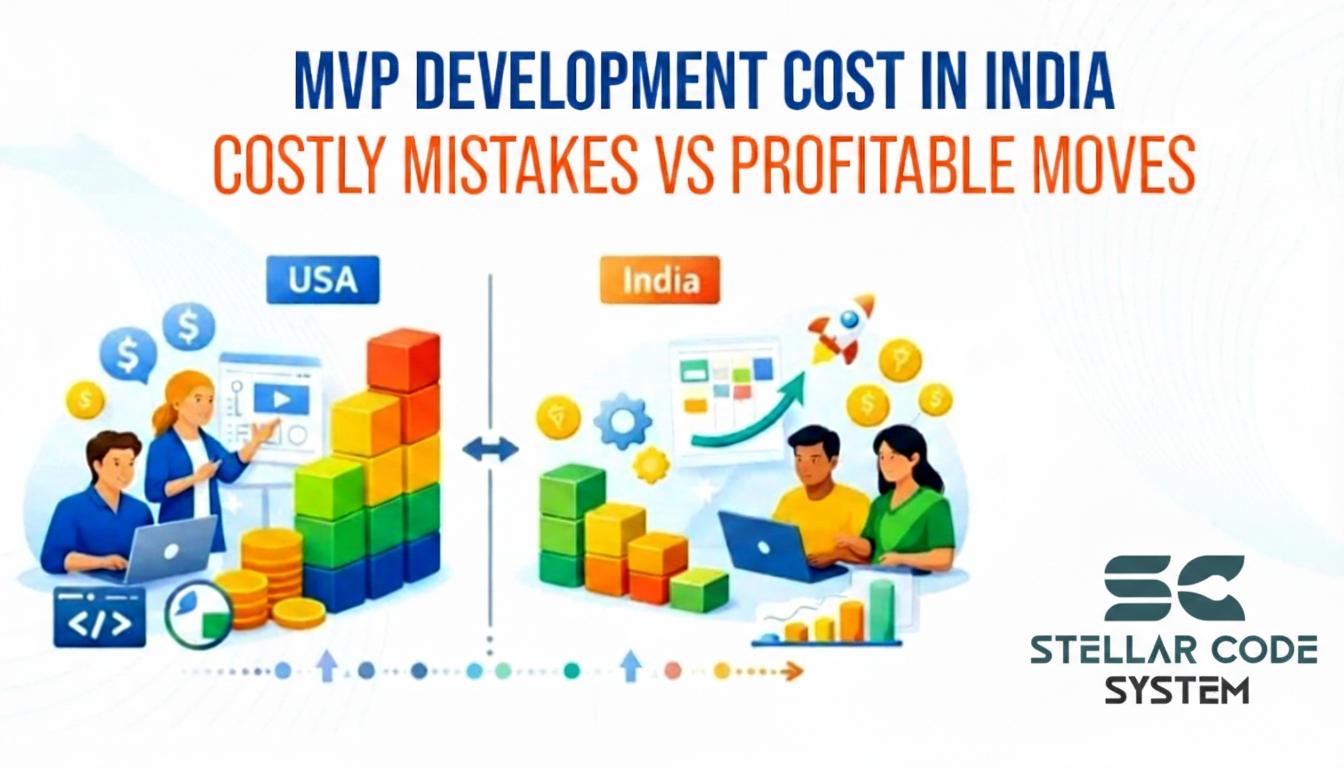
MVP Development Cost in India: Costly Mistakes vs Profitable Moves
A founder once told me, “We were quoted $18K for our MVP. We’ve already crossed $35K and it’s still not stable.” I’ve heard versions of that story too many times. The problem usually isn’t that MVP development cost in India is “too high.” It’s that the cost becomes uncontrolled because of how decisions are made. Let me break down where things actually go wrong.
Dedicated Development Team in India Explained: Structure, Cost & Control
I’ve worked with founders who hired a dedicated development team in India thinking it would “just work.” Six months later, they had code — but no clarity, no ownership, and no idea why velocity kept dropping. The problem usually isn’t the country. It’s how the engagement is structured. If you’re considering a dedicated development team in India, here’s what actually goes wrong — and what fixes it.

Offshore Software Development in India Explained
Most founders don’t fail with offshore teams because of bad developers. They fail because of unclear ownership, rushed expectations, and poor communication structure.

How to Choose a Software Development Company in India?
A few years ago, I worked with a founder who chose the lowest quote from three Indian agencies. Six months later, the product wasn’t stable, the original developers had changed, and no one knew who owned the architecture decisions. Choosing a software development company in India isn’t about price. It’s about clarity in ownership, execution structure, and long-term alignment. If you’re searching “How to Choose a Software Development Company in India?” — this is what actually matters.

Software Development Cost in India: How to Estimate It Without Getting Burned
I’ve worked with small Indian dev teams, early-stage startups, and client agencies for over a decade. One pattern keeps repeating. A founder chooses the lowest quote to reduce software development cost in India, thinking they’re being financially smart. Six months later, the product is slower, harder to change, and costs more to fix than to rebuild. This isn’t about blaming “cheap developers.” It’s about how cost decisions are usually made — and why they backfire in small teams.

Software Development Company In India For Saas Products
I’ve seen this happen too many times. A founder hires a team in India to build their SaaS. Six months later, the product works — but no one understands the architecture. Releases are slow. Costs are rising. And switching teams feels impossible. The real problem isn’t location. It’s loss of technical control early in the project. Let’s break down why this happens and how to avoid it.
Blog FAQs
What topics do you publish?
We publish practical guides on web & mobile development, AI, DevOps, UI/UX, cloud, and product engineering.
Do you offer software development services?
Yes. Stellarcode builds web apps, mobile apps, SaaS platforms, and custom engineering solutions for businesses.
How can I contact Stellarcode?
Visit the contact page on our website to discuss your requirements and timelines.
How often do you publish?
We publish new articles regularly—focused on real-world problems and clean implementation patterns.