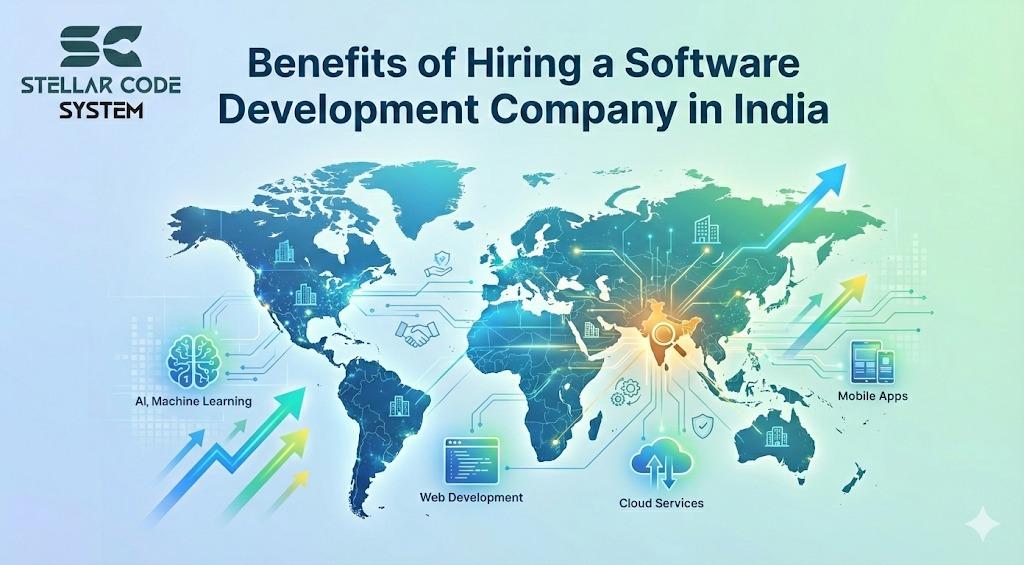
Benefits of Hiring a Software Development Company in India
In today’s market, software is no longer a “support function.” It is the business.
Whether you’re building a SaaS product, modernising internal systems, launching a startup, or scaling operations, the software partner you choose will directly impact your speed, costs, quality, and long-term growth.
Over the last decade, I’ve worked with founders, SMEs, and global teams who outsourced development to different regions. One pattern keeps repeating: companies that partner with the right Indian software development firm move faster, spend smarter, and scale more confidently.
India is not just “cheap development” anymore. It has quietly become one of the most reliable ecosystems for building serious, business-critical software.
Let’s break down why — from a real buyer’s perspective.

Why Businesses Actively Choose India (Beyond Just Cost)
Most buyers start with one problem:
“We need great developers, but hiring locally is slow, expensive, and risky.”
Then they discover a second problem:
“Freelancers are unpredictable, and agencies elsewhere blow the budget.”
This is where India consistently wins — when you choose the right company.
1. You Get Enterprise-Level Skills Without Enterprise-Level Burn
India produces millions of engineering graduates every year, and many businesses choose teams here because they can handle both product execution and long-term technical growth without the overhead of building a large in-house department.
Full-Stack Web and Mobile Development
End-to-end development of secure, high-performance web and mobile applications. Covers everything from intuitive frontends to powerful backends, ensuring scalable products that support real business growth.
Cloud & DevOps
Cloud and DevOps services streamline deployment, automate infrastructure, and improve system reliability. They help businesses scale faster, reduce downtime, and optimize performance across cloud environments.
AI/ML and Data Engineering
AI and data engineering solutions turn raw data into intelligent systems and actionable insights. They enable automation, prediction, and smarter decision-making across digital products.
Enterprise Platforms (ERP, CRM, SaaS)
Custom ERP, CRM, and SaaS platforms centralize operations and customer data into one connected ecosystem. They improve efficiency, visibility, and scalability for growing organizations.
But the real value is not volume. It's a battle-tested experience.
Many Indian teams have already built:
Fintech Platforms Handling Live Payments
These platforms are built to process real-time transactions with high security and zero tolerance for failure. They focus on compliance, fraud prevention, and system reliability.
Healthcare Systems with Compliance Needs
Healthcare systems are designed to securely manage sensitive patient data while meeting strict regulatory standards. They prioritize data privacy, system stability, and audit readiness.
E-Commerce Infrastructures Processing High Traffic
High-traffic e-commerce systems are engineered for speed, scalability, and uptime. They ensure smooth shopping experiences even during peak demand periods.
Custom Enterprise Tools Replacing Legacy Systems
Custom enterprise tools modernize outdated workflows and disconnected systems. They improve operational efficiency, integration capabilities, and long-term scalability.
That means you’re not paying for experiments. You’re paying for patterns, processes, and lessons already learned.
2. Cost Efficiency That Actually Improves ROI (Not Just Budgets)
Cheaper development only helps if quality stays high, which is why Custom Software Development delivers stronger ROI only when the partner reduces rework, security issues, and long-term maintenance pain instead of just lowering the initial quote.
Otherwise, you pay later in:
Rewrites
Poorly built software often needs to be rebuilt from scratch, wasting time, budget, and momentum. Rewrites usually happen when the original codebase lacks structure, scalability, or proper documentation.
Security Fixes
Weak architecture and rushed development can expose applications to serious security risks. Fixing vulnerabilities later is far more expensive and disruptive than building secure systems from the start.
Performance Issues
Slow load times, system crashes, and poor responsiveness damage user experience and business credibility. Performance problems usually signal deeper issues in system design, infrastructure, or database handling.
Missed Timelines
Unclear requirements and weak project management often lead to delayed launches and broken commitments. Missed timelines cost revenue opportunities, investor confidence, and market advantage.
A strong Indian development partner doesn’t just lower hourly rates — they optimize your entire cost structure:
Smaller, Specialised Teams Instead of Bloated Departments
Lean teams with focused expertise deliver higher efficiency and clearer accountability. This reduces management overhead while improving execution quality.
Faster Development Cycles
Optimized workflows and experienced teams shorten build and release timelines. This helps businesses reach the market faster and adapt quickly to change.
Fewer Architectural Mistakes
Strong planning and experienced architects reduce costly design flaws early on. This prevents performance issues, security gaps, and future rebuilds.
Better Long-Term Maintainability
Clean code structures and documented systems make future updates easier and safer. This lowers technical debt and protects long-term product stability.
Real example:
A UK startup I worked with reduced their projected product cost by 38%, but more importantly, launched three months earlier, capturing customers before a funded competitor went live. That kind of result is easier to achieve when you work with a quality-driven software development partner in India that balances speed, technical quality, and long-term maintainability instead of focusing only on lower pricing.
Speed + quality is where real ROI lives.
3. You’re Not Buying Code — You’re Buying Problem Solvers
Good Indian software companies don’t behave like “task takers.”
They challenge assumptions, suggest simpler workflows, and often prevent expensive mistakes early.
Common buyer problems they solve:
Our idea is big, but we don’t know how to build it lean.
Strong development teams break complex ideas into clear, buildable phases. They help define MVP scope, reduce waste, and validate products faster without overengineering.
Our current system is slow and breaking under growth.
Experienced teams identify bottlenecks and redesign systems for performance and scalability. This stabilizes operations, improves speed, and supports future expansion.
We need to automate operations, not just digitise them.
Modern software teams go beyond basic digital tools to build intelligent, automated workflows. This reduces manual effort, errors, and long-term operational costs.
Strong teams translate business goals into:
System Architecture
Designs a robust, scalable foundation that supports performance, security, and future growth. Prevents costly rewrites and ensures smooth long-term operation.
Technology Stacks
Select the right tools and frameworks tailored to your business needs. Ensures stability, maintainability, and easier future upgrades.
Scalable Databases
Builds databases that can handle growing users, transactions, and data without slowing performance. Supports reliable, high-volume operations.
Secure APIs
Creates safe, efficient connections between systems and third-party services. Protects data while enabling seamless integration.
Long-Term Product Roadmaps
Plans development aligned with business goals and future growth. Keeps projects strategic, focused, and adaptable over time.
This shift — from developer to technical partner — is one of India’s biggest hidden advantages.
4. Scalability Is Built Into the Relationship
One of the most practical benefits buyers notice:
As products grow, the ability to expand delivery capacity quickly becomes a real advantage, which is why fast-moving software projects often benefit from teams that can scale roles and execution without restarting the hiring process every few months.
You don’t need to re-hire every time you grow.
Indian firms are structured to scale teams up or down quickly:
Start with 2 Developers
Begin with a small, focused team to validate your idea and build a functional MVP. This keeps costs controlled while testing your product and market assumptions.
Expand to a Full Product Squad
As traction grows, the team scales into a full product unit with defined roles and delivery ownership. This enables faster development, better quality control, and consistent release cycles.
Add QA, DevOps, UI/UX, and Data Roles When Needed
Specialist roles are added based on real product demands, not assumptions. This ensures stronger performance, better user experience, higher reliability, and data-driven growth.
This is incredibly powerful for startups and SMEs who face unpredictable demand. Instead of restructuring internally, you scale capacity on demand.
5. Faster Launches Through Mature Delivery Systems
Top Indian companies often move faster because their delivery systems are already structured around repeatable execution, which helps reduce release friction, improve deployment quality, and make progress more visible to buyers from the very beginning.
Agile Sprint Cycles
Agile sprints break development into short, focused phases with clear goals and deliverables. This allows faster releases, continuous feedback, and better control over scope and priorities.
Daily Standups
Daily standups keep teams aligned on progress, blockers, and next steps. They improve accountability, speed up issue resolution, and maintain steady development momentum.
Dedicated Project Managers
A dedicated project manager coordinates tasks, timelines, and communication between all stakeholders. This ensures smooth execution, risk control, and consistent project visibility.
Automated Testing
Automated testing validates functionality, performance, and security across every build. It reduces human error, speeds up releases, and maintains software stability.
CI/CD Pipelines
CI/CD pipelines automate code integration, testing, and deployment processes. This enables faster updates, fewer bugs in production, and reliable software delivery.
This reduces two massive risks buyers face:
Endless Development Loops
Projects can get stuck in repeated revisions without clear direction. This wastes time, increases costs, and delays your product launch.
Unclear Progress Visibility
Lack of transparency leaves you unsure about timelines, deliverables, and milestones. It reduces accountability and makes planning and decision-making difficult.
With the right partner, you get:
Weekly Demos
Regular demos showcase progress and gather early feedback. They keep stakeholders aligned and reduce surprises at launch.
Roadmap Transparency
Clear visibility into project plans and timelines ensures predictable development. It helps teams and clients stay aligned on priorities.
Early MVP Releases
Launching a Minimum Viable Product quickly allows real-world testing. This validates ideas and reduces costly changes later.
Measurable Milestones
Tracking concrete milestones ensures accountability and progress visibility. It makes success quantifiable and keeps projects on schedule.
Which means you validate ideas faster and cut losing features early.
6. Time-Zone Advantage That Becomes a Business Asset
When managed correctly, India’s time difference is not a barrier — it’s leverage.
While your local team sleeps:
Bugs Get Fixed
Issues are identified and resolved quickly before they impact users. This keeps the product stable, secure, and reliable around the clock.
Builds Get Deployed
New updates are compiled, configured, and released without delays. This ensures continuous progress and faster delivery of improvements.
Tests Get Run
Automated and manual tests validate functionality, performance, and security. This reduces failures, catches issues early, and protects product quality.
Features Get Prepared
Upcoming features are developed, refined, and readied for release. This keeps the product roadmap moving forward without slowing business operations.
Many global companies effectively run 24-hour development cycles, compressing delivery timelines without burning internal teams
7. Deep Exposure to Modern, Production-Level Tech
Indian development firms are not just learning modern stacks like AI and cloud — many are already shipping them in production, and these capabilities have become a practical extension of software delivery for businesses that want automation, intelligence, and scalable digital systems.
Typical real-world implementations include:
AI Chat Systems and Automation Engines
AI chat systems and automation engines streamline customer support, operations, and internal workflows. They reduce manual effort, improve response times, and enable smarter, data-driven interactions.
Cloud Migrations from Legacy Infrastructure
Legacy systems are securely moved to modern cloud environments to improve performance and scalability. This reduces maintenance costs while increasing system reliability and flexibility.
SaaS Platforms with Multi-Tenant Architectures
Multi-tenant SaaS platforms allow multiple customers to run securely on a single scalable system. This architecture supports rapid growth, efficient resource use, and simplified updates.
Secure Fintech Systems
Secure fintech systems are built to handle transactions, sensitive data, and regulatory requirements. They ensure compliance, protect user trust, and support high-volume financial operations.
IoT Dashboards and Data Platforms
IoT dashboards and data platforms collect, process, and visualize real-time device data. They help businesses monitor operations, detect issues early, and make informed decisions.
This matters because modern software is less about writing code and more about integrating ecosystems.
8. Communication and Management Have Matured Significantly
One outdated myth is that outsourcing creates communication chaos.
In reality, top Indian companies invest heavily in:
Product Managers
Product managers align business goals with product strategy and development execution. They prioritize features, manage roadmaps, and ensure the product delivers real user and business value.
Business Analysts
Business analysts translate business needs into clear technical requirements and workflows. They bridge the gap between stakeholders and development teams to reduce risks and rework.
UX Strategists
UX strategists design user journeys that are intuitive, efficient, and conversion-focused. They ensure products are built around real user behavior, not assumptions.
Client Success Leads
Client success leads manage relationships, communication, and long-term engagement health. They ensure smooth collaboration, quick issue resolution, and consistent project progress.
You don’t just talk to developers. You interact with delivery teams trained to translate business goals into technical execution. For buyers, this removes a massive operational burden.
9. Stronger Emphasis on Security, Compliance, and Stability
Serious Indian firms now routinely operate under:
ISO-Certified Processes
ISO-certified processes ensure structured workflows, quality control, and consistent delivery standards. They reduce operational risk and improve reliability across software development projects.
Secure Development Frameworks
Secure development frameworks integrate security practices into every stage of the development lifecycle. This helps prevent vulnerabilities, data breaches, and costly post-launch fixes.
GDPR and HIPAA Exposure
Experience with GDPR and HIPAA means teams understand how to handle sensitive data responsibly and compliantly. It ensures privacy protection, regulatory alignment, and reduced legal risk.
Enterprise Client Audits
Enterprise audits demonstrate a company’s ability to meet strict security, performance, and process requirements. They validate technical maturity and build trust with large-scale, global clients.
This is driven by years of working with banks, healthcare providers, and global SaaS brands. The result: security is baked in, not bolted on.
10. Global Track Records Reduce Decision Risk
India’s biggest advantage is not marketing. It’s proof.
From bootstrapped founders to Fortune-level enterprises, companies across:
The US
Companies in the US partner with Indian software firms to accelerate product development and reduce engineering costs. This allows startups and enterprises to innovate faster while maintaining high technical standards.
The UK
UK businesses work with Indian development teams to build scalable, secure, and cost-efficient digital solutions. This partnership supports faster go-to-market strategies and long-term technology growth.
Europe
European organizations rely on Indian software companies to modernize systems and develop compliant, high-quality applications. These collaborations help manage costs while supporting complex, regulation-driven projects.
The Middle East
Middle Eastern businesses engage Indian development partners to drive digital transformation and smart infrastructure initiatives. This supports rapid expansion across fintech, e-commerce, healthcare, and government sectors.
Australia
Australian companies choose Indian software teams to extend development capacity and speed up product delivery. This approach enables scalable growth without the challenges of large in-house teams.
Already rely on Indian partners to run mission-critical systems. That ecosystem experience dramatically lowers your execution risk.

Step-by-Step: How Smart Buyers Choose the Right Indian Partner
Instead of asking only “How much does it cost?”, strong buyers evaluate:
Step 1: Business Understanding
A strong partner takes time to understand your business goals, users, and challenges before development begins.
They can clearly explain your problem back to you and suggest smarter, more efficient solutions.
Step 2: Architecture Thinking
The right company focuses on scalable, secure, and maintainable system design from day one.
Good architecture prevents future performance issues, security risks, and costly rebuilds.
Step 3: Process Transparency
You should always have visibility into progress, timelines, and deliverables.
Clear workflows, testing processes, and regular updates ensure accountability and predictable execution.
Step 4: Proof of Execution
Reliable partners support their claims with real case studies and measurable results.
This shows they can deliver working solutions, not just attractive portfolios.
Step 5: Long-Term Mindset
The best teams think beyond launch and align development with your long-term business goals.
They focus on outcomes, scalability, and continuous improvement—not just tasks.
This filtering alone eliminates 80% of bad outsourcing experiences.

Mini Case Snapshots
SaaS Founder (UK)
Replaced three freelancers with one Indian product team.
Achieved stable releases, halved bug counts, and closed enterprise clients within six months.
E-commerce Brand (UAE)
Moved from off-the-shelf tools to a custom system.
Indian developers built inventory automation and analytics dashboards that reduced operational workload by 45%.
Healthcare Startup (US)
I partnered with an Indian firm experienced in compliance.
MVP launched in 90 days with audit-ready architecture.
Conclusion
Hiring a software development company in India today is not about delegating work.
It’s about building a remote technical backbone for your business.
When chosen well, an Indian partner becomes:
- Your extended engineering department
- Your product execution arm
- Your long-term innovation ally
And in a market where speed, adaptability, and cost control decide survival — that partnership becomes a serious competitive advantage.
Benefits of hiring a software development company in India: FAQs
India offers highly skilled developers, cost-efficient solutions, and experience with global clients. Companies benefit from faster delivery, scalability, and access to modern technologies like AI, cloud, and blockchain.
Top Indian firms provide dedicated project managers, regular updates, and English-proficient teams. Agile methodologies, daily standups, and transparent reporting ensure smooth collaboration across time zones.
Yes. Experienced teams follow industry standards, security frameworks, and compliance regulations like GDPR, HIPAA, and ISO certifications, ensuring safe and reliable solutions.
Indian companies offer flexible team scaling. You can start with a small team, expand to a full product squad, and add specialized roles like QA, DevOps, UX, or data engineers as needed.
Look for proven case studies, enterprise client audits, and a strong long-term mindset. Companies with transparent processes, secure development practices, and repeat clients demonstrate trustworthiness and delivery capability.
Written by

Paras Dabhi
VerifiedFull-Stack Developer (Python/Django, React, Node.js)
I build scalable web apps and SaaS products with Django REST, React/Next.js, and Node.js — clean architecture, performance, and production-ready delivery.
LinkedIn