Cloud Computing for E-Commerce Business in India | Boost Growth
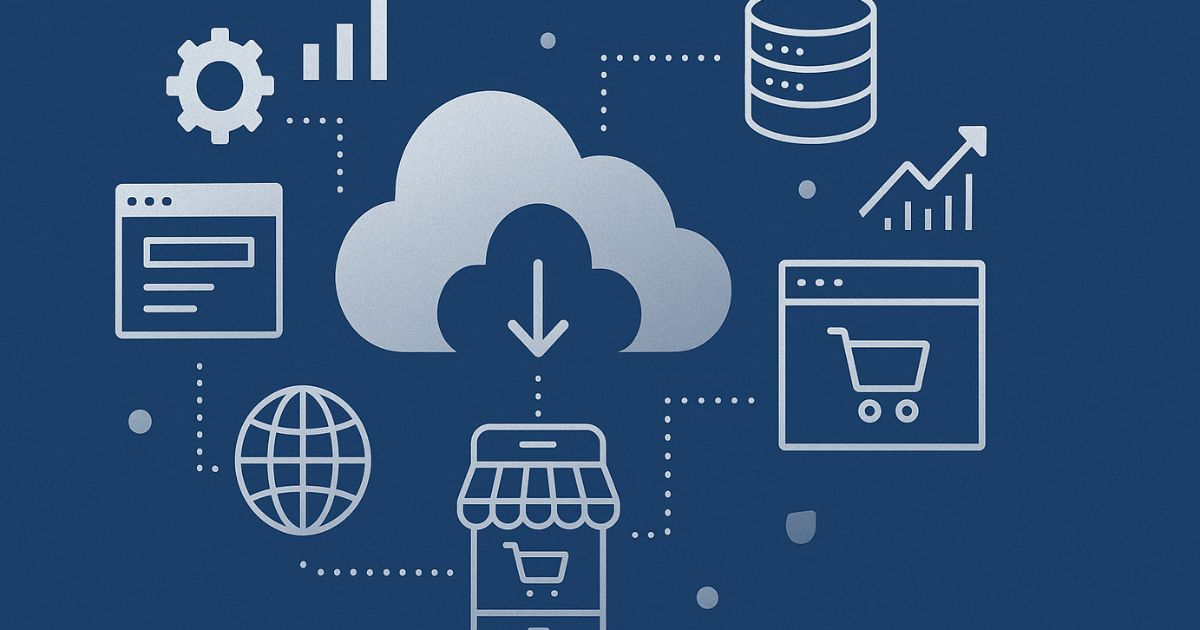
As with the growth of the eCommerce businesses, so also increases their challenges. Unpredictable traffic peaks, cost pressure on infrastructure, and heightened cybersecurity threats are especially problematic to many companies. Without keeping these challenges in check even the best businesses may be ruined within a short time.
Cloud computing in the eCommerce business in India comes in, at this point and provides a solution that is a game changer. It is changing the online shop's purpose, dynamism, and upgrading. With the help of cloud infrastructure, enterprises will be able to store the data effectively, flexibly manage the traffic, cut the costs of operation, and remain stable in performance and safety.
In addition, eCommerce brands are able to easily meet seasonal demand and needs, automate routine business processes, and provide customers with personalized experiences based on real-time analytics using cloud technology. It also allows the companies to cooperate more effectively across teams and regions accelerating the decision making and innovations. Concisely, cloud computing serves as the magic bullet of the next eCommerce customer-centric growth brands.
Understanding Cloud Computing in eCommerce
What Exactly Is Cloud Computing?
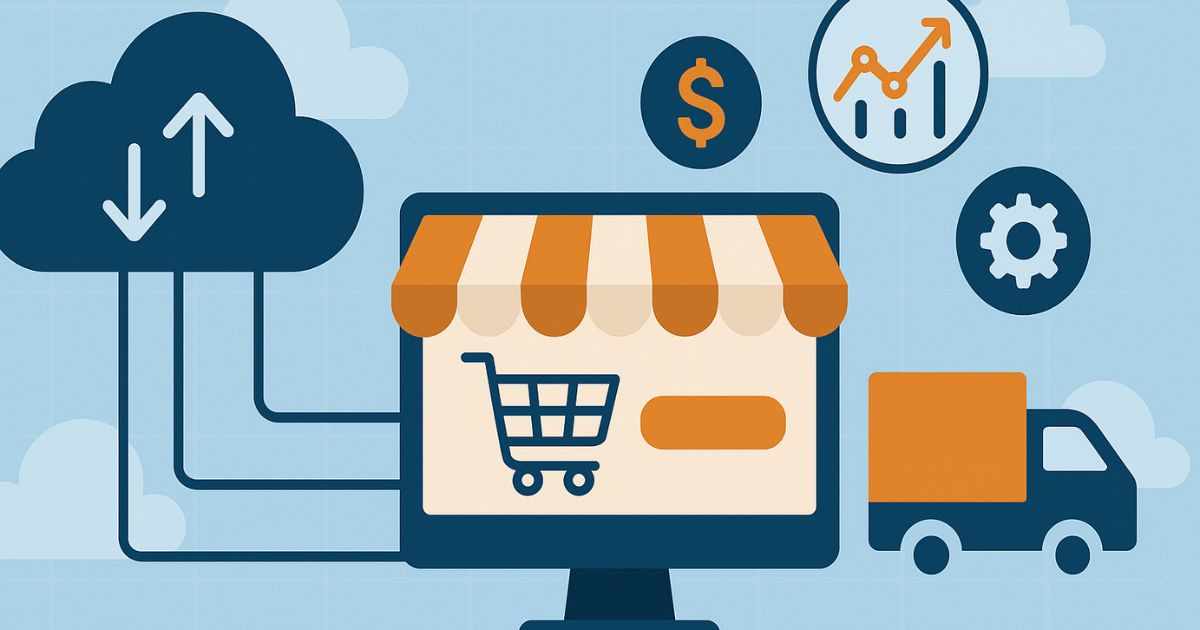
In simple terms, cloud computing means using remote servers—hosted on the internet—to store, manage, and process data instead of relying on local servers or personal computers.
For eCommerce businesses, this translates into hosting online stores, customer data, analytics, and apps in the cloud rather than on physical servers. This gives them on-demand access to computing resources—scaling up or down based on current business needs.
In short, cloud computing removes the need for heavy IT infrastructure, reduces maintenance costs, and enables businesses to stay flexible in a fast-changing digital world
Why It Matters for eCommerce
In eCommerce, everything depends on speed, uptime, and scalability. Customers expect your website to load in seconds, handle thousands of orders at once, and protect their sensitive data. Cloud computing offers exactly that flexibility—helping you manage all aspects of your online store seamlessly.
It ensures your website never goes offline during peak sales, provides reliable backups for customer data, and enhances security through advanced cloud tools.
With cloud technology, even small eCommerce startups can compete with large enterprises by offering the same performance and reliability to their customers.
Traditional Hosting vs. Cloud Hosting
Traditional hosting uses fixed resources that require manual scaling and maintenance, while cloud hosting offers auto-scalable resources with pay-as-you-go pricing. Cloud hosting provides worldwide access and dynamic load balancing, whereas traditional hosting can crash during high traffic and has limited global access.
- Scalability: Fixed resources vs Auto-scalable
- Cost: Pay for fixed capacity vs Pay-as-you-go
- Maintenance: Manual, in-house vs Managed by cloud provider
- Performance: Can crash during high traffic vs Dynamic load balancing
- Global Access: Limited vs Worldwide access
Types of Cloud Services Used in eCommerce
IaaS (Infrastructure as a Service): Renting virtual servers, storage, and networks (e.g., AWS EC2). This model lets eCommerce businesses rent essential IT infrastructure—like virtual servers, storage, and networking—on demand from providers such as AWS EC2 or Microsoft Azure. Instead of investing in costly physical hardware, you simply pay for what you use. IaaS helps eCommerce stores stay flexible, scale up during high-traffic seasons, and reduce downtime with reliable, globally distributed infrastructure. It's perfect for businesses that want full control over their setup without the hassle of maintaining servers.
PaaS (Platform as a Service): PaaS offers a complete environment for developers to build, test, and deploy applications without worrying about managing hardware or operating systems. Platforms like Google App Engine and AWS Elastic Beanstalk make it easier for eCommerce teams to roll out new features faster. With PaaS, your developers can focus purely on innovation—creating smooth checkout experiences, integrating APIs, or building AI-driven recommendation engines—all without dealing with backend complexities.
SaaS (Software as a Service): SaaS provides ready-to-use software applications delivered over the internet, such as Shopify, Salesforce, or HubSpot. These platforms eliminate the need for installations or updates, offering eCommerce businesses instant access to powerful tools for store management, CRM, marketing automation, and analytics. SaaS is ideal for startups and growing businesses because it's affordable, easy to use, and automatically updated. Plus, it integrates seamlessly with other tools, helping you run your online store efficiently from day one.
Together, these models empower eCommerce platforms to focus on business growth instead of worrying about server management.
The Role of Cloud Computing in eCommerce Growth
1. Expanding Global Reach
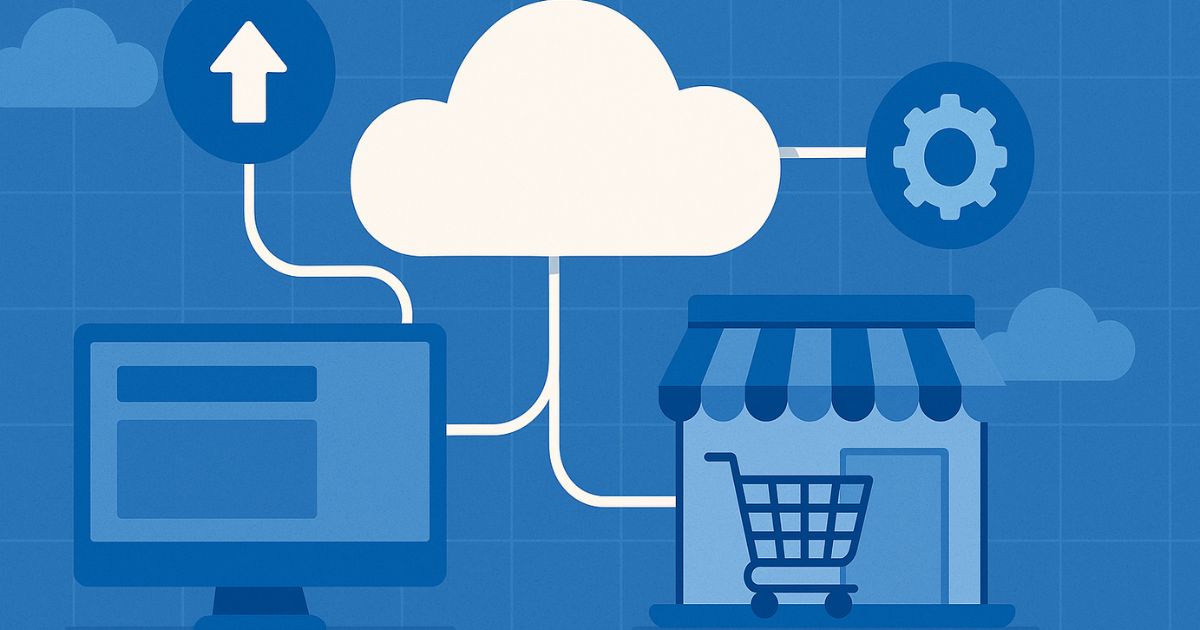
Cloud computing does not consider distance, so that an eCommerce store can provide the same experience to customers regardless of the geographical location of the shop globally.
Hosting your store on cloud enables you to tap into foreign markets easily without having to consider the local infrastructure or the expensive maintenance of the server.
This will allow your brand to absorb beyond boundaries, that is, it will be able to offer quick, trusting services regardless of where your customers are either India, US or Europe.
Cloud services have various global data centers, which serve the businesses in placing their applications near customers and win trust in the form of hassle-free online purchases.
Reducing Latency and Increasing Performance
Websites can serve and serve content to users all over the world, with faster speeds depending on the location of the user, when using global CDNs (Content Delivery Networks) such as AWS CloudFront or Akamai. The same fast experience is enjoyed by a user in Singapore or Mumbai since he can fetch data on the closest server point.
This configuration will completely minimize the reading of the pages and make the navigation smoother even when the heavy traffic or downloading of the files is taking place.
Milliseconds count in eCommerce, a sluggish page will cause a cart to be abandoned and sales will be lost.
With CDNs based on the cloud platform, brands will be able to provide their websites with loading within seconds, increasing the rates of conversion and customer perception on a global level.
Example — Amazon and Indian eCommerce
Millions of users are served efficiently by Amazon in the world clouds. On the same note, Indian eCommerce services with multi region architecture have the potential to grow in new countries without fear of speed or failure.
As an example, companies such as Flipkart and Meesho make use of scalable cloud systems which have guaranteed them a stable performance in different markets.
This type of infrastructure enables businesses to achieve the same level of success that Amazon has achieved within the world by being able to experience an equal amount of quality everywhere in the world.
Consequently, Indian brands are in a position to compete within the global market and they grow at a faster rate without excessive infrastructure investments.
Why This Matters for Indian Businesses
Cloud computing can provide a shortcut to global expansion in the case of Indian eCommerce startups that have customers all over the world, so it does not have to develop local data centers everywhere.
This not only keeps massive start-up expenses under the carpet, but also enables corporations to invest time on the acquisition of customers as well as product innovation rather than technology.
Cloud solutions are purchased along with in-built compliance and localization functions, which assure easy cross-border operations.
Stated briefly, cloud computing provides the Indian eCommerce enterprises with what it takes to become like the world giants on day one, to be able to act and even to scale up and down.
2. Building Scalable Architecture
The solution to successful online businesses is scalability. The thought of your site failing during Diwali due to the demand is horrifying- nightmare, eh?
Cloud platform makes it possible to have your eCommerce site capable of sustaining those unexpected peaks of traffic without shedding a tear. It gives on-demand services and it is flexible, which automatically adapts to your requirements.
This is regardless of whether you are hosting a couple of hundred shoppers or millions of people during a flash sale, your site will remain stable, fast and responsive.
Your business can expand at a rapid pace, but that will not disrupt performance as a well-built cloud architecture will keep up with you.
Auto-Scaling for Traffic Management
Cloud computing automatically adjusts resources depending on user traffic. During sales or festive events, it scales up instantly, and when demand drops, it scales down—saving costs.
This elasticity means you're never paying for unused capacity, unlike traditional hosting models.
Auto-scaling ensures that even during massive promotions, your website doesn't slow down or crash under pressure.
For eCommerce businesses, it's like having an intelligent system that expands or shrinks in real-time—keeping performance smooth and costs efficient.
It also improves the customer experience by ensuring every shopper gets the same fast checkout speed, no matter how busy your site is.
Example — Flipkart and Shopify's Scalability
Platforms like Flipkart and Shopify rely on cloud-based auto-scaling systems to handle massive order volumes during flash sales like Big Billion Days or Black Friday, ensuring zero downtime.
These companies use advanced cloud orchestration tools to monitor performance and allocate resources dynamically.
When traffic spikes, additional servers automatically activate; when it drops, those servers are released—keeping everything efficient.
This approach helps them save millions in infrastructure costs while maintaining lightning-fast user experiences worldwide.
It's a real-world example of how scalable cloud computing can turn technical challenges into competitive advantages.
Why Legacy Systems Fail
Traditional hosting systems often over-provision resources "just in case," leading to wasted money and poor efficiency. Cloud-native setups solve this problem elegantly.
Legacy servers are rigid—they can't quickly adapt to demand fluctuations, causing downtime or sluggish site speeds during high-traffic periods.
They also require manual scaling and expensive maintenance, which slows innovation.
Cloud-native architectures, on the other hand, use automation and microservices to dynamically balance loads and recover from failures instantly.
For modern eCommerce businesses, this flexibility isn't just a bonus—it's a necessity to stay competitive and deliver consistent performance year-round.
3. Cutting Down Operating Costs
Operating an eCommerce business is about striking the right balance between growth and profitability or may it be more as cloud computing has never been that easy.
The migration to cloud-based infrastructure will help companies to radically lower overhead costs associated with the physical servers, IT personnel and software licenses.
A business no longer has to incur huge initial expenses in order to run its business, but can now run its business in a flexible, pay-as-you-use price structure that is expandable to its needs.
This assists the Indian eCommerce startups to remain lean, effective, and nimble and redirect capital toward marketing, product expansion, or customer interaction.
Finally, cloud computing is replacing the unstable IT expenses with transparent, scalable pricing that is ideal in the long term sustainability.
Pay-as-You-Go Model
Cost flexibility is one of the greatest benefits of cloud computing in the eCommerce businesses in India. It is simply a matter of paying only the amount of computing power and storage you need.
This model is used to avoid incurring unnecessary costs in terms of operational expenditure in order to match your operational expenditure with your business activity; hence you pay only that which is necessary in times of low demand.
To illustrate, when your online shop is hit by a rush during Diwali or Black Friday, your services are automatically increased... and it goes down once the traffic is even again.
It is an intelligent and economical solution to start-ups and developing eCommerce brands that require flexibility without performance degradation.
In the long run, this method would save companies thousands of wasted infrastructure costs.
No Need for Physical Infrastructure
There is no need to maintain servers or power backups or cooling servers to use cloud hosting. This proves to be especially useful when dealing with startups and SMBs with small budgets.
The traditional data centers incur high set up costs, consistent maintenance, and space which are not applicable in the cloud solution.
When using providers such as AWS, Azure, or Google Cloud, all of your data and applications will get hosted in secure high-performance environments, which are also capable of scaling automatically.
Not only does this save money in physical hardware, but also saves on carbon footprint and energy use.
Simply put, cloud computing enables companies to conduct business wherever they like without the inconvenience of having to maintain IT infrastructure.
Reduced Labor and Maintenance
Given that the majority of cloud services are delivered by the providers, you do not have to pay maintenance to the IT, salaries of the staff, and costs of the downtime.
Your staff is no longer required to concern themselves with software upgrades, server patches or hardware outages - the cloud provider takes care of all that automatically.
This will give your employees precious time to be innovative, customer-centric and business-strategy oriented instead of being stuck in routine technology upkeep.
As an example, switching to AWS or Google cloud may reduce the costs of operations by a factor of 3050 than standard configuration as you only pay for the active use and enjoy high-level tools of automation.
Cloud computing will eventually turn IT into a strategic asset which can propel the efficiency and growth of an organization.
4. Strengthening Security and Compliance
As your customer base grows, so does your responsibility to protect their data.
Advanced Security Features
Your duty to safeguard the data of your customers increases as you get more customers.
Trust is the key component of eCommerce businesses considering that customers post personal and financial information on the internet.
Cloud computing provides high-level security structures that guarantee protection of data, and thus companies are at ease, but do not compromise with international standards.
Cloud platforms can prevent any kind of data breach and establish a long-lasting customer loyalty when they implement real-time monitoring and the automated recognition of threats affecting the Indian eCommerce brands.
Security is not only a feature but it is also a pillar to sustainable growth in the digital age.
Global Compliance
Other cloud market leaders adhere to regional data protection regulations such as GDPR, PCI DSS, and ISO 27001, which helps Indian companies to find meeting the legal and regulatory requirements more easily.
This will make online stores work anywhere around the world without the fear of alterations in the privacy legislations or data safety measures.
With the world certifications in-line with these, you have an automatic best practice on data storage and processing in your business.
This is vital particularly in eCommerce brands dealing with cross-border and global customers.
In simplistic terms, cloud platforms enable one to be more compliant, credible, and globally trusted.
Example — Cloud Security for Indian eCommerce
At stellar code system, we assist eCommerce companies to incorporate secure cloud networks that reference payment gateways, customer records and order histories to provide satisfaction and alleviate fear.
Our cloud services are based on in-built encryption, monitoring, and automatic recovery provisions reducing downtimes and risks of data.
This would be providing Indian brands to function well both in local and global markets.
Enterprise level security will help businesses avoid threats at their beginning level rather than responding to them once they have been caused by monitoring damage.
It is connected with establishing customer confidence with active security and open snowballing of information.
5. Speeding Up Deployment and Innovation
Nowadays, in the competitive and digital world, rapidity and innovativeness are the key aspects of achievement.
Cloud computing enables eCommerce staff to attach features more rapidly, swiftly evaluate concepts and address evolving customer requests in a real-time setting.
Businesses are also able to cut down development time and as well as quality, with automated deployment services and continuous integration systems.
This responsiveness enables both startups and businesses to remain up to date, effective and remain ahead of competition.
Cloud-based innovation is not simply through accelerated technology, but through intelligence in business development.
Agile Development Made Easy
Cloud systems make it much easier to develop by having centralized testing, coding and deployment environments.
Teams are able to work together even when they are not in the same location, they can work with several applications versions and even release updates to applications across devices.
This prevents the existence of bottlenecks due to manual process or machine reliance.
With cloud-based DevOps, the cost of experimenting with a new feature or product enhancement becomes cheaper and less risky.
This agility increases productivity, in the end, and allows businesses to keep pace with the fast-moving eCommerce market.
Faster Time-to-Market
Implementation of new features- such as loyalty program, referral system or regional storefront- can take place within hours rather than weeks.
Pipelines Cloud-based automation and deployment pipelines save so much time in a market by being very reliable.
This helps eCommerce firms to react immediately to the trends or customer requirements.
In a market where time is of the essence, a first to market approach usually translates to taking up the biggest portion of users and money.
Innovation on the cloud is on-going, as opposed to occasional.
Competitive Advantage
Those that embrace cloud services may have a huge advantage over other companies that still follow the old infrastructure.
They are able to scale more quickly, and change in accordance to changing market situations, to implement customer-oriented changes at a faster frequency.
The cloud-driven companies have reduced downtime, improved analytics, and team team work, as well.
Such agility enables them to turn on short notice when opportunities come along, or challenges set in.
To the point, pioneered cloud adoption outlines the paths to a sustainable market dominance in the eCommerce environment.
Implementing Cloud Computing in Your eCommerce Business

Step 1 — Ideation and Assessment
The first thing to do before taking a leap to the cloud is to get familiar with what you need as a business and what tech constraints you currently have.
Evaluate your current infrastructure, establish the performance bottlenecks and determine what success means to your eCommerce business.
The step will assist you in making the best option of which cloud model to use between the public, the private, and the hybrid based on your objectives in terms of scalability, security, and financial capacity.
By engaging the key stakeholders at the initial stage, you would be certain that you select a strategy, which is not only consistent with your business vision but also technology roadmap.
An assessment phase like that, properly planned, reduces risks and preconditions the further free cloud transformation.
Step 2 — Building the Foundation
As soon as you are certain about what you want to achieve, the next thing is to design a strong cloud platform.
This means identifying the appropriate cloud provider such as AWS, or Azure and configuring such important elements as databases, storage and user access systems.
By implementing a secure and scalable network architecture, you will guarantee long term stability of your eCommerce business.
It is also the most appropriate moment to apply the best practices such as encryption, backup policies and load balancing.
Consider this stage as the construction of the online foundation of your store to grow in the years to come.
Step 3 — Migration and Integration
The next step is the actual one, which is to transfer your current systems and data to the cloud.
In the process of migration, it is essential to ensure that all the essential applications such as inventory, CRM, analytics, and payment gateways also work in the new environment.
In this case, testing plays a vital role to avoid interruptions and business continuity.
This process can be facilitated and automated by cloud migration tools such as AWS Migration Hub or Azure Migrate.
With proper transition, you will have a smooth ride, improved performance, enhanced security and reduced downtimes.
Step 4 — Monitoring and Optimization
Monitoring of your platform is the best prescription to success after it is up and running.
Such tools as AWS CloudWatch, Google Cloud Monitoring, or (Azure) Monitor can assist you to monitor performance, uptime and resource utilization in real time.
You can use this data to optimize your systems to achieve a better speed, scalability, and cost-efficiency.
Periodic performance review, security audits, and automatic warnings can be used to make you stay active rather than reactive.
The process of continuous optimization keeps your eCommerce business competitive, rapid and reliable, regardless of the magnitude of the business.
Challenges of Cloud Adoption (and How to Overcome Them)
1. Data Privacy and Compliance
A major issue that the eCommerce businesses have is the concern of data security and privacy.
Firms are usually concerned about the place where data is stored and whether it is in accordance with the local and international laws.
Locating the cloud region in India enables companies to address the requirements of data localization legislation and conform to implicit regulations such as GDPR and PCI DSS.
Strong encryption and access control policies are also a clever way to protect customer data.
In this manner, you can be trusted and be transparent with the users without breaking the law.
2. Managing Costs
Cloud computing is based on a pay-as-you-use model, although, when the costs are not monitored, they can soon grow.
A lot of companies over-provision resources or even leave unused services unclosed and this results in leakage of budget.
The budget alerts, resource tagging, and auto-scaling policies can be used to manage costs.
Visualizing and optimalizing spending is simple with the help of such tools as AWS Cost Explorer or Azure Cost Management.
Poor cost governance means that you will receive maximum ROI, but you will not need any undesirable surprises at the end of the month.
3. Vendor Lock-In
Using a single cloud provider may provide long-term dependence and make it difficult to be flexible.
Unless applications are loosely coupled with the tools or APIs of one platform, the migration afterward may become complicated and expensive.
To avoid it, a multi-cloud or hybrid strategy should be employed, that is, the workloads are distributed among the providers such as AWS, Google Cloud, and Azure.
Lock-in can also be minimized by ensuring the use of open-source frameworks and containerization (including Kubernetes).
The objective is to ensure agility in order to move or add providers when you require something different in doing business.
4. Skill Gaps in Teams
The effective cloud journey has to be led by a team of people who comprehend how to create, operate, and optimize the cloud infrastructure.
The problem that a majority of Indian startups and SMBs have is the inability to hire qualified DevOps or cloud experts.
Investment in training, certifications and upskilling allows your team to remain abreast with best practices.
You may as well enlist the help of master cloud consultants or agencies (such as Stellar Code) to help you in the implementation.
Developing internal capabilities will not only guarantee effectiveness in the long run but will also lessen the reliance on the outside suppliers.
Best Cloud Platforms for eCommerce in India
AWS (Amazon Web Services)
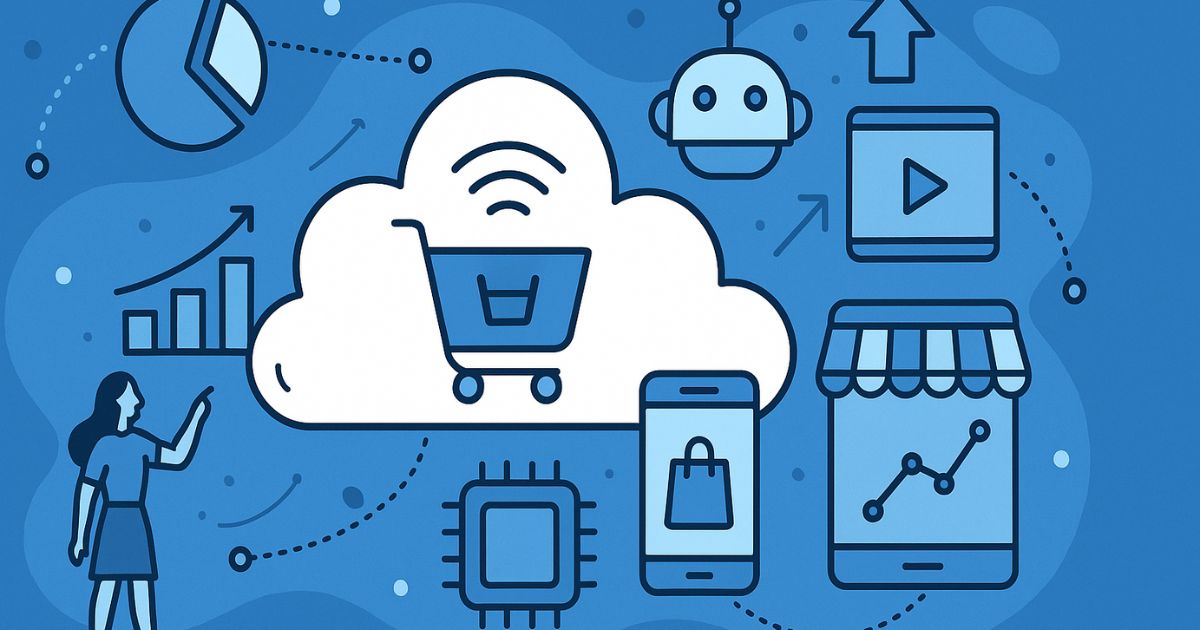
The most appropriate solution to apply in eCommerce platforms is AWS, as it has no competition in terms of scalability, reliability, and coverage. To all kinds of small online stores up to large marketplaces, AWS provides its services in the form of Amazon S3 to save data securely, EC2 to expand their computing capacity, and CloudFront to provide their content as quickly as it is possible. The pay-as-you-go model also supports the businesses to ensure that their costing is optimized yet the best performance would be realized.
Google Cloud Platform
The GCP BigQuery and AI capabilities are more sophisticated to analyze customer preferences, make business decisions, and come up with superior recommendations. eCommerce brands rely on the BigQuery and AI capabilities of GCP to study customer preferences. Its good infrastructure and network has ensured that its web sites have a high availability and perform well, which is highly needed in the globe.
Microsoft Azure
Tremendous retail businesses would like to work with Azure as it can be easily integrated with the Microsoft applications like Dynamics 365 and Power BI. It has high level security, certification of compliance and flexibility of hybrid cloud- can easily link on-premise to the cloud. Availability of the Azure in the world stage also guarantees the absolute stability of the uptime and the excellent user experience.
Local Indian Cloud Providers
The cloud providers that are gaining momentum in India are ESDS, NxtGen, and CtrlS due to their affordability, and their focus on the localization of data. They offer localized services, latency with the Indian customers and compliance to the national law on data protection. They are local providers of cheap, scalable and regulatory compliant hosting services to startups and middle sized eCommerce companies.
Future Trends in Cloud-Based eCommerce

Serverless Commerce
Serverless computing is transforming the working mechanism of the eCommerce platforms since developers are able to create and deploy features without necessarily maintaining the server infrastructure. This model automatically allocates resources based on the demand, reduces the operation costs and promotes agility. It helps stores on the Internet to be able to handle unexpected traffic jams without complications during the sale periods or during the festival season.
AI and Machine Learning in Cloud Retail
AI and ML on cloud is driving individualization and smart business decisions in retail. Such solutions analyze the customer behavior and predict the buying patterns and automate the on the fly pricing habit. With AI, the eCommerce brands can provide more personal customer experience and increase sales through recommendations and improved product discovery.
Green Cloud and Sustainability
Cloud providers have started to use sustainability as a central theme and many of them are currently investing in renewable energy and carbon-neutral data centres. When it comes to the eCommerce brands, a green cloud infrastructure does not only help reduce the impact on the environment but also is consistent with the growing desire among consumers to become environmentally friendly. This revolution promotes the effectiveness of energy usage and responsible online business.
Multi-Cloud Strategies
The use of multi-clouds is a growing trend whereby companies take the services of two or more clouds to ensure cost, performance and risk balances. This will assist in preventing lock-in on vendors, will be more flexible and more resilient to downtime. In the case of the eCommerce businesses, the multi-cloud approach will ensure the continuity in availability, improved disaster recovery and increased tactical scalability.
Conclusion
E-commerce business in India through cloud computing is transforming the way online shops operate, grow and serve their clients. The cloud allows it to be flexible, achieve higher performance, and save money, including major international organisations such as AWS and Azure and established other local offerings. Indian eCommerce brands will be able to keep up with the rapidly changing market with the help of AI-driven insights, serverless solutions, and sustainable cloud practices. By adopting the correct cloud strategy, a company can guarantee a smooth digital operation and Morris also contributes to the expansion and final success in the digital-first economy.
Cloud computing is no longer a luxury anymore and it is the subject of growth and survival in eCommerce today. Scalability to security, it comes as the means of assembling a strong and future-fit business.
We are the Stellar Code, and we have been specialized in cloud-migrating and developing eCommerce platforms. Our specialists will work with you to design, integrate, and operate cloud-based eCommerce systems to produce results, regardless of whether you are a start-up or an existing brand.
Are you prepared to make a step towards a higher level in your online business?
Get in touch with Stellar Code and make your eCommerce platform cloud powered.
FAQs on Cloud Computing for eCommerce Businesses in India
Cloud computing is very instrumental in ensuring that eCommerce businesses can grow fast and in an efficient manner. It gives the ability to handle any unexpected increase in traffic during high seasons or sales without crashing of the system. In addition to this, the cloud-based systems also facilitate improved site performances, accessibility of data, and customer experience; which are some of the most crucial aspects in the growth of an online business in the Indian market that is rapidly developing in the digital realm.
Cloud computing has removed the costs of having costly on-site servers and the IT maintenance expenses. A pay-as-you-go model can be used in businesses and it implies that the businesses only pay what they actually consume. This model helps reduce operation costs, as well as allows financial predictability and improved budget management among both start up and established eCommerce brands.
Yes, cloud computing provides high-level security, with such features as encryption, identity access control, and threat real-time monitoring. The major vendors (AWS, Google Cloud, and Azure) also adhere to such international data protection regulations as GDPR and ISO standards. These are security measures, which facilitate security in sensitive customer information resulting in secure and trustworthy shopping experience.
Absolutely. Cloud computing helps the small start-ups to start swiftly and does not demand massive investments on hardware and infrastructure. It maintains scalability- enables businesses to scale additional resources with increase in traffic and sales. Moreover, the emerging companies have an opportunity to use superior cloud solutions such as analytics and automation to fight the market giants.
The Indian eCommerce industry is saturated with the leading international solutions such as AWS, Google Cloud, and Microsoft Azure which are reliable and offer a broad spectrum of services. Nonetheless, regional service providers like ESDS, NxtGen and CtrlS are gaining popularity due to their affordable rates, local service and regional services that meet the local data localization regulations in India. The best alternative option is a selection based on the size, finances, and performance requirements of a business.
About the Author
Paras Dabhi
VerifiedFull-Stack Developer (Python/Django, React, Node.js) · Stellar Code System
Hi, I’m Paras Dabhi. I build scalable web applications and SaaS products with Django REST, React/Next.js, and Node.js. I focus on clean architecture, performance, and production-ready delivery with modern UI/UX.

Paras Dabhi
Stellar Code System
Building scalable CRM & SaaS products
Clean architecture · Performance · UI/UX