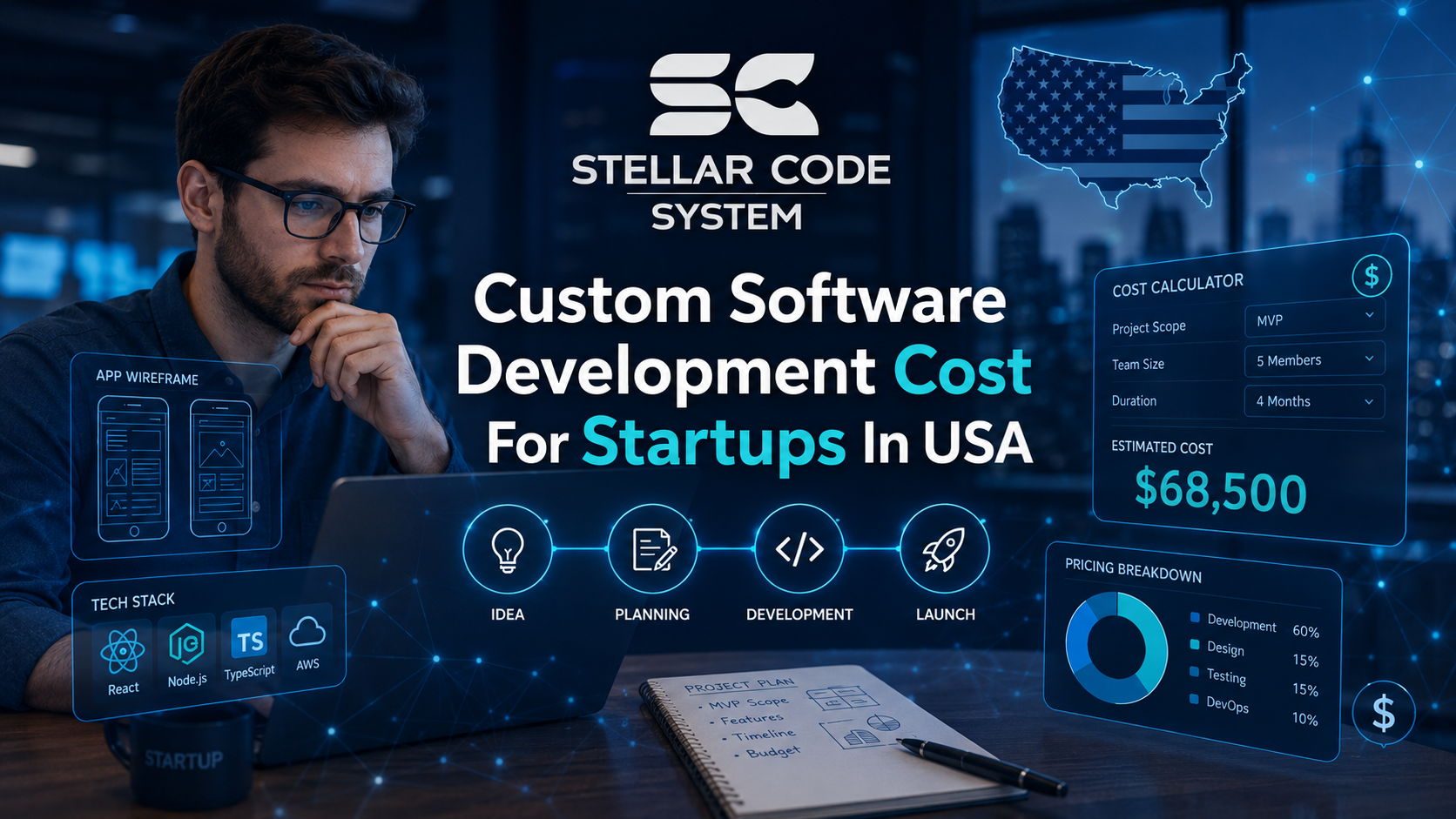
Custom Software Development Cost For Startups In Usa
Many founders begin planning a software product with one question: "How much will custom software development cost?" They compare an hourly rate, request a quotation, collect a few proposals, and expect the numbers to tell the whole story.
After working with startup teams across the USA and collaborating with remote engineering teams in Europe, Australia, and Canada, I've learned that software projects rarely become expensive because developers charge too much. They become expensive because the original assumptions behind the project scope, timeline, and technical decisions were incomplete.
I've seen founders carefully negotiate a development budget, only to spend significantly more six months later because the product needed architectural changes, additional integrations, or infrastructure that wasn't considered during the initial estimation.
The reality is that custom software development cost for startups in USA is influenced by dozens of technical and business decisions made long before the first feature reaches production. Understanding those decisions early helps avoid unnecessary expenses while building a product that can continue growing without constant rewrites.
Why This Problem Happens in Real Teams
Most startup teams don't intentionally overspend. They usually make reasonable decisions with limited information, tight deadlines, and pressure to launch quickly. The challenge is that software pricing is rarely based only on coding hours.
The MVP Often Expands Faster Than Expected
Nearly every startup begins with an MVP or a working prototype designed to validate an idea quickly. The original plan usually includes only the essential functionality needed for early users.
Then reality sets in.
Early customers request additional workflows.
Investors ask for reporting features.
Sales teams need administrative tools.
Product feedback changes priorities.
Before long, the original MVP starts evolving into a complete product, and every new requirement affects both the development effort and the overall project cost.
This is one of the biggest reasons early cost estimation becomes inaccurate. The software itself changes while the original budget stays the same.
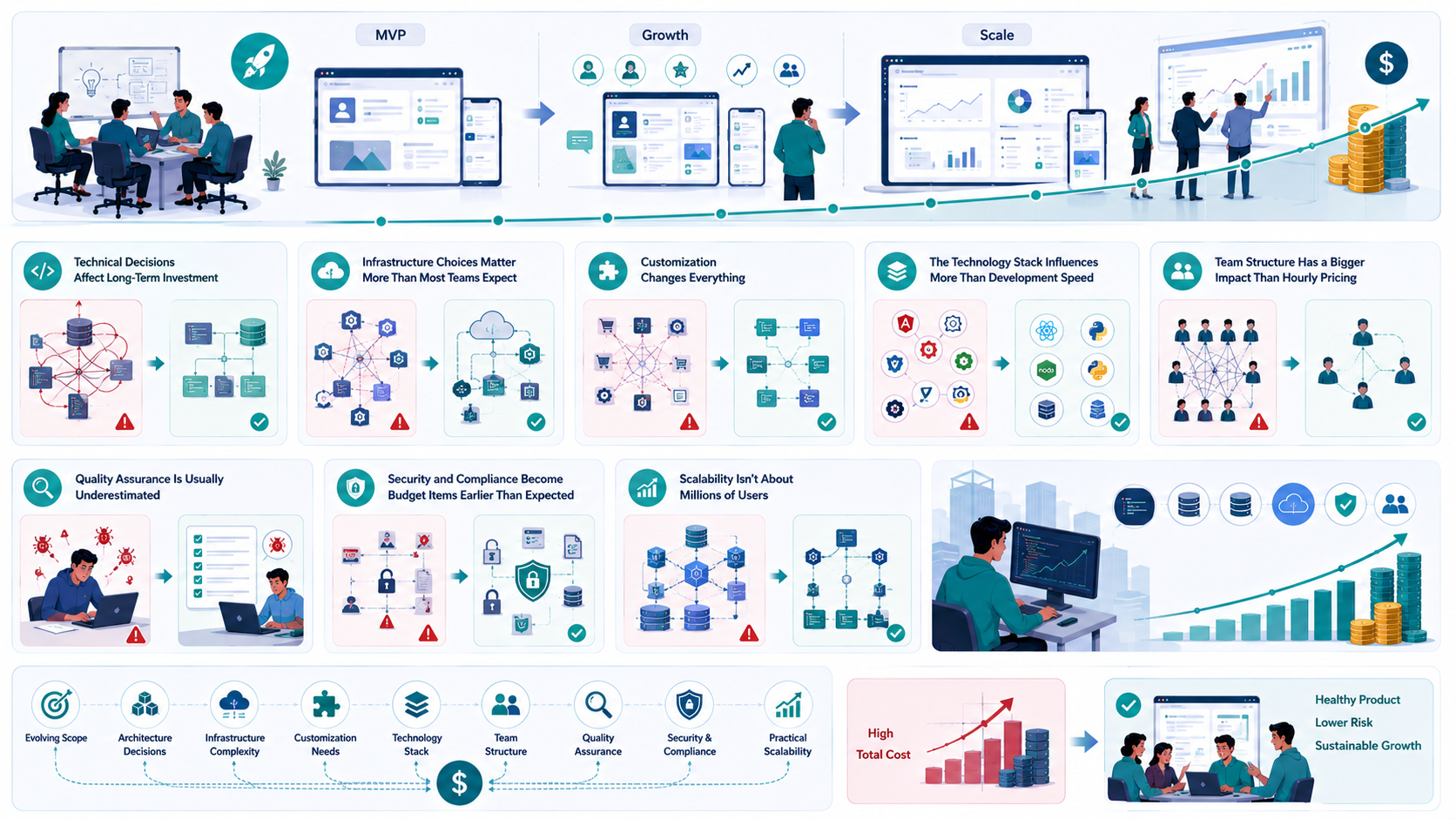
Technical Decisions Affect Long-Term Investment
Many founders evaluate proposals primarily by price.
Experienced engineering teams usually evaluate them differently.
A lower initial investment can become far more expensive if the underlying architecture creates maintenance problems later.
For example:
- Choosing a database that doesn't fit future data growth
- Building tightly coupled APIs that become difficult to modify
- Ignoring deployment automation during the first release
- Delaying security improvements until customers request compliance
None of these decisions appear expensive during development.
They become expensive after launch.
The true cost of software includes future engineering effort, not just the first delivery.
Infrastructure Choices Matter More Than Most Teams Expect
Modern startups rarely build software that exists on a single server.
Even a relatively simple SaaS application often includes:
- Cloud infrastructure
- Authentication services
- Storage systems
- API integration with third-party platforms
- Monitoring
- Backup strategies
- Deployment pipelines
Each component improves reliability, but every additional service also increases engineering complexity.
I've seen startups add cloud services simply because another company used them, without considering whether those services matched their actual product stage.
The result isn't just higher cloud bills.
It creates additional operational work for the development team, increasing both ongoing expenses and future maintenance.
Customization Changes Everything
Two startups may appear to build the same application.
Both want:
- User authentication
- Dashboards
- Billing
- Notifications
- Reporting
Yet their software budgets can differ dramatically.
Why?
Because customization introduces unique business logic that generic software doesn't provide.
Custom workflows often require:
- Specialized backend services
- Unique frontend interactions
- Complex approval systems
- Industry-specific compliance requirements
- Custom integrations
- Advanced reporting
These aren't reusable templates.
They're engineering problems that require careful design, testing, and long-term support.
The Technology Stack Influences More Than Development Speed
Founders sometimes ask whether one programming language is cheaper than another.
In practice, the technology stack affects much more than development velocity.
It influences:
- Hiring availability
- Future maintenance
- Deployment complexity
- Integration capabilities
- Performance optimization
- Long-term scalability
Selecting familiar technologies often reduces onboarding time for future developers.
Choosing unfamiliar or overly specialized technologies may increase both development costs and recruitment challenges later.
The stack should match the product's needs—not current industry trends.
Team Structure Has a Bigger Impact Than Hourly Pricing
One common misconception is that software cost depends almost entirely on developer salaries.
In reality, team organization often has a greater impact.
For example, a startup may hire:
- Dedicated developers
- A small cross-functional engineering team
- Independent specialists
- Existing internal engineers
Each model changes communication patterns, review cycles, and delivery speed.
I've worked with lean teams of five engineers that consistently outperformed projects involving more than fifteen developers because responsibilities were clearly defined and technical decisions were made quickly.
Adding more engineers doesn't always reduce the timeline.
Sometimes it simply increases coordination overhead.
Quality Assurance Is Usually Underestimated
Founders naturally focus on feature delivery.
Users focus on reliability.
Skipping proper quality assurance often appears to reduce development cost in the short term.
Later it creates:
- Production defects
- Emergency fixes
- Customer support requests
- Delayed releases
- Lost engineering time
Every production bug has its own hidden price.
Experienced teams invest in testing because fixing defects before release is almost always cheaper than repairing them afterward.
Security and Compliance Become Budget Items Earlier Than Expected
Many startup founders believe security and compliance are concerns for larger companies.
That assumption changes quickly after the first enterprise customer arrives.
Suddenly the product needs:
- Secure authentication
- Audit logs
- Encryption
- Access controls
- Data retention policies
These aren't optional improvements.
They're often contractual requirements.
Planning for them early reduces expensive architectural changes later.
Scalability Isn't About Millions of Users
One of the biggest misconceptions I see is that scalability only matters after a startup becomes successful.
In practice, scalability simply means your system can continue growing without constant rewrites.
That doesn't require enterprise architecture.
It requires thoughtful software architecture, clean APIs, modular services, and maintainable code.
Small engineering decisions made during the MVP stage often determine whether future features take days—or weeks—to implement.
When startups treat scalability as an engineering discipline instead of a marketing term, development becomes more predictable and long-term ROI improves.
Where Most Teams Make the Wrong Decision
When founders ask me why two development companies provide completely different pricing for the same project, my first response is usually, "They're probably estimating two different products."
On paper, the feature list looks identical.
In reality, every engineering team makes assumptions about architecture, deployment, testing, scalability, and future maintenance. Those assumptions directly affect the overall cost, even if they aren't obvious in the initial proposal.
Over the years, I've noticed the same mistakes appear repeatedly in startup projects.
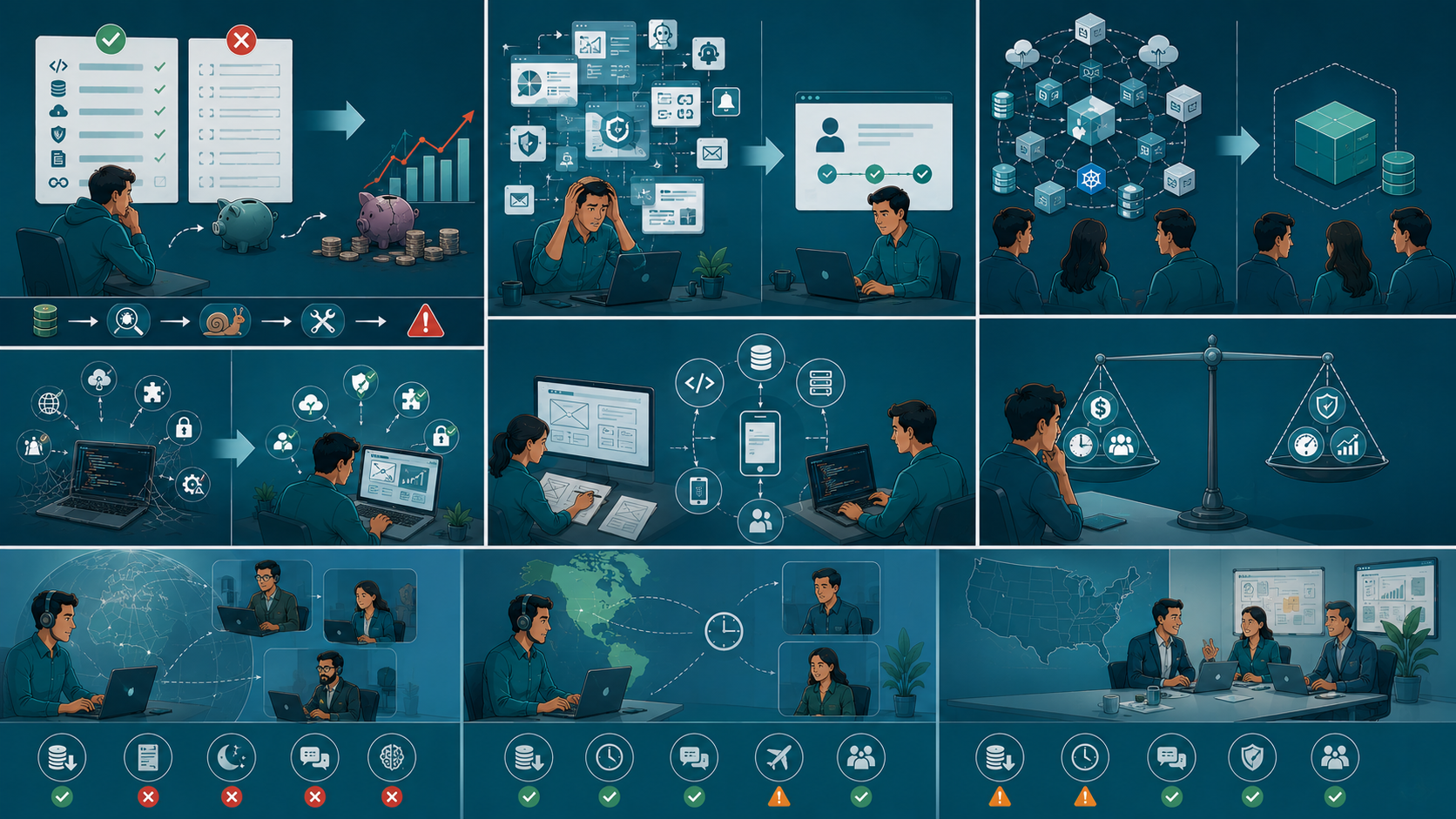
Mistake 1: Optimizing for the Lowest Price Instead of the Lowest Lifetime Cost
A lower quote feels like a safer financial decision.
Sometimes it is.
Often it isn't.
The cheapest proposal usually excludes work that becomes necessary later, such as:
- Automated testing
- Deployment automation
- Logging and monitoring
- Performance optimization
- Documentation
- Code reviews
These items don't immediately generate visible product features, so they're often removed to reduce the initial pricing.
The problem appears six months later.
The engineering team spends more time fixing problems than building new features, and the original savings disappear through additional maintenance, bug fixes, and slower releases.
The better question isn't:
"Which company has the lowest cost?"
It's:
"Which approach keeps engineering costs predictable over the next two years?"
Mistake 2: Treating Every Feature as Essential
Startups naturally want to impress investors and early customers.
The result is an expanding feature list.
I've reviewed project plans where the first release included:
- Advanced reporting
- Multi-role permissions
- Analytics dashboards
- AI features
- Automation workflows
- Enterprise administration
- Complex notification systems
None of these features were needed to validate the business idea.
Every additional feature increases:
- Engineering effort
- Testing time
- Deployment complexity
- Support requirements
- Future maintenance
Successful startup teams usually ask a different question:
"What is the smallest version customers will actually pay for?"
That mindset keeps the project scope realistic while protecting the overall budget.
Mistake 3: Copying Enterprise Architecture Too Early
This is one of the most common engineering mistakes I see.
A startup with three developers builds infrastructure designed for hundreds of engineers.
Suddenly the project includes:
- Multiple backend services
- Complex API gateways
- Distributed databases
- Event-driven messaging
- Container orchestration
- Advanced DevOps pipelines
All before the product has paying customers.
Enterprise architecture solves enterprise problems.
Small startups usually don't have enterprise problems.
They have product-market fit problems.
Every unnecessary architectural layer increases:
- Development time
- Debugging effort
- Deployment risk
- Infrastructure expenses
- Operational complexity
I've seen startups spend months maintaining architecture that delivered almost no business value.
Simple systems are often easier to improve than complicated systems that were built "just in case."
Mistake 4: Ignoring Future Support
Software doesn't stop evolving after launch.
Customers request improvements.
Browsers change.
Third-party APIs evolve.
Cloud providers introduce updates.
Without planning for ongoing support, startups eventually face technical debt that slows every release.
This is why experienced teams include long-term maintenance in their original planning instead of treating it as an unexpected expense.
Mistake 5: Underestimating UI/UX Work
Many founders estimate development effort based primarily on backend functionality.
In reality, UI/UX design often determines how much engineering work follows.
A small design adjustment can require changes across:
- Frontend components
- Backend validation
- Database models
- API contracts
- Mobile application screens
- Testing scenarios
Good interface planning reduces unnecessary rework throughout the project.
Poor interface planning usually creates repeated engineering cycles.
Mistake 6: Choosing Engagement Models Without Understanding the Trade-Offs
Another common mistake is assuming one hiring model is always cheaper.
In reality, different engagement models solve different problems.
Offshore Development
Works well when:
- Requirements are well documented.
- The startup has experienced technical leadership.
- Communication processes are already established.
Challenges:
- Time zone coordination
- Knowledge transfer
- Longer feedback loops
Nearshore Development
Often provides a balance between collaboration and affordability.
Teams typically benefit from:
- Similar working hours
- Faster communication
- Easier planning sessions
For startups with frequent product discussions, this can reduce project delays.
Onshore Development
Works well for products requiring:
- Frequent stakeholder meetings
- Strict regulatory oversight
- Close collaboration with business teams
The higher investment may be justified when communication speed has a significant impact on delivery.
None of these approaches is universally better.
The right choice depends on product complexity, internal leadership, and communication needs—not simply hourly pricing.
Practical Fixes That Actually Work
After seeing dozens of startup projects succeed and fail, I've found that controlling software costs has less to do with negotiating rates and more to do with improving engineering decisions. Working with a software product engineering company for US startups can help founders make better decisions about MVP scope, architecture, development priorities, quality assurance, infrastructure, and long-term product investment.
These practices consistently produce better outcomes.
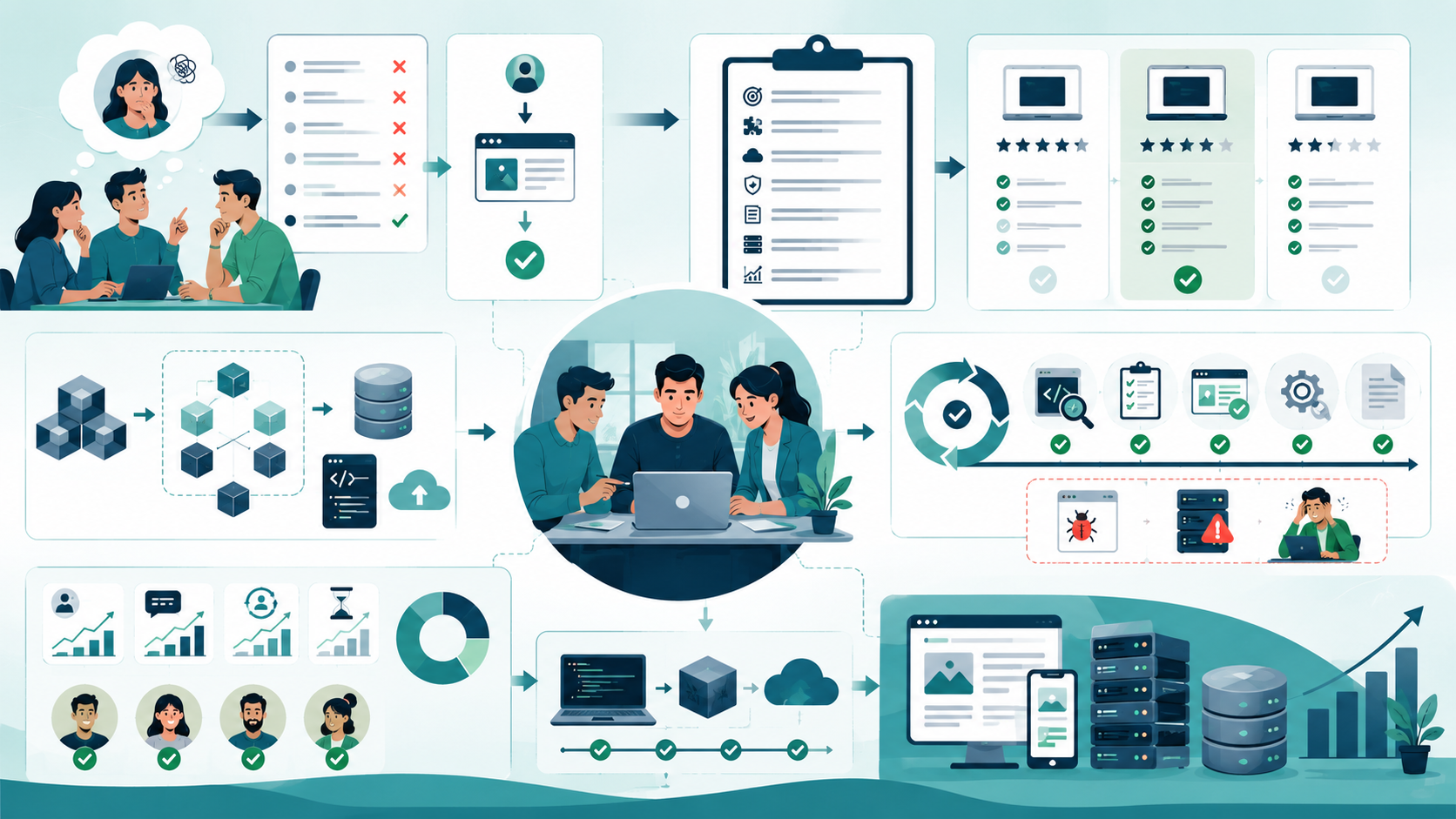
Start with Business Problems Instead of Feature Lists
Instead of asking:
"What should we build?"
Ask:
"What customer problem are we solving first?"
This keeps unnecessary features out of the initial release and makes cost estimation more accurate.
Keep the MVP Small
A focused MVP should answer one important business question.
For example:
Instead of building:
- Customer portal
- Admin portal
- Analytics
- Mobile application
- AI assistant
- Marketplace
Build:
- One workflow
- One customer type
- One measurable outcome
A smaller MVP reduces development risk while creating opportunities to learn from real users.
Define Technical Requirements Before Requesting Quotations
Many startups ask several vendors for pricing without providing enough technical detail.
The result is inconsistent quotations because every engineering team makes different assumptions.
A stronger project brief should include:
- Core business goals
- Required integrations
- Expected user volume
- Security requirements
- Compliance expectations
- Deployment preferences
- Success metrics
Better documentation leads to more accurate estimation and fewer surprises during development.
Invest in Architecture That Fits Today's Needs
Good architecture isn't the most advanced architecture.
It's the simplest architecture that can support the next stage of growth.
In many early-stage products, that means:
- A modular backend
- Well-defined APIs
- A clean database structure
- Simple deployment workflows
- Clear documentation
Complexity should be introduced only when real business requirements justify it.
Make Quality Assurance Part of Every Sprint
Waiting until the end of development to begin testing almost always increases project cost.
Instead:
- Review code continuously.
- Test new features immediately.
- Automate repetitive tests where practical.
- Validate API integrations before deployment.
- Document recurring issues.
Continuous quality assurance reduces emergency fixes and improves release confidence.
Monitor Resources Instead of Developer Hours
Many founders track how many hours developers spend coding.
Experienced product teams track how engineering resources create value.
Useful questions include:
- Which features generate customer adoption?
- Which workflows reduce support requests?
- Which improvements increase retention?
- Which tasks repeatedly delay releases?
Those answers help prioritize future development far better than timesheets alone.
Build for Sustainable Growth
Every startup hopes to scale.
The goal isn't to predict every future requirement.
The goal is to make future changes easier.
That means investing in:
- Clean software architecture
- Maintainable backend services
- Flexible frontend components
- Reliable deployment pipelines
- Well-designed database models
- Consistent engineering standards
These investments don't always reduce the first invoice.
They usually reduce the total cost of ownership over the life of the product.
When This Approach Fails
The practices I've described work well for most early-stage startups, but they aren't universal. As products mature, engineering priorities change.
One of the biggest mistakes founders make is assuming that an approach which worked for a five-person team will continue working after the company has dozens of engineers and multiple products.
Here are some situations where a lean engineering strategy begins to reach its limits.
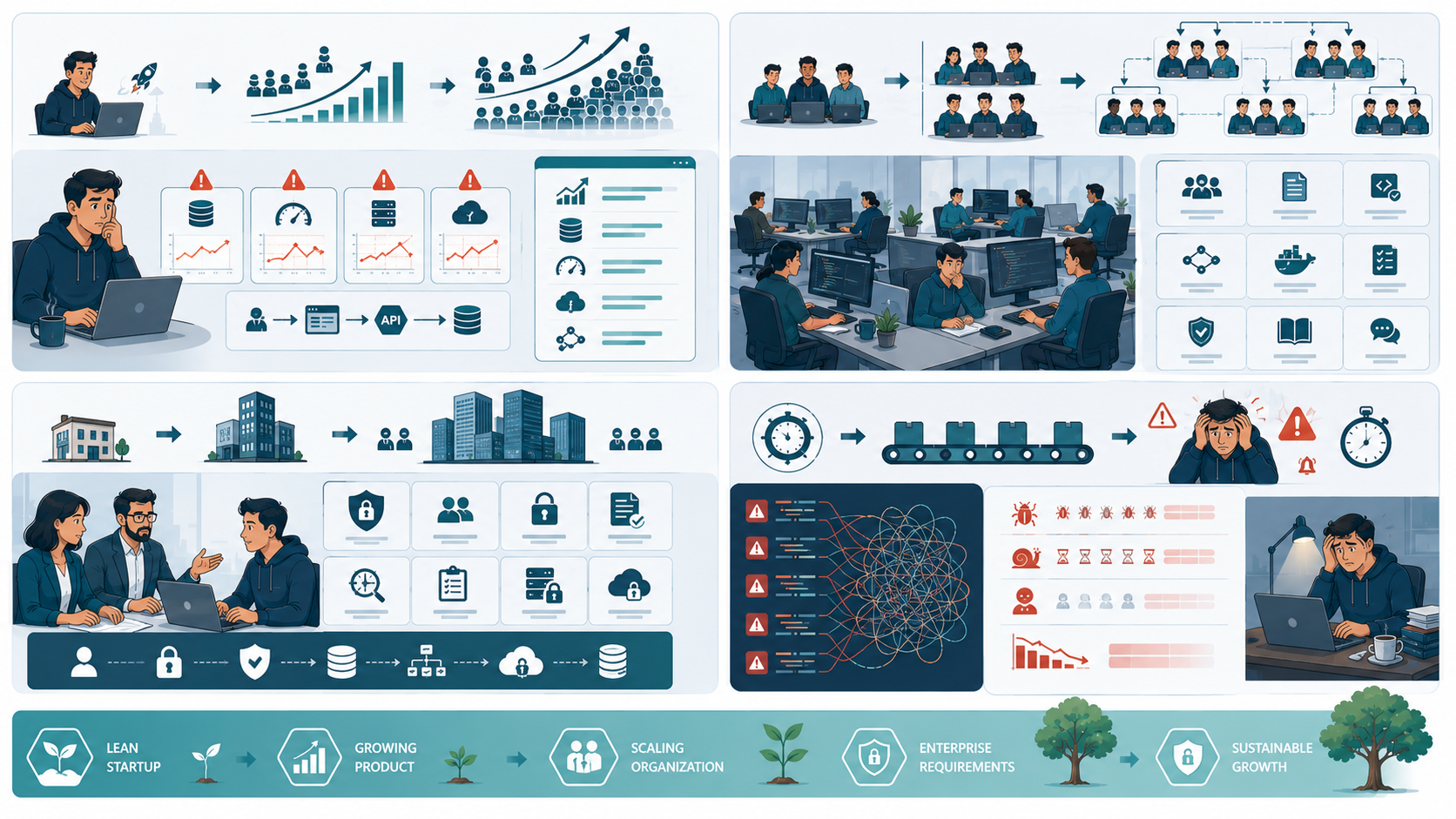
Rapid Customer Growth
A simple architecture is often the right decision for an early startup.
However, once a platform begins handling significantly higher traffic, the bottlenecks become more obvious.
Typical challenges include:
- Database performance limitations
- Longer API response times
- Increased deployment frequency
- Larger engineering teams working simultaneously
- Higher infrastructure utilization
At this point, investing in additional scalability is no longer premature—it's necessary.
Multiple Product Teams
A small engineering team can coordinate through conversations.
A larger organization cannot.
When several teams contribute to the same codebase, companies usually need:
- Clear ownership
- Better documentation
- Standardized deployment processes
- Stronger code review policies
- Shared engineering guidelines
Without those processes, development slows regardless of how experienced the developers are.
Enterprise Customers
Many startups eventually move into larger B2B markets.
Enterprise customers often require:
- Advanced security controls
- Formal compliance documentation
- Audit logging
- Role-based permissions
- Disaster recovery planning
These requirements naturally increase both engineering effort and ongoing operational costs.
They're not unnecessary expenses—they're part of selling software to larger organizations.
Aggressive Release Schedules
Fast releases are valuable.
Constant emergency releases are not.
I've seen startups promise new functionality every week without allowing time for:
- Refactoring
- Testing
- Documentation
- Performance improvements
Initially, development appears faster.
Eventually, technical debt accumulates to the point where every release becomes slower than the previous one.
Speed without engineering discipline rarely remains sustainable.
Sustainable Practices for Small Engineering Teams
After working with startup products for years, I've noticed that successful engineering teams aren't necessarily the fastest.
They're usually the most consistent.
Their software improves steadily because they focus on long-term maintainability rather than short-term speed.
Here are the practices that repeatedly produce better outcomes.
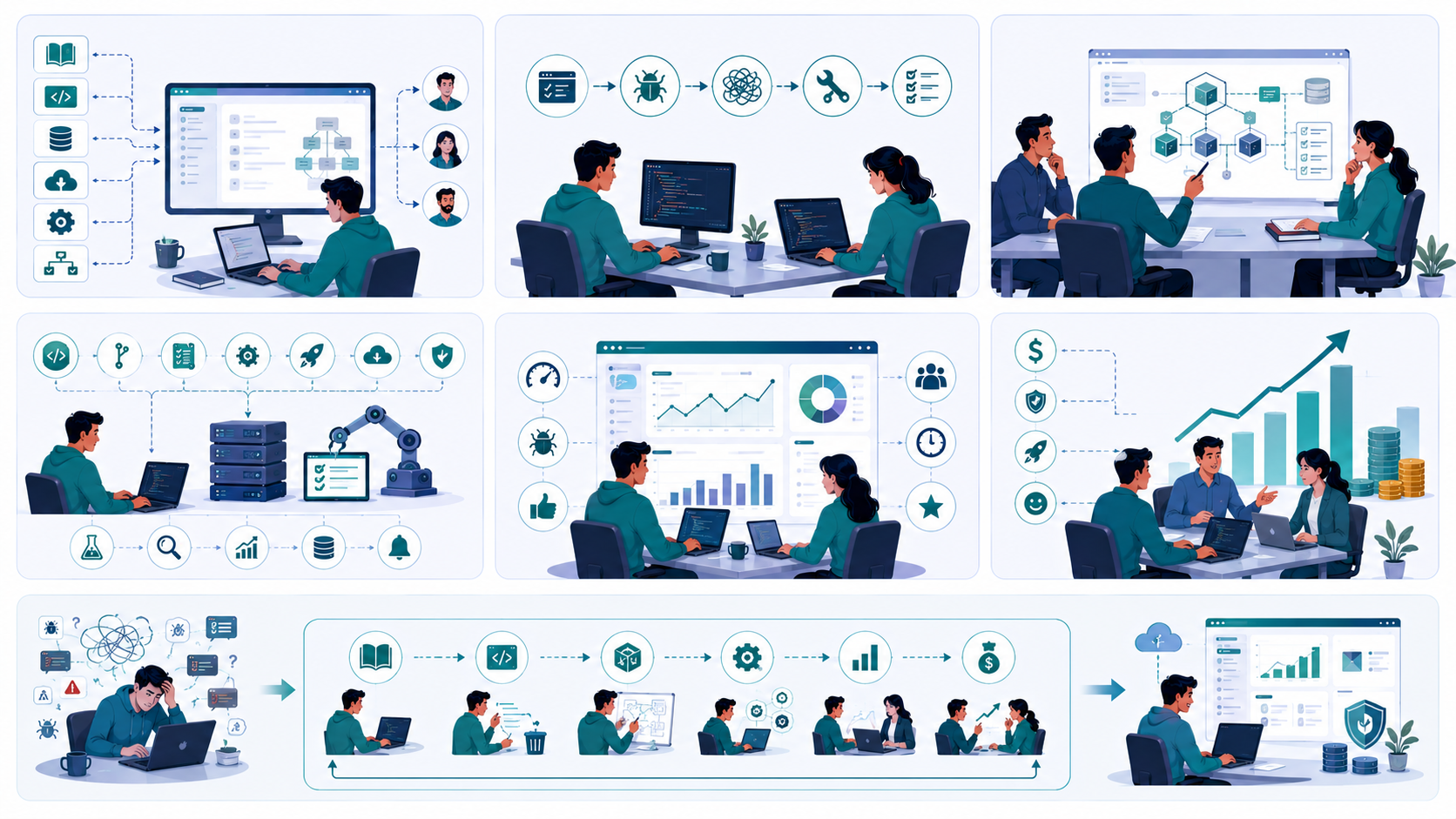
Keep Documentation Simple
Documentation doesn't need to become an internal encyclopedia.
It should simply answer questions that developers repeatedly ask.
Useful documentation includes:
- API behavior
- Deployment steps
- Database relationships
- Environment setup
- Business rules
- Integration workflows
Good documentation reduces onboarding time and minimizes repeated mistakes.
Schedule Time to Reduce Technical Debt
Every product accumulates technical debt.
The difference is whether teams manage it intentionally.
Reserve time during development cycles for:
- Code cleanup
- Removing duplicate logic
- Updating dependencies
- Simplifying services
- Improving tests
Waiting until the codebase becomes difficult to maintain usually costs much more.
Review Architecture Regularly
Architecture should evolve alongside the product.
Every few months, ask questions like:
- Does this service still belong here?
- Are these APIs still appropriate?
- Is the database structure helping or slowing development?
- Which components create unnecessary complexity?
Architecture reviews are often less expensive than major rewrites.
Automate Repetitive Work
Developers should spend time solving product problems—not repeating manual tasks.
Automation can simplify:
- Testing
- Deployments
- Backups
- Code quality checks
- Monitoring
- Build validation
Even small improvements save hundreds of engineering hours over the life of a project.
Measure Engineering Outcomes Instead of Activity
Healthy engineering teams don't judge productivity by lines of code or hours worked.
Instead, they ask:
- Are releases becoming more reliable?
- Is customer feedback improving?
- Are fewer production issues occurring?
- Is onboarding easier for new developers?
- Can new features be delivered without major rewrites?
Those indicators reflect engineering health much better than raw development metrics.
Think About ROI Beyond the First Release
Every engineering decision should improve long-term ROI, not just reduce today's invoice.
Sometimes spending slightly more during development leads to:
- Lower maintenance costs
- Fewer production issues
- Faster future releases
- Better developer productivity
- Improved product stability
The objective isn't building the cheapest software.
It's building software that remains affordable to improve over time.
Conclusion
When founders ask about custom software development cost for startups in USA, they're usually expecting a number.
In reality, there isn't a single number that applies to every product.
The overall cost depends on far more than developer rates. Your project scope, engineering decisions, infrastructure, deployment strategy, testing process, security requirements, and long-term maintenance all influence the final investment.
The startups that control costs most effectively aren't always the ones with the lowest initial quotations.
They're the ones that make deliberate technical decisions, keep their MVP focused, avoid unnecessary complexity, and continuously improve their codebase instead of repeatedly rebuilding it.
Software development isn't just about reducing the first invoice.
It's about making thousands of engineering decisions that keep future development predictable, maintainable, and aligned with the product's growth.
A thoughtful approach today often saves far more than aggressive cost-cutting ever will.
Custom Software Development Cost For Startups In Usa: FAQs
There isn't a universal number. The required budget depends on the project's scope, feature complexity, integrations, security requirements, team structure, and long-term product goals. A focused MVP generally requires a much smaller investment than a feature-rich production platform.
Most estimates are based on the information available at the beginning. As founders refine requirements, add features, or change priorities based on user feedback, development effort increases. Keeping the project scope stable leads to more accurate estimates.
A fixed-price model works well when requirements are clearly defined and unlikely to change. If the product is still evolving, a flexible engagement model often allows engineering teams to respond to new information without constant contract revisions.
Not necessarily. Lower hourly rates can sometimes result in higher long-term expenses if code quality, documentation, testing, or maintainability are compromised. The total cost of ownership is usually more important than the initial development price.
The most effective approach is to build a focused MVP, define requirements clearly, prioritize maintainable architecture, invest in quality assurance, automate repetitive workflows, and review technical debt regularly. These practices reduce unnecessary rework and make future development more predictable.
Reference
Written by

Paras Dabhi
VerifiedFull-Stack Developer (Python/Django, React, Node.js)
I build scalable web apps and SaaS products with Django REST, React/Next.js, and Node.js — clean architecture, performance, and production-ready delivery.
LinkedIn