Custom Software Development Vs SaaS Solutions
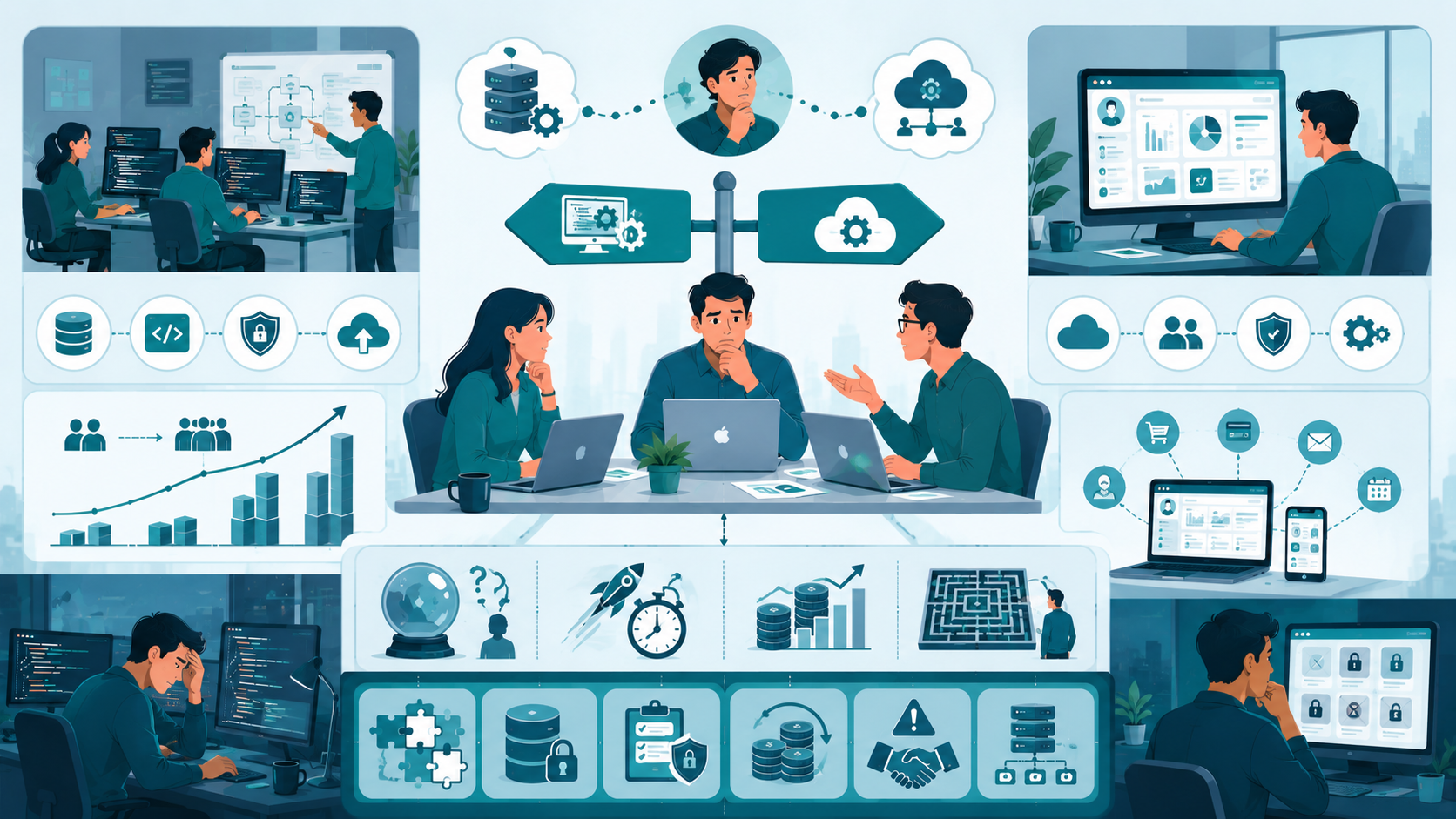
One of the most common decisions startup teams face is whether to build a custom software platform or adopt a SaaS platform.
At first, the choice seems straightforward. SaaS products offer fast deployment, lower upfront development costs, and minimal infrastructure management. Custom software offers flexibility, ownership, and deeper alignment with business requirements.
The problem is that many teams make this decision based on short-term convenience rather than long-term operational realities.
I've seen startups spend months building software that could have been handled by an existing software solution. I've also seen companies become trapped inside SaaS products that could no longer support their business processes, integrations, or growth requirements.
The challenge isn't deciding which option is better. The challenge is understanding which option fits the current stage of the business.
Why This Problem Happens in Real Teams
Most startup teams operate under significant time pressure.
Founders want faster implementation. Product teams want to launch features quickly. Engineering teams are expected to support growth while managing limited resources.
Under these conditions, the decision often becomes:
- Build quickly with SaaS
- Build everything internally with custom software
Unfortunately, neither extreme works well in every situation.
Several factors usually contribute to poor decisions:
Limited Visibility Into Future Requirements
Business requirements often change as products grow and customer expectations evolve. A workflow that works during the early stages may become inefficient at scale. Teams frequently underestimate future customization needs, leading to limitations that require significant changes later.
A workflow that works for ten customers may become problematic at one hundred customers.
Many organizations underestimate how much customization they will eventually require.
Focus on Immediate Delivery
Many startups prioritize rapid deployment to accelerate time-to-market. While this helps launch products quickly, it can cause teams to overlook future integration requirements, compliance needs, and long-term maintenance considerations. These trade-offs often create challenges as the product matures.
Teams often optimize for short-term deployment speed without considering:
- Future integration needs
- Data control requirements
- Compliance obligations
- Long-term maintenance costs
This creates challenges later when the software must evolve.
Misunderstanding Total Ownership Costs
Comparing SaaS subscriptions with custom development expenses can be misleading when only upfront costs are considered. Long-term factors such as licensing, support, maintenance, and vendor dependency significantly impact overall spending. A broader evaluation often reveals a different financial picture over time.
The comparison is incomplete.
The real evaluation should include:
- Subscription expenses
- Licensing fees
- Internal support effort
- Integration maintenance
- Vendor dependency risks
- Long-term scalability requirements
The total cost of ownership often looks very different after several years.
Lack of Architecture Planning
Early software architecture decisions can have lasting effects on scalability and maintainability. Without considering future growth, teams may choose infrastructure and system designs that become difficult and expensive to modify. Careful planning helps avoid costly architectural changes later.
Without understanding future growth patterns, teams frequently make infrastructure choices that become difficult to reverse.
Where Most Teams Make the Wrong Decision
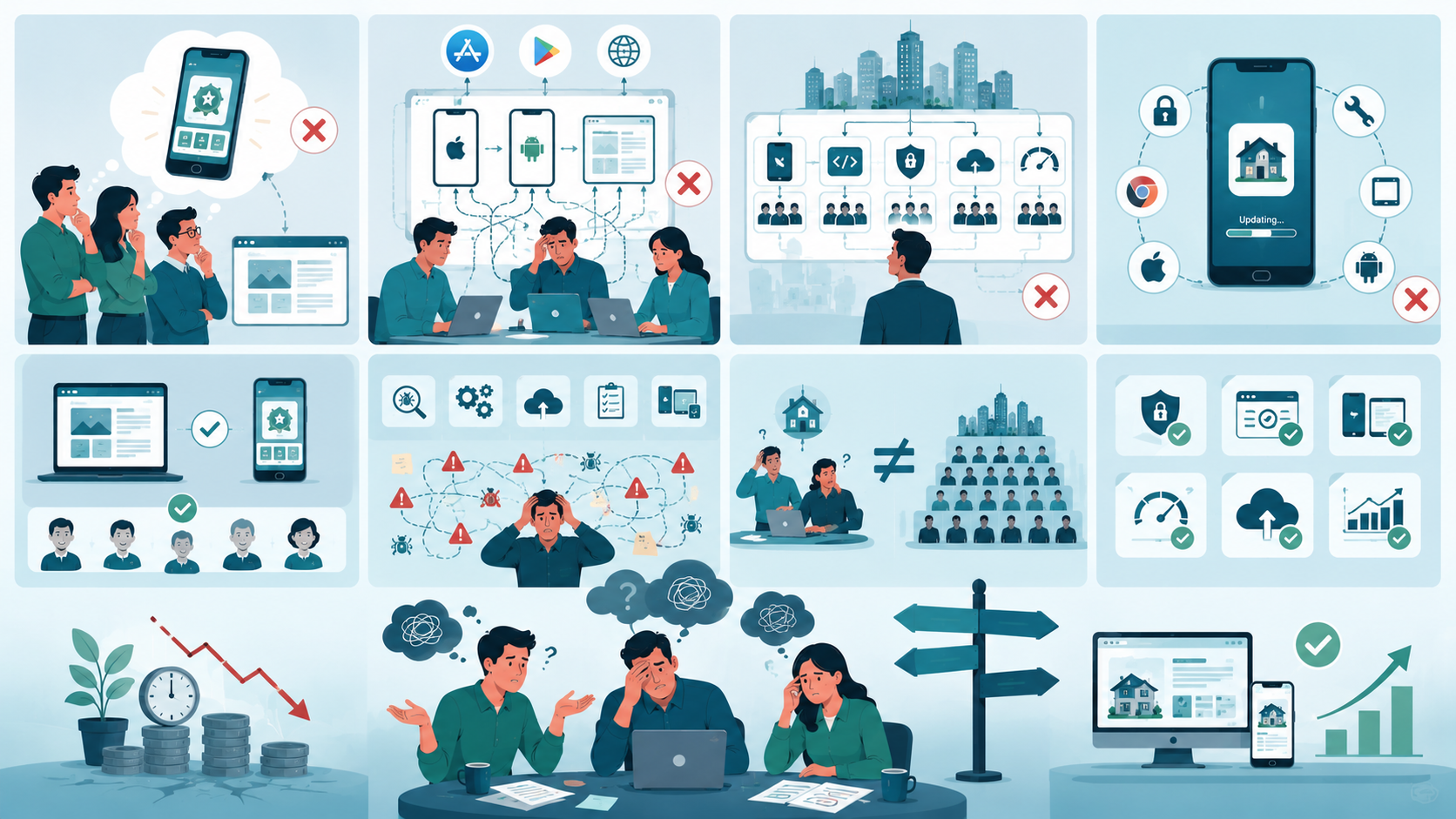
The biggest mistake I see is assuming one approach solves every problem.
Assuming SaaS Always Saves Money
SaaS platforms often look cost-effective during the early stages of a business. However, expenses can increase significantly as teams add users, require advanced features, or need deeper integrations. Over time, recurring subscription costs may exceed the investment required for a custom solution.
However, costs increase when organizations require:
- Additional users
- Advanced security controls
- Enterprise software features
- API integration capabilities
- Compliance requirements
- Custom workflows
As usage grows, subscription costs can become substantial.
In several projects, annual SaaS spending eventually exceeded the cost of developing internal systems.
Building Custom Software Too Early
Many startups begin building internal tools before confirming whether existing solutions can meet their needs. This approach often consumes valuable development resources and delays product delivery. Custom software creates the most value when it solves a unique business challenge rather than replicating common functionality.
I've seen startup teams build:
- CRM systems
- Internal reporting platforms
- Project management tools
- Customer support portals
before validating whether existing software solutions could meet their needs.
This often leads to:
- Longer development timelines
- Delayed product launches
- Increased maintenance responsibilities
- Resource allocation problems
Custom software should solve a genuine business problem, not recreate existing products.
Copying Enterprise Decisions
Many startups begin building internal tools before confirming whether existing solutions can meet their needs. This approach often consumes valuable development resources and delays product delivery. Custom software creates the most value when it solves a unique business challenge rather than replicating common functionality.
- Specialized workflows
- Unique compliance controls
- Proprietary operational processes
Small engineering teams frequently copy these decisions too early.
The result is increased complexity without meaningful business value.
Ignoring Vendor Lock-In Risks
Relying heavily on a single SaaS provider can create long-term operational challenges. As business processes become deeply integrated with a platform, switching providers becomes more difficult and expensive. Evaluating data portability and integration flexibility early helps reduce future risks.
When critical business processes become deeply connected to a third-party software provider, migration becomes difficult.
Common issues include:
- Proprietary data formats
- Limited export options
- API restrictions
- Pricing changes
- Product roadmap changes
Data control becomes increasingly important as businesses grow.

Practical Fixes That Actually Work
The most successful teams evaluate the decision using practical business criteria rather than industry trends.
Start With Process Complexity
The first step is understanding how complex your business workflows actually are. Working with a custom software partner for US business workflows helps businesses decide whether SaaS is enough or custom development is needed for integrations, data ownership, workflow control, and long-term scalability.
Ask a simple question:
Can existing SaaS products support at least 80% of the required workflow?
If the answer is yes, SaaS is often the better choice.
If the answer is no, custom software may provide greater long-term value.
Evaluate Integration Requirements Early
Integration needs can significantly influence the success of a software strategy. Organizations should assess how new systems will connect with existing applications, data sources, and workflows. Early evaluation helps prevent costly integration challenges and operational inefficiencies later.
Review:
- API integration requirements
- Existing backend systems
- External platforms
- Reporting workflows
- Data synchronization needs
If integration becomes excessively complex, custom development may simplify operations.
Calculate Multi-Year Costs
Software decisions should be evaluated beyond initial implementation expenses. Comparing projected costs over several years provides a clearer picture of long-term financial impact. This approach helps organizations avoid decisions that appear affordable today but become expensive over time.
Compare:
SaaS Costs
SaaS expenses extend beyond monthly subscription fees. Organizations may also incur costs related to licensing, integrations, premium features, and vendor support services. Understanding these recurring expenses is essential when estimating long-term software investments.
- Subscription fees
- Licensing expenses
- Integration work
- Vendor support costs
Custom Software Costs
Custom software requires upfront development investment along with ongoing operational expenses. Infrastructure management, maintenance, technical support, and security updates contribute to the total cost over time. These factors should be included when evaluating long-term viability.
- Initial development
- Infrastructure expenses
- Ongoing maintenance
- Technical support
- Security updates
Looking three to five years ahead often changes the decision.
Separate Core and Non-Core Functions
Not every business system needs to be custom-built. Standard operational functions can often be handled effectively through SaaS products, while custom development should focus on areas that differentiate the business. This approach improves efficiency and reduces unnecessary engineering effort.
One approach that works well is dividing systems into categories.
Use SaaS for:
- Email systems
- Accounting software
- HR platforms
- Collaboration tools
Build custom software for:
- Competitive differentiators
- Unique customer workflows
- Specialized business processes
- Proprietary operational systems
This reduces unnecessary development effort.
Prioritize Data Ownership
Data becomes increasingly valuable as organizations grow and accumulate operational knowledge. Before adopting a SaaS platform, businesses should understand how data can be accessed, exported, and protected. Strong ownership and portability options help reduce future migration and compliance risks.
Before adopting any SaaS platform, review:
- Data export capabilities
- Backup options
- Privacy controls
- Compliance support
Ownership becomes increasingly important as data volume grows.

When This Approach Fails
Neither SaaS nor custom software works perfectly in every scenario.
SaaS Limitations
SaaS platforms work well for many organizations, but they are not ideal for every scenario. Businesses with highly specialized workflows, strict regulatory requirements, or extensive customization needs may eventually encounter platform limitations. As complexity increases, flexibility often becomes a significant constraint.
SaaS platforms may struggle when organizations require:
- Extensive customization
- Complex workflows
- Strict compliance standards
- Unique software architecture requirements
At some point, flexibility becomes limited.
Custom Development Limitations
Custom software provides greater control and flexibility, but it also increases operational responsibility. Teams must manage infrastructure, security, maintenance, and ongoing performance improvements. For smaller engineering teams, these responsibilities can consume resources that would otherwise support product development.
Teams must manage:
- Infrastructure
- Security
- Maintenance
- Reliability
- Performance optimization
Small development teams may struggle to support these responsibilities effectively.
Scaling Challenges
Both SaaS platforms and custom software face challenges as businesses grow. Custom systems may accumulate technical debt, while SaaS products can become restrictive as operational complexity increases. Regularly reassessing software decisions helps ensure systems continue supporting business scalability.
Budget Constraints
Custom development often requires substantial upfront investment in engineering resources and infrastructure. For early-stage startups, these costs may be difficult to justify before achieving product-market fit. In many cases, SaaS solutions provide a more practical path until business requirements become clearer.

Sustainable Practices for Small Engineering Teams
Regardless of the approach selected, several practices consistently improve outcomes.
Reduce Technical Debt Continuously
Technical debt grows over time if it is not addressed regularly. Setting aside time for refactoring, dependency updates, and architecture improvements helps maintain system quality and stability. Small, consistent improvements are usually more effective than large-scale cleanup projects.
Schedule recurring work for:
- Refactoring
- Architecture cleanup
- Dependency updates
- Performance improvements
- Security reviews
Small improvements prevent larger problems.
Maintain Clear Documentation
Good documentation helps teams understand and manage software more effectively throughout its lifecycle. Recording architecture decisions, deployment processes, and integration details reduces confusion and improves collaboration. Clear documentation also lowers operational risks when teams grow or change.
Document:
- Software architecture decisions
- Integration dependencies
- Deployment procedures
- Security controls
- Business logic
This reduces operational risk.
Keep Deployment Workflows Simple
Complex deployment processes often increase the likelihood of errors and delays. Standardized workflows, automated testing, and reliable rollback procedures help teams release changes with confidence. Simpler deployment practices improve system reliability and development efficiency.
Focus on:
- Automated testing
- Consistent deployment workflows
- Rollback procedures
- Monitoring systems
Reliability improves when deployment remains predictable.
Review Technology Choices Regularly
Technology decisions should be reviewed periodically as business needs evolve. A solution that works well today may become a limitation as products and teams grow. Regular evaluations help identify performance issues, scalability concerns, and opportunities for improvement before they become major problems.
Avoid assuming today's solution will remain ideal indefinitely.
Periodic reviews help identify:
- Performance issues
- Infrastructure limitations
- Integration challenges
- Scalability concerns
Protect Team Capacity
Sustainable engineering teams balance feature development with maintenance and operational responsibilities. Overloading developers with constant support tasks can reduce productivity and increase burnout. Protecting team capacity helps maintain delivery speed, software quality, and long-term project stability.
Balance resources across:
- Feature development
- Infrastructure maintenance
- Technical support
- Optimization work
Sustainable development requires protecting engineering capacity.
Conclusion
The debate between custom software development and SaaS solutions is often framed as a technology decision.
In practice, it is usually a business decision.
SaaS platforms provide speed, lower initial investment, and operational simplicity. Custom software provides ownership, flexibility, deeper customization, and stronger alignment with unique business requirements.
The biggest mistake teams make is choosing either option based on assumptions rather than actual operational needs.
The most successful organizations evaluate their workflows, integration requirements, scalability expectations, and long-term ownership costs before making the decision.
Neither approach is universally correct. The right choice depends on the complexity of the problem being solved.
Custom Software Development vs SaaS Solutions: FAQs
Not necessarily. SaaS often reduces initial costs, but long-term subscription, licensing, and integration expenses can eventually exceed custom development costs.
Usually when the business depends on unique workflows, competitive differentiation, or specialized operational requirements that existing SaaS products cannot support effectively.
Vendor dependency. Pricing changes, feature limitations, API restrictions, and data portability issues can become significant challenges over time.
Yes, if the system remains focused, well-documented, and aligned with actual business needs. Complexity often creates more problems than team size.
The best approach is evaluating business processes, integration requirements, scalability goals, compliance needs, and total cost of ownership over multiple years rather than focusing only on upfront expenses.
Reference
Written by

Paras Dabhi
VerifiedFull-Stack Developer (Python/Django, React, Node.js)
I build scalable web apps and SaaS products with Django REST, React/Next.js, and Node.js — clean architecture, performance, and production-ready delivery.
LinkedIn