
Hidden Costs In Software Development Projects
The feature list is still the same, but by sprint three the budget is already off track.
I’ve seen this happen in small teams more times than founders expect. Nobody added a big new feature, yet burn keeps increasing, timelines slip, and suddenly the team starts discussing compromises.
In most cases, the issue is not developer rates. It’s the hidden costs in software development projects that were never estimated as part of real delivery.

Why These Hidden Costs Actually Happen
The biggest reason budgets drift is simple: teams usually estimate visible work, not the full system required to ship it.
A feature sounds small during planning because everyone sees the UI or API outcome. But once development starts, invisible layers begin to appear.
The most common hidden cost areas I’ve seen are:
- Vague feature behavior at sprint start
- Repeated revisions after founder feedback
- Regression testing after small changes
- Deployment pipeline fixes
- Cloud configuration changes
- Third-party API edge cases
- Admin-side workflow updates
- Reporting and analytics requests
- Permission logic between user roles
A dashboard filter, for example, may look like a 4-hour task. In reality it often touches backend query optimization, export logic, caching, permission checks, QA across roles, and analytics event tracking.
That’s where unexpected software project costs quietly stack up.
In small teams, budget pressure makes this worse. People rush estimates to keep momentum, especially in early-stage startups where speed feels more important than precision.
The result is optimistic sprint planning that ignores the actual cost of safe delivery.

What Hidden Costs Are Most Often Missed In Software Development Projects?
The most expensive part of a software feature is often not the feature itself.
What teams usually miss is the supporting delivery work required to make that feature stable, secure, testable, and production-ready. In small development teams, sprint estimates are often based only on visible coding effort, while the hidden engineering layers are ignored until they start slowing the release.
The most commonly missed hidden costs I’ve seen in real projects include:
- QA and regression testing
- Deployment and rollback preparation
- Third-party API retry logic
- Role-based permission checks
- Reporting and export workflows
- Analytics event tracking
- Admin-side operational tools
- Post-release hotfixes
- Monitoring and logging improvements
- Dependency and security updates
A simple feature like adding a payment workflow is a good example. At first, it may look like a 20-hour task: payment API integration, checkout UI, and success callback.
But once the real production workflow starts, hidden costs begin to appear: failed payment retry handling, webhook mismatch issues, refund admin workflows, timeout edge cases, duplicate transaction prevention, QA across user roles, finance reporting exports, and production alerting, which is exactly where Software Testing becomes important for reducing avoidable rework and preventing small release issues from turning into expensive budget leaks.
That same feature can realistically become 35–40 hours of delivery work, even though the original scope technically stayed the same.
This is exactly why hidden costs in software development projects break small team budgets.
In most startups, these costs are missed because the team estimates the happy path only. The real cost usually lives in failure states, edge cases, deployment safety, and the first week after release.
The practical lesson is simple: if the estimate does not include testing, permissions, reporting, and release stabilization, it is not a real project estimate yet.
Read More → Why Choose Small Software Teams In Ahmedabad

Where Most Teams Get Budgeting Wrong
The most expensive mistake is treating coding hours as the full project cost.
I’ve seen teams estimate 40 hours for a feature because that’s how long the build part takes. But the real delivery effort is often closer to 60–70 hours once the surrounding work shows up.
The usual budgeting mistakes are:
- Ignoring QA and regression effort
- Assuming integrations are straightforward
- Not pricing founder review cycles
- Forgetting deployment hardening
- Skipping staging environment fixes
- Leaving monitoring out of sprint estimates
- Pushing architecture decisions until scaling problems happen
In most startups, internal reporting becomes one of the biggest hidden budget leaks.
It starts as: Just give us a quick dashboard. Then it expands into filters, CSV export, access control, date ranges, performance tuning, and edge-case bug fixing.
I’ve seen this single workflow quietly become a second project.
Another common issue is post-release stabilization. Teams plan for development done, but the first 1–2 weeks after release usually include user-reported bugs, log analysis, hotfix deployment, data cleanup, retry logic issues, and API timeout handling.
These costs are real, but many founders never see them in the original estimate.
That’s why software budgets increase even without scope change.
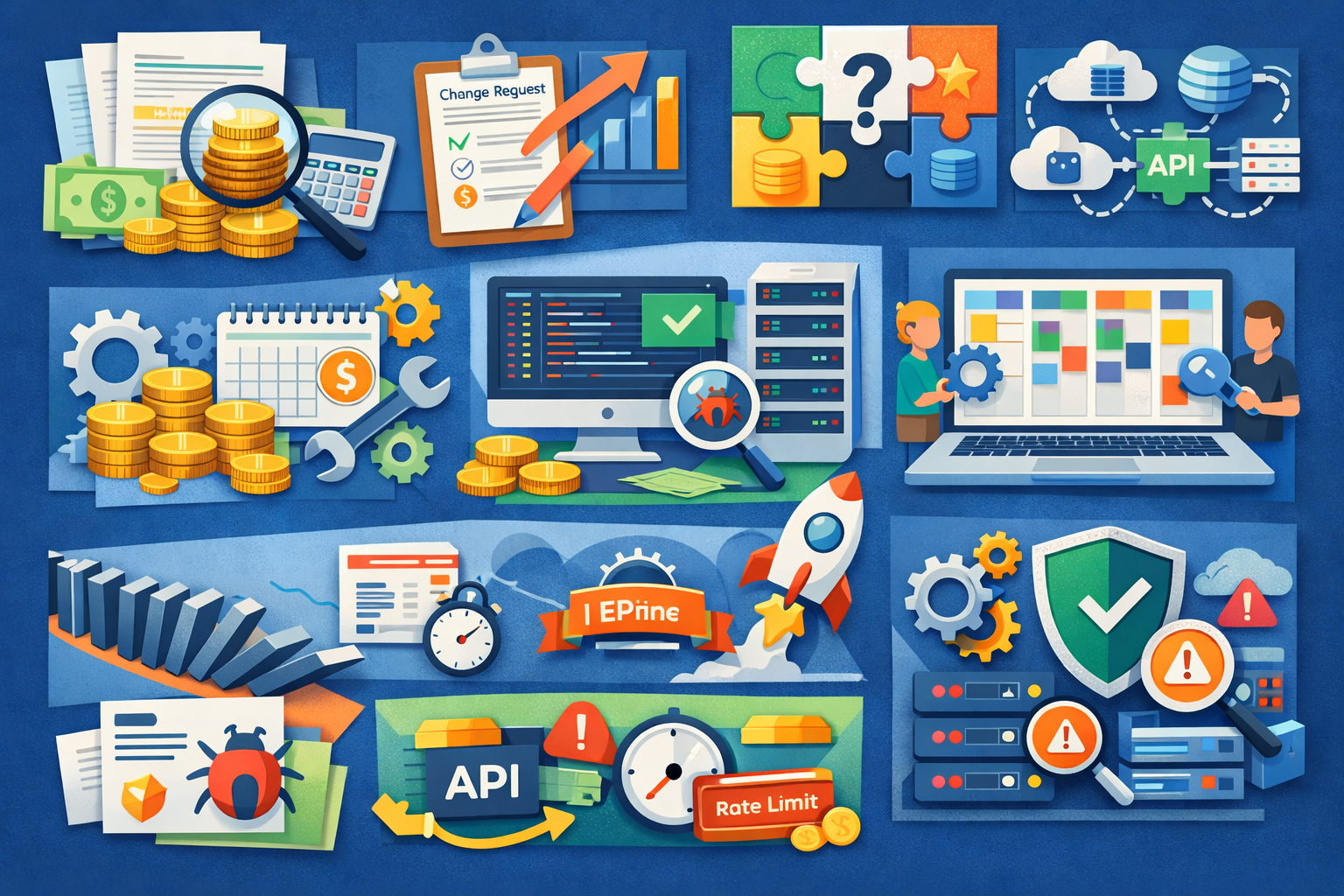
Practical Ways To Prevent Budget Leaks Early
The fix is not bigger teams. It’s better visibility into the full delivery workflow.
1. Break Estimates Into Hidden Cost Layers
Most budget overruns happen because teams estimate the feature outcome, not the full delivery path. Breaking work into QA, deployment, permissions, and support layers exposes the real effort early.
I’ve seen this simple shift turn unrealistic sprint promises into predictable delivery plans.
Instead of one combined feature estimate, split it into feature implementation, QA and regression, infrastructure and deployment, analytics and logs, admin workflow changes, role-based permission updates, and release support fixes.
This instantly exposes invisible work. A 30-hour feature often becomes a more honest 45-hour delivery plan.
2. Track Change-Request Cost Separately
Small founder changes rarely stay small once they hit testing, approvals, and deployment workflows. A minor update in UI behavior can quietly trigger backend, QA, and release work.
Tracking these requests separately helps teams understand where software budgets actually drift.
Small founder requests feel harmless: change button behavior, adjust workflow order, add one export field, or update email notifications.
But these changes create chain reactions. I’ve seen 15-minute requests consume 6–8 hours after testing, review, and release.
Track these separately so the budget reflects real drift instead of mysterious overruns.
3. Budget For Unknown Integrations
Third-party APIs are where hidden costs in software development projects often explode unexpectedly. Documentation may look clean, but production issues like token refresh, rate limits, and webhook retries add real engineering time.
A contingency buffer here prevents integration surprises from breaking the sprint budget, which is why many startups prefer working with an affordable software development company in Ahmedabad that can plan for real-world delivery risks without pushing the project into avoidable cost overruns.
What looks easy on docs often becomes expensive because of poor API consistency, auth token expiry issues, rate limits, webhook failures, and sandbox vs production mismatches.
For active client projects, I usually keep 15–20% contingency for integrations alone. That buffer saves uncomfortable budget conversations later.
4. Price Maintenance From Day One
A project is never truly complete at the first release. Logs, monitoring, dependency updates, and early production bug fixes are part of responsible delivery.
Pricing maintenance from day one prevents post-launch work from becoming an invisible budget leak.
Always reserve budget for logging improvements, monitoring alerts, dependency updates, incident fixes, failed background jobs, and security patching.
Maintenance is not future optional work. It is part of shipping responsibly.

When This Budgeting Approach Does NOT Work
Even strong estimation frameworks have limits.
I’ve seen this approach still fail in situations where the business itself is unstable.
Examples include:
- Fast startup pivots every sprint
- AI products with prompt experimentation
- Unclear user behavior assumptions
- Compliance-heavy fintech workflows
- Marketplace products with many user roles
- Enterprise legacy integrations
In these cases, some uncertainty is unavoidable.
If the product direction changes every two weeks, no estimation method will fully prevent cost overruns in development projects.
The goal here is not perfect forecasting.
It’s reducing preventable budget leakage.
Best Practices For Small Development Teams
For teams of 2–10 developers, budgeting discipline matters more than complex planning systems.
The practices that consistently work are:
- Estimate by workflow, not by screens
- Include bug stabilization in every sprint
- Review budget drift every 2 weeks
- Isolate risky modules early
- Document technical assumptions before approval
- Reuse internal modules for auth, reporting, and notifications
- Separate MVP shortcuts from long-term architecture decisions
One lesson I’ve learned the hard way: optimistic estimates are rarely helpful. Clarity beats confidence.
A realistic 6-week plan is far cheaper than a 4-week promise that creates rework, founder frustration, and rushed technical debt.
Small teams stay efficient when they budget the entire delivery system, not just the build phase.
Conclusion
Hidden costs rarely come from expensive developers.
They usually come from invisible complexity, rushed assumptions, unclear workflows, and work that nobody priced because it didn’t look like feature development.
I’ve seen small teams stay on budget not by working faster, but by making hidden work visible early.
The real fix is estimating the full path from idea to stable release.
Once teams start budgeting for QA, revisions, integrations, deployment, and maintenance from day one, software budgets stop feeling unpredictable.
That’s what actually prevents hidden costs in software development projects from breaking small team budgets.
Hidden Costs In Software Development Projects: FAQ
Rework, QA cycles, deployment tasks, stakeholder revisions, and integration fixes usually expand after sprint execution starts.
Teams often miss monitoring, admin workflows, analytics, permission logic, release stabilization, and maintenance effort.
In real-world projects, a 15–20% contingency is usually necessary for integration issues and unexpected technical edge cases.
Yes. MVP shortcuts reduce early speed gains later by increasing bug rates, slower releases, and rebuild effort.
Pricing only coding hours and ignoring delivery layers like QA, DevOps, revisions, and post-release support.
References
Written by

Paras Dabhi
VerifiedFull-Stack Developer (Python/Django, React, Node.js)
I build scalable web apps and SaaS products with Django REST, React/Next.js, and Node.js — clean architecture, performance, and production-ready delivery.
LinkedIn