How Much Does Software Maintenance Cost In Ahmedabad For Startups?
Launching the product is usually the easy part.
The harder and more expensive phase starts after real users begin interacting with the system in ways the team never fully predicted during the MVP stage. Internal testing may have covered the happy paths, but production users quickly expose edge cases — unexpected workflows, incomplete validations, broken assumptions in user roles, and data patterns that never showed up in staging.
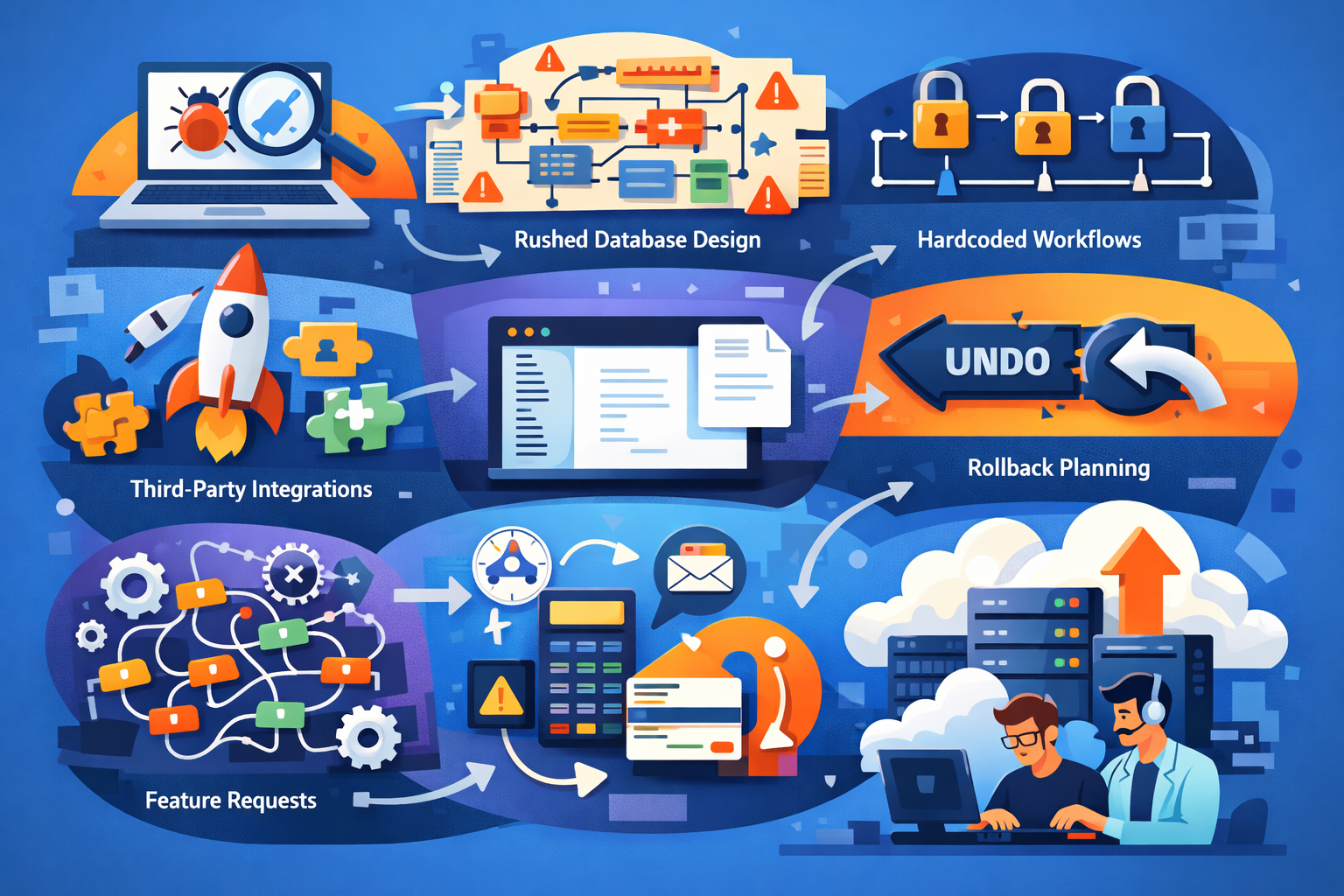
At the same time, third-party services begin to change around you. A payment provider updates webhook behavior, a CRM API introduces rate limits, or a cloud service starts costing more as traffic patterns shift. These are not "new features," but they still demand developer time, testing, deployment, and rollback planning.
Then the MVP shortcuts begin showing their real cost. The quick release decisions that helped ship faster — limited test coverage, duplicated logic, hardcoded business rules, weak monitoring, or rushed database design — start breaking under real traffic and customer-specific use cases.
Why Software Maintenance Cost Becomes Expensive After Launch
The cost usually has less to do with hourly rates and more to do with how the MVP was originally built. In early-stage startups, speed wins every product decision. That means:
- Minimal test coverage
- Rushed database design
- Hardcoded workflows
- Quick third-party integrations
- Skipped documentation
- No rollback planning
These shortcuts are normal. I've done the same in products racing toward investor demos or pilot customers. The problem starts 3–6 months later.
A simple feature request now touches five modules. A payment gateway changes one webhook response. A cloud instance suddenly needs scaling because one customer onboarded 5,000 users.
That is when maintenance stops being small bug fixing and becomes continuous engineering work, which is why Custom Software Development decisions made during the MVP stage have such a direct effect on long-term cost, stability, and engineering effort.
Where Most Startup Teams Miscalculate Maintenance Budget
The biggest budgeting mistake is assuming maintenance = fixing bugs. That's rarely true.
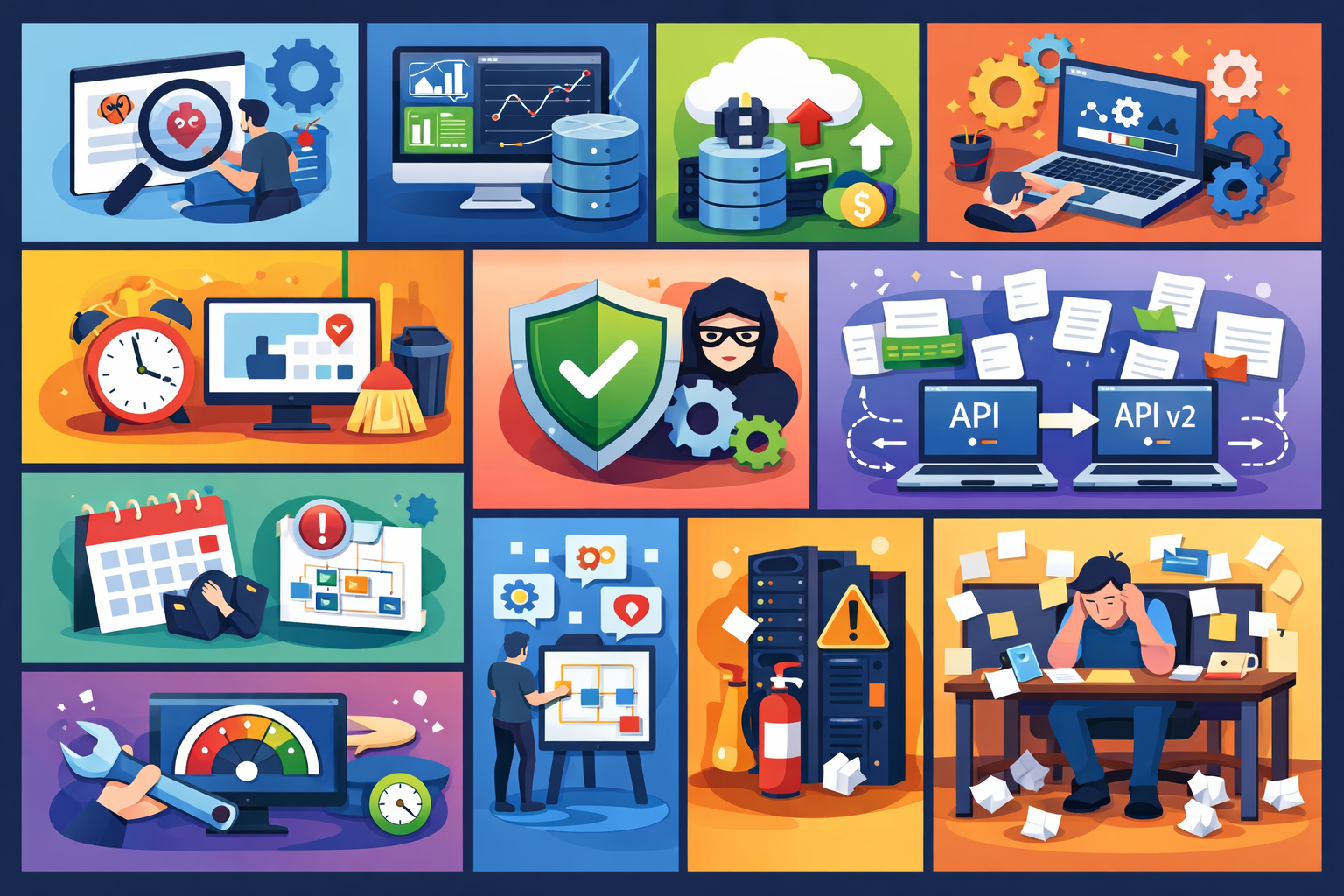
In real startup projects, maintenance cost usually includes:
- Production monitoring
- Cloud optimization
- Dependency upgrades
- Security patching
- Log cleanup
- Failed cron jobs
- API version changes
- Customer-specific workflow tweaks
- Performance tuning
- DevOps incident time
I've seen startups spend 3x more fixing rushed MVP code after six months than what a cleaner release process would have cost.
Another common issue in Ahmedabad startup teams is one developer becoming the entire product memory. When that person leaves, even a 2-hour fix turns into a 2-day investigation. This is where founders feel maintenance costs "suddenly" spike, but the real issue is missing ownership and documentation, not developer pricing.
What Actually Decides Software Maintenance Cost Month To Month
Software maintenance cost is rarely fixed month to month because the workload keeps changing. One month may only need dependency updates and server monitoring, while another may involve payment failures, urgent bug fixes, or customer-specific workflow changes. The real cost usually depends on release frequency, bug recurrence, third-party API stability, and how much technical debt already exists in the codebase.
1. Release Frequency Directly Affects Support Hours
The more often your team deploys, the more support time gets pulled into regression checks, rollback planning, and production monitoring, which is why stronger release and operational discipline becomes important when startups want faster releases without losing control over stability.
Frequent releases improve product speed, but they also increase the chances of small issues slipping into live environments.
Over time, this directly adds to monthly maintenance effort.
2. Third-Party APIs Can Change Your Monthly Maintenance Budget
A large part of post-launch cost comes from systems you do not fully control, which is why Full Stack Development becomes more valuable when products depend on external APIs, backend workflows, and integration-heavy business logic working together consistently.
Payment gateways, CRM APIs, WhatsApp services, analytics tools, and auth providers often change response formats, limits, or webhook behavior.
Even a small external API update can suddenly create unplanned debugging and redeployment work.
3. Legacy Shortcuts Increase Recurring Debugging Cost
Shortcuts taken during the MVP phase usually become repeated maintenance expenses later. Hardcoded rules, duplicated business logic, and quick fixes without cleanup make every future bug harder to trace. Instead of solving issues once, the team ends up paying the same debugging cost sprint after sprint.
4. Customer-Specific Requests Often Become Hidden Maintenance Work
What looks like a small client request often touches validation rules, dashboards, reports, notifications, and permissions across multiple flows. These changes are rarely counted as "new development," so they silently increase support hours. In many startup products, this becomes one of the biggest hidden maintenance costs.

Practical Ways To Reduce Software Maintenance Cost In Real Projects
The goal is not to make maintenance cheap. The goal is to make it predictable. Here's what has worked best in real SaaS products.
1. Define Monthly Maintenance Buckets
Don't treat all post-launch work as one generic support budget. Split it into clear buckets like bug fixes, server issues, dependency updates, and minor product changes. This gives founders better visibility into where maintenance hours are actually going. It also prevents feature requests from silently consuming support bandwidth.
Split the budget into:
- Bug fixes
- Infra/server work
- Dependency/security updates
- Minor product enhancements
- Incident buffer
This avoids feature work quietly consuming support hours.
2. Separate Maintenance From Feature Sprints
One of the biggest mistakes small teams make is mixing production fixes with roadmap delivery. When maintenance and feature work sit in the same sprint, true support cost becomes invisible, which is why many startups prefer working with a software support and development company in Ahmedabad that can separate support work from roadmap execution and keep release planning more predictable. Keeping them separate helps teams plan releases better and makes sprint velocity more predictable.
Never mix "new dashboard module" with "production hotfixes." Once mixed, founders lose visibility into true support costs.
3. Automate Error Logging Early
The fastest way to reduce maintenance cost is to catch failures before users report them, which is why early production visibility and validation matter so much once a startup begins supporting real users.
Basic error logging, crash traces, failed job alerts, and API timeout tracking can save hours of manual debugging.
Early visibility turns reactive firefighting into planned engineering work.
4. Assign Code Ownership
Every important module should have one developer who understands its behavior, edge cases, and deployment risks. Without ownership, the same bugs get re-investigated by different people every sprint. Clear ownership reduces debugging time and lowers long-term support dependency.
Every service, module, or workflow should have one clear owner. This reduces duplicate debugging and avoids "everyone thought someone else handled it."
5. Use Staging Before Hotfixes
Hotfixes pushed directly to production often solve one issue while creating another. A small staging flow helps teams validate database changes, API responses, and user paths before release. Even for small startup teams, this one habit prevents expensive recurring bugs.
Hotfixing directly in production creates recurring bugs. A small staging environment costs less than repeated release failures. The trade-off is simple: slightly slower release speed, but much lower long-term maintenance cost. That trade is almost always worth it.
When Low-Cost Maintenance Plans Do NOT Work
Cheap retainers usually fail when the product itself is unstable. This approach does not work well when:
- Your app has daily releases
- Multiple clients need custom workflows
- Payment/security compliance is involved
- The codebase has no tests
- External APIs change frequently
- Product direction pivots every month
- AI/token billing costs scale with usage
In these cases, low monthly support plans become misleading because the system needs continuous product engineering, which is where ongoing product support usually matters more than trying to force a cheap maintenance retainer onto an unstable product.
I've seen founders try to force a ₹25k–₹40k/month retainer onto a codebase that realistically needs a dedicated part-time engineer. That never stays cheap for long.
Best Practices For Small Development Teams
For small teams in Ahmedabad, sustainability matters more than aggressive short-term savings. These practices reduce long-term support cost better than negotiating lower hourly rates:
- Keep code reviews mandatory, even for hotfixes
- Schedule one monthly refactor window
- Track repeated bug patterns
- Fix root causes, not symptoms
- Review infra costs quarterly
- Document rollback steps
- Avoid single-developer dependency
- Keep dependency updates on a release cycle
One repeated bug in auth, billing, or onboarding usually means an architecture issue. Fixing the root once is cheaper than paying every sprint.
Conclusion
Software maintenance cost is rarely about the developer's hourly rate alone.
For startups in Ahmedabad, the real cost depends on:
- How fast the MVP was shipped
- How many shortcuts were taken
- Whether ownership is clear
- How often customer workflows change
- How stable integrations and infra are
A healthy benchmark is still 15–25% of initial build cost per year, but rushed SaaS products can easily cross that range.
The teams that spend less long-term are usually not the ones paying the lowest monthly retainer. They are the ones making fewer reactive fixes.
How Much Does Software Maintenance Cost In Ahmedabad For Startups: FAQ
For small SaaS products, many teams plan 15–25% of the original build cost annually, which often becomes a manageable fixed monthly engineering budget.
Because real users expose workflow gaps, scaling issues, and integration edge cases that rarely appear during internal QA.
For stable products, yes. For fast-changing MVPs, sprint-based maintenance is usually more realistic than fixed AMC plans.
Better code ownership, test coverage, monitoring, and staged releases usually save far more than reducing hourly rates.
Usually when technical debt compounds for 6–12 months without refactoring, especially in products with frequent custom client requests.
References
Written by

Paras Dabhi
VerifiedFull-Stack Developer (Python/Django, React, Node.js)
I build scalable web apps and SaaS products with Django REST, React/Next.js, and Node.js — clean architecture, performance, and production-ready delivery.
LinkedIn