Software Development Cost In USA: Full Breakdown
Many founders begin software projects with a rough budget in mind.
The assumption is usually simple: hire developers, build features, launch the product, and start acquiring users.
In practice, software development costs in the USA rarely follow the original estimate. What starts as a straightforward project budget often grows because of changing requirements, architectural decisions, deployment complexity, testing needs, security concerns, and long-term maintenance.
I've worked with startup teams, SaaS products, and remote engineering teams across multiple countries. One pattern appears repeatedly: teams focus heavily on coding costs but underestimate everything required to build reliable software.
Understanding where development expenses actually come from is the difference between successful delivery and budget overruns.
Why Software Development Costs Become Difficult to Predict
Limited Visibility Into the Full Development Lifecycle
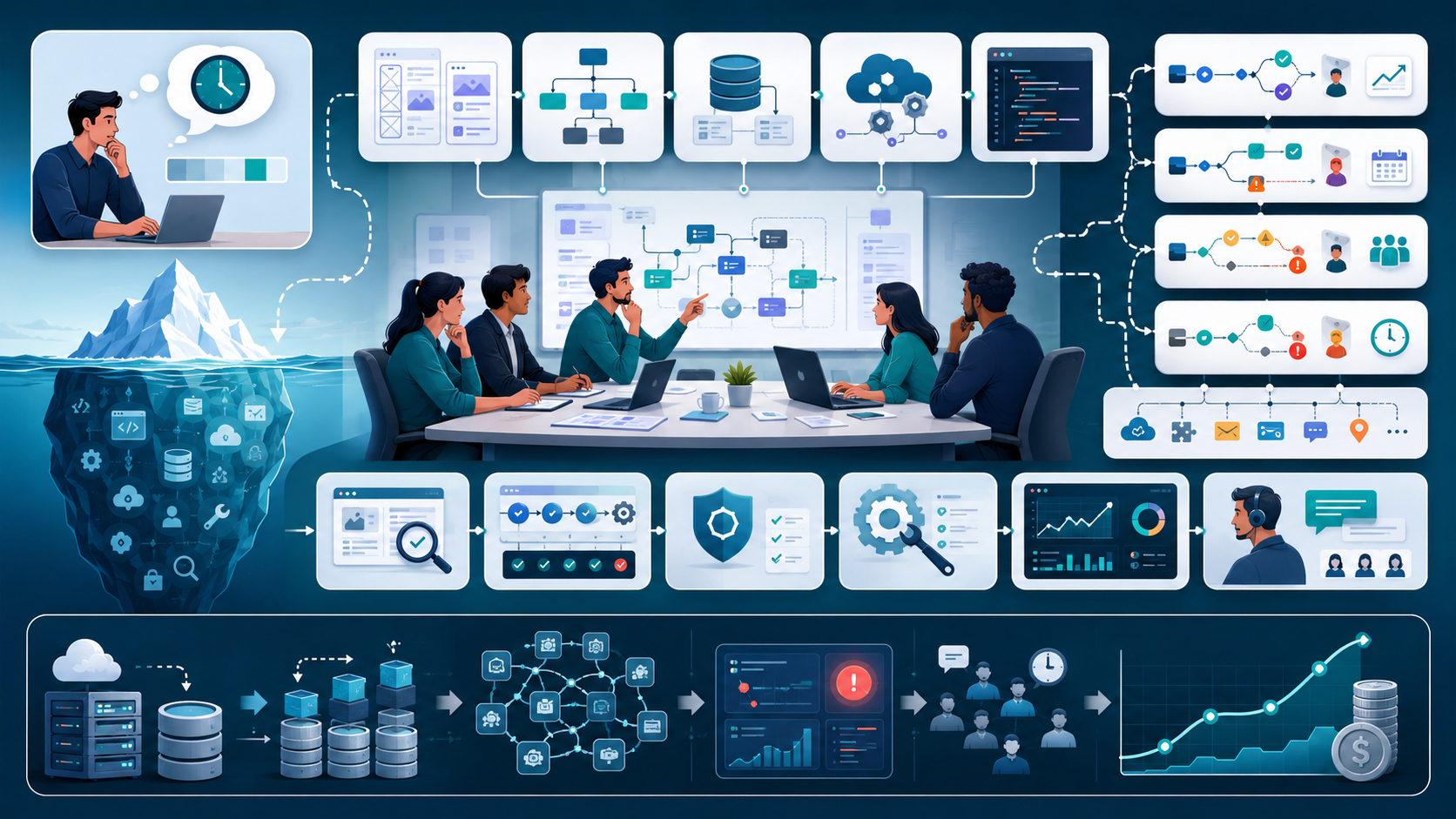
Many founders estimate software development costs based only on coding time. In reality, projects also require design, architecture planning, testing, deployment, security reviews, and ongoing maintenance. These additional activities significantly impact the overall project budget and timeline.
However, modern software projects include:
- Product design
- Architecture planning
- Database design
- API development
- Testing
- Deployment
- Security reviews
- Maintenance
- Support
Development effort extends far beyond writing code.
Requirements Change During Development
Many founders estimate software development costs based only on coding time. In reality, projects also require design, architecture planning, testing, deployment, security reviews, and ongoing maintenance. These additional activities significantly impact the overall project budget and timeline.
As product teams receive feedback, new functionality gets added, workflows change, and integrations become necessary.
Every change impacts:
- Timeline
- Resources
- Deliverables
- Engineering effort
The result is additional expenditure that was not included in the original quotation.
Early Technical Decisions Affect Long-Term Costs
Technology and architecture choices made early in a project can influence costs for years. Overly complex solutions often increase maintenance, infrastructure, and support expenses. Practical technical decisions help teams control costs while maintaining scalability and reliability.
Where Most Teams Make the Wrong Cost Assumptions
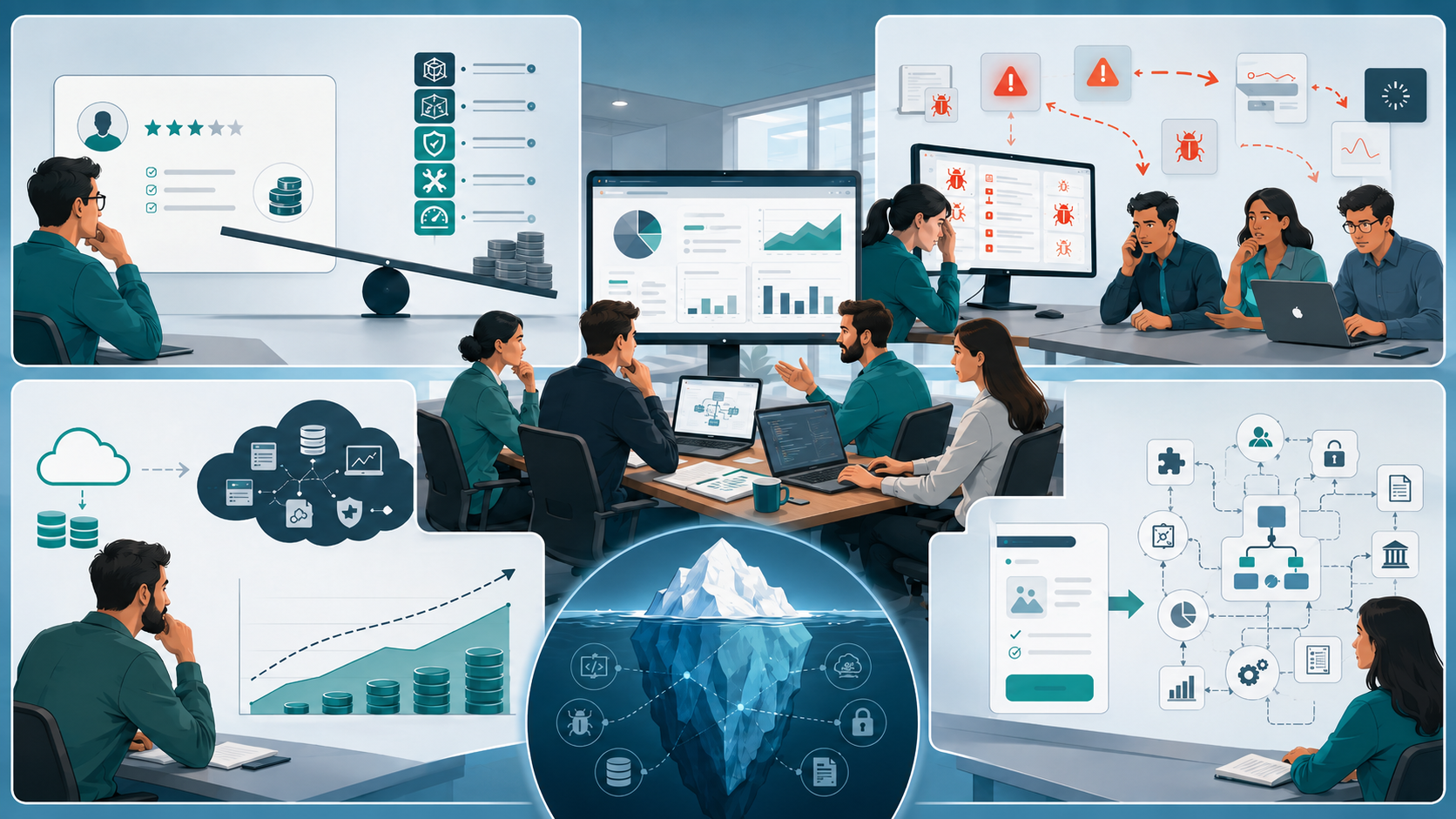
Focusing Only on Developer Hourly Rates
Many businesses assume lower hourly rates automatically reduce software development costs. However, experienced developers often deliver better architecture, cleaner code, and fewer defects. This can significantly lower maintenance expenses and improve the total cost of ownership over time.
This is usually a mistake.
A lower labor cost does not automatically produce lower project costs.
An experienced engineer may cost more per hour but often delivers:
- Better architecture
- Higher reliability
- Fewer bugs
- Reduced maintenance costs
The total cost of ownership is often lower.
Ignoring Quality Assurance
Quality assurance is often overlooked when budgets are tight, but skipping testing can be expensive. Bugs discovered after deployment typically require more time and resources to fix. Investing in QA early helps improve reliability and prevents costly production issues.
In reality, quality assurance reduces expensive production issues.
Without proper testing, teams typically spend more fixing defects after deployment than preventing them during development.
Underestimating Infrastructure Costs
Infrastructure expenses usually grow as applications scale and user demand increases. Costs related to databases, cloud storage, monitoring, backups, and security services can quickly add up. These ongoing operational expenses should be included in any realistic project budget.
As applications grow, costs emerge from:
- Databases
- Storage
- Monitoring
- Logging
- Backups
- Security services
Infrastructure becomes a meaningful part of software development costing.
Assuming Features Are the Main Cost Driver
Many teams believe the number of features determines the overall project cost. In reality, technical complexity, integrations, security requirements, and scalability needs often have a greater impact on development effort. Simple features can become expensive when they involve complex business logic or system dependencies.
A dashboard requiring integrations, permissions, compliance controls, reporting systems, and automation workflows can multiply development expenses significantly.

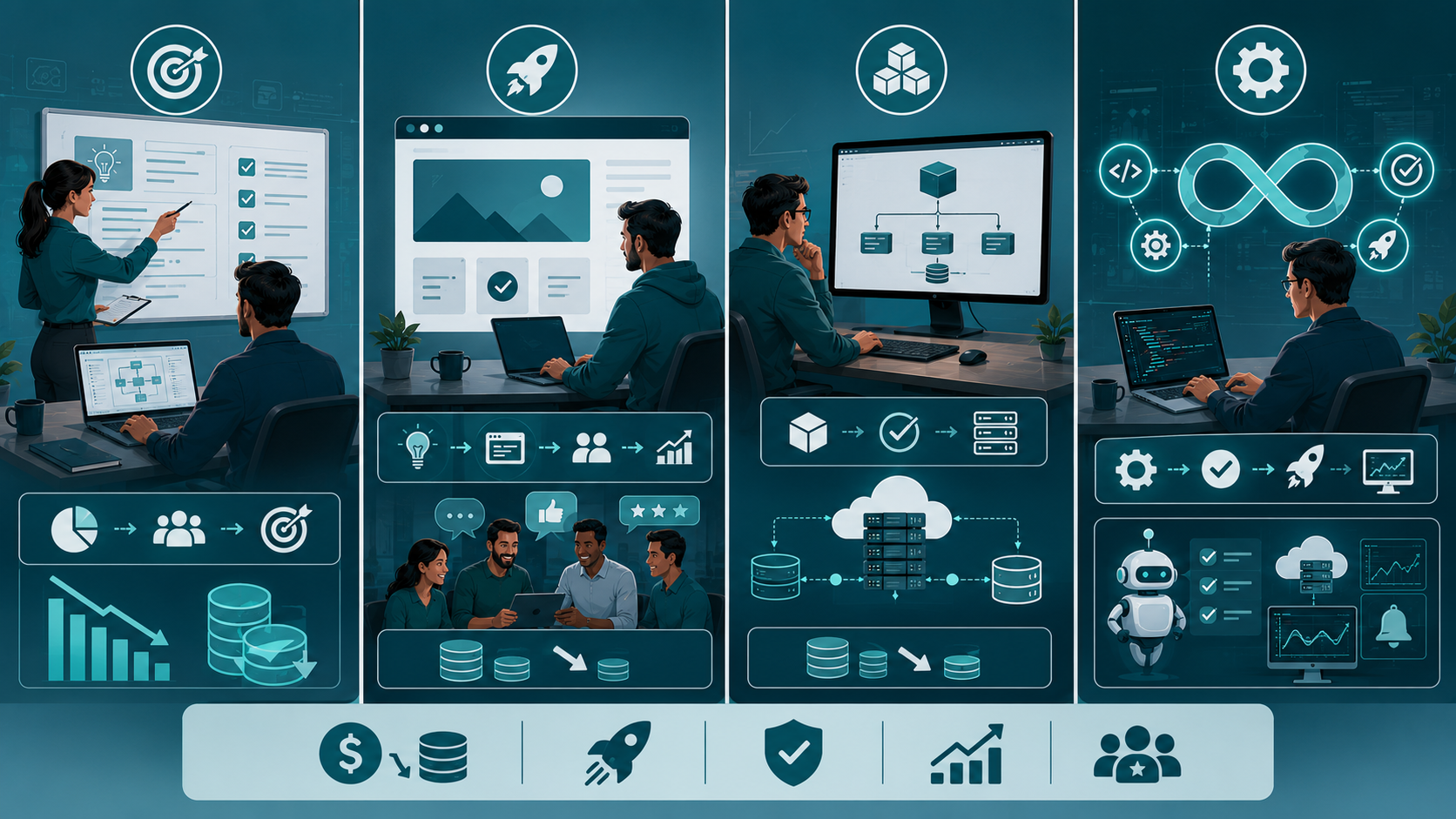
Full Breakdown of Software Development Costs in the USA
Discovery and Planning
Discovery and planning establish the foundation of a successful software project. Choosing a software development company in USA for cost-effective software projects helps founders define requirements, estimate costs, plan architecture, and reduce expensive changes before development begins.
This stage includes:
- Requirements gathering
- Technical consultation
- Scope definition
- Cost estimation
- Architecture planning
Typical allocation:
5%–10% of project budget
UI/UX Design
UI/UX design focuses on creating intuitive and efficient user experiences. Activities such as wireframing, prototyping, visual design, and user flow planning ensure the product is easy to use. Strong design work can reduce development rework and improve user satisfaction after launch.
Design costs cover:
- User flows
- Wireframes
- Visual design
- Prototypes
- Design revisions
Typical allocation:
10%–20%
Software Engineering
Software engineering is typically the largest portion of a project's budget. It covers frontend and backend development, database implementation, API integration, and custom functionality. The complexity of features and technical requirements largely determines the overall engineering effort.
It includes:
- Frontend development
- Backend development
- API integration
- Database implementation
- Custom functionality
Typical allocation:
40%–60%
Testing and Quality Assurance
Testing and quality assurance help ensure software performs reliably under real-world conditions. This stage includes manual testing, automated testing, performance validation, and security checks. Effective QA reduces production issues and lowers long-term maintenance costs.
Quality assurance includes:
- Manual testing
- Automated testing
- Performance validation
- Security verification
Typical allocation:
10%–20%
Infrastructure and Deployment
Infrastructure and deployment costs support the operation and delivery of software applications. These expenses include cloud hosting, deployment pipelines, monitoring tools, backup systems, and operational services. Proper infrastructure planning helps maintain performance, reliability, and scalability.
Costs include:
- Cloud hosting
- CI/CD pipelines
- Deployment workflows
- Monitoring
- Backup systems
Typical allocation:
5%–15%
Ongoing Maintenance and Support
Software development costs do not end after launch. Ongoing maintenance includes bug fixes, security updates, performance optimization, and technical support. Regular maintenance helps keep applications stable, secure, and aligned with evolving business requirements.
Maintenance commonly includes:
- Security updates
- Framework updates
- Bug fixes
- Performance optimization
- Infrastructure management
Many SaaS products spend 15%–25% of initial development investment annually on maintenance.
Practical Ways to Control Software Development Costs
Define Requirements Early
Clear requirements are one of the most effective ways to control software development costs. Documenting core functionality, business goals, and feature priorities before development begins helps prevent scope creep. This reduces rework, improves estimation accuracy, and keeps projects on budget.
Before development begins:
- Document core functionality
- Prioritize features
- Define business objectives
Clear requirements improve cost efficiency.
Build an MVP First
Launching with a Minimum Viable Product (MVP) allows teams to validate ideas without a large upfront investment. By focusing only on essential features, startups can reduce development effort and resource requirements. An MVP also provides valuable user feedback before committing to additional functionality.
A smaller MVP reduces:
- Development effort
- Resource requirements
- Project funding needs
It also provides faster market validation.
Keep Architecture Simple
Many teams introduce complex architectures before they actually need them. A simple and well-structured system is often easier to build, deploy, and maintain, especially for early-stage products. Keeping architecture practical helps reduce infrastructure costs and long-term maintenance overhead.
For many SaaS products, a well-designed monolith offers:
- Lower infrastructure costs
- Simpler deployment
- Reduced maintenance burden
Complex architecture should solve actual problems, not hypothetical future scaling concerns.
Invest in Automation
Automation helps engineering teams improve efficiency and reduce repetitive manual work. Automated testing, deployment pipelines, and monitoring systems can prevent costly errors and speed up delivery. While automation requires an initial investment, it often lowers operational costs over the long term.
Useful examples include:
- Automated testing
- Deployment pipelines
- Monitoring alerts
- Infrastructure provisioning
Although automation requires upfront investment, it often reduces operational expenses over time.

When Cost Optimization Stops Working
Highly Regulated Industries
Software projects in regulated industries often require additional compliance measures that increase overall costs. Security audits, documentation, data governance, and regulatory reviews demand extra time and resources. Reducing budgets in these environments can introduce operational and legal risks.
Examples include:
- Security audits
- Documentation
- Data governance
- Regulatory reviews
Budget reduction becomes difficult without increasing risk.
Large-Scale SaaS Platforms
As SaaS products scale, infrastructure and operational requirements become more complex. Teams must invest in performance optimization, reliability improvements, scalability planning, and database management. At this stage, maintaining platform stability often becomes more important than minimizing costs.
Additional costs emerge from:
- Scalability improvements
- Performance engineering
- Reliability enhancements
- Database optimization
Cost control becomes secondary to platform stability.
Complex Enterprise Integrations
Enterprise projects frequently involve integrating multiple internal and third-party systems. These integrations increase development complexity, testing efforts, deployment challenges, and ongoing maintenance requirements. As a result, such projects typically require larger budgets and longer delivery timelines.
Integrating multiple systems increases:
- Development effort
- Testing requirements
- Deployment complexity
- Ongoing support obligations
These projects naturally require larger budgets.
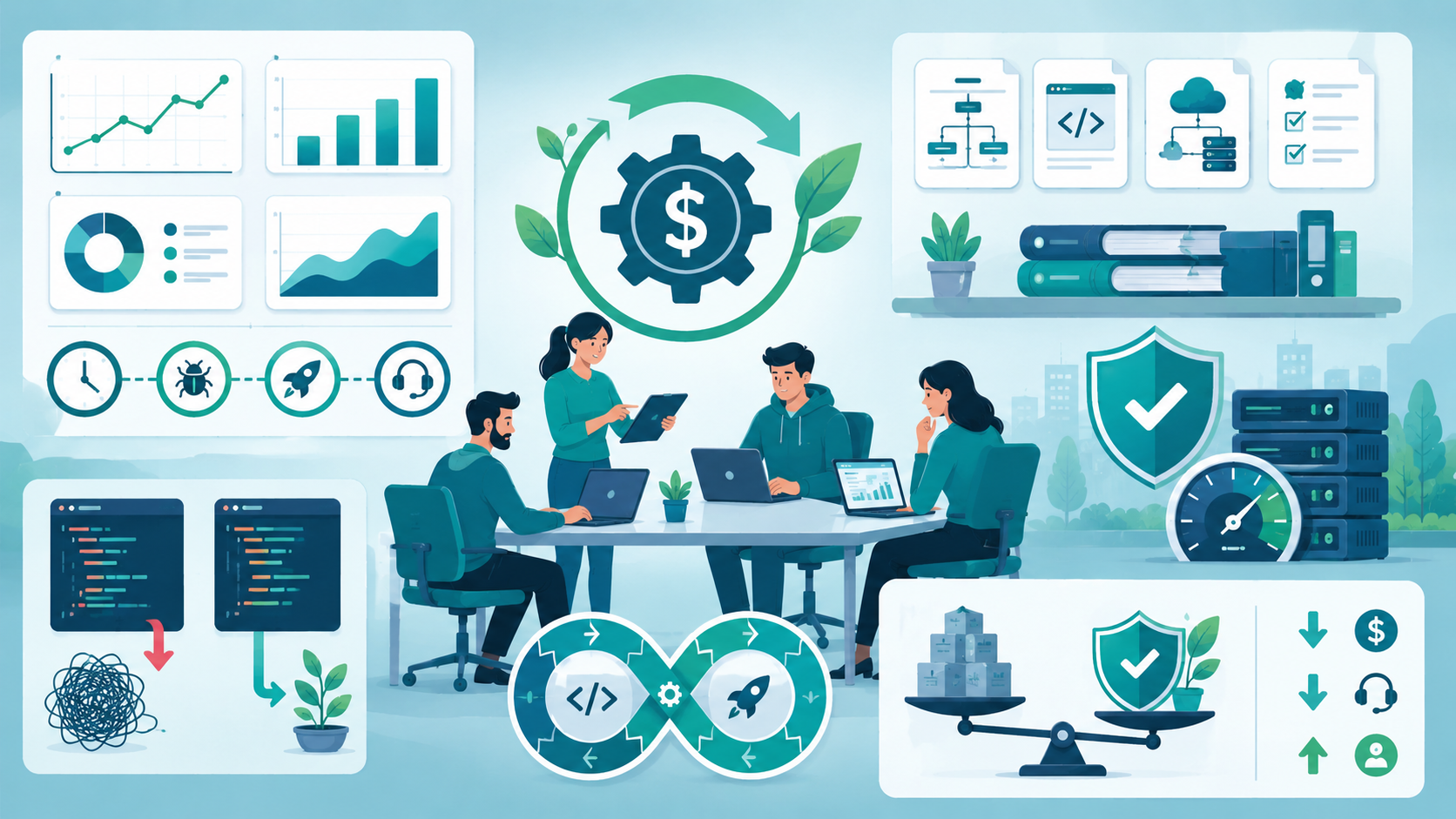
Sustainable Cost Management for Small Engineering Teams
Track Development Effort Continuously
Monitoring development metrics helps teams make more accurate project estimates and budgeting decisions. Tracking feature delivery, bug resolution, deployment frequency, and support workload provides visibility into team productivity. Over time, this data improves planning and resource allocation.
Measure:
- Feature delivery time
- Bug resolution time
- Deployment frequency
- Support workload
This provides realistic future estimates.
Reduce Technical Debt
Technical debt often creates hidden costs that slow development and increase maintenance effort. Regular refactoring and code improvements help maintain performance, reliability, and overall productivity. Addressing small issues early prevents larger and more expensive problems in the future.
Regular refactoring helps maintain:
- Performance
- Reliability
- Productivity
Small improvements prevent expensive rewrites.
Maintain Strong Documentation
Good documentation makes software projects easier to manage and maintain over time. Recording architecture decisions, API details, infrastructure setup, and deployment processes reduces knowledge gaps within the team. This improves collaboration and minimizes dependency on individual developers.
Document:
- Architecture
- APIs
- Infrastructure
- Deployment processes
Knowledge retention improves long-term efficiency.
Prioritize Reliability Over New Features
Adding new features is valuable, but system stability should remain a priority. Unreliable software can lead to downtime, increased support costs, and frustrated users. Focusing on reliability helps teams deliver consistent performance and long-term business value.
Conclusion
The biggest mistake founders make when estimating software development costs in the USA is focusing solely on developer rates.
Actual project expenses include architecture, design, testing, infrastructure, deployment, maintenance, security, and ongoing support.
Successful teams view software development as a long-term investment rather than a one-time project expenditure.
When requirements are clear, architecture remains practical, and technical debt is managed consistently, software costs become far more predictable.
FAQ
Costs vary based on scope, complexity, team structure, and technology stack. Small projects may require tens of thousands of dollars, while enterprise platforms can require significantly larger investments.
Requirements, feature complexity, engineering resources, integrations, infrastructure needs, and long-term maintenance have the largest impact.
In many cases, yes. Experienced engineers often reduce overall project costs by making better architectural and implementation decisions.
Changing requirements, underestimated complexity, insufficient planning, and technical debt are the most common causes.
Start with an MVP, maintain clear requirements, automate repetitive processes, keep architecture simple, and invest in testing early.
Reference
Written by

Paras Dabhi
VerifiedFull-Stack Developer (Python/Django, React, Node.js)
I build scalable web apps and SaaS products with Django REST, React/Next.js, and Node.js — clean architecture, performance, and production-ready delivery.
LinkedIn