Software Development Ownership Models
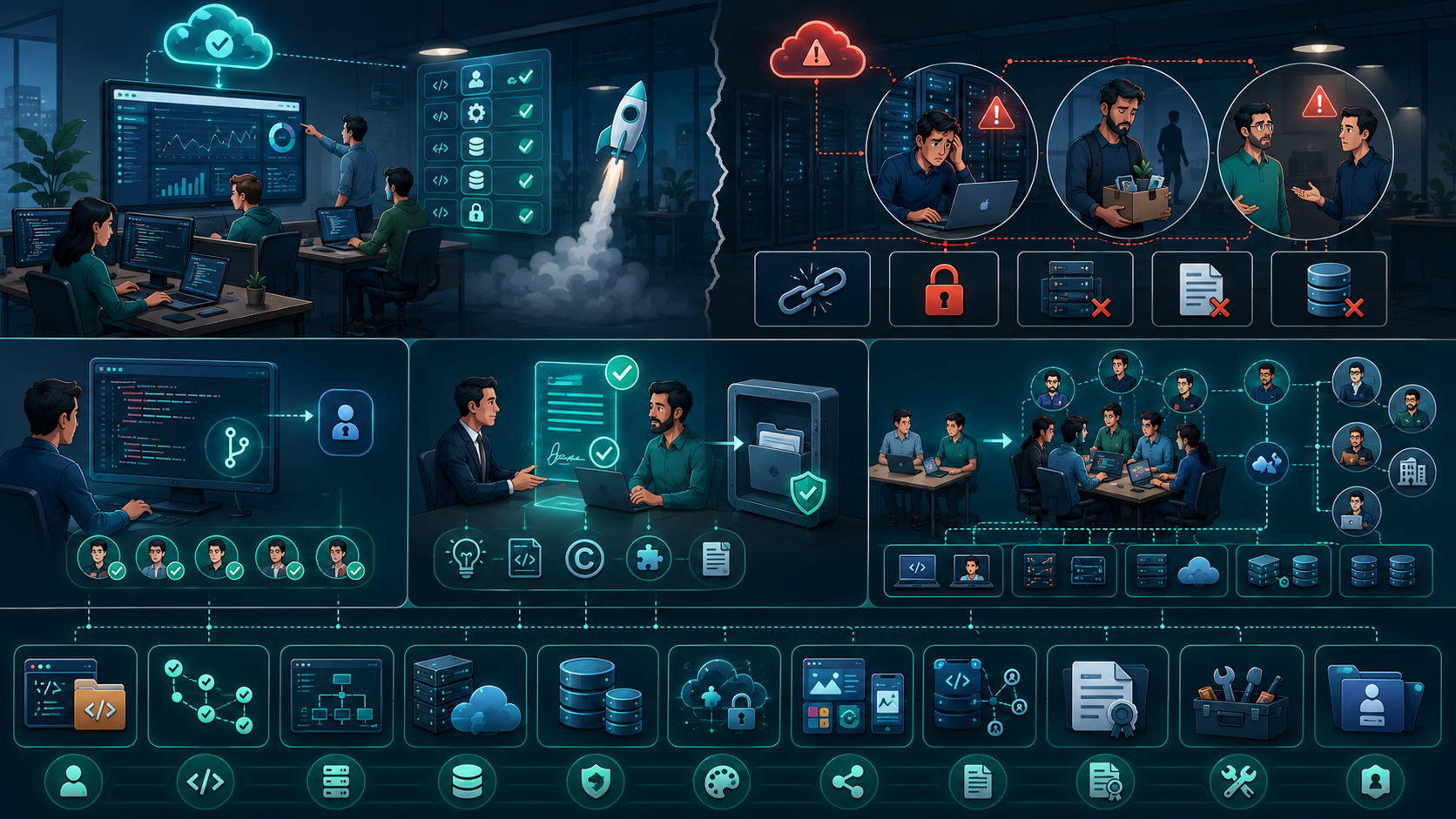
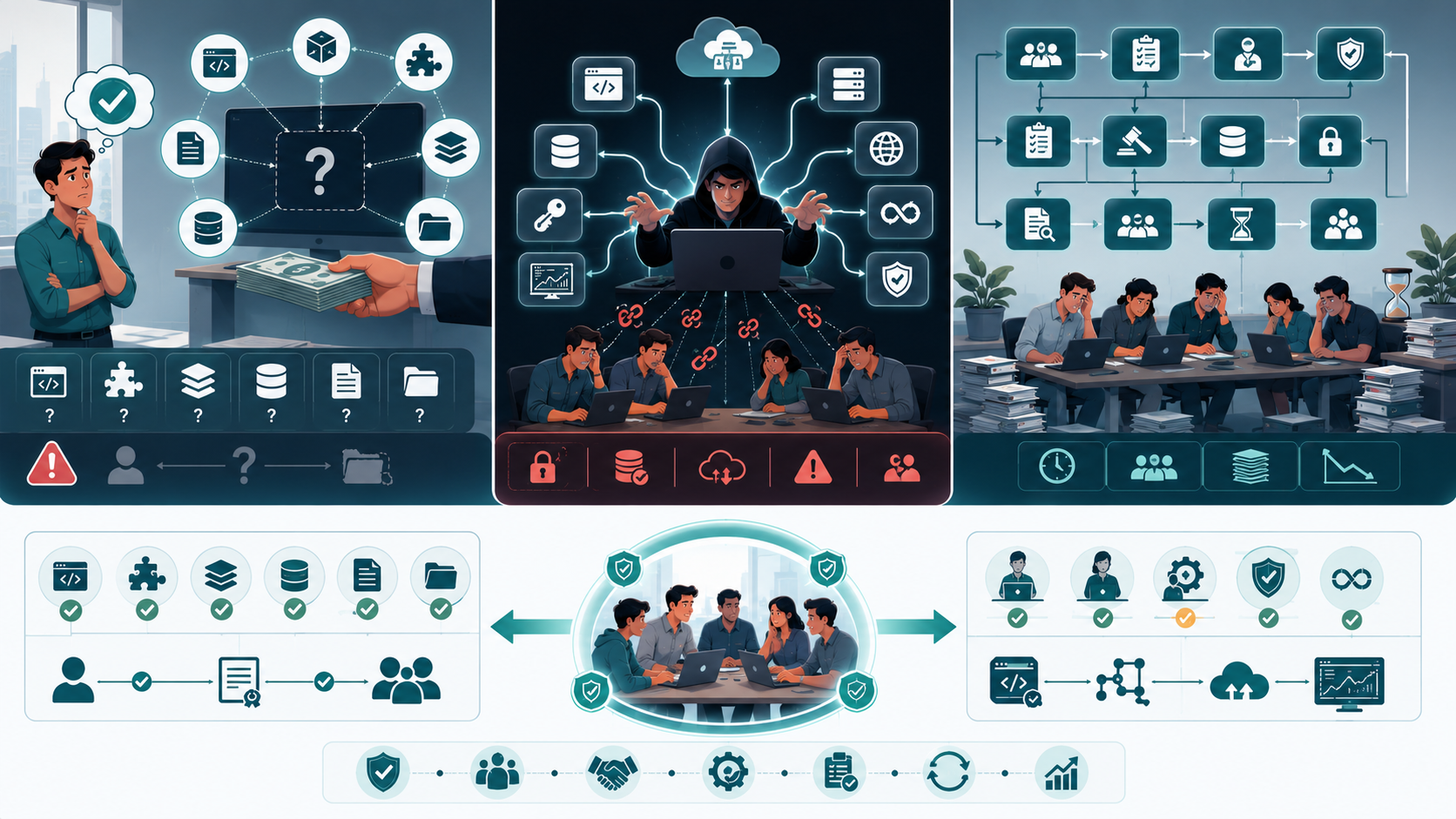
I’ve seen this happen in small SaaS teams, client projects, and remote engineering groups. The application works, releases are going out, and everyone appears to have access to the code. Then a production issue appears, a developer leaves, or the client asks for the repository and documentation. Suddenly, basic questions become difficult to answer.
Who controls the source code? Who can modify it? Who owns the intellectual property? Who is responsible for infrastructure? Can the developer reuse a component? Who has access to customer data? What happens when the contract ends?
These are not just legal questions. They affect daily development, maintenance, deployment, security, collaboration, and product decisions.
A clear software development ownership model defines responsibilities and rights before those questions become expensive problems.
Why Software Ownership Problems Happen in Real Teams
Ownership is often treated as something that can be sorted out later.
That approach works until the project becomes important.
Early-stage teams are usually focused on getting the product into production. A founder wants the first release. A developer wants to finish the feature. A vendor wants to deliver the agreed scope. A product team wants to test the market.
Nobody wants to spend several meetings discussing repository access, documentation, licensing, or intellectual property.
But ownership affects much more than the code itself.
It can include:
- Source code
- Code repositories
- Product architecture
- Technical documentation
- Infrastructure configuration
- Databases and data
- Deployment environments
- Design assets
- APIs and integrations
- Third-party licensing
- Development tools
- Intellectual property
The problem becomes more complicated when multiple stakeholders are involved.
For example, a startup may have a founder controlling the product, an internal developer managing the repository, an external agency handling development, and a cloud provider hosting the infrastructure.
Everyone may have access, but access does not necessarily mean ownership.
That distinction is one of the most common sources of confusion.
Access Is Not the Same as Ownership
A developer may have administrative access to a Git repository because they need it for development.
That does not automatically mean the developer owns the code.
Likewise, a client may pay for a software project but still need to verify what the contract says about intellectual property, licensing, and transfer of rights.
Ownership needs to be explicitly established through the appropriate agreement and working arrangements.
Ownership Gets Complicated as Teams Grow
A two-person team can often resolve ownership questions through direct communication.
A team of 10 or 15 developers is different.
There may be:
- Multiple repositories
- Several vendors
- Internal and external developers
- Shared infrastructure
- Different environments
- Contractors
- Product stakeholders
- Customer data
- Third-party dependencies
Without clear governance, responsibility becomes fragmented.
That fragmentation eventually affects development speed.
Where Most Teams Make the Wrong Decision
The biggest mistake is assuming that one ownership model works for every software project.
It doesn't.
A startup building its own SaaS product has different requirements from a company commissioning an internal business application. A client hiring an agency has different concerns from a company building a product with a dedicated internal engineering team.
I’ve seen teams make three recurring mistakes.
1. Treating Payment as Automatic Ownership
One common assumption is:
We paid for development, so we automatically own everything.
The commercial arrangement may be more complicated than that.
Contracts can define different rights for:
- Custom source code
- Pre-existing components
- Third-party libraries
- Frameworks
- Reusable development assets
- Documentation
- Product data
- Intellectual property
The important point is not to assume. The agreement should clearly define the intended rights.
2. Giving One Person Too Much Control
Small teams often give one developer administrator access to everything.
That may be convenient initially.
But eventually that person could control:
- Repository access
- Production deployment
- Cloud infrastructure
- Database credentials
- Domain configuration
- CI/CD workflows
- Monitoring systems
This creates an unnecessary dependency.
The goal should be shared responsibility without creating unnecessary administrative complexity.
3. Copying Large-Company Governance
Large companies may have extensive processes for ownership, permissions, compliance, and governance.
A five-person startup doesn't need to reproduce all of that.
I’ve seen small teams create complicated approval systems that slow down simple development work.
Good ownership isn't about creating bureaucracy.
It's about making control, responsibility, access, and transfer clear.
Practical Fixes That Actually Work
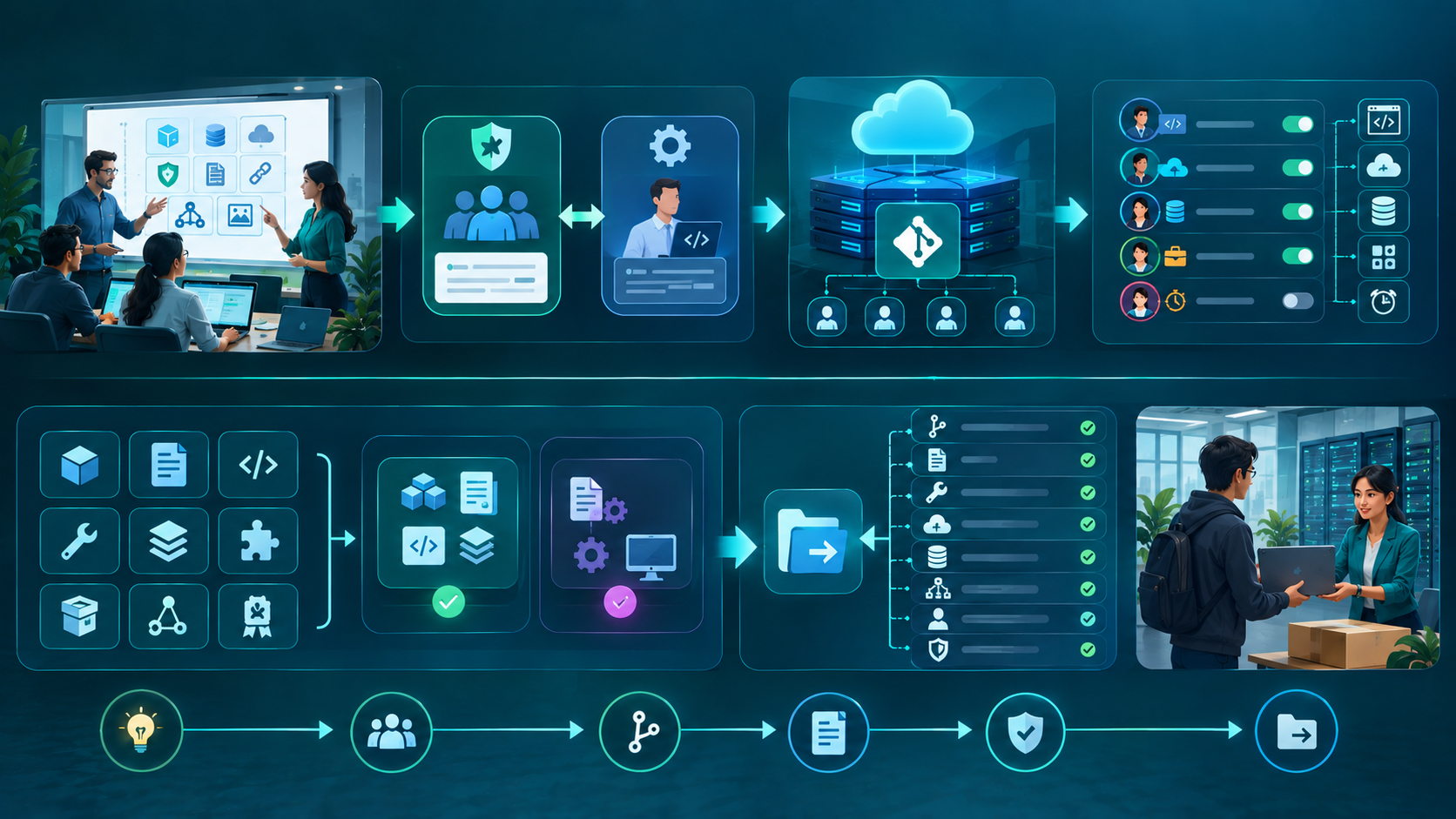
The best ownership model is usually the simplest one that clearly answers the important questions. Working with a US software partner for client-owned development helps teams define source code ownership, repository control, infrastructure access, documentation responsibilities, IP rights, licensing boundaries, and software transfer planning before development begins.
1. Define Ownership Before Development Starts
Before writing significant amounts of code, document who owns:
- Product IP
- Source code
- Data
- Infrastructure
- Documentation
- Deployment environments
- Design assets
- Custom integrations
This doesn't need to be a 50-page document.
Even a concise agreement can eliminate major ambiguity.
2. Separate Ownership From Responsibility
A person can be responsible for maintaining something without owning it.
For example:
| Area | Responsible Team | Ownership |
|---|---|---|
| Source code | Engineering | Defined by agreement |
| Product requirements | Product team | Company |
| Infrastructure | DevOps/engineering | Company or defined entity |
| Customer data | Product/company | Defined by applicable agreements |
| Documentation | Engineering | Project owner/company |
| Deployment | Engineering | Company/team according to access policy |
This distinction is particularly useful in remote teams.
The person operating the system doesn't necessarily have to be the person who legally or commercially owns the asset.
3. Keep the Repository Under the Right Organization
One practical rule I recommend is simple:
The primary repository should normally live under an organization controlled by the party that needs long-term continuity.
For a startup product, that will often mean the company's organization rather than an individual developer's personal account.
This reduces problems when:
- A developer leaves
- A contractor's engagement ends
- A vendor relationship changes
- Access credentials are lost
- New developers join
The repository should not become hostage to one person's account.
4. Document Existing and Reusable Components
Ownership becomes particularly complicated when developers bring existing technology into a project.
A developer may already have:
- Utility libraries
- Templates
- Internal tools
- Code snippets
- Framework extensions
- Development components
The team should distinguish between project-specific development and pre-existing assets.
Third-party software also requires attention to licensing.
Before commercializing a product, teams should know what dependencies they are using and what obligations those licenses create.
5. Establish Access Based on Responsibility
Not everyone needs access to everything.
For example:
- Developers may need repository access.
- A deployment owner may need production access.
- Database administrators may need database permissions.
- Product stakeholders may need application-level access.
- Contractors may require temporary access.
This is where security and governance overlap.
Access should be intentional rather than permanent by default.
6. Plan for Ownership Transfer
A good ownership model should answer one uncomfortable question:
What happens when the relationship ends?
This matters for agencies, contractors, freelancers, and development partners.
A transition plan may include:
- Repository transfer
- Documentation delivery
- Credential transfer
- Infrastructure handover
- Deployment instructions
- Database information
- Architecture documentation
- Third-party account information
- Maintenance responsibilities
Without this preparation, a technically complete project can still be difficult to operate.
Choosing Between Common Ownership Models
Different projects naturally lead to different arrangements.
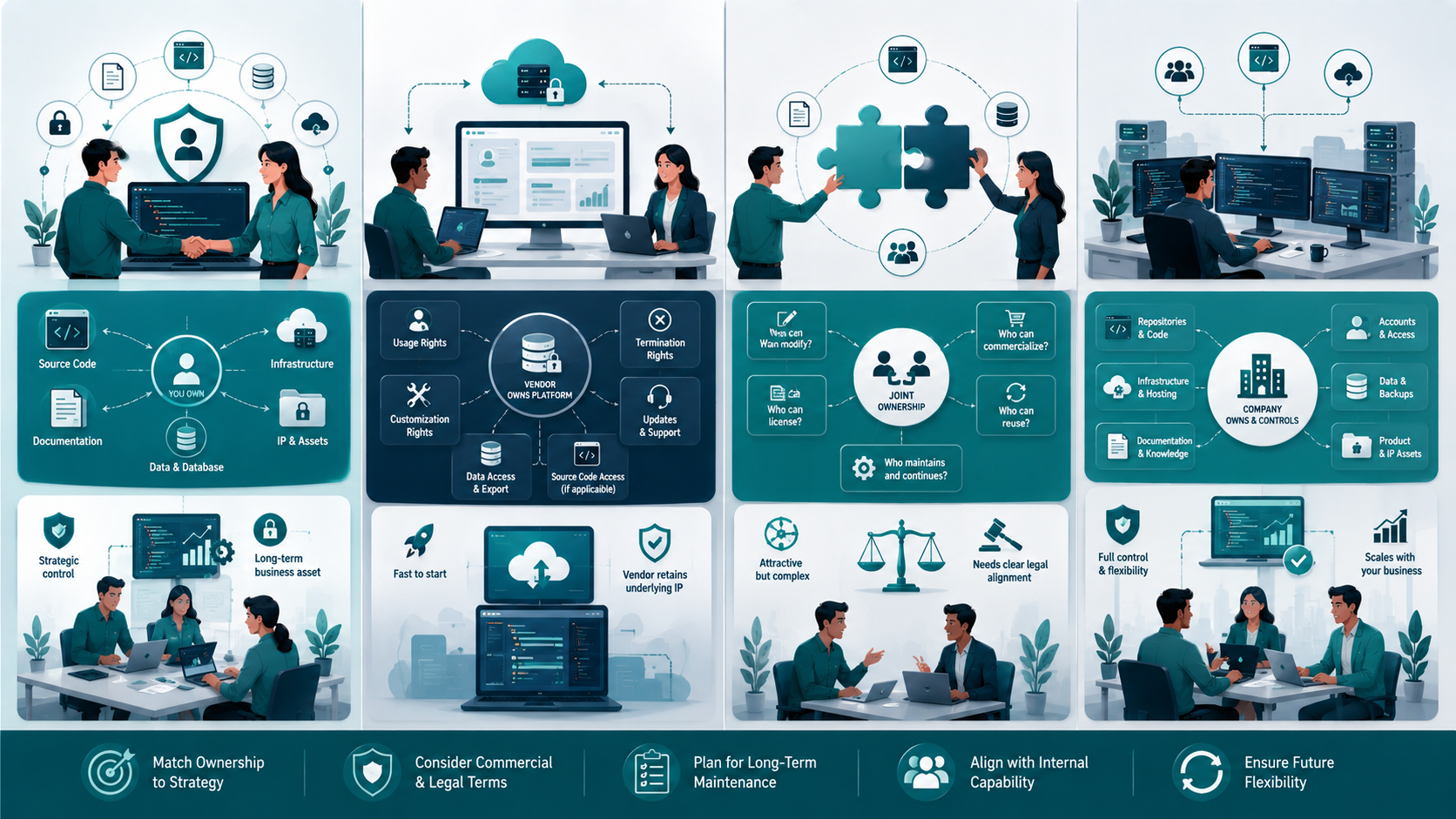
Client-Owned Development
The client maintains ownership of the project assets according to the agreed contract.
This can work well when the software is a strategic business asset and the client expects long-term internal control.
The client should still understand what happens with third-party software and pre-existing developer assets.
Vendor-Owned or Licensed Software
Sometimes a vendor retains ownership of its underlying platform while providing the client with usage rights.
This is common when the software contains reusable technology that the vendor uses across multiple customers.
The key issue is understanding what the client receives:
- Usage rights
- Customization rights
- Data access
- Export capabilities
- Source code access, if applicable
- Termination rights
Joint Ownership
Joint ownership can sound attractive when two parties contribute significantly to development.
In practice, it can become complicated.
Questions arise around:
- Who can modify the software?
- Who can commercialize it?
- Who can license it?
- Can either party reuse the code?
- Who handles maintenance?
- What happens if the partnership ends?
If joint ownership is used, the agreement needs to be unusually clear.
Internal Team Ownership
For a startup with an internal engineering team, the company generally needs a clear organizational structure around its software assets.
Developers may have responsibility for development and maintenance while the company maintains control over the product and associated assets.
This model is usually easier to manage when repositories, infrastructure, documentation, and accounts are organized under company-controlled systems.
When a Software Ownership Model Fails
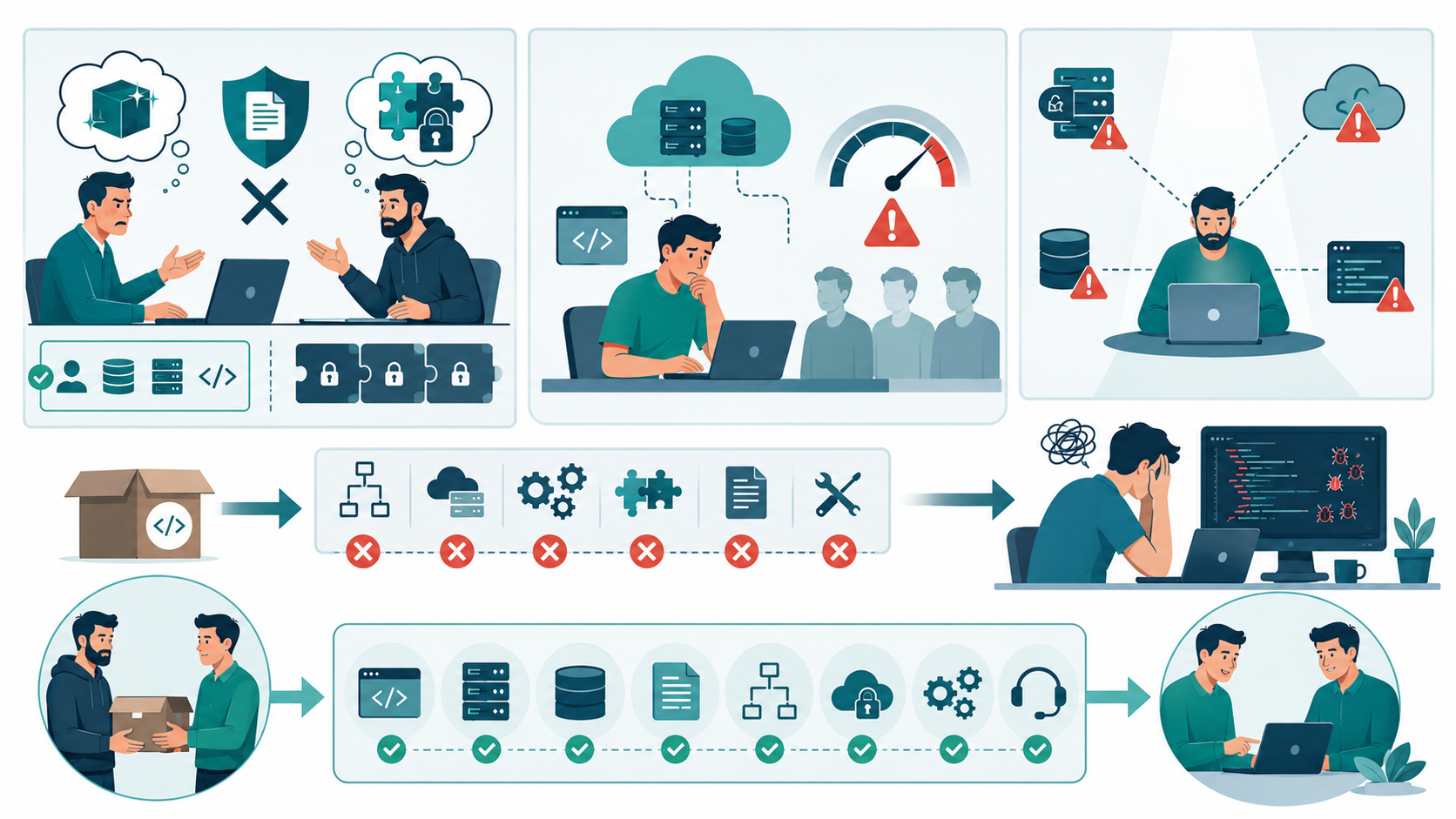
Even a well-defined ownership model can create problems if it doesn't match the project.
For example, full ownership may sound ideal for every client.
But if a vendor has built the product using proprietary technology that it needs to reuse across multiple customers, transferring everything may not be practical.
Likewise, giving a startup complete control over infrastructure doesn't automatically mean the startup has the engineering capacity to operate it.
There are also situations where ownership isn't the biggest issue.
A company may technically own the source code but still be dependent on one developer because nobody else understands the architecture.
That is an operational ownership problem.
The organization controls the asset, but doesn't have enough knowledge to maintain it.
Another failure occurs when documentation is treated as optional.
If the team owns the repository but has no useful documentation covering architecture, deployment, integrations, and infrastructure, transferring the project can still be painful.
Ownership needs to include knowledge transfer, not just file transfer.
Sustainable Practices for Small Engineering Teams
Small teams don't need complicated governance.
They need consistency.
Keep Ownership Visible
Maintain a simple record showing:
- Who owns the product
- Who manages the repository
- Who controls infrastructure
- Who manages production access
- Who maintains documentation
- Who approves major changes
This can be part of the team's internal documentation.
Review Access Regularly
When developers, contractors, or vendors leave a project, remove unnecessary access.
Don't allow old permissions to accumulate.
This is especially important for production systems and customer data.
Maintain Documentation Alongside Development
Documentation should evolve with the software.
At minimum, important projects should document:
- Architecture
- Repository structure
- Deployment
- Environment configuration
- Infrastructure
- External integrations
- Data flow
- Maintenance procedures
Good documentation reduces dependency on individual developers.
Keep Commercial and Technical Decisions Connected
Ownership decisions shouldn't be made only by developers or only by legal teams.
Engineering understands how the technology is built.
Product and business stakeholders understand how the software will be used.
Contractual decisions should reflect both realities.
Design for Developer Turnover
A strong ownership model should survive a developer leaving tomorrow.
Ask:
Could another engineer take over this project next week?
If the answer is no, the team has an operational risk even if the contractual ownership is perfectly defined.
Conclusion
Software development ownership isn't simply about deciding who owns the code.
It is about defining control, rights, responsibility, access, governance, and continuity around the entire technology asset.
The biggest mistake small teams make is leaving these decisions until something goes wrong.
A developer leaves. A vendor relationship ends. A repository becomes inaccessible. A production credential is missing. A company wants to commercialize its product and discovers that intellectual property rights were never clearly documented.
Those problems are avoidable.
For most small engineering teams, the practical approach is straightforward: define ownership early, separate ownership from responsibility, keep critical assets under appropriate organizational control, document access, understand licensing, and prepare for eventual transfer or termination.
The best ownership model isn't necessarily the most complicated one. It's the one that makes control and responsibility clear while allowing the team to keep building without unnecessary friction.
Software Development Ownership Models: FAQs
A software development ownership model defines who has control and rights over software assets such as source code, intellectual property, data, documentation, infrastructure, and related technology.
It depends on the contractual arrangement and applicable law. The agreement should clearly define ownership, licensing, pre-existing assets, third-party components, and transfer rights rather than relying on assumptions.
No. A developer can have access to a repository for development and maintenance without necessarily owning the underlying software or intellectual property.
Documentation makes technical knowledge transferable. Without architecture, deployment, infrastructure, and maintenance information, an organization may technically own the software but still depend heavily on specific developers.
The project should have a defined transition process covering repository access, source code, documentation, infrastructure, credentials, data, third-party accounts, and ongoing maintenance responsibilities.
Reference
Written by

Paras Dabhi
VerifiedFull-Stack Developer (Python/Django, React, Node.js)
I build scalable web apps and SaaS products with Django REST, React/Next.js, and Node.js — clean architecture, performance, and production-ready delivery.
LinkedIn