
How Startups Build Software Products In Ahmedabad
A few months ago, a founder in Ahmedabad contacted our team with a SaaS idea. He had already spent weeks planning features, design flows, and integrations.
But he had no tech team yet and a limited budget. His main question was simple: "How do startups actually build products without wasting months or money?"
This situation is common here. Most founders have strong ideas but limited engineering resources. What happens next usually determines whether the product launches quickly or gets stuck in development.

Why startup product development works differently in Ahmedabad
In big startup hubs, teams sometimes begin with large funding and a full engineering team. That's rarely the case in Ahmedabad.
Most startups here start lean. From what I've seen across several projects, the environment usually looks like this:
- Small teams (often 2–5 developers)
- Limited early-stage funding
- Founders who are involved in product decisions daily
- Heavy reliance on external development teams or freelancers
- Pressure to launch quickly
Because of these constraints, teams tend to focus on building an MVP first, not a complete product.
Another difference is decision speed. In many Ahmedabad startups, founders sit directly with developers or agencies and make quick calls. There's less bureaucracy, but sometimes that also means rushed product decisions.
Most early-stage teams here aren't trying to build perfect architecture. They're trying to get something working in front of users as soon as possible.

Where most startup founders or teams get this wrong
Even with the lean mindset, some mistakes repeat again and again. I've seen these patterns in many early startup projects.
Trying to build the full product immediately
Many startup founders try to build every feature they imagine in the first version of the product. This usually leads to longer development timelines and unnecessary complexity.
The result is usually a 6–8 month development cycle, which is risky for an early startup. In reality, the first version should only solve one core problem.
Hiring too many developers too early
Startups sometimes assume that adding more developers will speed up development. In reality, larger teams often create coordination problems and slow decision-making. Small teams tend to move faster during the early product stage.
When 6–8 developers join a brand-new project, coordination becomes the real problem. Instead of moving faster, the team spends time managing tasks and dependencies.
Over-engineering the tech stack
Early startup products don't need complex infrastructure or advanced architecture. Many teams introduce tools, frameworks, and systems that are unnecessary at the MVP stage. This often increases development time without adding real product value.
- Microservices
- Complex DevOps pipelines
- Heavy infrastructure planning
For an early startup, this usually slows everything down. I've seen simple products delayed by months because teams tried to build "scalable architecture" before they even had users.
Ignoring product validation
Some founders begin development without confirming whether users actually need the product. When validation is skipped, teams may spend months building features that users never adopt. Early user feedback helps avoid this situation.
So development starts immediately. Months later, the product launches and the main features are barely used. This happens more often than people admit.
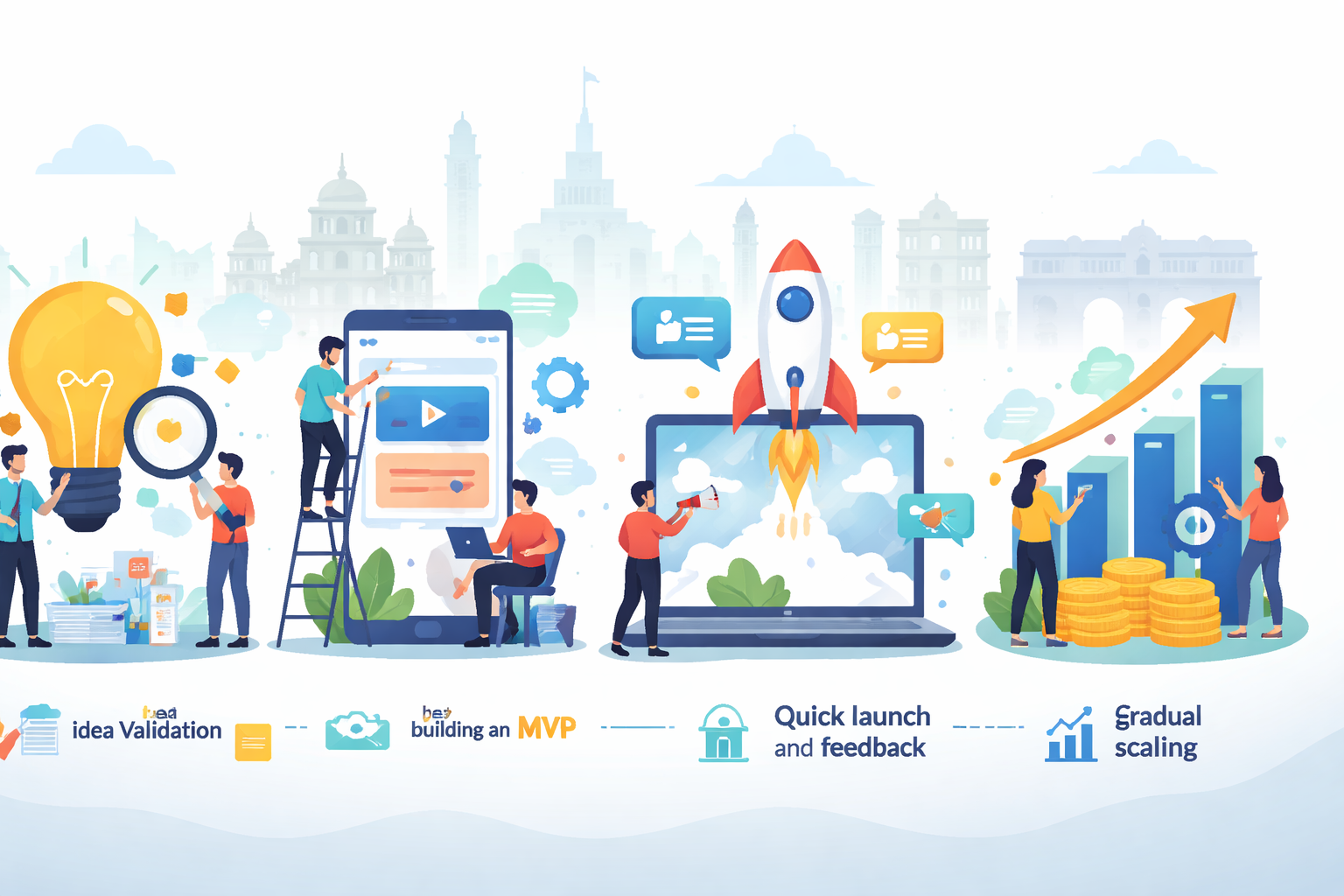
How startups in Ahmedabad actually build their first product
The startups that move fastest usually follow a simpler path. Not a perfect process — but a practical one.
1. Idea validation before writing code
Before development starts, startups should validate the core idea with potential users. This can involve simple conversations, surveys, or testing demand with a landing page. Early validation helps ensure the product solves a real problem.
Common validation methods
- Talking to potential users
- Running simple surveys
- Creating a landing page explaining the idea
- Collecting early sign-ups
This step sounds basic, but it saves huge development time later. If no one cares about the idea, it's better to know early.
2. Building a small MVP
Once the idea shows promise, teams usually build a minimal version of the product. The MVP focuses only on the main workflow and essential features. This allows startups to launch faster and learn from real users sooner.
Typical MVP team structure
- 1 product-focused founder
- 2–4 developers
- Sometimes a designer
The goal is simple: build the core workflow only.
Example MVP feature set
If the startup is building a booking platform, the MVP might include:
- Account creation
- Booking functionality
- Basic admin management
Everything else can wait.
3. Quick launch and early user feedback
Instead of waiting for a perfect product, many startups release a limited beta version. Early users test the product and provide feedback about usability and missing functionality. These insights guide the next development steps.
What founders learn during beta
- A feature is confusing
- Something takes too many steps
- The product solves a slightly different problem than expected
These insights are far more valuable than internal brainstorming.
4. Gradual scaling
After the product gains real users, the development team begins expanding features and improving performance. At this stage, decisions are based on user behavior and data, which is why many founders prefer working with an innovative software development company in Ahmedabad that can improve the product based on real usage patterns instead of assumptions. This helps ensure that development effort goes toward meaningful improvements.
What teams improve during scaling
- System performance
- Architecture improvements
- Additional features based on user data
At this stage, decisions come from real usage data instead of assumptions.

When this startup approach does NOT work
The lean MVP approach works well for many SaaS products and marketplaces. But it isn't suitable for every type of platform.
Enterprise platforms
Enterprise software often requires strict security standards, integration layers, and compliance requirements. Because of this, building a simple MVP is sometimes difficult. Development usually involves more planning and structured architecture — launching a rough MVP is not always possible.
Highly regulated industries
Industries like fintech, healthcare, and insurance operate under strict regulatory frameworks. Products in these sectors must meet legal and compliance standards before launch. This adds additional complexity to early development.
Data-heavy or AI platforms
Platforms that rely heavily on machine learning or large datasets often require complex infrastructure. Even early versions of these products may require data pipelines and processing systems. This makes MVP development more technically demanding — minimal products are harder to create in these cases.
Large marketplace ecosystems
Marketplace platforms depend on multiple user groups interacting with each other. For example, buyers, sellers, and service providers all need to be active for the platform to work effectively. Building and balancing these ecosystems can be challenging for early startups — launching a simple MVP becomes more complicated.
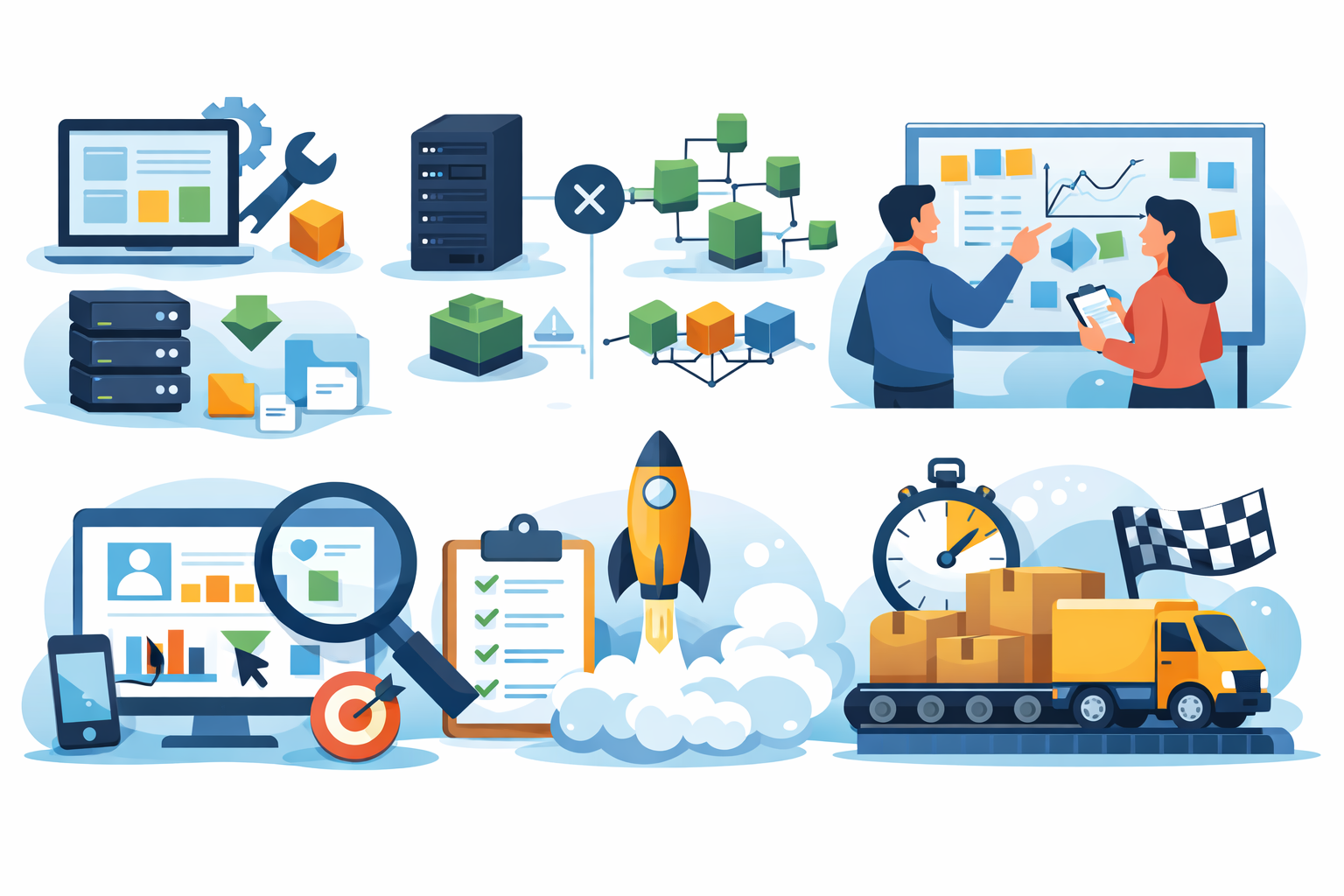
Best practices for startup development teams in Ahmedabad
After working with several early-stage products, a few practices consistently help small teams move faster.
Keep the tech stack simple
Using familiar and proven technologies helps development teams move faster. A simple tech stack reduces maintenance effort and makes it easier for new developers to join the project. Complexity should only be added when the product actually requires it. Complex stacks create learning curves that slow development.
Avoid early microservices
Microservices architecture is useful for large systems, but it often creates unnecessary overhead for startups. Early-stage products usually work well with a simple monolithic structure. This approach keeps development and deployment easier. Microservices add unnecessary operational overhead early on.
Review the product weekly
Regular product reviews between founders and developers keep the project aligned with the original vision. Weekly discussions help identify problems early and adjust priorities quickly. This prevents small issues from becoming larger development delays.
What weekly reviews should include
- Product walkthroughs
- Feature progress
- UX improvements
This keeps development aligned with the product vision.
Track user behavior early
Understanding how users interact with the product is critical for improvement. Even basic analytics can reveal where users struggle or drop off. These insights help teams focus on the features that matter most.
Important metrics to track
- Where users drop off
- Which features are ignored
- What workflows users follow
These insights guide development priorities.
Focus on shipping, not perfection
Startups benefit more from launching quickly than from building a perfectly engineered system. Early releases allow teams to gather real feedback and refine the product. Waiting too long for perfection can delay learning and slow growth.
Conclusion
Building a startup product in Ahmedabad usually begins with limited resources and small teams.
That reality forces founders and developers to focus on what matters most: launching quickly, learning from users, and improving step by step.
Startups rarely succeed because of complex technology. They succeed because they build simple products, release early, and improve based on real feedback.
FAQ
Early MVP products usually cost much less than full-scale platforms, depending on feature scope and development time.
Yes. Most early-stage teams launch a minimal version first to validate demand before investing heavily in development.
Many founders start with small external teams or freelancers before building an internal engineering team.
Most MVPs take around 8–16 weeks, depending on product complexity.
Often the product was built without validating user demand, leading to features that real users don't actually need.
References
Written by

Paras Dabhi
VerifiedFull-Stack Developer (Python/Django, React, Node.js)
I build scalable web apps and SaaS products with Django REST, React/Next.js, and Node.js — clean architecture, performance, and production-ready delivery.
LinkedIn