Overview
What we delivered
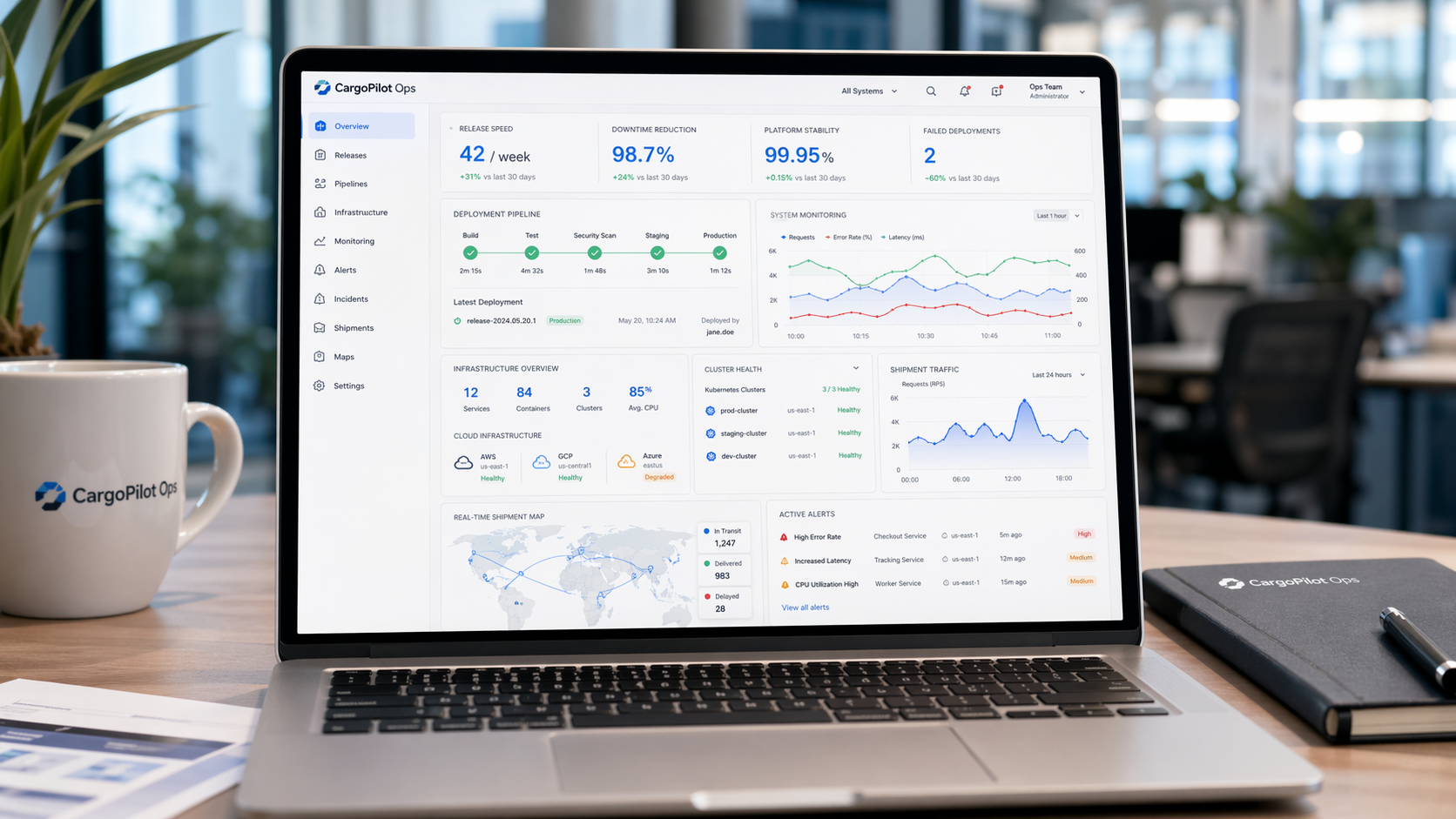
A logistics platform was dealing with shipment tracking delays, unstable peak-load performance, slow deployment cycles, and limited infrastructure visibility. Stellar Code System delivered a DevOps optimization program focused on monitoring, scalable cloud architecture, automated CI/CD, and container orchestration to improve release speed, reduce downtime, and strengthen overall platform stability.
Client
A logistics platform supporting shipment tracking, operational workflows, and peak-load traffic patterns that required more stable infrastructure and faster delivery operations.
Challenge
The platform’s release and infrastructure model was not keeping pace with operational demand. Peak-load periods created performance instability, shipment-related workflows were affected by delays, and limited visibility made infrastructure management reactive rather than proactive.
Shipment tracking delays
Unstable peak-load performance
Slow deployment cycles
Limited infrastructure visibility
Solution
Stellar Code System implemented a DevOps optimization strategy designed to improve observability, stabilize infrastructure under load, and accelerate the logistics platform’s release lifecycle.
1. Real-Time Monitoring and Alerting
Introduced real-time monitoring and alerting across production systems
Improved visibility into performance and operational issues
Enabled faster incident response for logistics-critical workflows
Reduced blind spots in infrastructure management
2. Scalable Cloud Infrastructure
Built scalable cloud infrastructure for peak-load resilience
Improved platform behavior during heavy tracking and operations traffic
Reduced instability caused by infrastructure bottlenecks
Created a stronger base for future logistics scale
3. Automated CI/CD and Container Orchestration
Implemented automated CI/CD for faster release cycles
Used container orchestration for more reliable deployment handling
Reduced manual delivery effort and release friction
Improved consistency across deployment environments
Technology Stack
Monitoring: Real-time monitoring and alerting for production visibility
Cloud: Scalable cloud infrastructure for peak-load performance and resilience
CI/CD: Automated delivery pipeline for faster and safer deployments
Containers: Container orchestration for deployment consistency and operational scalability
Implementation Timeline
Phase 1 (Weeks 1-2): Infrastructure audit, performance bottleneck review, visibility gap analysis
Phase 2 (Weeks 3-5): Monitoring stack rollout, cloud scaling improvements, CI/CD automation
Phase 3 (Weeks 6-7): Container orchestration setup, validation, release hardening, rollout support
Results
The DevOps optimization program improved release efficiency, reduced downtime, and made the logistics platform more stable under operational demand.
Key Metrics:
+65% release speed
-45% system downtime
+52% platform stability
Business Impact:
Improved production reliability for shipment-related workflows
Reduced infrastructure-related disruption during peak demand
Accelerated deployment cycles for product and operations teams
Built a more observable and scalable logistics platform foundation
Client Testimonial
Words from the client
The DevOps improvements gave us much better control over infrastructure and releases. The platform is more stable, downtime is down, and our team now has clearer visibility into production performance.
Technical Highlights
Real-time monitoring and alerting
Scalable cloud infrastructure
Automated CI/CD pipeline
Container orchestration
Peak-load stability improvements
Operational visibility for logistics systems
Future Enhancements
The logistics platform is now ready for deeper reliability engineering and operational scale improvements.
Predictive infrastructure alerting
Advanced release strategies with staged rollouts
Traffic-based autoscaling refinement
Service-level objective tracking
Disaster recovery and failover automation
Previous case study
DevOps Services for an Education Platform
Education DevOps
Next case study
Software Testing for a FinTech Payment Platform
FinTech Testing
Let’s build yours
Want similar results for your business?
Share your requirements—we’ll propose a premium, scalable solution.