Benefits Of Custom Software Development For Enterprises
Most enterprise teams do not start with custom software.
They begin with spreadsheets, SaaS subscriptions, shared dashboards, and disconnected internal tools because those systems are fast to adopt and relatively inexpensive early on. For small operational workflows, that usually works.
The problem starts when the company grows faster than the software stack was designed to handle.
I’ve worked with startup teams and mid-sized enterprises where engineering bottlenecks had nothing to do with traffic scale or backend performance. The real issue was that core business operations were being forced into generic software that could not adapt to the company’s actual workflow.
At some point, teams begin spending more time managing workarounds than improving the product itself. That is usually when enterprises realize the real benefits of custom software development are not about having unique software. With enterprise custom software development services businesses can regain operational efficiency, scalability, integration control, and long-term maintainability.

Why This Problem Happens in Real Teams
Most enterprise software problems are created gradually.
A product team adopts one platform for analytics, another for customer management, another for deployment workflows, and a separate tool for reporting. Initially, the setup feels manageable because every tool solves one isolated problem well.
But over time, fragmentation creates operational instability.
I’ve seen remote engineering teams spend months building synchronization layers between systems that were never designed to work together. Teams often underestimate how much complexity accumulates from disconnected APIs, duplicated workflows, inconsistent data structures, and overlapping business logic.
Several patterns usually cause this:
Rapid Scaling Without Infrastructure Planning
Startups often prioritize speed over architecture maturity.
That makes sense early on. But once customer growth increases, scalability problems appear quickly:
- Reporting systems become slow
- Workflow automation breaks
- Internal dashboards become unreliable
- Deployment pipelines grow fragile
- Team collaboration becomes inconsistent
At that stage, generic SaaS tools begin limiting adaptability rather than improving productivity.
Generic Platforms Cannot Match Internal Processes
Most enterprises have:
- Unique approval systems
- Internal compliance requirements
- Specialized reporting needs
- Custom resource-management workflows
- Cross-department dependencies
Off-the-shelf platforms force businesses to adapt their process around the software instead of designing functionality around operational reality.
That usually creates:
- Reduced transparency
- Manual work duplication
- Poor accessibility between teams
- Workflow inefficiency
- Long-term technical debt
Integration Complexity Gets Ignored Early
API integration problems rarely appear during the first six months.
They appear later when:
- Multiple backend systems need interoperability
- Legacy infrastructure must connect with modern services
- Analytics pipelines require centralized monitoring
- Different regional teams require compatibility across environments
I’ve seen enterprises create entire internal engineering teams simply to maintain broken integrations between third-party systems.
Where Most Teams Make the Wrong Decision
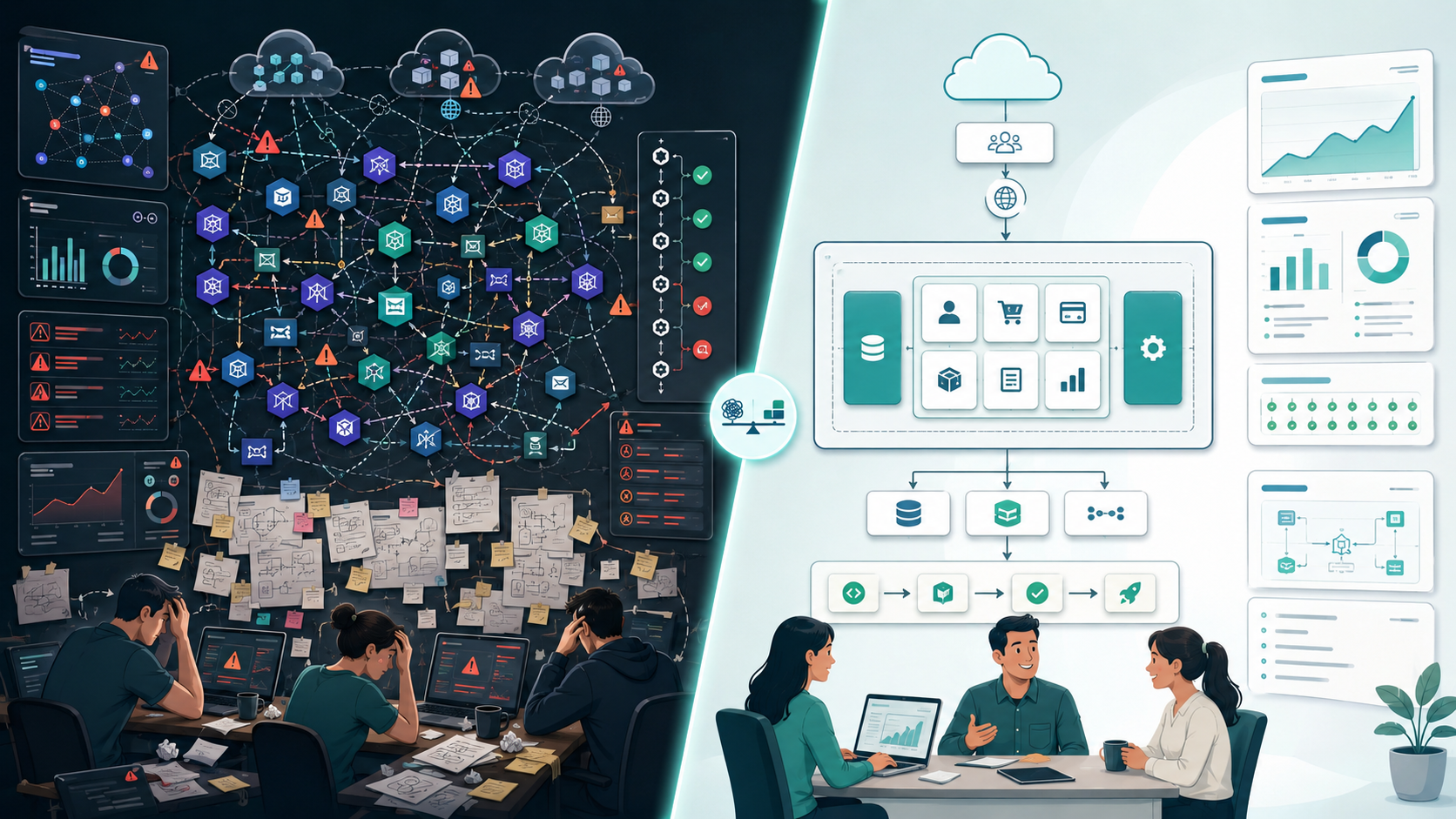
One of the biggest mistakes enterprise teams make is copying architecture decisions from companies operating at completely different scale levels.
I’ve seen startups with fewer than ten developers introduce:
- Microservices
- Kubernetes
- Event-driven infrastructure
- Multi-region deployments
- Complex AI-powered orchestration layers
before they even had stable product-market fit.
The result is usually operational chaos.
Overengineering Becomes the Real Problem
Most small engineering teams do not need highly distributed systems early.
What they actually need is:
- Stability
- Maintainability
- Simpler deployment
- Clear documentation
- Reliable workflows
- Faster debugging
But many teams mistake architectural complexity for innovation.
In practice, overengineered systems reduce productivity because:
- Monitoring becomes harder
- Deployment failures increase
- Collaboration slows down
- Onboarding becomes painful
- Process-improvement efforts stall
Tool Obsession Replaces Engineering Discipline
I’ve worked with teams that constantly replaced infrastructure tools hoping performance problems would disappear.
They rarely did.
Most enterprise inefficiency comes from:
- Weak architecture decisions
- Poor workflow ownership
- Lack of documentation
- Unclear deployment responsibility
- Inconsistent coding standards
Not from the framework itself.
Custom software development only works when the organization improves engineering discipline alongside the software architecture.
Enterprises Underestimate Long-Term Maintainability
This is one of the most expensive mistakes I repeatedly see.
Teams focus heavily on launch speed but ignore:
- Maintainability
- Upgradation paths
- Documentation quality
- System observability
- Long-term compatibility
A system can function perfectly during launch and still become operationally unstable 18 months later.
That is where enterprise-grade software design matters.
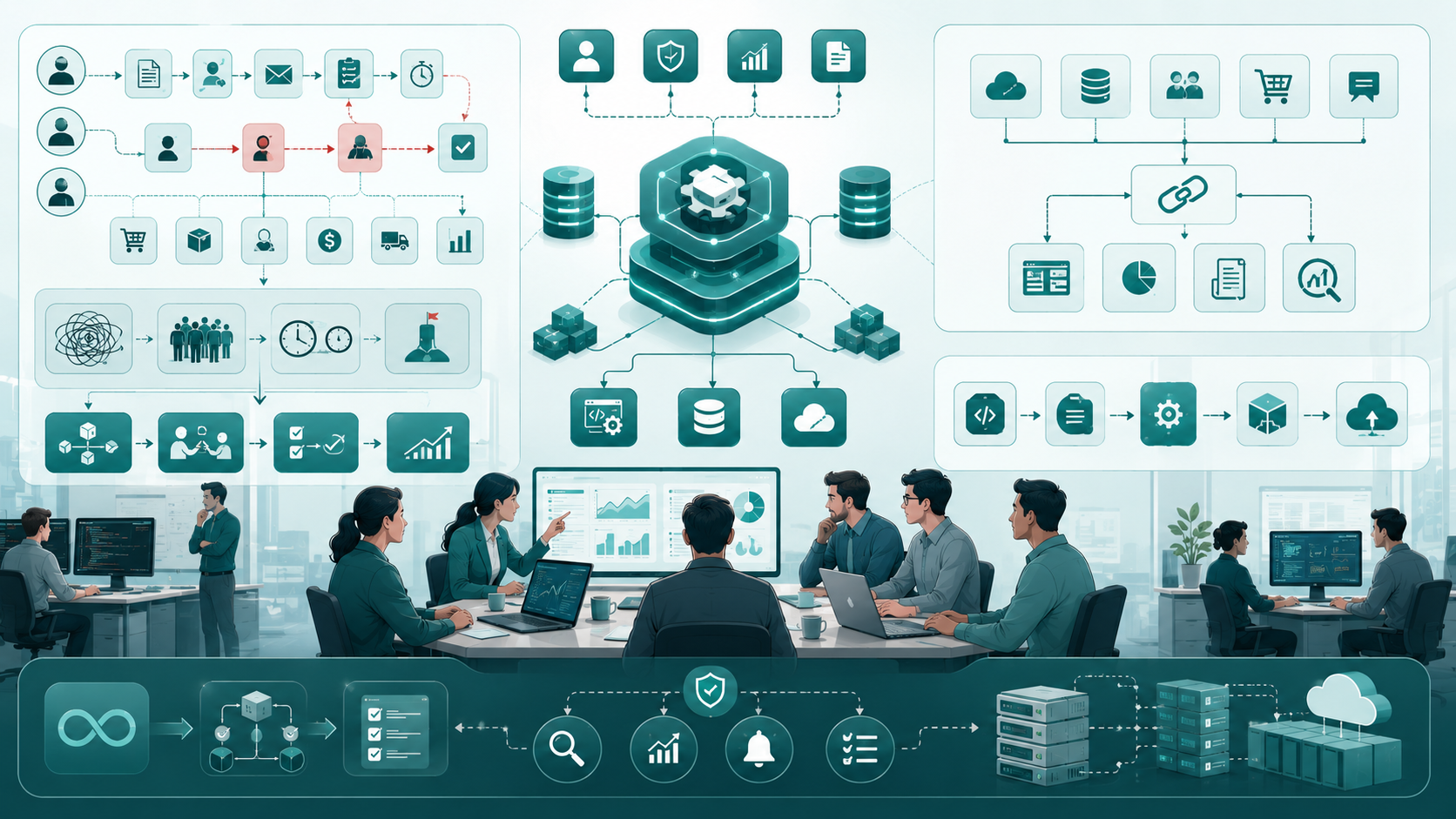
Practical Fixes That Actually Work
The most effective enterprise software systems are usually the simplest ones operationally. For companies planning long-term digital products, working with a software development partner for US enterprises can help connect architecture decisions with real workflow, scalability, and maintainability needs.
Not the most trendy.
Here are approaches that consistently worked across SaaS products and remote engineering teams I’ve worked with.
Build Around Workflow, Not Features
Before writing code, map:
- Team dependencies
- Operational bottlenecks
- Manual approval chains
- Reporting delays
- Deployment friction
Custom software becomes valuable when it improves workflow optimization directly.
A good internal system should reduce:
- Duplicate tasks
- Context switching
- Manual reporting
- Communication overhead
That is where real cost-efficiency appears.
Centralize Core Business Logic
One practical improvement is reducing logic duplication across systems.
Instead of:
- Multiple reporting engines
- Separate validation systems
- Different authentication layers
centralize critical functionality.
- Better synchronization
- Improved reliability
- Easier monitoring
- Cleaner architecture
- Better compliance management
This also improves scalability because operational complexity grows slower over time.
Prioritize Integration Stability Early
Most enterprise instability comes from weak integrations.
Practical improvements include:
- Standardized API contracts
- Clear versioning rules
- Shared deployment documentation
- Integration testing pipelines
- Centralized analytics logging
I’ve seen teams dramatically improve deployment stability simply by documenting API ownership clearly.
That sounds basic, but remote product teams often skip it under deadline pressure.
Design for Adaptability Instead of Perfection
Requirements always change.
Enterprise software should support:
- Workflow customization
- Configuration-based functionality
- Modular deployment
- Flexible reporting systems
- Cross-platform accessibility
Rigid systems usually create long-term operational problems.
Adaptability matters more than theoretical architectural purity.
Keep Infrastructure Operationally Simple
Many enterprise teams improve performance after simplifying systems, not adding more layers.
Examples:
- Monolith instead of premature microservices
- Simple deployment pipelines
- Shared backend services
- Smaller infrastructure surface area
- Reduced operational dependencies
This improves:
- Stability
- Productivity
- Maintainability
- Team collaboration
- Business-continuity
Simple systems are easier to debug, optimize, and scale gradually.

When This Approach Fails
Custom software is not automatically the correct decision.
There are situations where it becomes operationally expensive.
Small Teams Without Engineering Ownership
If the business lacks:
- Technical leadership
- Internal documentation discipline
- Deployment ownership
- Maintenance planning
custom systems can become liabilities quickly.
Over-Customization Creates Fragility
Too much personalization can reduce:
- Compatibility
- Maintainability
- Deployment speed
- Infrastructure stability
I’ve seen enterprise systems become impossible to upgrade because every workflow was deeply customized.
Budget Constraints Limit Sustainability
Custom enterprise systems require:
- Ongoing monitoring
- Security reviews
- Infrastructure upgrades
- Performance optimization
- Engineering maintenance
Without long-term investment, technical debt accumulates fast.

Sustainable Practices for Small Engineering Teams
The healthiest engineering teams are usually the ones that protect simplicity aggressively.
Not the ones chasing architectural trends.
Reduce Technical Debt Continuously
Small fixes prevent large operational failures later.
Practical habits include:
- Refactoring during feature work
- Cleaning outdated APIs
- Removing unused infrastructure
- Simplifying deployment workflows
- Maintaining documentation regularly
Standardize Engineering Processes
Consistency improves scalability more than adding tools.
Useful practices:
- Shared deployment checklists
- Clear branching strategies
- API documentation standards
- Infrastructure ownership rules
- Monitoring expectations
This improves collaboration across remote developers significantly.
Treat Documentation as Operational Infrastructure
Most scaling problems become worse because knowledge stays trapped inside individual developers.
Good documentation improves:
- Reliability
- Accessibility
- Team onboarding
- Workflow transparency
- Operational continuity
Documentation is part of infrastructure, not administrative overhead.
Protect Developer Velocity
Burnout often appears when systems become operationally chaotic.
Teams maintain productivity longer when:
- Architecture stays manageable
- Deployment workflows remain predictable
- Monitoring is centralized
- Responsibilities are clear
- Infrastructure complexity stays controlled
Sustainable engineering velocity matters more than short-term feature output.
Conclusion
The real benefits of custom software development for enterprises are not about building something flashy.
They come from creating systems that align with actual operational workflows, reduce engineering friction, improve scalability gradually, and remain maintainable as the business evolves.
The biggest mistake most teams make is introducing complexity too early.
In my experience, enterprise software succeeds when teams prioritize simplicity, adaptability, integration stability, and operational discipline over architectural trends.
The companies that scale cleanly are usually not the ones with the most complicated infrastructure.
They are the ones with the clearest systems.
FAQ
It depends on operational complexity. Once workflows, integrations, and reporting requirements become highly specialized, custom systems usually provide better scalability and flexibility.
Most maintainability problems come from rushed architecture decisions, poor documentation, duplicated business logic, and uncontrolled integration growth.
Usually no. For most SaaS products and startup teams, monolithic systems are easier to maintain, deploy, and scale initially.
Standardized workflows, shared documentation, centralized monitoring, and clear ownership structures reduce most deployment-related operational failures.
Operational adaptability. Businesses can optimize workflows, improve integration control, maintain compliance requirements, and scale infrastructure without constantly fighting software limitations.
Reference
Written by

Paras Dabhi
VerifiedFull-Stack Developer (Python/Django, React, Node.js)
I build scalable web apps and SaaS products with Django REST, React/Next.js, and Node.js — clean architecture, performance, and production-ready delivery.
LinkedIn