Checklist Before Hiring A Software Development Company In India
A situation I’ve seen many times in startups is this: the product idea is clear, but the internal team doesn’t have enough developers to build everything.
So the founder starts looking for a software development company in India. They compare hourly rates, browse portfolios, and schedule a few sales calls.
Everything looks good at the beginning. But the real problems usually appear three or four months after the contract is signed.
Most of the time, the issue is not talent or cost. It’s that founders follow the wrong checklist before hiring a software development company in India.
Why This Problem Actually Happens
From working with startups and outsourcing projects, hiring mistakes rarely happen because the development team is incompetent.
They happen because the evaluation process is rushed.
Startups usually reach the outsourcing stage when something urgent is happening:
- A product launch deadline is approaching
- Internal developers are overloaded
- Investors expect progress
- The founder wants to move faster than the current team can handle
Because of this pressure, founders often simplify the hiring decision.
They focus on a few visible factors:
- Hourly rate
- Technology stack
- Portfolio projects
- Company size
These are easy things to compare, but they don’t tell you how the team actually works.
The real indicators of a good development partner are things like communication structure, engineering ownership, and release management. Those are rarely visible in the first sales call.
Where Most Founders and Teams Get This Wrong

One pattern I’ve seen repeatedly is founders trusting the presentation instead of the process.
A company can have a great website, impressive case studies, and a polished sales team. But none of that guarantees the engineering workflow behind the scenes.
Here are a few mistakes that happen often in outsourcing projects.
Trusting portfolio screenshots
Many founders judge a development company by the projects shown on its website. However, portfolio screenshots rarely explain what part of the product the team actually built. It’s better to ask about their real contribution, team size, and ongoing involvement in those projects.
Many founders evaluate companies based on past projects shown on the website.
The problem is that portfolios rarely show:
- How large the team was
- What part of the system they built
- Whether the project is still running today
Sometimes a company only builds a small module of the product being showcased.
Not checking who will actually work on the project
Sales calls are usually handled by senior people. But the developers assigned later may be completely different.
In some outsourcing setups, the team working on your product changes every few months.
That leads to knowledge loss and inconsistent code quality.
Ignoring communication structure
Many founders focus on pricing and technology but overlook how communication will actually work during the project, Without a clear structure for updates, reporting, and issue escalation, small problems can quickly turn into major delays, A well-defined communication process keeps both the startup and development team aligned throughout the project.
In many outsourcing projects, communication breaks before the code quality does.
If the founder or product manager does not know:
- Who the technical lead is
- How progress is reported
- How issues are escalated
Then delays start appearing very quickly.
Hiring companies that outsource again
Some development companies accept projects but then pass the work to another outsourced team. This creates communication gaps and reduces accountability when issues appear. Founders should always confirm whether the company builds the product in-house or relies on subcontractors.
This is surprisingly common.
A startup hires a development company, and that company then subcontracts the project to another team.
When that happens, accountability disappears.
A Practical Checklist Before Hiring a Software Development Company in India

If you are evaluating a development partner, here is a checklist that actually helps avoid most outsourcing problems.
1. Ask who your actual developers will be
Before hiring a development company, founders should ask who will actually work on the project. The people on the sales call are often different from the developers assigned later. Knowing the real developers helps ensure consistency, accountability, and better project communication.
Do not stop at the sales presentation.
Ask questions like:
- Who will be the backend developer?
- Who will handle architecture decisions?
- Who is the technical lead?
If the company cannot clearly answer this, that’s usually a warning sign.
2. Request a technical discussion with engineers
Before making a final decision, founders should ask for a technical discussion with the engineers who will work on the project. This conversation helps reveal how the team thinks about architecture, scalability, and real development challenges. It also shows whether the engineers truly understand the product requirements.
Before signing any contract, schedule a call with the engineers who will work on the project.
During this call, discuss:
- System architecture ideas
- Scalability concerns
- How they would structure the backend
This conversation reveals much more than any portfolio page.
3. Understand their development workflow
Before hiring a development company, founders should understand how the team actually manages development work. This includes sprint planning, task tracking, code reviews, and testing processes. A clear workflow usually indicates a more organized and reliable development team.
A good development company should clearly explain how they work.
Ask about:
- Sprint planning
- Task tracking tools
- Code reviews
- QA process
If the answer is vague or overly simplified, the process might not be well structured.
4. Check how they handle production issues
Before hiring a development company, founders should understand how the team responds to issues in a live production environment, Ask about their process for identifying, fixing, and deploying solutions for critical bugs, Teams with real production experience usually have clear incident handling and recovery procedures.
Ask a simple question:
“What happens if a critical bug appears in production?”
You want to understand:
- Response time
- Debugging process
- Deployment rollback strategy
Teams that have handled real production systems will answer this clearly.
5. Ask about deployment and release process
Before hiring a development company, founders should ask how the team manages deployments and product releases, This includes understanding their staging environments, testing process, and CI/CD pipeline, A structured release process usually reduces deployment risks and unexpected downtime.
Many outsourcing delays happen around releases.
Ask how they manage:
- Staging environments
- CI/CD pipelines
- Release approvals
A team that already has a disciplined release workflow usually delivers more consistently.
6. Verify communication structure
Before hiring a development company, founders should confirm how communication will be managed throughout the project. This includes knowing the main point of contact, update frequency, and how issues are reported. A clear communication structure helps avoid confusion and keeps the project moving smoothly.
Clear communication prevents most outsourcing problems.
Make sure you know:
- Who your main contact is
- How weekly updates are shared
- How blockers are escalated
A structured communication loop keeps projects stable even when unexpected issues appear.
7. Start with a small milestone
Instead of committing to a long-term contract immediately, founders should start with a small milestone or pilot project. This allows both sides to evaluate communication, development quality, and workflow, A short initial phase helps reduce risk before scaling the collaboration.
Instead of committing to a six-month contract immediately, start with a smaller project phase.
For example:
- Architecture planning
- A prototype feature
- Initial API development
This gives both sides a chance to evaluate how the collaboration works.
When This Checklist Still Fails
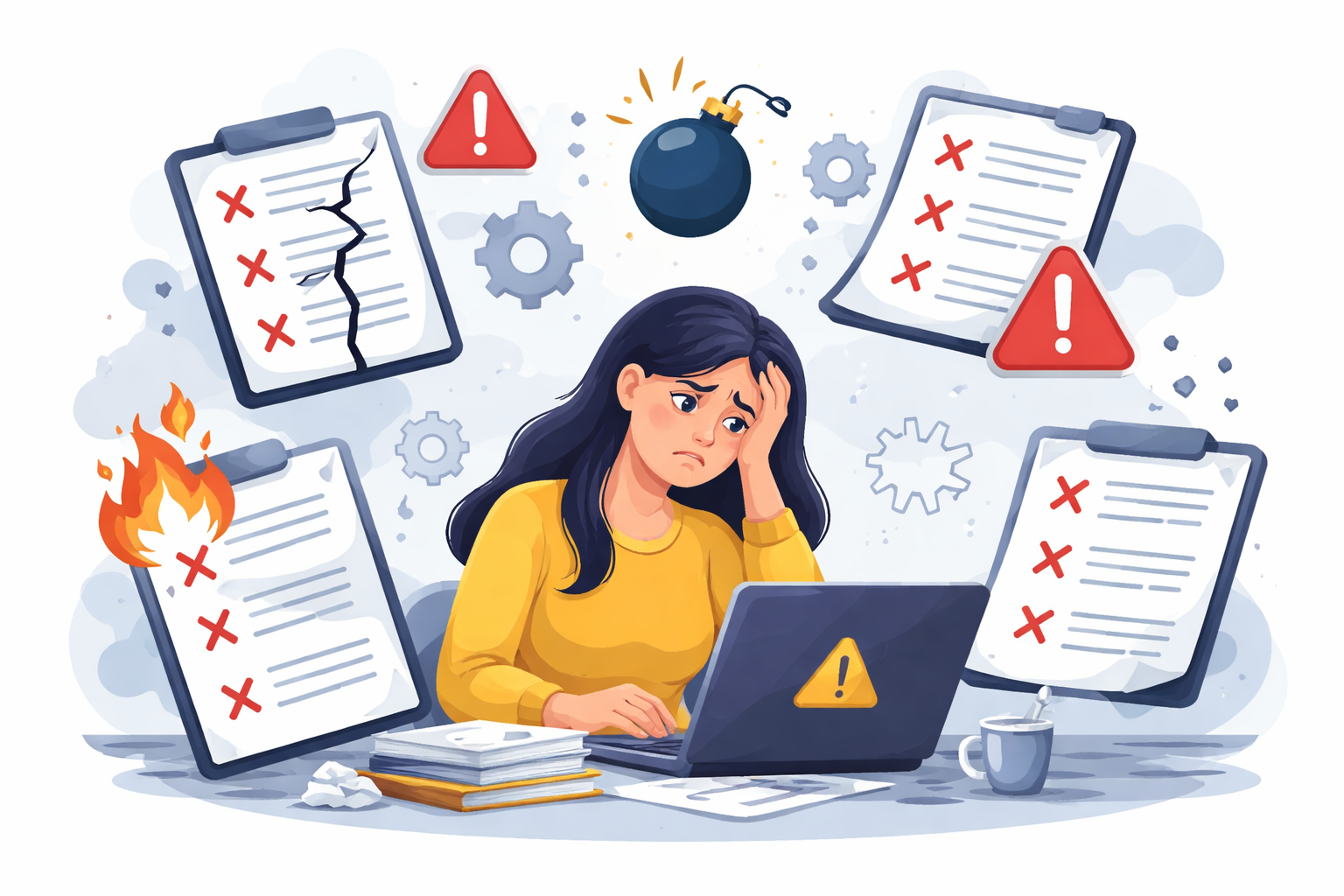
Even with a strong hiring process, outsourcing can still struggle in certain situations.
One common issue is unclear product requirements.
If the founder is still figuring out the product direction while development is happening, the scope will keep changing. That creates frustration for both sides.
Another problem is lack of technical ownership.
If nobody on the startup side reviews architecture decisions or technical trade-offs, the development team ends up guessing product priorities.
Unrealistic timelines also cause issues.
Startups sometimes expect a complex platform to be built in two or three months. Under that pressure, even a strong development team will cut corners.
And finally, constant scope changes can break any outsourcing project.
When features are added every week without adjusting timelines, the project becomes unstable.
Best Practices When Working With an Outsourced Development Team

Hiring the right development company is only the first step. The collaboration model matters just as much.
A few practices that consistently work well in startup environments include:
Weekly technical check-ins
Beyond product updates, schedule regular technical discussions.
These meetings help review:
- Architecture decisions
- Performance issues
- Upcoming technical risks
It keeps both sides aligned.
Clear product ownership
Clear product ownership means having one person responsible for product decisions and priorities. When too many stakeholders give feedback, it often creates confusion for the development team. A single decision-maker helps keep development focused and prevents constant changes in direction
Deliver in small milestones
Delivering work in small milestones helps founders track progress and reduce project risk. Instead of waiting months for a full product, the team releases features step by step. This approach allows faster feedback, easier improvements, and better control over the development process.
Maintain documentation discipline
Maintaining proper documentation helps teams keep track of system architecture, decisions, and workflows. It makes onboarding new developers easier and reduces confusion during development. Good documentation ensures the product can be maintained and scaled over time.
Documentation may feel unnecessary early in a startup.
But even lightweight documentation helps with:
- Onboarding new developers
- Explaining architecture decisions
- Reducing repeated discussions
This becomes very valuable as the product grows.
Conclusion
Hiring a development partner is not just about talent or cost.
Most outsourcing failures happen because founders evaluate the wrong things during the hiring stage.
Portfolio screenshots, hourly rates, and company size are easy to compare, but they rarely reveal how the team actually works.
A practical checklist before hiring a software development company in India focuses on deeper questions: engineering ownership, communication structure, deployment workflow, and production responsibility.
Spending time on these details early can prevent months of delays, missed deadlines, and expensive rebuilds later.
Checklist Before Hiring A Software Development Company In India: FAQs
Yes, it can work well for startups if the company provides dedicated developers, clear communication processes, and consistent team members. Many successful startups rely on distributed teams when managed correctly.
Most founders evaluate companies based on pricing and portfolio instead of understanding the development workflow, communication structure, and engineering ownership.
Request a technical discussion with engineers, ask about architecture decisions from past projects, and review how they handle production bugs and deployment processes.
Choosing the lowest hourly rate often leads to hidden costs later. Shared teams, poor communication, or inconsistent developers usually slow the project down and increase overall development time.
A short milestone project (4–6 weeks) is usually enough to evaluate communication quality, engineering discipline, and delivery reliability before committing to a longer engagement.
References
About the Author
Paras Dabhi
VerifiedFull-Stack Developer (Python/Django, React, Node.js) · Stellar Code System
Hi, I’m Paras Dabhi. I build scalable web applications and SaaS products with Django REST, React/Next.js, and Node.js. I focus on clean architecture, performance, and production-ready delivery with modern UI/UX.

Paras Dabhi
Stellar Code System
Building scalable CRM & SaaS products
Clean architecture · Performance · UI/UX