Cloud Modernization Services In USA
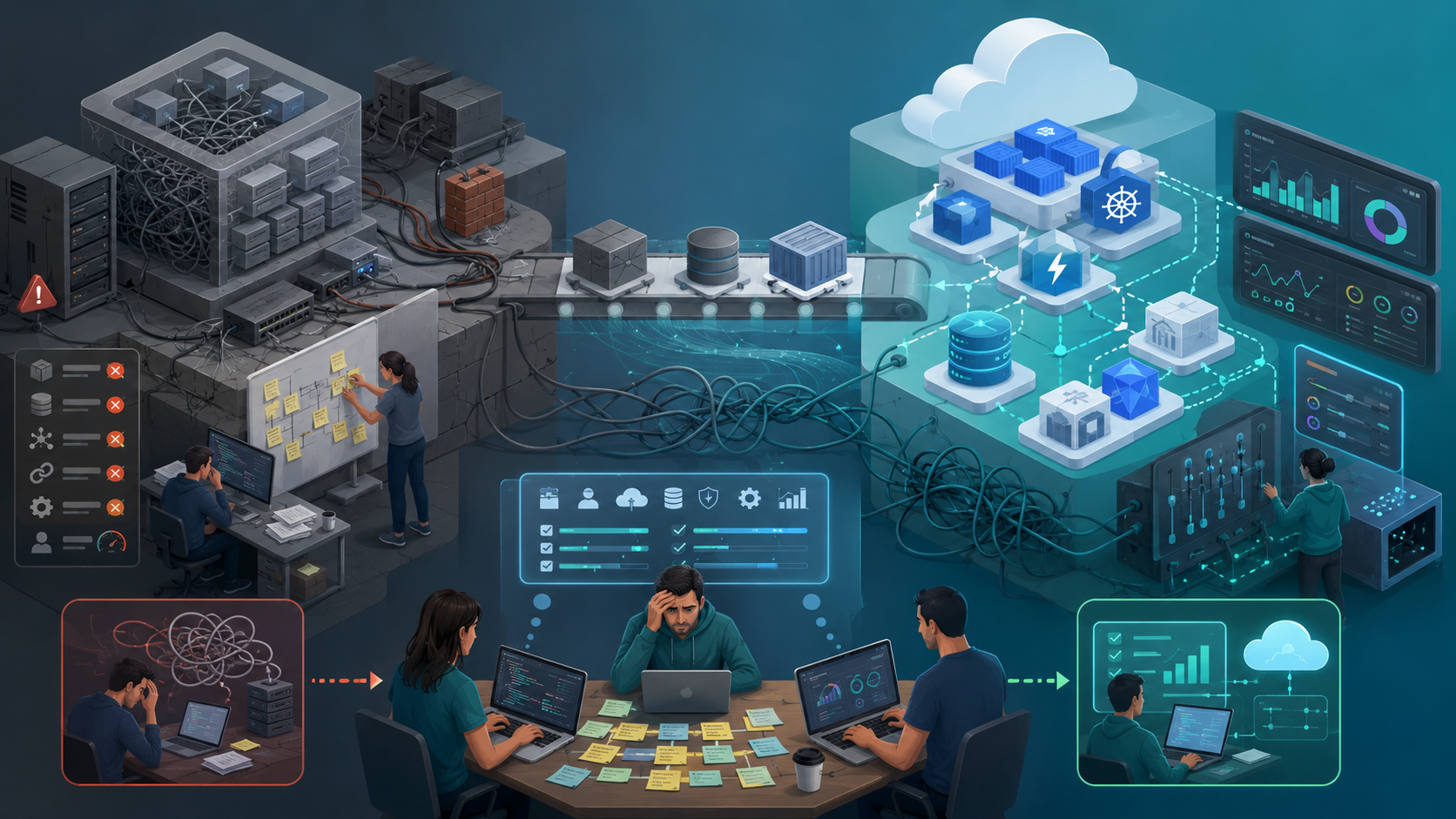
Cloud modernization is often presented as a straightforward journey. Move workloads to the cloud, adopt containers, automate deployments, and everything becomes faster, more scalable, and easier to maintain. In reality, most engineering teams discover that modernization introduces a different set of challenges rather than eliminating the existing ones.
I've worked with startup teams, SaaS companies, and growing product organizations that began their cloud modernization efforts expecting immediate improvements in performance, reliability, and development speed. Instead, many found themselves dealing with fragmented infrastructure, inconsistent deployment workflows, and operational complexity that slowed delivery rather than accelerating it.
The problem usually isn't the cloud platform or the technology itself. It is the assumption that replacing existing infrastructure automatically improves software architecture, engineering processes, and team collaboration. Without a clear modernization strategy, organizations often migrate technical debt instead of reducing it.
For small engineering teams with limited resources, every architectural decision has long-term consequences. Modernization should simplify systems, improve efficiency, and make future development easier—not create another layer of complexity that becomes difficult to manage.
Why This Problem Happens in Real Teams
Cloud modernization projects rarely fail because engineers lack technical skills. They become difficult because business priorities, limited engineering capacity, and aggressive delivery timelines influence technical decisions from the beginning.
Migration Becomes the Primary Goal Instead of Business Value
One of the most common mistakes is treating migration as the success metric.
Teams focus on moving applications, databases, and workloads into a cloud platform as quickly as possible. Once everything is deployed, they consider the modernization complete.
In practice, very little has changed.
The same software architecture, inefficient application design, and operational bottlenecks continue to exist—only now they're running on different infrastructure.
Modernization should improve:
- Application maintainability
- Deployment reliability
- Development speed
- Operational visibility
- Long-term scalability
Simply changing where software runs doesn't automatically improve any of these areas.
Legacy Architecture Moves Without Improvement
I've seen teams spend months planning migration while avoiding discussions about architecture.
Instead of evaluating which services should be refactored, replatformed, or retired, they move every component exactly as it exists.
That often means:
- Large monolithic applications
- Aging databases
- Manual deployment processes
- Outdated networking configurations
- Poor service integration
The cloud becomes a more expensive hosting environment rather than a better engineering platform.
Small Teams Have Limited Engineering Capacity
Most startups and SaaS companies don't have dedicated cloud engineering departments.
The same engineers often handle:
- Backend development
- Frontend development
- Infrastructure
- Security
- Deployment
- Production support
Adding cloud transformation to an already busy roadmap creates difficult trade-offs.
Important work such as:
- Refactoring
- Documentation
- Automation
- Performance optimization
- Monitoring
gets postponed because customer-facing features take priority.
The result is a partially modernized environment that's harder to maintain than the original system.
Automation Arrives Too Late
Many organizations still perform deployment manually during the early stages of modernization.
Configuration changes happen through dashboards.
Infrastructure changes are tracked in spreadsheets.
Production environments differ slightly from staging.
These differences may seem harmless at first but eventually create inconsistent environments that are difficult to troubleshoot.
Automation should be introduced early—not after migration is complete.
Reliable deployment workflows reduce operational risk while improving engineering confidence.
Teams Confuse Infrastructure Modernization with Software Modernization
Modern cloud platforms provide excellent services for compute, storage, networking, analytics, and databases.
However, these services don't solve poor software engineering practices.
If an application has tightly coupled modules, unclear service boundaries, or inconsistent APIs, those problems remain after migration.
Cloud modernization should improve both:
- Infrastructure
- Software architecture
Ignoring one usually limits the benefits of the other.
Tool Adoption Replaces Engineering Planning
Modern cloud ecosystems provide countless technologies:
- Kubernetes
- Docker
- Serverless platforms
- Container orchestration
- Managed databases
- Monitoring platforms
- Analytics services
- Infrastructure automation
Each solves a specific problem.
The challenge is that many teams adopt them simply because they're considered industry standards.
Instead of asking:
"What operational problem are we solving?"
they ask:
"Which cloud technologies should we use?"
That shift in thinking often increases operational complexity without delivering measurable business improvements.
Where Most Teams Make the Wrong Decision
Cloud modernization isn't usually damaged by poor technology choices.
It's damaged by introducing complexity before the organization is ready to support it.
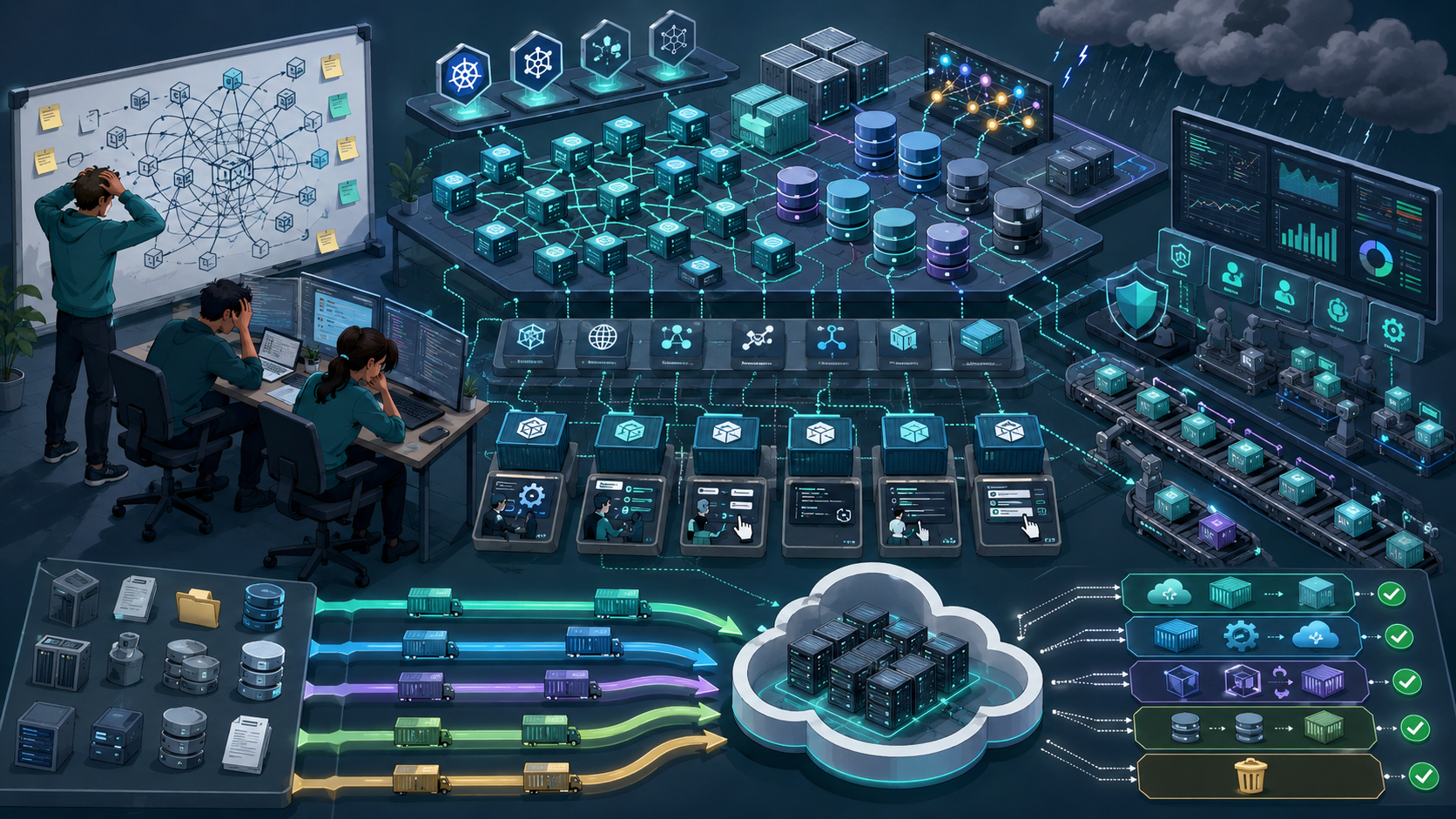
Copying Enterprise Architecture Too Early
One pattern appears repeatedly.
A startup with six developers decides to build infrastructure similar to large technology companies.
Within months they have:
- Microservices
- Kubernetes clusters
- Multiple databases
- Event-driven messaging
- Complex networking
- Service discovery
- Independent deployment pipelines
Everything looks modern.
But everyday development becomes slower.
Simple feature requests require changes across several services.
Debugging production issues takes longer.
New engineers need weeks to understand the architecture.
Enterprise architecture solves enterprise-scale problems.
Small teams often create enterprise-scale complexity without enterprise-scale traffic.
Introducing Microservices Before the Product Stabilizes
Microservices are powerful when product boundaries are well understood.
Early-stage products rarely have that stability.
Business requirements change constantly.
Features evolve every sprint.
Data models shift frequently.
Breaking applications into many independent services too early creates unnecessary coordination between engineering teams.
I've seen startups spend more time maintaining service communication than delivering product improvements.
A modular monolith is often a better foundation during early growth.
Treating Containerization as the End Goal
Containerization has become a standard part of modern software deployment.
Docker provides consistency across development, testing, and production.
But containerization alone doesn't modernize software.
If applications still require:
- Manual configuration
- Manual deployments
- Shared databases
- Unclear dependencies
running them inside containers changes very little.
Containers improve portability.
They don't automatically improve maintainability.
Overengineering Infrastructure for Future Scale
Many engineering teams optimize for traffic they'll never reach.
They build highly distributed platforms designed for millions of users while serving only a few thousand.
This usually introduces:
- Higher maintenance costs
- More operational overhead
- Additional monitoring requirements
- Complex deployment workflows
- Larger security responsibilities
Good architecture grows with the business.
It doesn't try to predict every future requirement.
Rehosting Everything Instead of Evaluating Each Workload
Rehosting is often the fastest migration strategy.
Moving existing workloads without major changes reduces short-term project risk.
However, not every application benefits equally.
Some systems perform better after replatforming.
Others require selective refactoring.
Some legacy services should simply be retired.
Treating every workload the same often misses opportunities to improve efficiency, reduce maintenance, and simplify long-term operations.
Choosing the right modernization path for each application usually produces better results than applying one migration strategy across the entire platform.
Practical Fixes That Actually Work
The most successful cloud modernization projects I've participated in didn't begin with new technologies.
They began by reducing unnecessary complexity.
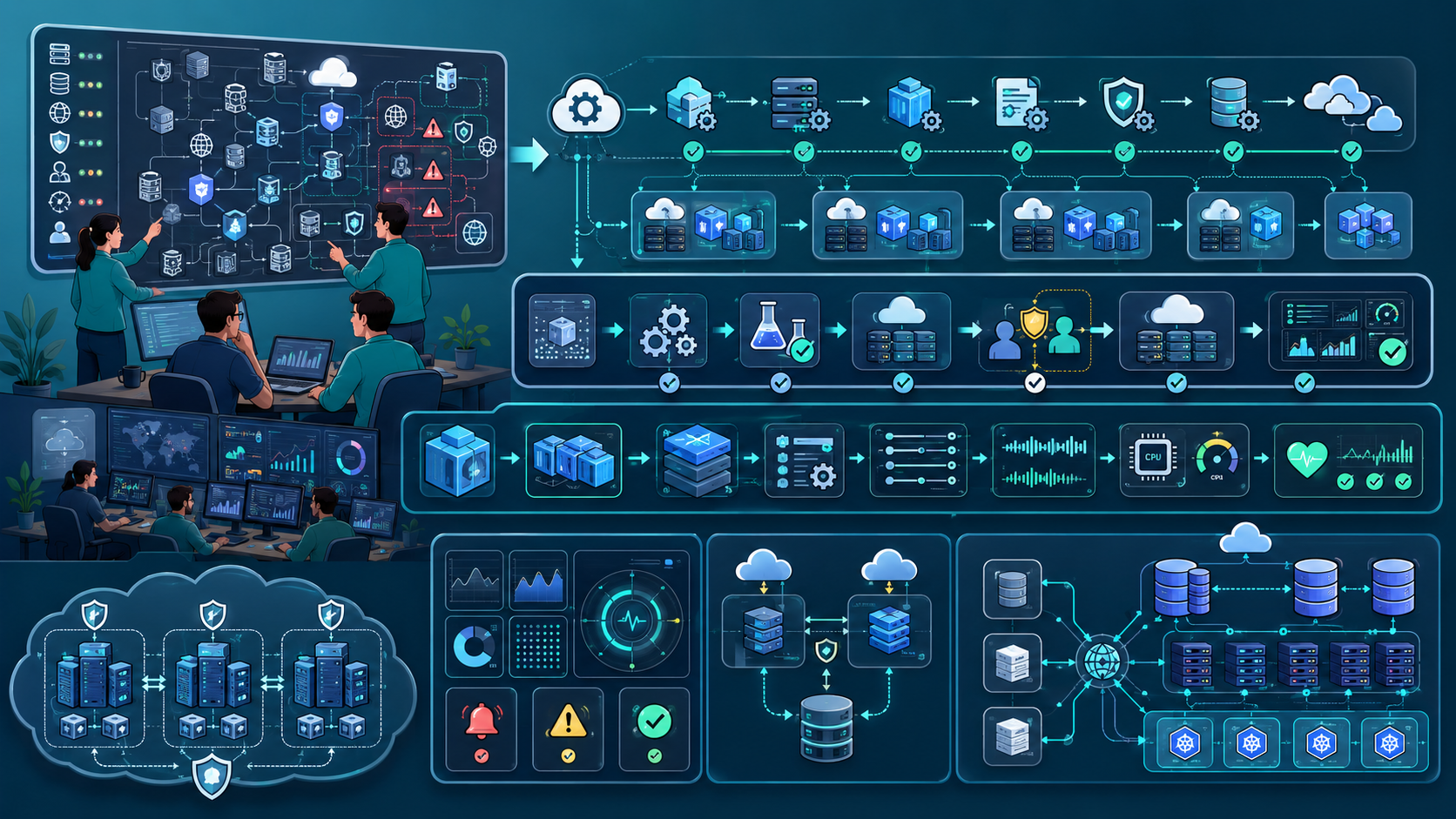
Start With an Architecture Assessment
Before migrating anything, document your current environment. Working with a US cloud software team for modernization planning helps businesses assess architecture, infrastructure dependencies, database relationships, security requirements, cloud migration risks, and modernization priorities before moving workloads.
Identify:
- Core business applications
- Infrastructure dependencies
- Database relationships
- External integrations
- Security requirements
- Compliance obligations
- Performance bottlenecks
- High-risk workloads
This exercise often reveals systems that no longer provide business value and components that can be consolidated before migration.
A simpler architecture is almost always easier to modernize than a larger one.
Modernization succeeds when engineering teams improve their delivery process alongside their technology stack. The following practices consistently produce better long-term results than large, one-time migrations.
Build Automation Before Scaling Infrastructure
Automation should not be the final step of cloud modernization—it should be one of the first.
Every manual deployment, configuration change, or environment setup becomes technical debt as the platform grows.
Prioritize automation for:
- Infrastructure provisioning
- Application deployment
- Configuration management
- Security validation
- Backup processes
- Environment creation
When engineers can reproduce environments consistently, deployments become more reliable and production incidents become easier to investigate.
Introduce CI/CD Incrementally
Many teams attempt to redesign their entire deployment process at once.
A better approach is to improve one workflow at a time.
For example:
- Automatically build every commit.
- Run automated tests before deployment.
- Deploy to staging after successful validation.
- Require approval before production releases.
- Monitor deployment health after release.
Incremental CI/CD adoption reduces deployment risk while allowing engineering teams to learn and improve their release process without disrupting ongoing product development.
Standardize Containerization Carefully
Containerization provides consistent runtime environments, but consistency only matters if teams follow the same practices.
Define standards for:
- Docker image structure
- Version management
- Environment variables
- Logging
- Resource allocation
- Health checks
When every application follows different conventions, containerized environments quickly become difficult to support.
Consistency reduces operational overhead.
Adopt Kubernetes Only When Operations Justify It
Kubernetes is an excellent orchestration platform, but it introduces its own operational responsibilities.
Small engineering teams should ask:
- Do we manage enough services to benefit?
- Do we need advanced orchestration capabilities?
- Can our engineers support cluster operations?
- Will Kubernetes simplify deployment or add another maintenance layer?
For many SaaS products, simpler deployment platforms remain sufficient until product growth creates genuine orchestration requirements.
Modernization should reduce complexity, not introduce it prematurely.
Strengthen Monitoring From Day One
Visibility is often overlooked during migration.
Teams focus on deployment while neglecting operational insight.
Effective monitoring should cover:
- Application health
- Infrastructure utilization
- Database performance
- Network latency
- API response times
- Error rates
- Resource consumption
Combine operational metrics with analytics that explain how infrastructure changes affect user experience and business outcomes.
Without visibility, troubleshooting becomes reactive rather than proactive.
Design for Reliability Instead of Maximum Scale
Many organizations focus heavily on scalability while overlooking reliability.
In practice, users notice outages long before they notice scaling improvements.
Prioritize:
- High availability
- Automated recovery
- Backup validation
- Disaster recovery planning
- Resilient service communication
- Fault isolation
A platform that handles moderate growth consistently delivers more value than one designed for extreme scale but prone to operational failures.
Modernize Data Alongside Applications
Applications rarely operate independently.
Successful modernization also evaluates:
- Database architecture
- Storage optimization
- Backup strategies
- Data replication
- Networking efficiency
- Compute resource allocation
Ignoring these supporting systems often limits overall platform performance regardless of application improvements.

When This Approach Fails
No modernization strategy works in every situation.
Being honest about the limitations helps engineering teams choose the right approach.
Extremely Large Enterprises
Organizations managing hundreds of applications across multiple business units often require dedicated platform engineering teams, governance frameworks, and specialized migration programs.
The lightweight approach described here is better suited to small and mid-sized engineering organizations.
Highly Regulated Industries
Products operating under strict security or compliance requirements often require:
- Additional documentation
- Formal approval processes
- Security assessments
- Infrastructure validation
- Audit controls
These requirements naturally slow modernization efforts.
Attempting to move too quickly usually creates additional operational risk.
Legacy Systems With Heavy Dependencies
Some enterprise applications have accumulated years of tightly coupled integrations.
Replacing one component may affect dozens of other systems.
In these environments, gradual transformation usually produces better results than complete replacement.
Patience often saves significant engineering effort.
Teams Without Operational Ownership
Cloud modernization is not simply an engineering project.
It requires ongoing ownership.
If nobody maintains:
- Infrastructure
- Security
- Deployment workflows
- Monitoring
- Performance optimization
the platform gradually becomes difficult to support regardless of how successful the initial migration appeared.
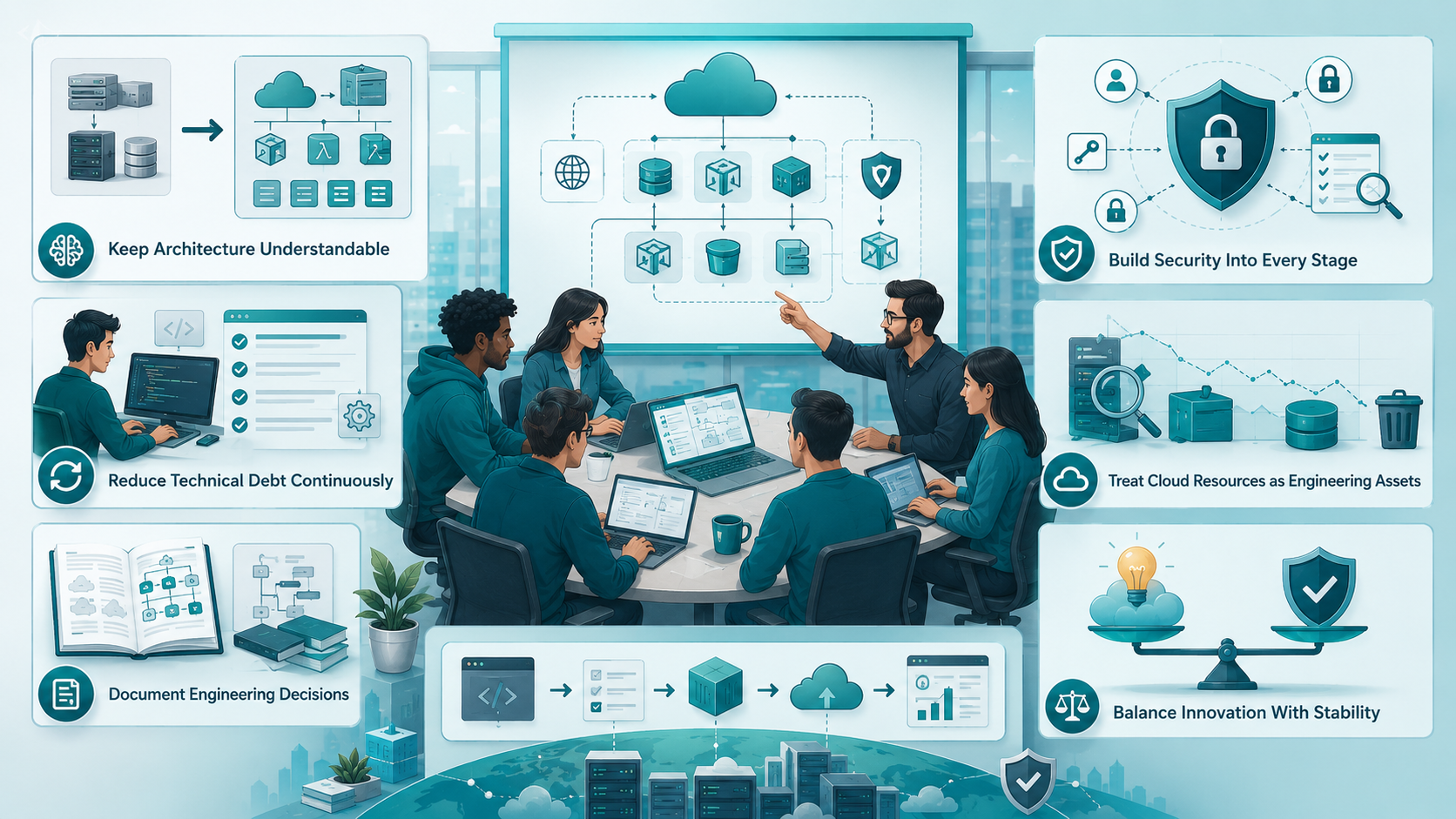
Sustainable Practices for Small Engineering Teams
Long-term success comes from maintaining simplicity rather than constantly adopting new technologies.
Keep Architecture Understandable
Every engineer should understand how the platform works.
Avoid unnecessary abstraction.
Simple architecture improves:
- Development speed
- Onboarding
- Maintenance
- Incident response
If only one engineer understands the system, operational resilience is already compromised.
Reduce Technical Debt Continuously
Technical debt grows quietly.
Instead of scheduling massive cleanup projects, dedicate time during every development cycle for:
- Refactoring
- Removing unused services
- Updating dependencies
- Improving code quality
- Simplifying integrations
Small improvements prevent expensive rebuilds later.
Document Engineering Decisions
Documentation should explain why decisions were made—not just how systems work.
Maintain documentation for:
- Infrastructure architecture
- Deployment workflows
- Platform dependencies
- Security practices
- Disaster recovery procedures
- Integration patterns
Clear documentation improves collaboration across remote engineering teams and reduces onboarding time for new developers.
Build Security Into Every Stage
Security becomes harder to improve after systems reach production.
Include security throughout modernization by reviewing:
- Identity management
- Access controls
- Encryption
- Network segmentation
- Secret management
- Vulnerability scanning
Security should become part of normal engineering workflows rather than a separate project.
Treat Cloud Resources as Engineering Assets
Infrastructure requires regular maintenance just like application code.
Review cloud resources periodically to identify:
- Underutilized compute instances
- Unused storage
- Legacy workloads
- Obsolete networking rules
- Idle databases
- Outdated deployment resources
Regular optimization reduces maintenance costs while improving operational efficiency.
Balance Innovation With Stability
Every new platform, framework, or automation tool introduces learning curves.
Innovation matters, but stability keeps products moving forward.
Successful engineering teams evaluate technology based on:
- Business value
- Operational simplicity
- Team expertise
- Long-term maintainability
Modernization should enable faster product delivery—not become the product itself.
Conclusion
Cloud modernization is not a checklist of technologies to adopt. It is a continuous engineering effort to build systems that are easier to develop, deploy, operate, and maintain.
The biggest mistake I see is treating migration as the finish line. Moving applications to a new platform without improving architecture, automation, documentation, or engineering processes simply transfers existing problems into a different environment.
Small engineering teams achieve better outcomes by modernizing gradually. Focus on simplifying architecture, automating repetitive work, improving deployment reliability, strengthening resilience, and making thoughtful decisions about rehosting, replatforming, or refactoring based on each application's needs.
The goal is not to build the most advanced cloud platform. It is to create a reliable, secure, flexible, and maintainable system that supports the business as it grows.
Cloud Modernization Services In USA: FAQs
No. Cloud migration focuses on moving applications and workloads to a cloud environment. Cloud modernization goes further by improving architecture, automation, deployment workflows, security, and operational efficiency.
Not necessarily. Kubernetes is valuable when managing complex distributed applications, but many small teams can operate more efficiently with simpler deployment approaches until operational complexity justifies orchestration.
Rehosting moves applications with minimal changes.
Replatforming updates parts of the application to use managed cloud services.
Refactoring changes the application architecture or code to improve scalability, maintainability, and long-term performance.
Costs often increase because organizations migrate inefficient workloads, underestimate operational changes, delay automation, and fail to optimize infrastructure, storage, databases, and networking after migration.
Focus on incremental improvements, automate repetitive tasks, maintain clear documentation, continuously reduce technical debt, monitor system health, prioritize security, and make architecture decisions that match the team's size and product complexity instead of copying large enterprise environments.
Reference
Written by

Paras Dabhi
VerifiedFull-Stack Developer (Python/Django, React, Node.js)
I build scalable web apps and SaaS products with Django REST, React/Next.js, and Node.js — clean architecture, performance, and production-ready delivery.
LinkedIn