Dedicated Development Team vs Freelancers: Which Is Better in 2026?
Many startup teams begin product development with freelancers.
The decision usually makes sense at the beginning. Budget constraints are real, timelines are aggressive, and hiring a full engineering team feels unnecessary when the product is still being validated.
The problem appears later.
As SaaS products grow, new features, maintenance work, deployment workflows, customer requests, and technical debt start accumulating. What initially looked like a cost-efficient decision often creates hidden engineering bottlenecks.
Over the years, I've worked with startup founders, remote developers, and distributed engineering teams across multiple countries. One pattern appears repeatedly: teams focus on short-term pricing and underestimate the long-term impact of collaboration, accountability, and knowledge retention.
The discussion is rarely about who writes better code.
It's usually about which model can sustain product growth without creating operational instability.

Why This Problem Happens in Real Teams
Most founders evaluate development resources primarily through cost.
At the MVP stage, that approach seems reasonable.
A freelancer may provide the expertise needed to build an initial feature quickly. However, software products rarely remain static.
As products mature, complexity grows faster than expected.
New integrations appear.
Backend systems expand.
Frontend architecture evolves.
Customer support requests increase.
Security requirements become more demanding.
Documentation becomes necessary.
The challenge is that freelancers are often optimized for task completion rather than long-term ownership.
Dedicated development teams operate differently.
Their structure typically includes:
- Shared accountability
- Team coordination
- Continuous collaboration
- Consistent development processes
- Knowledge sharing
- Long-term product ownership
Without those systems, development can become dependent on individual contributors rather than organizational capacity.
I've seen startups lose months of productivity because critical product knowledge existed only inside one freelancer's head.
The immediate savings disappeared quickly.
Where Most Teams Make the Wrong Decision
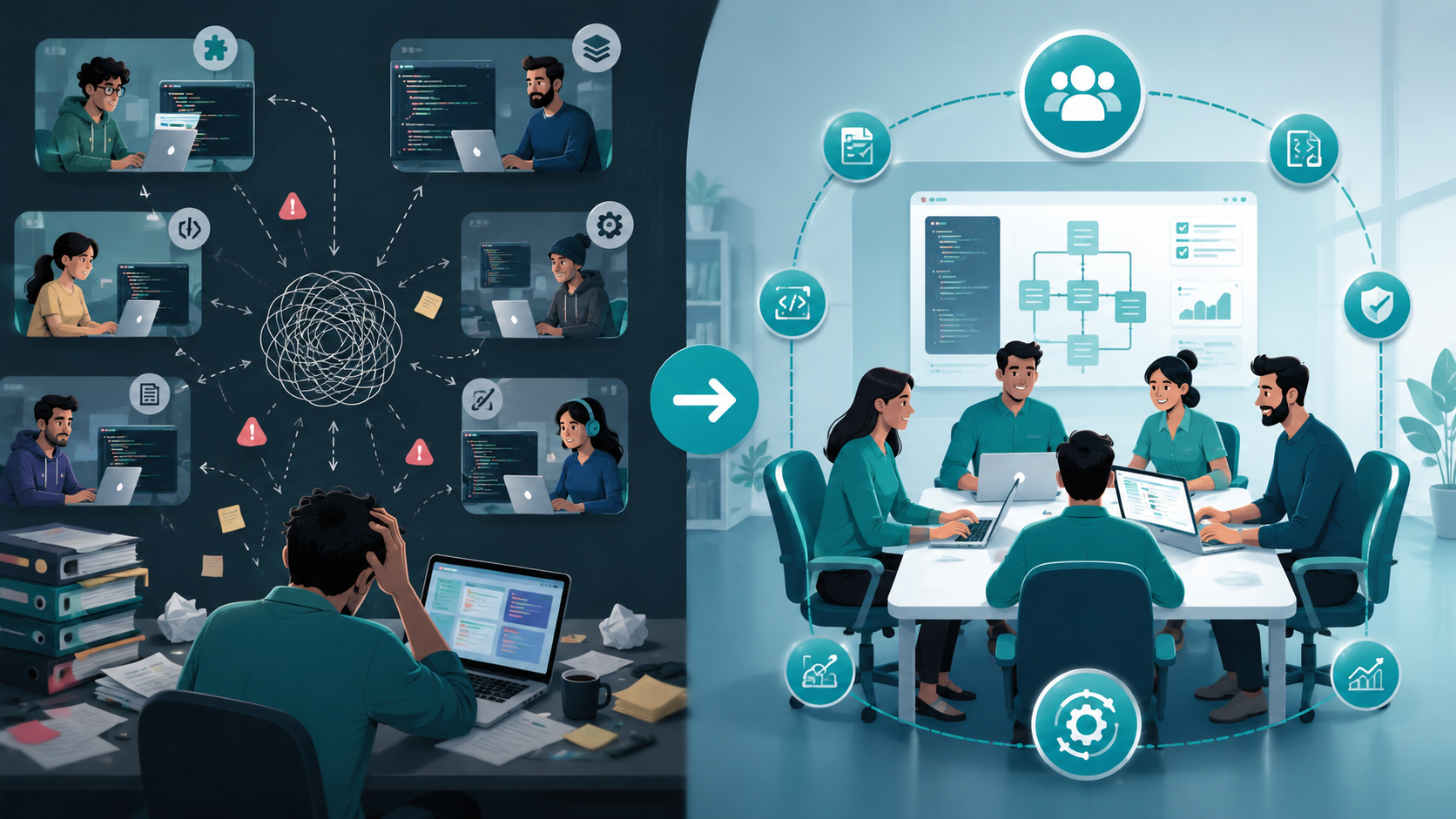
The biggest mistake is assuming software development is simply a collection of independent tasks.
In reality, software products are interconnected systems.
Online advice often suggests hiring multiple freelancers instead of building a dedicated team.
On paper, this appears flexible.
In practice, integration becomes difficult.
Common issues include:
- Inconsistent coding standards
- Different architectural approaches
- Communication delays
- Uneven documentation quality
- Lack of accountability for production issues
Most small teams underestimate the management overhead involved.
When five freelancers contribute to the same codebase, someone must supervise architecture decisions, coordinate delivery schedules, manage dependencies, and maintain quality standards.
If nobody owns those responsibilities, stability begins to decline.
I've seen startups introduce additional freelancers to solve workload problems.
Ironically, this often increases complexity rather than reducing it.
More contributors create additional communication paths.
More communication paths create additional coordination requirements.
Productivity starts slowing even while development capacity appears to increase.
Dedicated teams generally avoid this issue because collaboration is built into the operating model.
Developers work within shared processes, common engineering practices, and aligned business objectives.
Practical Fixes That Actually Work
The correct decision depends on product maturity. For growing SaaS products, working with a US-based software team for long-term product ownership can provide stronger accountability, documentation, knowledge retention, and delivery stability than relying only on short-term freelance support.
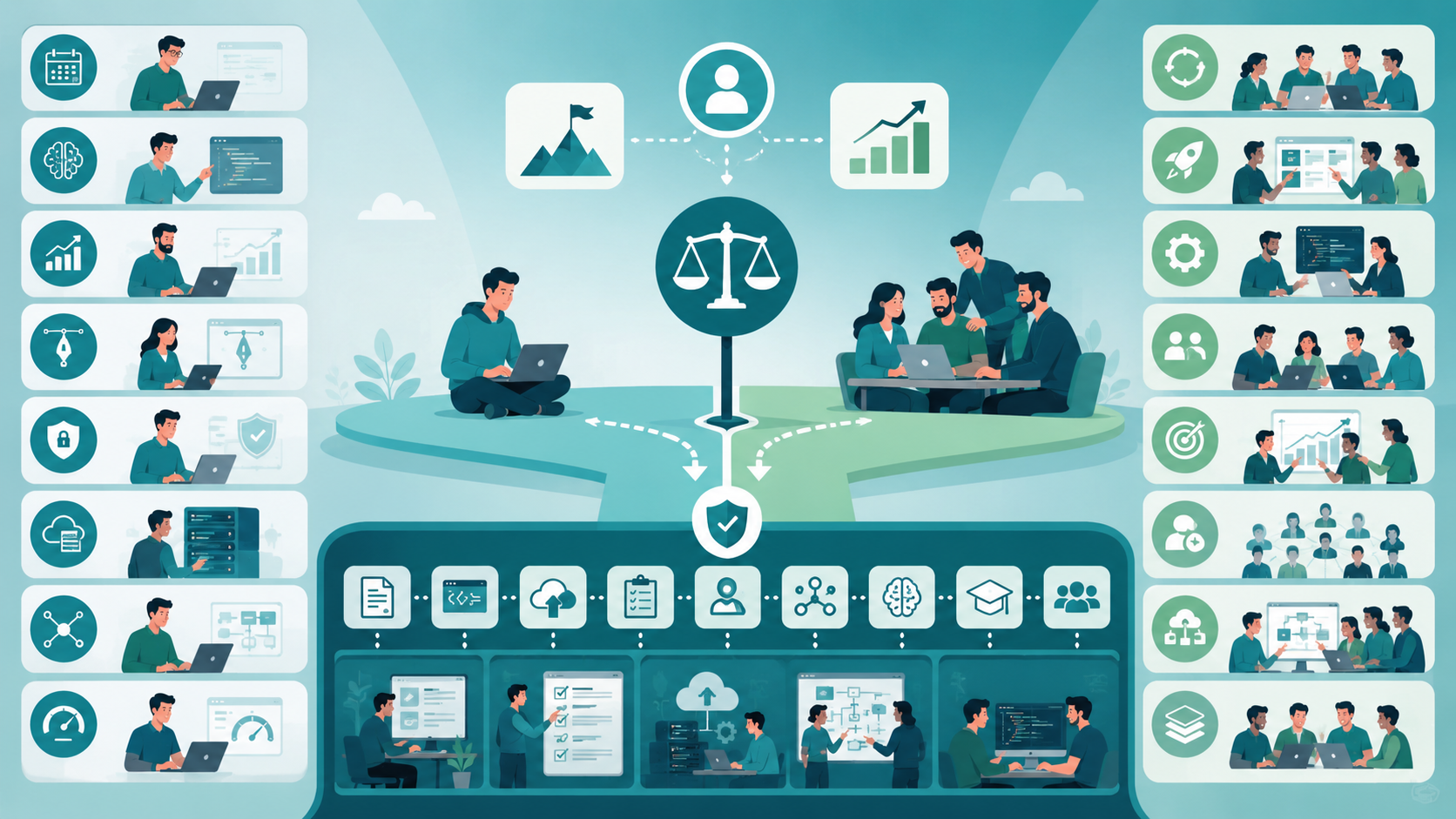
Many founders assume the choice is binary.
It isn't.
Use Freelancers When
Freelancers are often effective for:
- Short-term projects
- Specialized expertise
- Temporary workload spikes
- Design-focused tasks
- Independent technical audits
Examples include:
- Security reviews
- Infrastructure optimization
- API integrations
- Performance troubleshooting
These projects have clear boundaries and limited long-term dependency.
Use Dedicated Teams When
Dedicated teams become valuable when products require:
- Continuous development
- Frequent releases
- Long-term maintenance
- Shared ownership
- Predictable delivery
Typical indicators include:
- Multiple active developers
- Growing customer base
- Increasing feature requests
- Complex deployment workflows
- Cross-functional product work
At this stage, consistency becomes more valuable than flexibility.
Focus on Process Before Scaling Headcount
Adding more developers does not automatically solve engineering challenges. Without clear documentation, architectural standards, deployment procedures, and defined ownership, larger teams often create additional complexity. Strong processes improve collaboration, consistency, and productivity regardless of team size.
That rarely works.
Instead:
- Improve documentation
- Define architectural standards
- Establish deployment procedures
- Clarify ownership responsibilities
- Reduce unnecessary dependencies
Strong processes improve efficiency regardless of team structure.
Protect Knowledge Retention
Critical product knowledge should never depend on a single developer. When one person exclusively understands key systems, operational risks increase significantly. Shared documentation, cross-training, and knowledge distribution help maintain stability and reduce disruptions when team members leave or become unavailable.
One practical rule I recommend:
Every critical system should be understandable by multiple developers.
Avoid situations where:
- One person owns production infrastructure
- One developer understands payment systems
- One freelancer maintains backend services
Knowledge concentration creates operational risk.
Documentation is significantly cheaper than recovery efforts.
When This Approach Fails
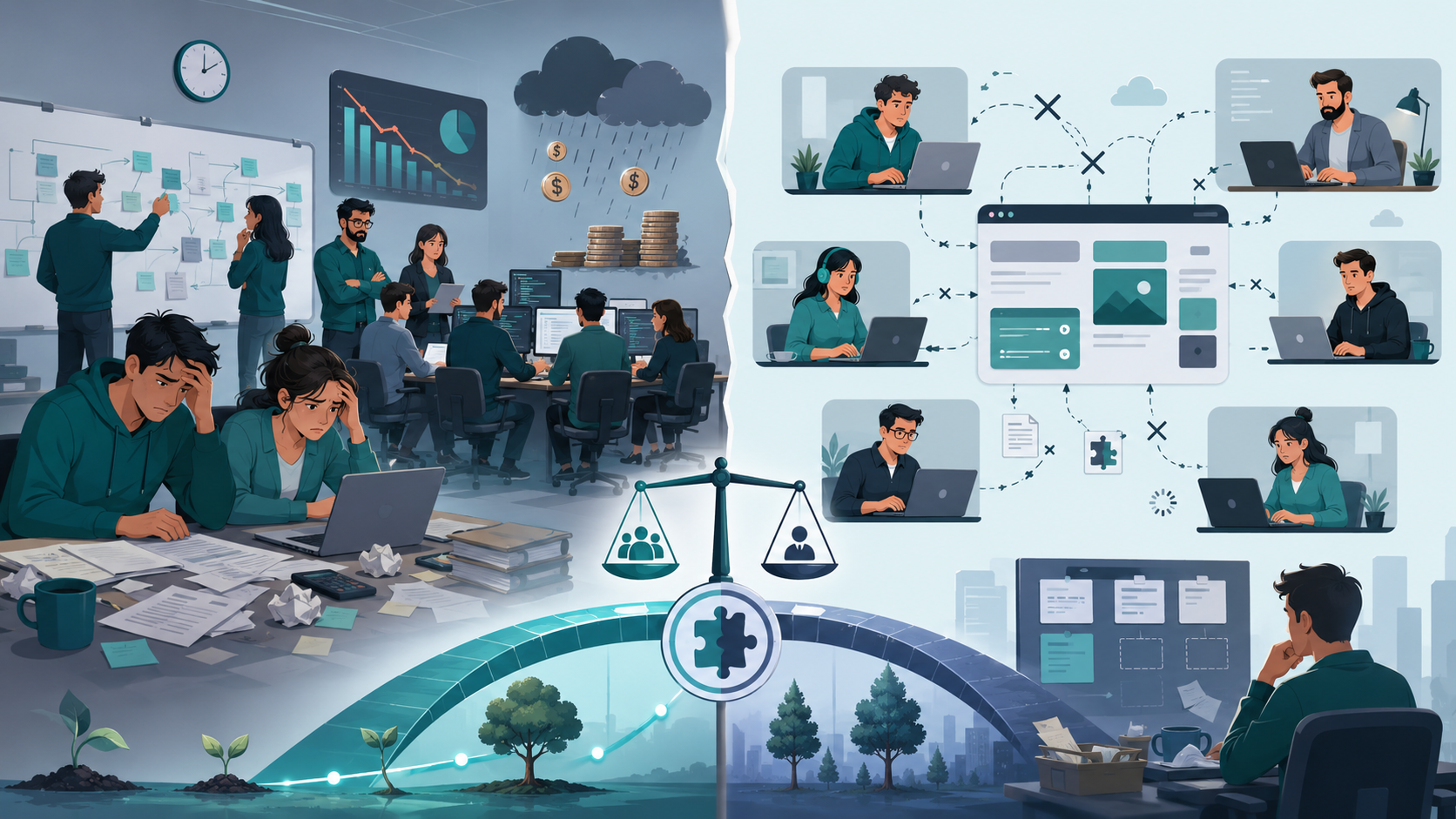
Dedicated development teams are not automatically better.
They introduce trade-offs.
For very early-stage products, dedicated teams can increase investment before product-market fit exists.
This creates unnecessary financial pressure.
Dedicated teams may also become inefficient when:
- Product direction changes weekly
- Requirements remain unstable
- Workloads fluctuate dramatically
- Budget limitations are severe
In these situations, freelancer flexibility can provide advantages.
Freelancers also remain valuable when highly specialized skills are needed temporarily.
The key lesson is that team structure should match product complexity.
Premature team expansion creates waste.
Premature dependence on freelancers creates scalability problems.
Both approaches fail when applied at the wrong stage.
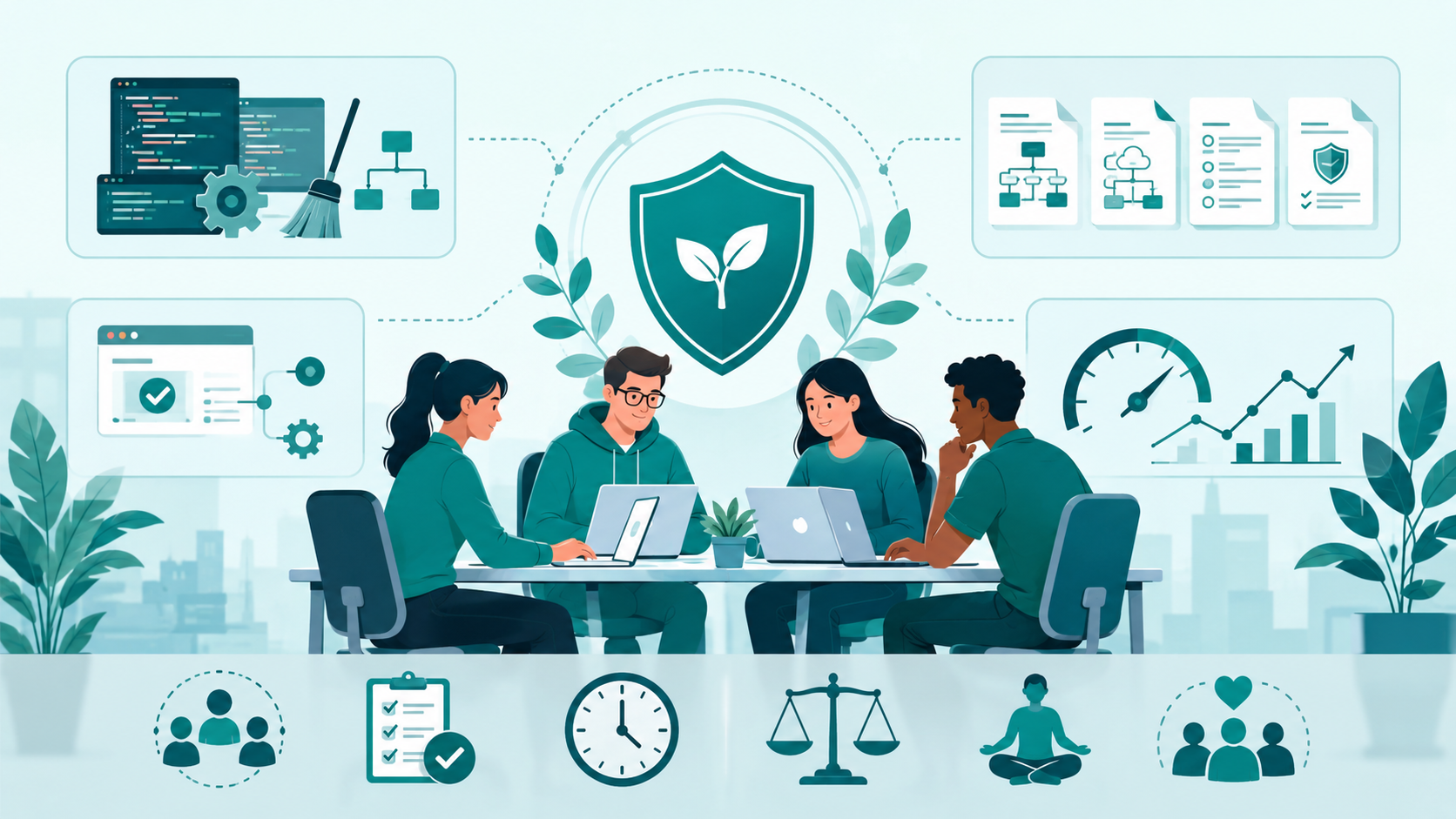
Sustainable Practices for Small Engineering Teams
Regardless of staffing model, sustainable engineering practices matter more than headcount.
Reduce Technical Debt Continuously
Technical debt grows over time and becomes increasingly expensive to address. Regular refactoring, architecture improvements, dependency updates, and performance optimization help keep systems maintainable. Small, consistent improvements prevent larger development and maintenance challenges in the future.
Schedule regular time for:
- Refactoring
- Architecture cleanup
- Dependency upgrades
- Performance optimization
Small improvements prevent larger maintenance costs later.
Standardize Documentation
Well-maintained documentation improves transparency and supports better collaboration across engineering teams. Recording architecture decisions, deployment workflows, API details, and security practices makes onboarding easier and reduces reliance on individual contributors. Strong documentation creates a more stable development environment.
Good documentation improves:
- Transparency
- Collaboration
- Onboarding
- Stability
Focus on:
- System architecture
- Deployment workflows
- API documentation
- Security decisions
Documentation reduces dependency on individuals.
Prioritize Consistency
Consistency is often more valuable than constantly introducing new tools or processes. Standardized development practices improve code quality, reliability, maintainability, and delivery speed. Teams that follow predictable workflows typically achieve better long-term results than those making frequent changes.
Consistency improves:
- Quality
- Reliability
- Delivery speed
- Maintainability
A predictable development process usually outperforms constantly changing workflows.
Build Sustainable Workloads
Sustainable workloads help teams maintain productivity over the long term. Realistic timelines, clear priorities, and manageable responsibilities reduce stress and prevent burnout. Consistent progress and steady delivery are generally more effective than short periods of intense output followed by exhaustion.
Healthy engineering environments maintain:
- Realistic timelines
- Manageable workloads
- Clear priorities
- Reasonable expectations
Velocity matters more than occasional bursts of output.
Conclusion
The debate between dedicated development teams and freelancers is rarely about coding ability.
It is primarily about ownership, scalability, coordination, and long-term product stability.
Freelancers can be extremely effective for specialized or short-term work.
However, as SaaS products grow, collaboration, accountability, documentation, and knowledge retention become increasingly important.
The biggest mistake most startups make is evaluating development decisions purely through short-term cost.
The more important question is whether the chosen model can support the product twelve months from now.
In growing software products, sustainability usually becomes more valuable than flexibility.
FAQ
Initially, yes. However, long-term costs often depend on productivity, maintenance effort, and coordination overhead rather than hourly rates alone.
Usually when product development becomes continuous, releases become frequent, and multiple systems require ongoing maintenance.
They can, but knowledge retention, availability, and accountability often become challenges as complexity increases.
Clear documentation, ownership definitions, communication standards, and consistent development processes reduce most coordination issues.
Dependency on individual contributors. When critical product knowledge exists with one person, operational risk increases significantly.
Reference
Written by

Paras Dabhi
VerifiedFull-Stack Developer (Python/Django, React, Node.js)
I build scalable web apps and SaaS products with Django REST, React/Next.js, and Node.js — clean architecture, performance, and production-ready delivery.
LinkedIn