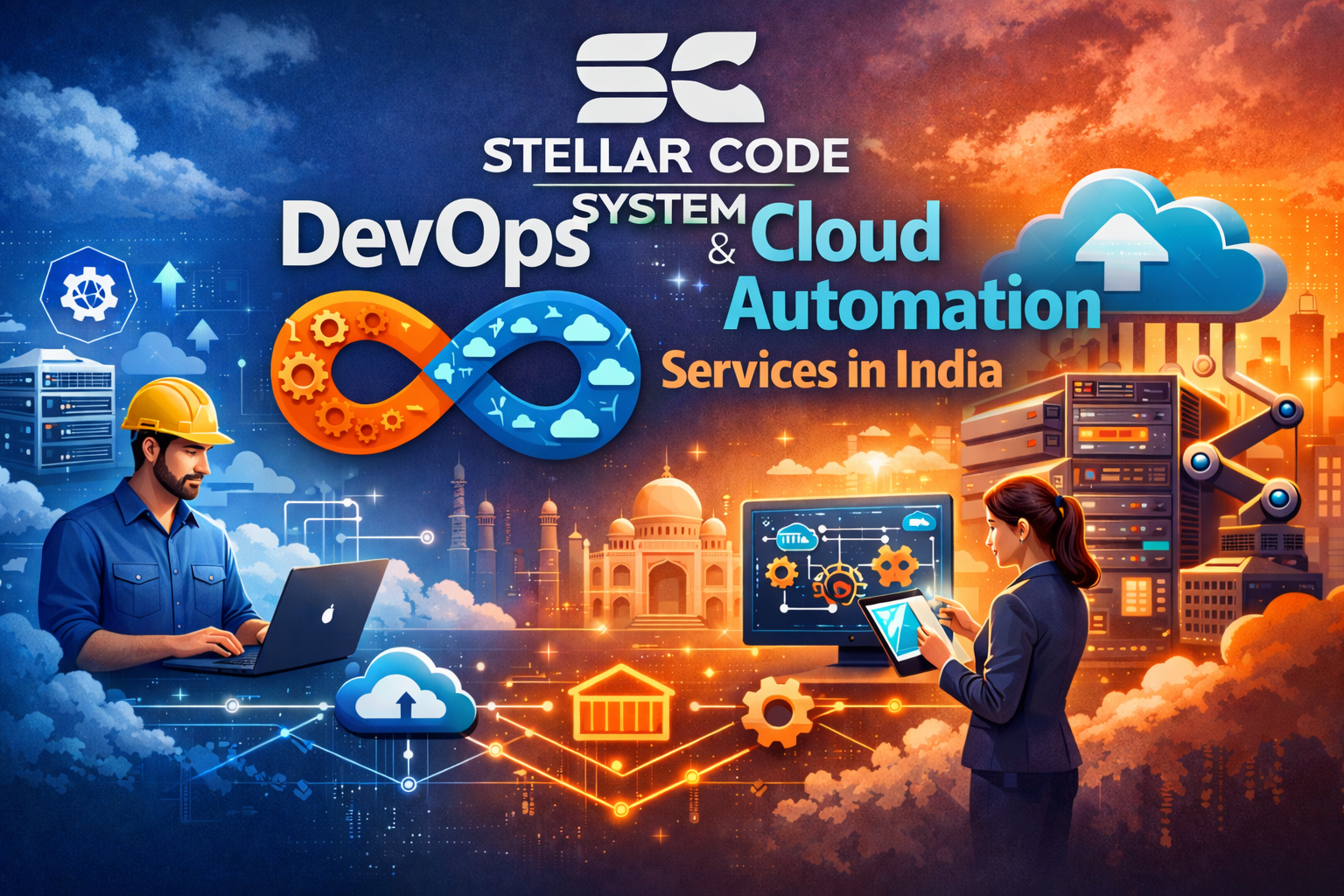
DevOps and Cloud Automation Services in india
Small teams usually don’t notice deployment problems early.
At first, shipping through manual scripts, console changes, and late-night SSH fixes feels good enough. Then traffic grows, releases become risky, rollback takes too long, and suddenly half the sprint goes into fixing infrastructure mistakes instead of building product features.
This happens repeatedly in Indian startups and small SaaS teams. The problem is that it rarely announces itself clearly. It is the lack of repeatable deployment ownership.

Why this problem actually happens in small teams
Most small teams start with speed, not process.
The first backend goes live with a few EC2 instances, a managed database, maybe a Docker setup, and some manual GitHub Actions workflow. That works for the MVP phase.
The trouble starts when that temporary setup quietly becomes production architecture.
A few common reasons this breaks later:
- rushed MVP infrastructure with no naming standards
- manual AWS console changes that never make it into code
- no Infrastructure as Code ownership
- different staging and production environments
- rollback steps only exist in one senior developer’s head
- no cloud cost visibility after autoscaling starts
In most Indian startup teams, the same developers handling product features are also managing deployment pipelines. Under deadline pressure, infra discipline gets pushed aside.
That is where deployment instability begins.

Where most teams in India get this wrong
The biggest mistake is assuming DevOps means adding more tools.
Small teams often adopt Kubernetes, Terraform, ArgoCD, Prometheus, Grafana, and multiple CI layers before they even have a stable staging workflow.
That usually makes things worse.
The common wrong turns look like this:
- using Kubernetes too early for a product with one API service
- manual SSH deployments even after the team grows past 3 developers
- no Terraform state locking strategy
- pipelines that deploy successfully but cannot rollback safely
- secrets stored across multiple places
- copying enterprise architecture from big tech blogs
The real issue is process ownership, not tooling.
A lot of teams in India copy architectures designed for 100-engineer organizations. Small teams end up maintaining unnecessary complexity.
The result:
- slower releases
- more deployment fear
- higher cloud bills
- constant infra firefighting
Read More:- How To Migrate Custom Software To Cloud In India
Practical DevOps and cloud automation fixes that work
The fixes that actually work are boring, repeatable, and easy to maintain.
That is exactly why they work.
1) Fix deployment automation first
Most release issues in small teams come from inconsistent deployment steps, not from the application code itself. Before introducing Kubernetes or advanced tooling, make the release process repeatable through a clean CI/CD pipeline with validation, staging, approvals, and rollback triggers. Predictable deployments reduce production risk and make releases less stressful for growing teams.
Before touching Kubernetes or advanced orchestration, make deployment predictable.
A practical CI/CD pipeline should include:
- build validation
- test execution
- image tagging
- staging deployment
- smoke test
- approval gate
- production release
- automatic rollback trigger
A simple safe release flow:
2) Move infrastructure changes into code
Manual cloud console changes create hidden drift that eventually breaks staging, production parity, and disaster recovery plans. Moving infrastructure into Terraform or similar Infrastructure as Code workflows gives teams repeatable environments, version control, and safer changes. This is usually the fastest way to reduce infra mistakes in small SaaS teams.
The fastest way to reduce deployment drift is Infrastructure as Code.
Terraform works well here because it removes hidden cloud-console decisions.
A small team should standardize:
- VPC modules
- ECS/EKS service modules
- RDS templates
- IAM role definitions
- autoscaling policies
- logging defaults
Important rules that prevent future pain:
3) Automate cloud cost control
Cloud costs usually increase quietly through idle environments, oversized containers, and forgotten storage resources. Simple automation like scheduled shutdowns, lifecycle cleanup, and rightsizing policies helps small teams control waste without constant manual monitoring. The goal is steady cost discipline, not over-optimization.
Most cloud bills rise because idle resources stay alive.
This is where cloud automation services create immediate value.
The easiest wins:
- scheduled shutdown for non-prod environments
- automatic cleanup for orphan volumes
- idle load balancer audits
- rightsizing containers monthly
- storage lifecycle rules
- autoscaling limits
For small SaaS teams in India, even simple scheduled shutdowns for staging can reduce noticeable monthly waste, and working with a cloud infrastructure services company in India helps teams connect automation decisions with long-term platform reliability, cost control, and cleaner deployment ownership.
The goal is not extreme optimization.
It prevents silent waste from becoming a permanent architecture cost.
4) Standardize rollback before scaling tooling
Fast deployment means little if rollback is slow or unclear during incidents. Teams should define safe rollback steps, reversible database changes, gradual traffic shifts, and feature-flag isolation before adding more release tooling. Strong rollback standards reduce fear during releases and make automation safer as deployment frequency grows.
Rollback speed matters more than deployment speed.
A good AWS deployment pipeline should answer:
- how fast can we restore the previous version
- are DB migrations reversible
- can feature flags isolate risky changes
- can traffic shifts happen gradually
Without rollback-first thinking, automation simply makes failures faster.

When this approach does NOT work
This approach is not perfect for every team stage.
It usually does not work well when:
- the startup is still validating product-market fit
- features change daily
- only one founder writes code
- release risk is still low
- the team ships prototypes weekly
- there is no clear production ownership
At that stage, heavy Terraform modularization or Kubernetes deployment automation may slow the team down.
Teams can waste weeks polishing CI/CD while product requirements change every three days.
That is wasted engineering effort.
Automation should remove repeated pain, not create future-looking complexity.
Best practices for startups using DevOps and Cloud Automation Services in India
The best long-term results come from discipline, not tooling volume.
These are the practices that scale well for small budgets:
Treat infra ownership like product ownership
Infrastructure becomes fragile when critical responsibilities are spread across everyone but owned by no one. A small team needs clear accountability for deployment workflows, rollback logic, secrets handling, and alert routing. Just like product features need ownership, production reliability improves when one person or a clearly defined rotation owns infrastructure decisions.
Someone must own:
- deployment workflow
- rollback logic
- environment parity
- secrets lifecycle
- alert routing
Shared ownership usually becomes no ownership.
Keep observability simple early
Early-stage teams do not need a complex observability platform to stay reliable. Basic application logs, health alerts, deployment failure notifications, and database monitoring are usually enough to catch most production issues quickly. The priority is fast debugging visibility, not building an enterprise monitoring stack too early.
Start with:
- application logs
- infra health alerts
- deployment failure alerts
- cost anomaly alerts
- DB resource monitoring
You do not need a full observability stack on day one.
You need enough visibility to debug quickly.
Prefer boring architecture
Small teams often create long-term complexity by adopting advanced orchestration before they truly need it. A simple ECS pipeline managed through Terraform is usually easier to deploy, debug, and recover than premature Kubernetes adoption. The safest architecture is often the one your team can confidently support during late-night incidents.
A stable ECS pipeline with Terraform often beats early Kubernetes adoption.
Choose the simplest system your team can maintain confidently at 2 AM.
That rule alone prevents massive technical debt.
Review cloud waste every sprint
Cloud cost problems usually grow through small forgotten resources rather than one major mistake. Making resource cleanup part of every sprint helps teams catch unused instances, abandoned environments, and oversized containers before they become permanent cost leaks. This keeps cloud automation tied to actual product usage instead of assumptions.
Cloud cost optimization should become sprint hygiene.
Check for:
- overprovisioned instances
- unused snapshots
- abandoned environments
- test clusters left running
- high-memory containers with low utilization
This keeps automation aligned with real usage.
Conclusion
The biggest deployment wins rarely come from adding more DevOps tools.
They come from clear ownership, repeatable infrastructure as code, safe rollback workflows, and realistic cloud automation boundaries.
For small teams in India, the real value of DevOps and Cloud Automation Services in India is not complexity. It is reducing release fear, preventing infra drift, and keeping cloud cost predictable as the product grows.
When automation removes repeated human mistakes, teams finally get back to shipping features instead of fixing deployments.
DevOps and Cloud Automation Services In India: FAQs
Yes, once deployments become frequent and rollback risk starts affecting sprint velocity. Before that, keep automation lightweight.
Usually when more than 2–3 developers are releasing regularly, because manual deployments quickly create drift and release conflicts.
Yes. It prevents forgotten resources, improves visibility, and makes environment cleanup repeatable.
Not always. For many early-stage products, ECS or simple container orchestration is easier to maintain and cheaper operationally.
If your team spends more time maintaining pipelines than releasing product features, you have likely automated too much too soon.
Reference
Written by

Paras Dabhi
VerifiedFull-Stack Developer (Python/Django, React, Node.js)
I build scalable web apps and SaaS products with Django REST, React/Next.js, and Node.js — clean architecture, performance, and production-ready delivery.
LinkedIn