How Much Does Custom Software Development Cost?
One of the most common questions founders ask is how much a software project will cost.
The problem is that the initial estimate is rarely wrong because developers cannot calculate costs. It is usually wrong because the project scope changes long before the product reaches deployment.
I've worked with startup teams, SaaS products, and remote engineering teams across multiple countries, and the pattern is surprisingly consistent. A founder requests a quotation, the engineering team provides a budget, everyone agrees on the timeline, and then reality arrives.
New features appear. Integrations become more complex. Security requirements increase. Performance expectations change. Suddenly the original pricing model no longer reflects the actual work required.
The real challenge is not development itself. The challenge is understanding which decisions drive software costs upward and which decisions keep a project sustainable.
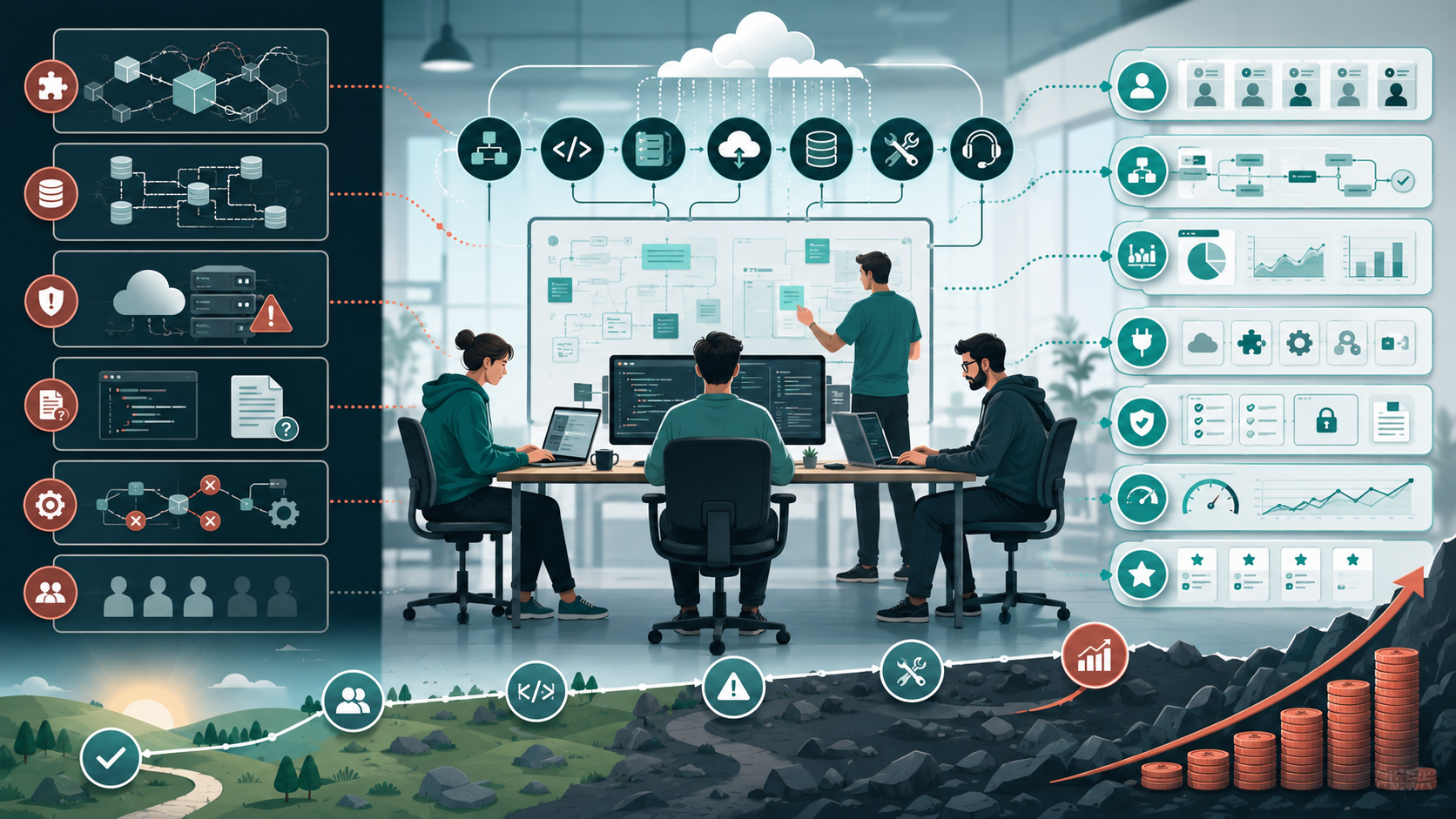
Why This Problem Happens in Real Teams
Limited Engineering Resources
Most startup teams operate with constrained resources.
A team of three developers often handles architecture, coding, testing, deployment, maintenance, infrastructure management, and production support simultaneously.
Because resources are limited, early estimates frequently assume ideal conditions that rarely exist in practice.
Requirements Evolve Faster Than Expected
Project requirements rarely remain unchanged after development begins. As stakeholders start using early versions of the software, new functionality, integrations, and performance expectations often emerge. These additions expand the project scope and increase both development effort and overall costs.
However, once stakeholders interact with working software, functionality requests increase rapidly.
Common additions include:
- New user roles
- Additional workflows
- Reporting systems
- Third-party API integration
- Compliance requirements
- Performance improvements
Every new requirement affects the overall project scope and increases implementation effort.
Early Architecture Decisions Create Long-Term Costs
Project requirements rarely remain unchanged after development begins. As stakeholders start using early versions of the software, new functionality, integrations, and performance expectations often emerge. These additions expand the project scope and increase both development effort and overall costs.
Architecture decisions that seem efficient initially often create additional maintenance overhead later.
Examples include:
- Tight coupling between services
- Poor database structure
- Limited scalability planning
- Weak documentation
- Missing deployment automation
The result is higher modernization and enhancement costs months later.
Lack of Process Maturity
Small teams often prioritize speed over structured planning and process management. When requirements, responsibilities, and workflows are not clearly defined, teams spend valuable time resolving confusion instead of building features. This inefficiency reduces productivity and can significantly impact project budgets and timelines.
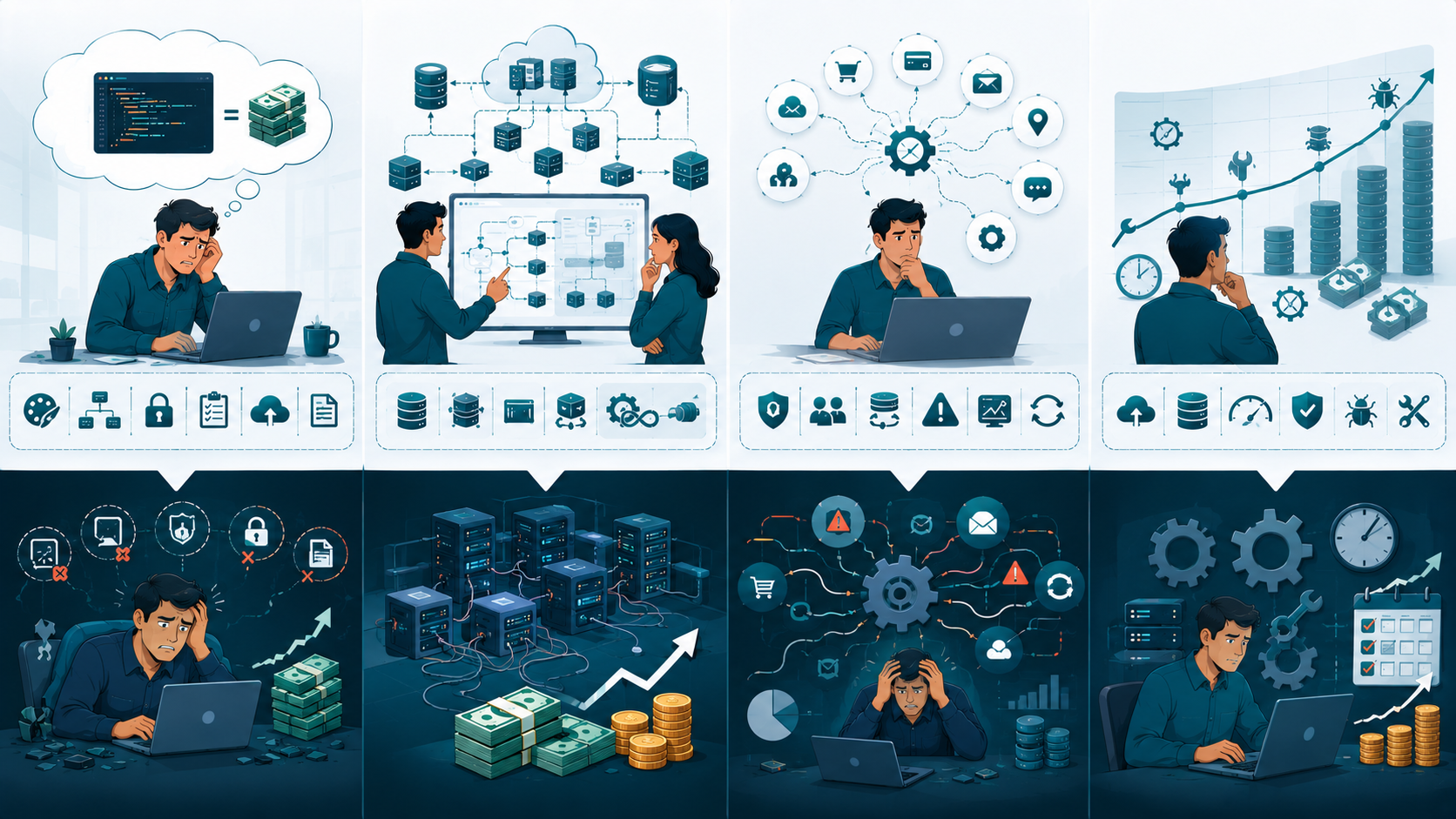
Where Most Teams Make the Wrong Decision
Treating Development as Pure Coding
One mistake I frequently see is assuming development costs are primarily coding costs.
In reality, coding may represent only part of the total investment.
Additional work includes:
- Design reviews
- Architecture planning
- Security implementation
- Testing
- Infrastructure setup
- Deployment workflows
- Documentation
- Ongoing support
Ignoring these factors creates unrealistic estimates.
Chasing Enterprise Architecture Too Early
I've seen startups introduce complex platforms before validating their product.
They invest heavily in:
- Distributed infrastructure
- Multiple databases
- Advanced automation systems
- Complex deployment pipelines
The technology looks impressive.
The budget does not.
For small engineering teams, excessive complexity increases operational overhead without creating proportional business value.
Underestimating Integration Work
API integration is often viewed as a simple task.
In practice, integrations create ongoing responsibilities:
- Authentication management
- Vendor dependency management
- Data synchronization
- Error handling
- Monitoring
- Security updates
The initial implementation is usually the cheapest part.
Long-term maintenance becomes the larger expense.
Ignoring Future Maintenance
Many founders focus exclusively on launch costs.
However, ownership continues long after deployment.
Software requires:
- Security updates
- Database optimization
- Infrastructure upgrades
- Performance tuning
- Feature enhancements
- Compliance updates
Projects that ignore maintenance eventually accumulate technical debt that becomes expensive to remove.

Practical Fixes That Actually Work
Define Requirements Before Estimation
Accurate estimates depend on clearly defined requirements. Choosing a software development company in USA for custom software budgeting helps founders document functionality, integrations, security needs, user workflows, and realistic cost expectations before development begins.
At minimum, document:
- Core functionality
- User workflows
- Integration needs
- Security expectations
- Performance targets
- Compliance requirements
Better specifications produce more accurate pricing.
Break Projects into Phases
Dividing a project into smaller phases makes development more manageable and predictable. Teams can focus on delivering core functionality first while postponing lower-priority features. This approach improves budget control and reduces the risk of large-scale rework.
For example:
This approach improves budget control and reduces risk.
Phase 1
- Core platform
- Essential functionality
- Basic infrastructure
Phase 2
- Advanced integrations
- Additional automation
- Scalability improvements
Phase 3
- Optimization
- Advanced reporting
- Enterprise features
Prioritize Architecture That Matches Team Size
Architecture should reflect the capabilities of the engineering team maintaining it. Small teams often benefit from simpler systems that are easier to deploy, monitor, and support. Avoiding unnecessary complexity helps maintain development velocity and reduces operational overhead.
Focus on:
- Clear ownership
- Maintainable code
- Straightforward deployment
- Reliable testing
Complex frameworks often increase costs faster than they increase value.
Invest in Automation Early
Automation reduces repetitive work and improves consistency across development workflows. Automating testing, deployments, and monitoring helps teams identify issues faster and spend more time building valuable features. Early automation often lowers long-term maintenance costs.
Useful areas include:
- Testing
- Deployment
- Monitoring
- Infrastructure provisioning
The initial investment pays for itself through improved productivity and fewer operational mistakes.
Plan for Maintenance from Day One
Software requires ongoing maintenance long after the initial release. Teams should account for updates, security improvements, bug fixes, and infrastructure management from the beginning. Planning for maintenance early prevents unexpected costs and technical debt later.
Questions worth answering early:
- Who manages upgrades?
- Who handles support?
- How will infrastructure scale?
- How will security updates be applied?
Ignoring these questions creates future budget surprises.
When This Approach Fails
Large Distributed Enterprises
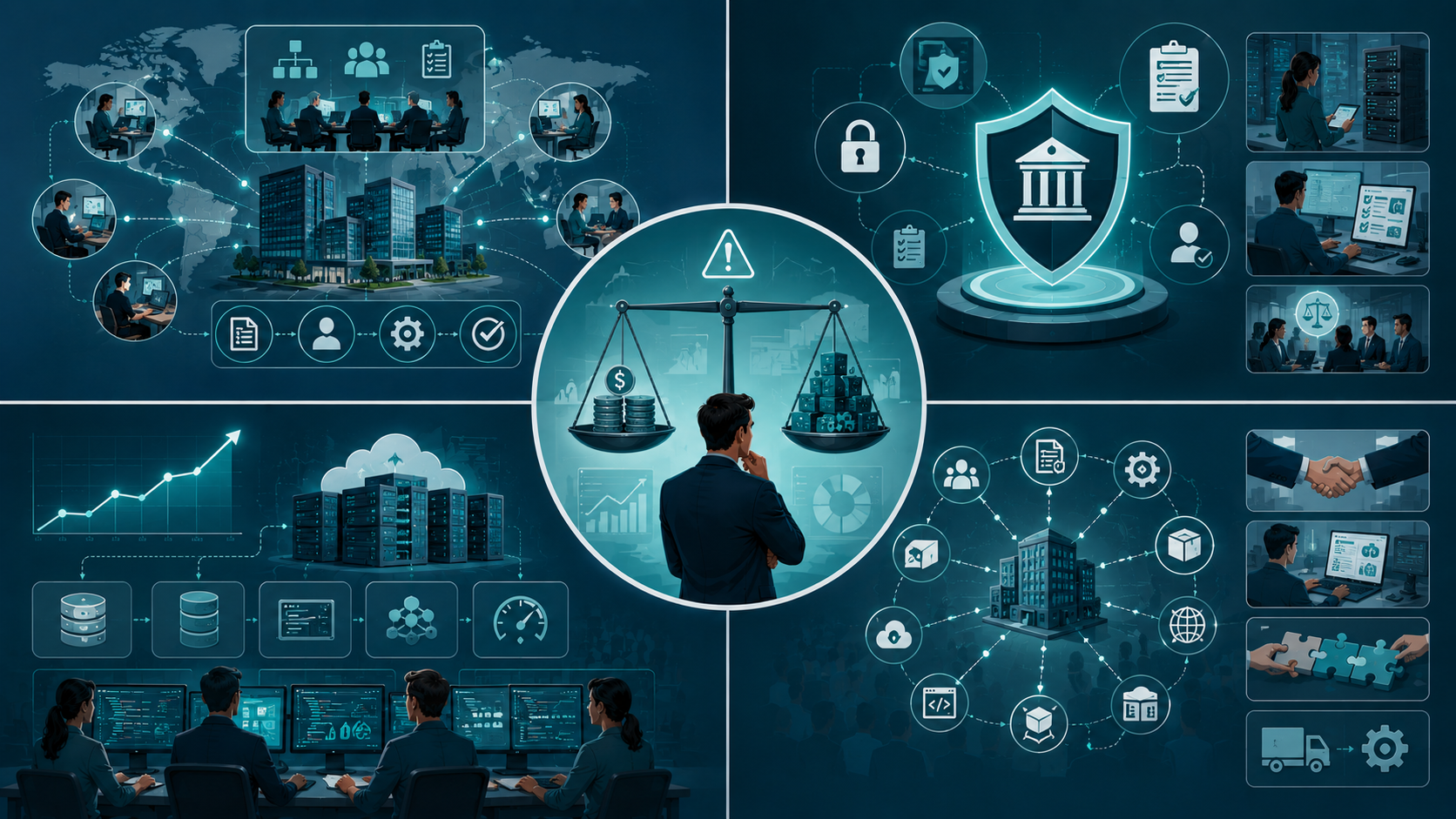
Large organizations often operate across multiple teams, departments, and regions. Coordination becomes more difficult as governance processes, approval workflows, and infrastructure requirements grow. These additional layers increase project complexity and make cost estimation less predictable.
Additional costs emerge from:
- Governance
- Compliance reviews
- Multi-region infrastructure
- Internal approvals
- Complex ownership structures
Simple estimation models become less effective.
Highly Regulated Environments
Industries with strict regulatory requirements must invest heavily in compliance-related activities. Security audits, documentation reviews, and regulatory validation can significantly extend project timelines. As a result, development costs remain high even when technical implementation is relatively straightforward.
Industries with strict compliance requirements often require:
- Security audits
- Documentation reviews
- Data governance controls
- Regulatory validation
These activities add significant expense regardless of development speed.
Products With Extreme Scalability Requirements
Products expecting rapid user growth require more robust infrastructure and system design. Teams must invest in performance testing, database optimization, and reliability improvements to maintain a stable user experience. These requirements increase both development effort and long-term operational costs.
Applications expecting substantial traffic growth require additional investment in:
- Infrastructure
- Database optimization
- Reliability engineering
- Performance testing
The architecture becomes more complex, and costs increase accordingly.
Complex Vendor Ecosystems
Software products that depend on multiple third-party vendors introduce additional management overhead. Teams must handle integrations, licensing agreements, API changes, and vendor coordination throughout the product lifecycle. This added complexity often increases maintenance costs and slows down development workflows.
Every external dependency introduces:
- Licensing expenses
- Contract management
- Vendor coordination
- Upgrade planning
This complexity impacts long-term sustainability.
Sustainable Practices for Small Engineering Teams
Reduce Technical Debt Continuously
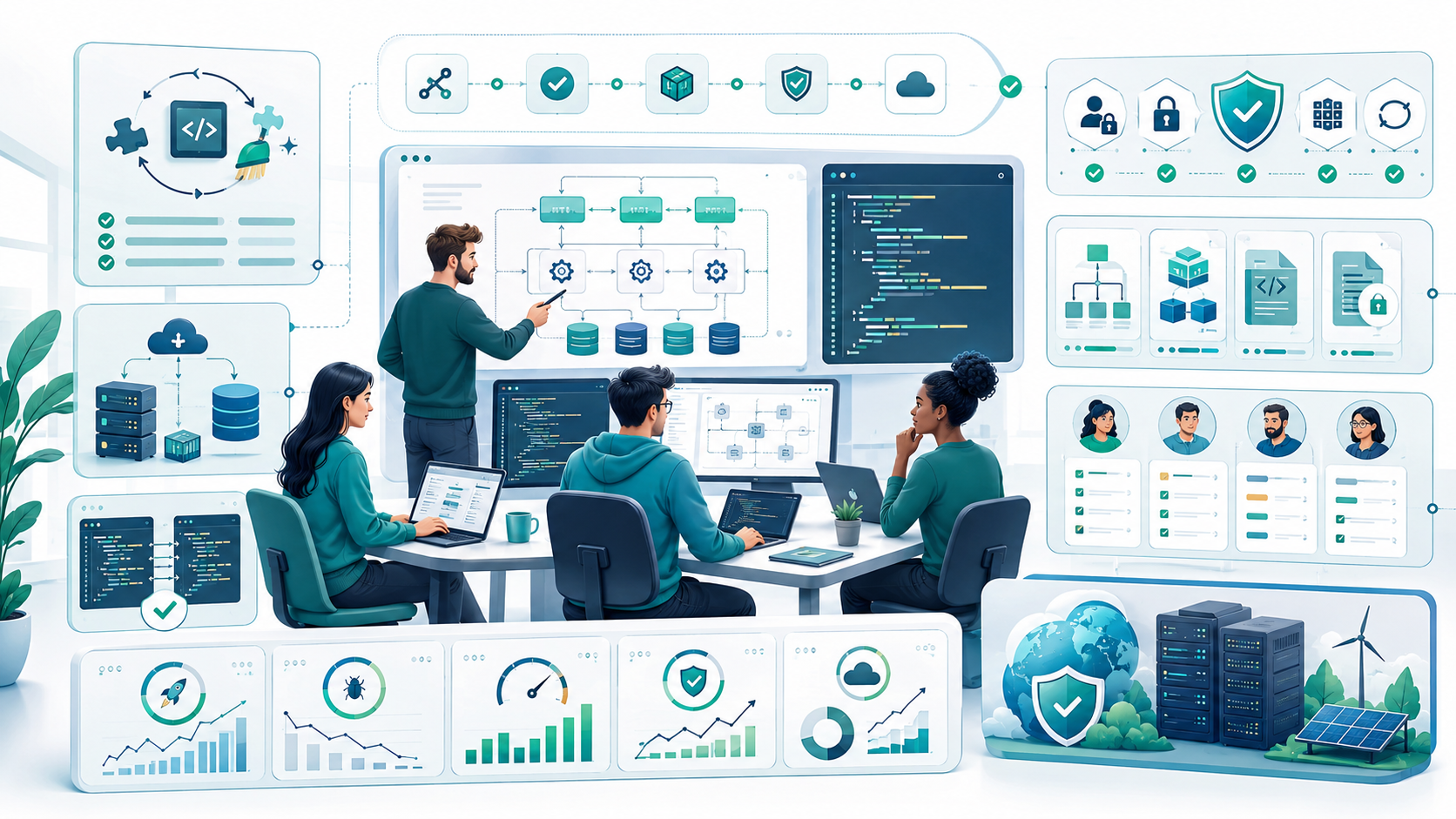
Technical debt becomes harder and more expensive to fix when ignored for long periods. Small improvements made during regular development help keep the codebase maintainable and reduce future rework. Consistent refactoring and cleanup efforts support long-term product stability.
Small improvements during regular development produce better long-term outcomes.
Examples include:
- Refactoring
- Dependency upgrades
- Architecture reviews
- Code cleanup
Maintain Strong Documentation
Good documentation helps teams share knowledge and reduce dependency on individual contributors. Recording architecture decisions, deployment processes, and system requirements makes onboarding easier and improves consistency across engineering workflows. Clear documentation also reduces costly misunderstandings.
Document:
- Architecture decisions
- Infrastructure design
- Deployment workflows
- API behavior
- Security requirements
This reduces onboarding costs and improves execution consistency.
Keep Security Consistent
Security should be treated as an ongoing responsibility rather than a one-time task. Consistent practices such as access management, secure deployments, and regular updates help reduce risk without adding unnecessary complexity. Simple processes are often easier for teams to maintain over time.
Security should be integrated into everyday workflows.
Focus on:
- Access control
- Secure deployment
- Dependency management
- Regular updates
Simple, repeatable processes outperform complicated security programs.
Improve Team Collaboration
Effective collaboration is essential for distributed and remote engineering teams. Clear ownership, well-defined responsibilities, and structured communication help teams work more efficiently. Strong collaboration practices reduce delays, improve reliability, and support faster decision-making.
Helpful practices include:
- Clear ownership
- Defined deliverables
- Regular planning sessions
- Consistent documentation
These practices improve reliability and reduce delays.
Measure What Matters
Tracking meaningful metrics helps teams make better technical and business decisions. Monitoring deployment performance, development velocity, production issues, and infrastructure costs provides visibility into team effectiveness. Data-driven improvements are often more valuable than assumptions.
Track metrics that influence real outcomes:
- Deployment frequency
- Production issues
- Development velocity
- Testing coverage
- Infrastructure costs
These measurements support better planning and smarter investment decisions.
Conclusion
Software costs increase for predictable reasons.
The biggest mistake teams make is treating development as a one-time activity focused only on coding.
In reality, architecture, testing, infrastructure, security, deployment, maintenance, support, scalability, and ongoing optimization all contribute to the total investment.
Teams that define requirements clearly, control project scope, prioritize maintainable architecture, and plan for long-term ownership typically avoid the budget overruns that derail many startup projects.
The goal is not finding the cheapest development option.
The goal is building software that remains sustainable as the product grows.
How Much Does Custom Software Development Cost?: FAQs
Requirements, functionality, integrations, and scalability needs usually evolve after development begins, increasing overall effort.
Project scope, architecture complexity, integrations, infrastructure requirements, security needs, and maintenance expectations typically have the greatest impact.
Usually no. Most small teams benefit from simpler architecture that supports current requirements rather than future assumptions.
Maintenance is ongoing and includes upgrades, security updates, support, optimization, and infrastructure management.
Define requirements clearly, automate repetitive work, manage technical debt continuously, maintain documentation, and avoid unnecessary complexity.
Reference
Written by

Paras Dabhi
VerifiedFull-Stack Developer (Python/Django, React, Node.js)
I build scalable web apps and SaaS products with Django REST, React/Next.js, and Node.js — clean architecture, performance, and production-ready delivery.
LinkedIn