How to Choose a B2B SaaS Development Company in India
A lot of founders make the same early mistake: they hire a team that can ship screens fast but cannot think in SaaS systems.
The MVP works for demos, maybe even the first few customers. Then permissions become messy, billing logic starts breaking, onboarding slows down, and every new feature feels risky.
The real problem usually is not speed. It is choosing a B2B SaaS application development company in India that understands what happens after customer number 100.
From what I’ve seen in real SaaS builds, the wrong engineering partner rarely fails in month one. Failure shows up when growth begins.
What a B2B SaaS application development company actually does
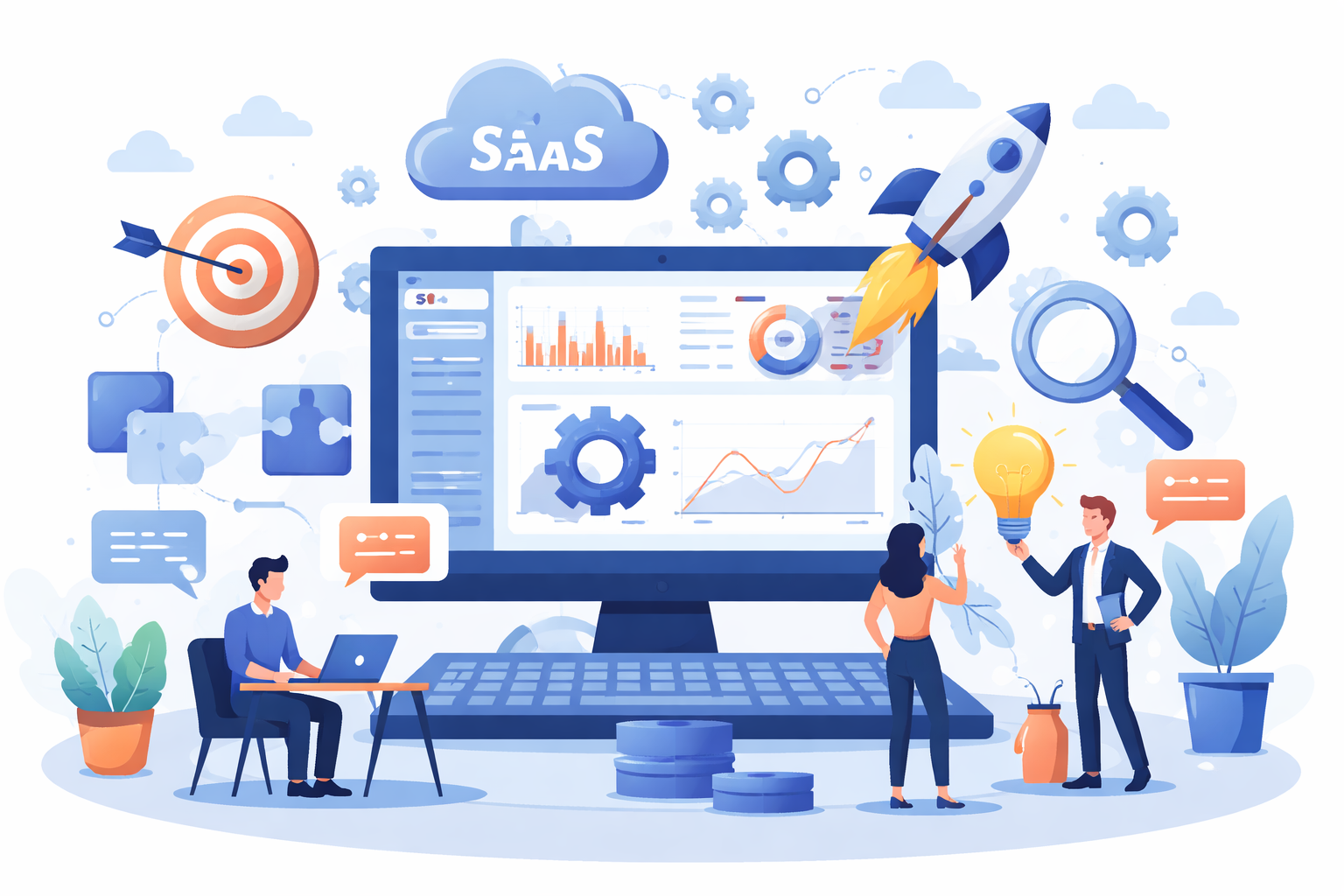
A real B2B SaaS product team does much more than build dashboards and APIs.
The core job is designing systems that can support multiple customers, multiple roles, and changing workflows without constant rewrites.
That usually includes:
- multi-tenant product architecture
- tenant data isolation
- workspace-level permissions
- subscription and billing workflows
- usage-based metering
- audit trails
- admin control panels
- third-party integrations
- analytics pipelines
- onboarding and activation workflows
The biggest difference between a normal web app team and a true SaaS product development company India founders should look for is system thinking.
For example, a CRM SaaS platform is not just contacts + tasks.
It needs:
- account-level separation
- invite workflows
- seat billing
- trial expiration logic
- role escalation
- export permissions
- event logging
- API throttling
This is where many generalist teams struggle.

Why founders choose India for B2B SaaS development
India remains a strong choice for B2B SaaS software development India-focused startups need, mainly because the talent pool has matured far beyond simple outsourcing.
The best reason is not cheap development.
It is access to senior engineers who have already seen SaaS scaling mistakes before.
The practical advantages are:
- strong backend and cloud engineering talent
- better cost-to-senior-developer ratio
- dedicated SaaS MVP development team models
- timezone overlap with UK and partial US collaboration
- fast iteration cycles
- easier team extension after MVP
- strong DevOps and QA support layers
That said, there are trade-offs.
Some India SaaS outsourcing company teams are excellent at execution but weak in product decisions. If founders expect roadmap thinking, they need to validate that early.
The best teams act like product engineers, not ticket closers.
Read More → The Best Tech Stack For SaaS In India

Where most startups choose the wrong SaaS development company
This is where I’ve seen expensive mistakes happen.
Most founders evaluate delivery partners using the wrong signals:
- polished portfolio
- attractive hourly rate
- fast proposal turnaround
- UI-heavy case studies
None of these prove SaaS depth.
The common failure points are usually more technical:
1) Website teams pretending to be SaaS teams
Many teams can build clean dashboards and fast UIs, but SaaS products need deeper system thinking. Multi-tenant boundaries, billing logic, and workflow states usually expose the gap once real customers start using the product.
A team may be great at building marketing websites, admin panels, or ecommerce apps.
That does not automatically mean they understand:
- tenant boundaries
- feature flags
- subscription state transitions
- API versioning
- event-driven workflows
2) Rushed MVP database design
Early MVP schemas often prioritize speed over future flexibility. That shortcut becomes painful when analytics, subscription logic, and customer segmentation require changes across the entire product structure.
Most MVP failures happen because early schemas are optimized for shipping speed.
Then customer segmentation, analytics, and billing need schema changes that touch everything.
This usually breaks after the first 100 customers.
3) Missing DevOps ownership
Code delivery without deployment discipline creates long-term risk. When CI/CD, rollback plans, monitoring, and alerting are missing, even small production bugs can quickly turn into customer-facing incidents.
I’ve seen founders regret hiring teams that only push code.
Without CI/CD, rollback workflows, log visibility, staging discipline, and alerting, small bugs become customer incidents.
4) Weak permission systems
Simple admin and user roles rarely survive real B2B SaaS growth. As teams, clients, and workflows expand, weak access control creates security gaps, messy logic, and expensive rework across the platform.
Missing role-based access almost always becomes technical debt.
The team must think beyond admin vs user from day one.
Practical framework to evaluate a SaaS development company in India
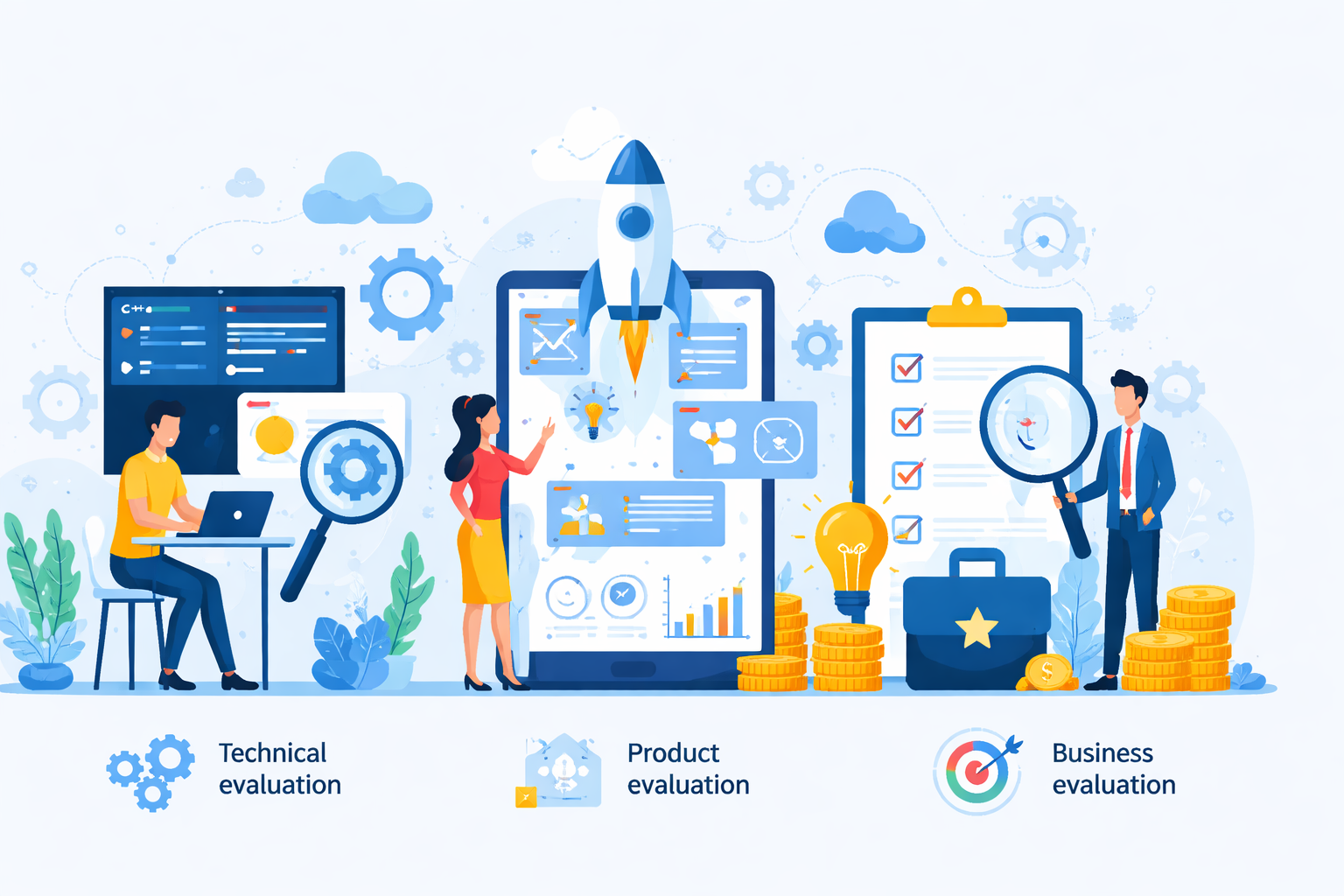
The best way to choose the right partner is to evaluate across technical, product, and business maturity.
Technical evaluation
A capable SaaS team should show real examples of how they handle multi-tenant architecture, tenant isolation, deployments, testing, and monitoring. The goal is not to hear tool names, but to understand how they make technical trade-offs for scale, reliability, and long-term maintainability.
Ask for proof of:
- multi-tenant architecture examples
- tenant isolation strategy
- API versioning approach
- CI/CD workflows
- automated testing coverage
- observability stack
- rollback strategy
- cloud cost optimization discipline
A strong scalable SaaS product development team should explain trade-offs, not just tools.
Product evaluation
Strong engineering alone is not enough for SaaS success. The team should understand user onboarding, activation drop-offs, feature prioritization, and release workflows because poor product judgment often slows growth even when the code quality is good.
This is often ignored.
Check whether they understand:
- onboarding friction
- activation metrics
- feature prioritization
- retention loops
- release cadence
- async product documentation
- founder communication workflows
A technically strong team with weak product judgment can still slow growth.
Business evaluation
This layer protects your product after the MVP phase. A reliable B2B SaaS development company in India should offer clarity around IP ownership, team stability, reporting structure, support commitments, and how they expand the team when product traction starts increasing.
This protects you later.
Validate:
- IP ownership terms
- developer replacement risk
- team continuity
- sprint reporting clarity
- post-launch support
- scale-up hiring model
- security compliance readiness
Before finalizing the team, validate operational and business safeguards that reduce future delivery risk. Clear ownership terms, continuity plans, compliance readiness, and transparent sprint reporting help prevent disruptions when the product moves from MVP to scale.
The best SaaS product development company India teams usually score well across all three layers.
When outsourcing B2B SaaS development to India does NOT work
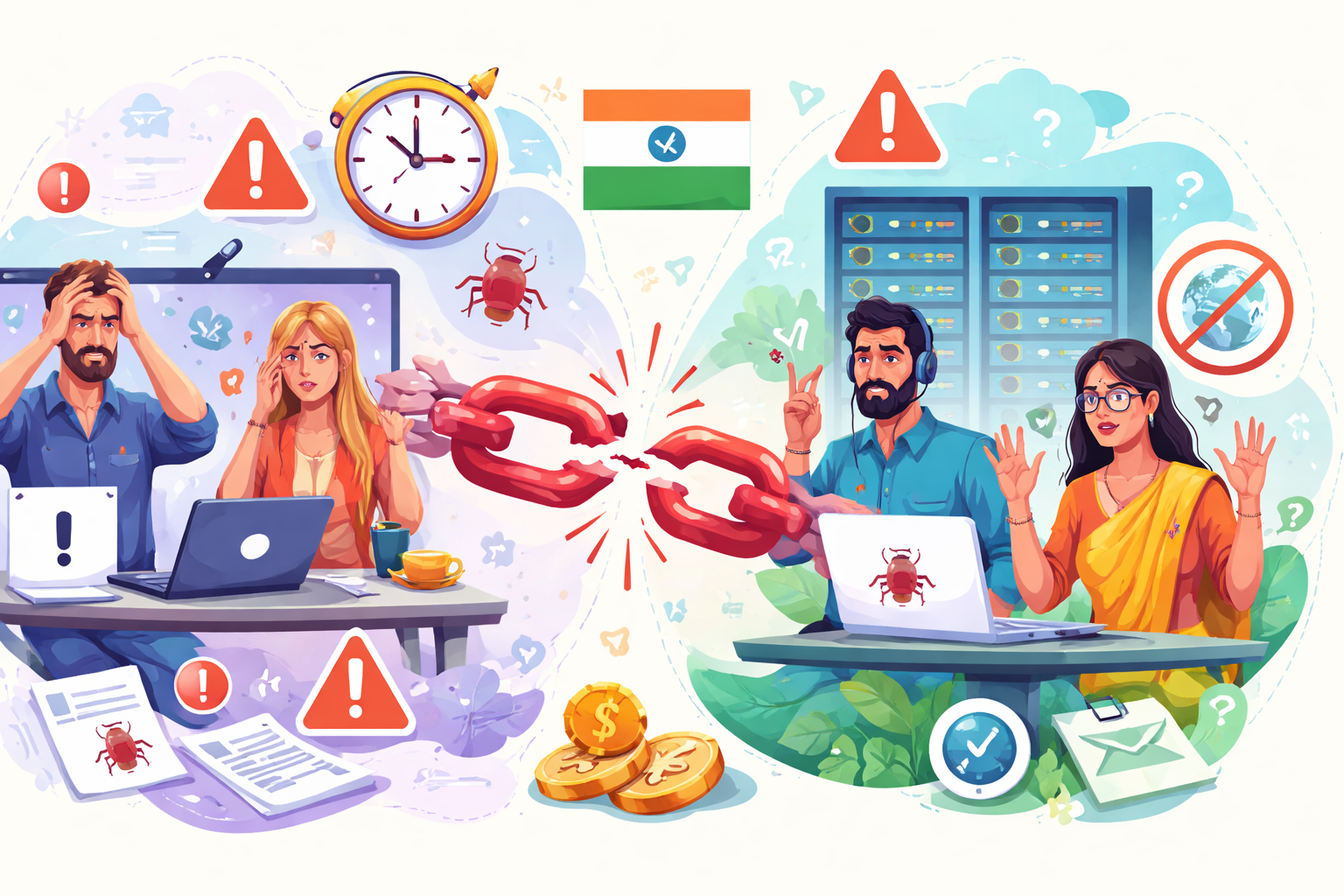
Even the right team cannot fix a broken product process.
This approach usually fails when:
- founders change scope every week
- there is no internal product owner
- requirements are still vague
- MVP success metrics are undefined
- unrealistic deadlines force shortcuts
- design decisions come from non-SaaS stakeholders
- roadmap changes happen without architecture review
A great engineering partner still needs stable product direction.
Without that, velocity becomes fake. Features ship, but the system gets harder to evolve.
The issue is not offshore execution.
The issue is unclear product leadership.

Best practices for scaling SaaS products with small offshore teams
Small teams can absolutely build enterprise-grade SaaS if they stay disciplined.
The practices that work best in real projects are:
Documentation-first delivery
Every feature should begin with clear workflow logic, user roles, edge cases, and event tracking requirements. This upfront clarity reduces misunderstandings between product and engineering, cuts rework, and helps small SaaS teams ship features with fewer regressions.
Every feature should start with:
- workflow map
- role behavior
- edge cases
- failure scenarios
- analytics events
This reduces rework massively.
Architecture reviews at milestones
Waiting until technical debt becomes visible is usually too late. Reviewing database growth, authentication flow, API consistency, queue load, and infrastructure costs every 4–6 weeks helps the team catch scaling risks before they affect customers.
Do not wait for technical debt audits.
Review:
- database growth
- query hotspots
- auth model
- API consistency
- queue performance
- infra spend
every 4–6 weeks.
Shared product metrics
Engineering decisions become much stronger when they are based on actual product usage data. Tracking activation drop-offs, churn patterns, onboarding failures, slow endpoints, and feature adoption helps teams improve what users truly depend on.
Track:
- activation rate
- churn signals
- failed onboarding steps
- support-triggering workflows
- slow endpoints
- feature adoption
This helps the engineering team build for real usage, not assumptions.
Protected refactoring windows
Small SaaS teams need planned cleanup time inside every sprint cycle. Without protected refactoring windows, early MVP shortcuts stay in production too long and eventually slow feature velocity, increase bugs, and make scaling more expensive.
Reserve sprint capacity for cleanup.
Without this, MVP shortcuts become permanent architecture.
Conclusion
Choosing the right B2B SaaS application development company in India is less about cost and more about whether the team understands scale before scale arrives.
The strongest teams think beyond launch:
- permissions
- billing
- onboarding
- observability
- long-term maintainability
In real SaaS products, the cheapest team often becomes the most expensive rebuild.
The better choice is the one that helps growth happen without forcing architectural resets every six months.
FAQ: B2B SaaS Application Development Company in India
Yes, if the team has proven multi-tenant SaaS architecture experience and not just general web application delivery.
It depends on workflow complexity, integrations, compliance, and billing systems, but India is usually cost-efficient for senior SaaS teams.
Review tenant isolation, deployment workflows, permission models, monitoring setup, and how they plan post-MVP scaling.
Most fail because the system is optimized for launch speed instead of scale, billing logic, analytics, and role complexity.
Yes. Small teams often perform well when they have strong backend architecture discipline, clear sprint ownership, and stable product leadership.
Reference
Written by

Paras Dabhi
VerifiedFull-Stack Developer (Python/Django, React, Node.js)
I build scalable web apps and SaaS products with Django REST, React/Next.js, and Node.js — clean architecture, performance, and production-ready delivery.
LinkedIn