How To Choose a Software Development Company In USA
Choosing a software development company isn't difficult because there are too few options. It's difficult because almost every company looks capable during the first few meetings.
Most engineering teams can present polished case studies, impressive portfolios, and a long list of technologies they've used. But those things rarely tell you how they'll perform once the project becomes complicated. The real test starts after requirements change, deadlines shift, integrations fail, or unexpected technical challenges appear.
I've worked with startups building their first SaaS product, growing companies replacing legacy systems, and product teams spread across the USA, Europe, Australia, and Canada. One pattern repeats itself: companies often choose a development partner based on what is easy to compare instead of what actually determines long-term project success.
The result isn't usually a failed launch. More often, it's a product that becomes harder to maintain with every release. Development slows down, technical debt increases, communication breaks down, and both sides spend more time managing problems than building new features.
Selecting the right software development company should be less about finding the cheapest proposal or the biggest brand and more about understanding how that team thinks, plans, communicates, and solves engineering problems over time.
Why This Problem Happens in Real Teams
From the outside, most software companies appear remarkably similar. They advertise experienced developers, modern technology stacks, agile workflows, and successful client projects. Nearly every website promises quality, innovation, and reliable delivery.
The differences become visible only after development begins.
In many projects I've joined midway through, the original decision was made using a simple checklist:
- Lowest pricing
- Fastest timeline
- Largest development team
- Long list of technologies
- Attractive portfolio
Those factors matter, but they rarely predict how well a company will execute an actual software project.
Teams Evaluate Skills Instead of Engineering Process
A common mistake is assuming that technical expertise alone guarantees successful software delivery.
Strong engineers certainly matter, but software projects depend just as much on process as programming.
Before writing a single line of code, experienced teams invest time in:
- Discovery
- Business analysis
- Technical planning
- Architecture validation
- Requirement clarification
- Risk identification
Skipping these activities often creates problems that no amount of coding can solve later.
I've seen projects where excellent developers spent months rewriting features simply because the initial discovery phase lasted only a few hours.
Every Product Evolves Faster Than Expected
One assumption almost every startup makes is that today's requirements will still be accurate six months later.
They rarely are.
New customers request additional functionality.
Business priorities change.
Integrations become more complex.
Compliance requirements appear unexpectedly.
Performance expectations increase as user traffic grows.
A software development company should expect change instead of treating every modification as a surprise.
That means designing systems with enough flexibility for future customization without introducing unnecessary complexity.
Good engineering isn't about predicting every future feature.
It's about creating an architecture that allows change without rebuilding the product.
Communication Problems Usually Cost More Than Technical Problems
Many founders focus heavily on development capabilities but overlook communication until the project starts falling behind.
In remote engineering teams, communication directly affects:
- Planning accuracy
- Delivery consistency
- Requirement understanding
- Collaboration between developers
- Issue resolution
- Release confidence
The best teams aren't necessarily those writing code the fastest.
They're the teams that explain trade-offs clearly, raise concerns early, document decisions, and maintain complete transparency throughout development.
One project I worked on involved developers across four time zones. The technology wasn't the challenge.
Poor communication was.
Simple misunderstandings about API behavior delayed deployment by weeks, even though the actual technical fix required less than a day.
Portfolios Don't Always Reflect Real Engineering Quality
A polished portfolio can demonstrate experience, but it shouldn't be the deciding factor.
Many companies showcase visually impressive products without explaining:
- Their engineering responsibilities
- System architecture decisions
- Scalability considerations
- Security implementation
- Performance optimization
- Maintenance strategy
- Deployment process
Those details reveal much more about engineering capability than screenshots.
When reviewing a portfolio, I usually look for evidence that a team understands the complete software lifecycle rather than just feature development.
Questions worth asking include:
- How was the system designed?
- What challenges appeared during implementation?
- How was performance measured?
- What monitoring was introduced after launch?
- How were integrations tested?
- How did the architecture evolve as the product grew?
These answers demonstrate practical experience that marketing materials rarely show.
Pricing Often Hides the Largest Risks
Budget matters.
Every organization has financial limits.
However, choosing solely on pricing usually shifts costs elsewhere.
Lower initial estimates frequently result in:
- Shorter discovery sessions
- Limited documentation
- Minimal testing
- Reduced quality assurance
- Weak project governance
- Little long-term support
- Higher maintenance costs
The cheapest proposal can easily become the most expensive project after multiple revisions, production issues, and delayed releases.
Instead of asking, "Which company charges less?"
A better question is:
"Which company has a realistic strategy for delivering reliable software within our budget and timeline?"
That single shift in thinking changes how every proposal is evaluated.
Trust Is Built Through Process, Not Promises
Experienced software companies rarely guarantee that nothing will go wrong.
Instead, they explain exactly how they'll respond when challenges appear.
Look for evidence of:
- Transparent communication
- Clear documentation
- Structured planning
- Consistent project monitoring
- Reliable deployment practices
- Strong security reviews
- Regular maintenance strategy
- Defined support processes
- Technical references from previous clients
- Honest reviews and testimonials
These are indicators of maturity that become increasingly valuable as projects grow in complexity.
In my experience, the best development partner isn't the one promising the fastest delivery.
It's the one that consistently demonstrates sound engineering judgment, practical problem-solving, and a willingness to discuss trade-offs before they become expensive mistakes.
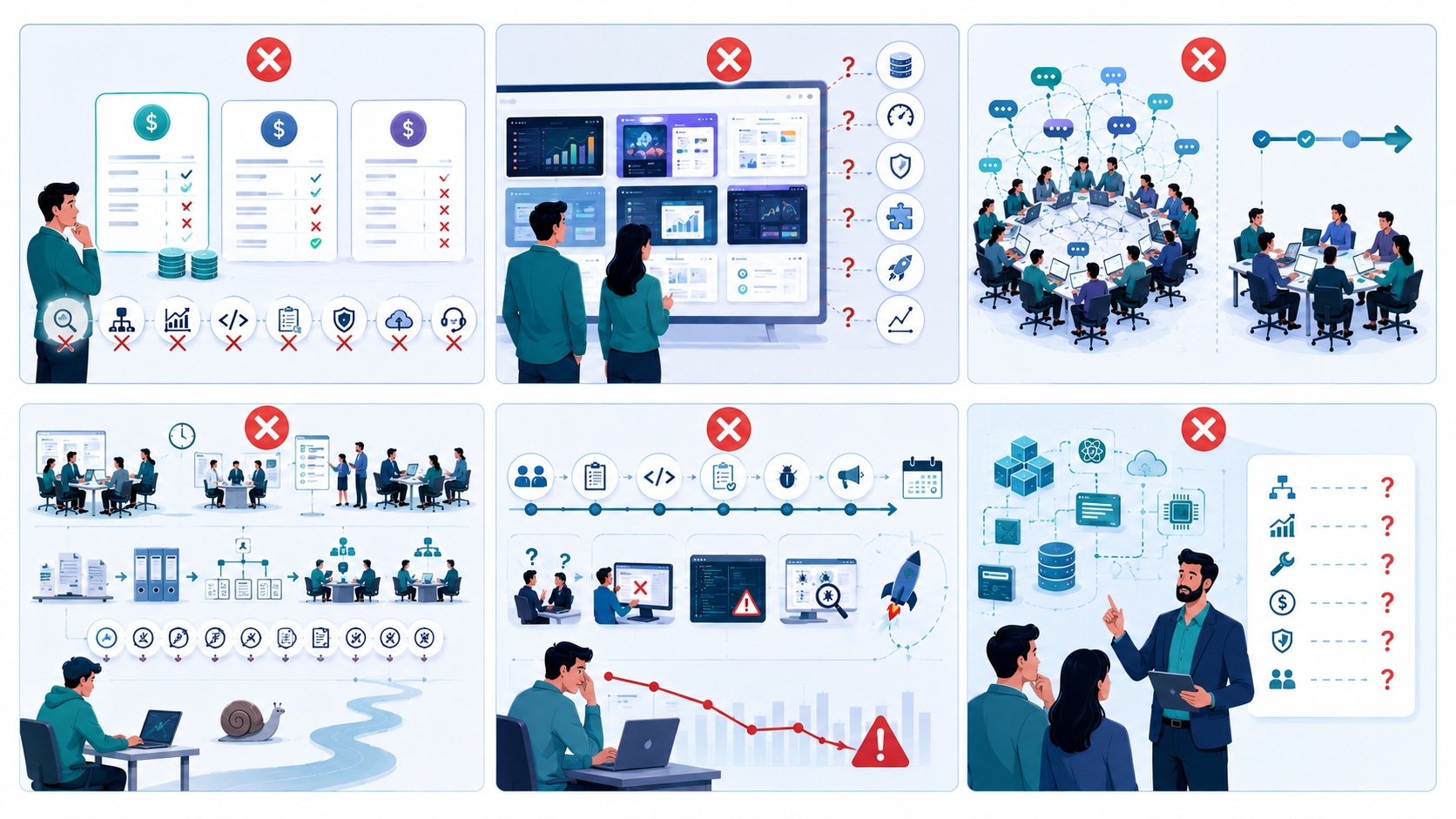
Where Most Teams Make the Wrong Decision
One of the biggest misconceptions I've seen is that choosing a software development company is similar to hiring an employee. It isn't.
You're selecting a long-term engineering partner that will influence your product's architecture, delivery process, maintenance costs, and ability to scale. Yet many teams still make the decision using criteria that only matter during the sales process.
Months later, they're dealing with missed deadlines, unstable releases, growing technical debt, and constant rework.
Here are the mistakes I see most often.
Mistake #1: Choosing Based on the Lowest Pricing
Every project has a budget, and cost should absolutely be part of the decision.
The mistake is assuming that two proposals describe the same amount of work.
One company may include:
- Complete discovery sessions
- Technical analysis
- Architecture planning
- Automated testing
- Documentation
- Security reviews
- Deployment automation
- Post-launch support
Another proposal might only cover feature development.
On paper, the second proposal looks significantly cheaper.
In reality, you're comparing two completely different scopes.
Whenever I review proposals, I try to understand what has been excluded instead of focusing only on the total pricing.
Missing planning usually becomes expensive later.
Mistake #2: Falling for an Impressive Portfolio Alone
A strong portfolio shows that a company has delivered projects.
It doesn't automatically prove they can deliver yours.
During technical discussions, I pay more attention to how engineers explain previous work than the screenshots themselves.
Questions worth asking include:
- Why was this architecture chosen?
- What performance issues appeared?
- How did the team improve reliability?
- What security challenges had to be solved?
- Which integrations became difficult?
- How was deployment automated?
- What changed after the first release?
Experienced engineers usually enjoy answering these questions because they reveal actual engineering decisions instead of marketing material.
Mistake #3: Assuming More Developers Mean Faster Delivery
This misconception causes problems on projects of every size.
Adding developers increases communication requirements.
It increases planning effort.
It increases collaboration complexity.
It increases code review workload.
It increases documentation needs.
A ten-person engineering team isn't automatically twice as productive as a five-person team.
I've seen small teams consistently outperform much larger organizations simply because they communicated better and followed cleaner development practices.
Efficiency almost always beats team size.
Mistake #4: Copying Enterprise Processes Too Early
Startups often believe that enterprise processes will help them grow faster.
Instead, they slow everything down.
I've worked with early-stage SaaS teams introducing approval layers, lengthy documentation requirements, and complex governance models before their product even reached market validation.
Every feature suddenly required:
- Multiple meetings
- Several approvals
- Extensive documentation
- Formal reviews
- Complex planning cycles
Meanwhile, customer feedback stopped arriving because features were taking months instead of weeks.
Good engineering process should reduce friction—not create it.
Mistake #5: Ignoring Communication Until Problems Appear
Poor communication rarely causes immediate failure.
Instead, it slowly reduces delivery quality.
Requirements become unclear.
Assumptions remain undocumented.
Developers solve different problems than product managers intended.
Testing happens against outdated requirements.
Deployment schedules drift.
Good communication isn't about having more meetings.
It's about creating shared understanding through:
- Clear documentation
- Transparent planning
- Defined responsibilities
- Regular technical reviews
- Honest progress reporting
Remote development teams especially benefit from written communication because decisions remain available long after meetings end.
Mistake #6: Treating Technology as the Main Selling Point
Many companies introduce themselves by listing programming languages and frameworks.
Those technologies matter.
But they're rarely the deciding factor.
Successful software projects depend more on engineering discipline than technology choices.
A capable development company should explain:
- Why a particular architecture fits your product
- How future scalability will be managed
- What trade-offs exist
- Where customization may become difficult
- How maintenance costs can be reduced
The reasoning behind the decision is usually more valuable than the technology itself.
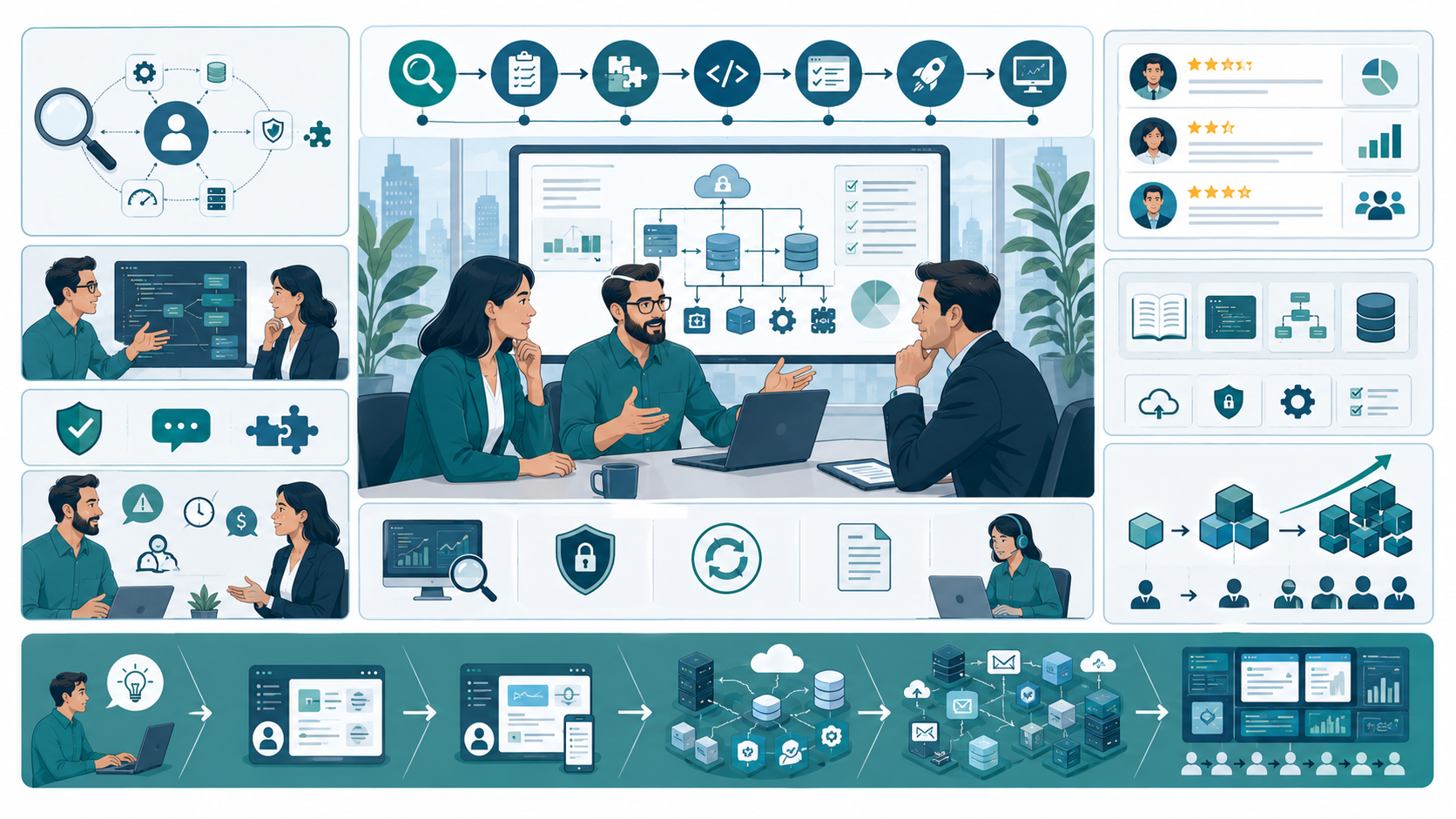
Practical Fixes That Actually Work
Over the years, I've found that successful projects follow remarkably similar evaluation processes. When assessing a US software engineering company for growing digital products, businesses should focus on discovery, architecture, communication, testing, deployment, transparency, and long-term maintenance rather than sales presentations alone.
Instead of asking, "Which company looks best?"
They ask, "Which company reduces long-term engineering risk?"
Here are the practices that consistently produce better outcomes.
Start with Discovery Before Discussing Development
Many organizations begin conversations by requesting estimates.
Experienced engineering teams usually begin somewhere else.
Discovery.
A proper discovery phase should clarify:
- Business goals
- Functional requirements
- Technical constraints
- Existing systems
- Integration needs
- Compliance requirements
- Expected performance
- Scalability expectations
If a company immediately promises an exact timeline without asking detailed questions, that's usually a warning sign.
Good estimates require understanding.
Evaluate Engineering Thinking, Not Sales Presentations
One interview often tells you more than twenty marketing pages.
Ask senior engineers questions like:
- What architecture would you recommend?
- Why?
- What risks do you see?
- What assumptions concern you?
- Which parts should be built first?
- Where would you expect technical debt?
Experienced engineers rarely pretend every decision has one perfect answer.
Instead, they'll explain trade-offs.
That demonstrates genuine expertise.
Review Their Development Process
A reliable software development company should have a repeatable process.
Look for consistency in areas such as:
- Discovery
- Planning
- Architecture reviews
- Development
- Testing
- Deployment
- Monitoring
- Maintenance
- Support
A structured process doesn't eliminate problems.
It makes them easier to identify and resolve.
Ask About Long-Term Maintenance
Launching software is only the beginning.
The real work starts afterward.
Questions worth discussing include:
- How are updates managed?
- Who handles production issues?
- What monitoring is available?
- How are security patches delivered?
- How frequently are dependencies updated?
- What documentation is maintained?
- How is technical knowledge transferred?
These discussions often reveal whether a company expects a long-term partnership or simply wants to complete a project.
Verify Transparency During Early Conversations
Transparency is surprisingly easy to evaluate.
Notice whether the company openly discusses:
- Technical limitations
- Project risks
- Timeline uncertainty
- Budget constraints
- Architecture trade-offs
- Resource availability
If every answer sounds perfect, I'd be cautious.
Real engineering always involves compromises.
Experienced teams acknowledge them.
Look Beyond Client Reviews
Reviews and testimonials are useful.
But context matters.
Instead of only reading ratings, try to understand:
- Project complexity
- Team size
- Delivery duration
- Product maturity
- Industry challenges
If possible, request references from projects similar to yours.
A fintech platform and a simple internal dashboard require very different engineering approaches.
Evaluate Documentation Standards
Documentation isn't exciting.
It also isn't optional.
Good documentation improves:
- Collaboration
- Maintenance
- Onboarding
- Security
- Governance
- Future customization
- Development speed
I've joined projects where missing documentation delayed development far more than poor code quality.
Knowledge locked inside developers' heads eventually becomes a bottleneck.
Consider the Company's Ability to Grow With Your Product
Many products begin as an MVP.
Few remain that way.
Ask how the company approaches:
- Scalability
- Architecture evolution
- Performance optimization
- Infrastructure growth
- Additional integrations
- Team expansion
The goal isn't building enterprise infrastructure on day one.
It's making sure today's decisions won't block tomorrow's growth.
A Practical Evaluation Checklist
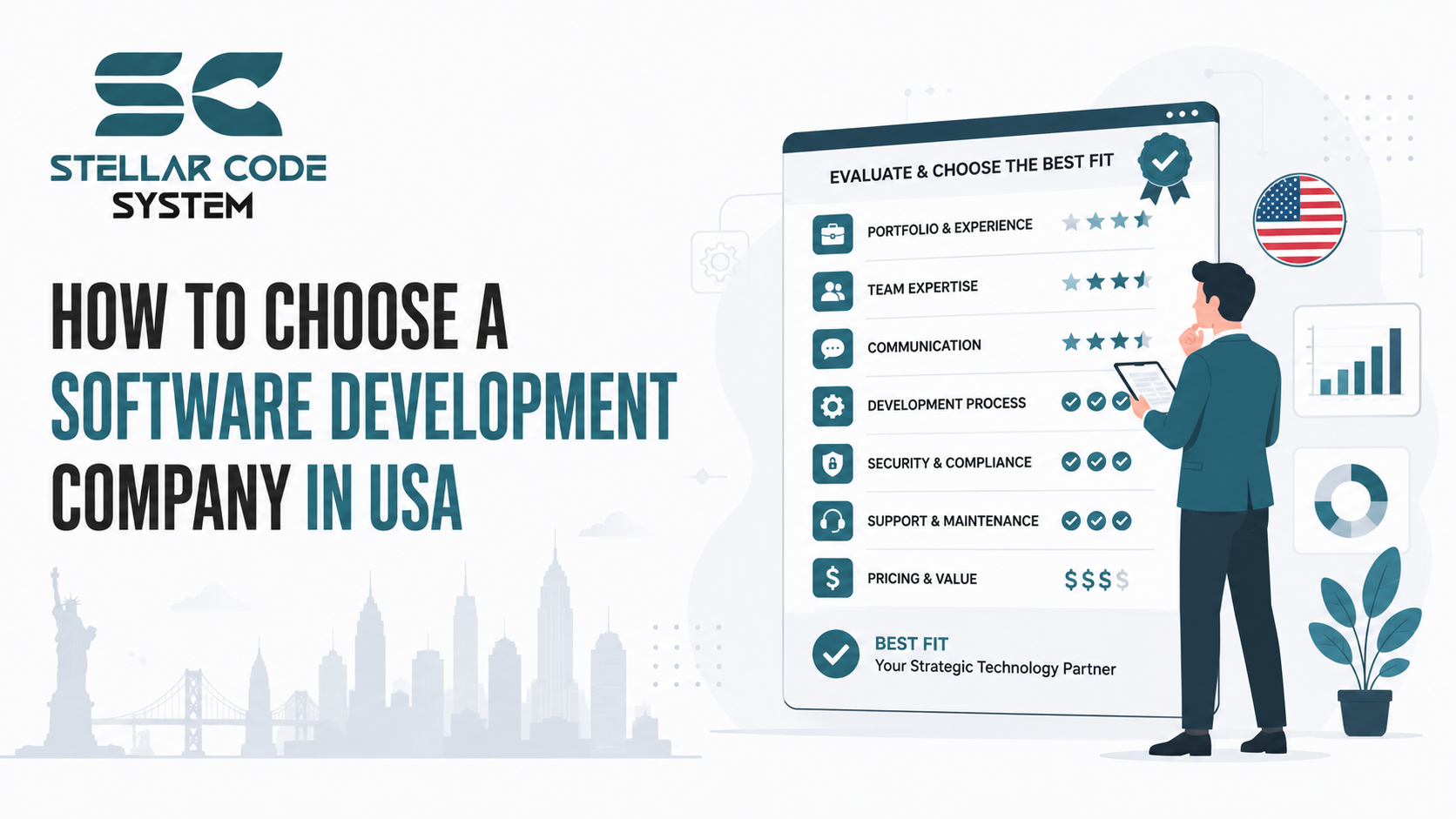
Before selecting a software development company in the USA, I recommend confirming that they can clearly explain:
- Their development strategy
- Discovery process
- Technical expertise
- Architecture decisions
- Communication workflow
- Testing methodology
- Deployment process
- Security practices
- Compliance considerations
- Maintenance approach
- Support model
- Documentation standards
- Resource planning
- Timeline assumptions
- Budget allocation
- Portfolio relevance
- Client references
- Long-term partnership expectations
If a company can discuss these topics confidently and transparently, you're far more likely to build a successful product than if you choose based only on pricing or technology claims.

When This Approach Fails
Even a well-planned selection process doesn't guarantee success. Every engineering decision has trade-offs, and the right software development company for one product may be the wrong choice for another.
Understanding these limitations before signing a contract prevents unrealistic expectations later.
Large Enterprises Need Different Processes
The evaluation approach discussed in this article works well for startups, SaaS companies, and mid-sized product teams.
Large enterprises often have additional requirements, including:
- Procurement procedures
- Internal governance
- Vendor compliance audits
- Legal reviews
- Multiple stakeholder approvals
- Enterprise security policies
In these environments, technical expertise is only one part of the decision. Organizational alignment becomes equally important.
Extremely Low Budgets Limit Engineering Quality
Every team wants to maximize value, but software development has practical limits.
If the available budget only covers feature implementation, expecting comprehensive discovery, architecture workshops, automated testing, documentation, security assessments, and long-term maintenance isn't realistic.
I've seen projects where companies expected enterprise-level quality while allocating enough resources for only a basic prototype.
The result wasn't poor developers.
It was unrealistic planning.
Requirements That Change Every Week
Some early-stage startups are still validating their product idea.
That's completely normal.
However, if business requirements change every few days, even experienced engineering teams will struggle with:
- Timeline accuracy
- Resource allocation
- Technical planning
- Documentation
- Deployment scheduling
Frequent change isn't the problem.
Unmanaged change is.
The best development companies establish a process for reviewing, prioritizing, and documenting changes before implementation.
Communication Cannot Be Replaced by Process
Some organizations assume project management tools solve communication problems.
They don't.
Tools improve visibility.
People solve problems.
Even the best planning system won't help if stakeholders don't participate in requirement discussions or engineers hesitate to raise technical concerns.
Successful software delivery depends on continuous collaboration between business and engineering teams.
Every Company Has Technical Strengths
No software development company is equally experienced in every domain.
A team that builds healthcare platforms may not be the best choice for a real-time logistics application.
Likewise, a company with strong SaaS experience may have limited expertise in embedded systems or enterprise ERP modernization.
Rather than searching for the "best" company, look for the one whose experience closely matches your product and technical challenges.
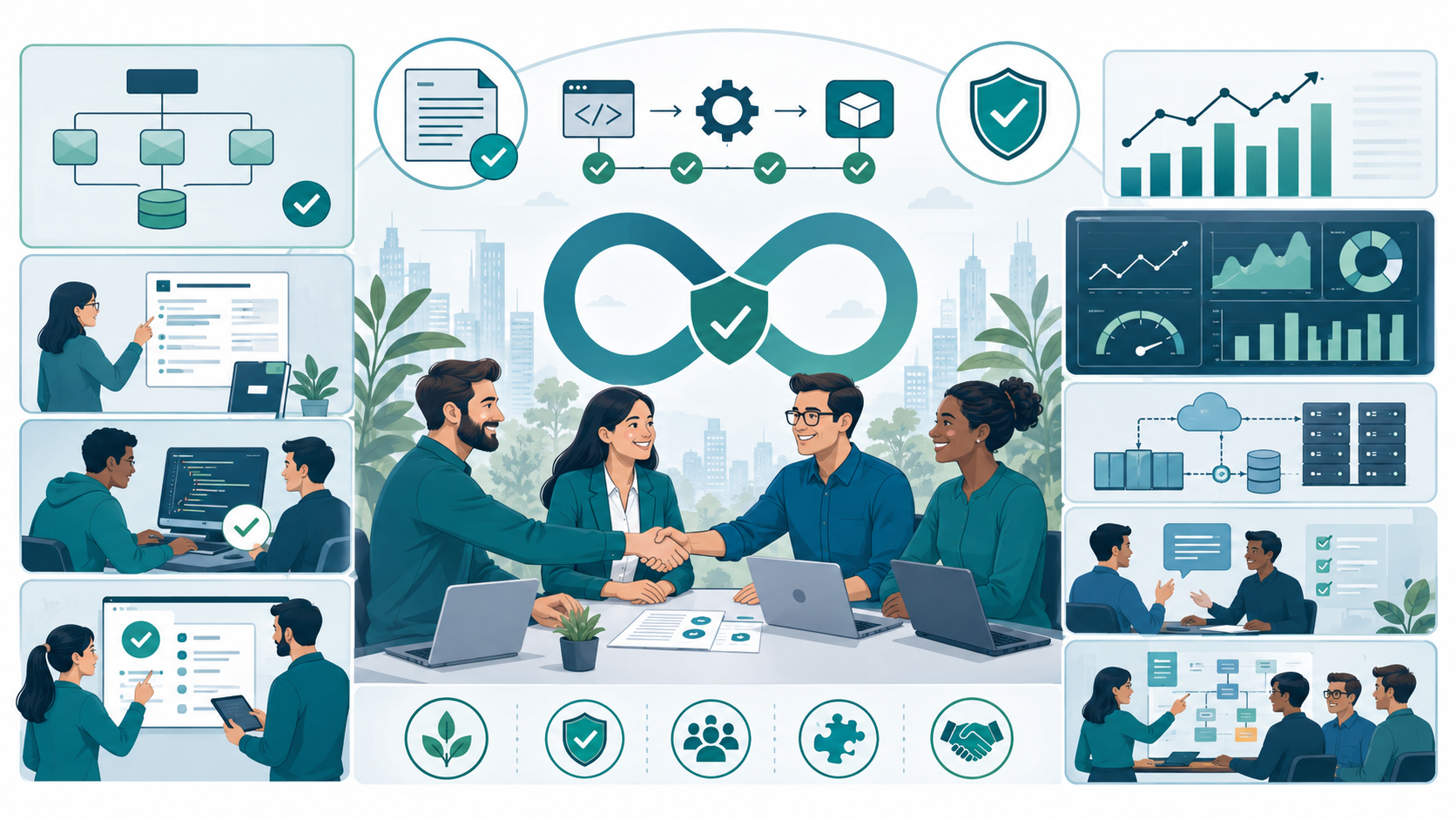
Sustainable Practices for Small Engineering Teams
After working with startups and distributed engineering teams for years, I've noticed that successful products don't rely on extraordinary developers.
They rely on consistent engineering habits.
These practices help teams maintain development velocity while reducing long-term technical debt.
Keep Architecture as Simple as Possible
Complex architecture often appears impressive during presentations.
Simple architecture usually performs better in production.
Start with solutions that are easy to understand, test, maintain, and extend.
Only introduce additional complexity when the product genuinely requires it.
Simple systems are easier to optimize than overly complicated ones.
Invest in Documentation Early
Documentation often gets postponed because feature development feels more urgent.
Eventually, every undocumented decision becomes someone's future problem.
Maintain documentation for:
- Architecture decisions
- API behavior
- Deployment procedures
- Integration workflows
- Environment configuration
- Technical assumptions
Good documentation improves onboarding, maintenance, and long-term collaboration.
Build Quality Into Every Release
Testing shouldn't happen only before launch.
Quality should be part of the entire development lifecycle.
Healthy engineering teams include:
- Code reviews
- Automated testing
- Manual validation
- Performance monitoring
- Security verification
- Deployment checklists
Finding defects early is significantly less expensive than fixing production incidents.
Make Transparency Part of the Process
Trust grows when everyone understands the project's current status.
Effective teams regularly communicate:
- Progress updates
- Risks
- Blockers
- Timeline adjustments
- Budget impacts
- Technical decisions
Transparent communication reduces surprises and helps stakeholders make informed decisions.
Measure Performance Continuously
Performance problems rarely appear overnight.
They develop gradually as products grow.
Monitor key areas such as:
- Application response time
- Infrastructure usage
- Database performance
- API latency
- Deployment success rate
- Error frequency
Continuous monitoring allows engineering teams to identify issues before users notice them.
Prioritize Long-Term Maintainability
Every feature added today becomes something that must be maintained tomorrow.
Before implementing new functionality, ask:
- Will future developers understand this?
- Can it be tested easily?
- Is customization straightforward?
- Does it introduce unnecessary complexity?
- Will it still make sense a year from now?
These questions often prevent technical debt more effectively than any framework or tool.
Build a Partnership, Not Just a Contract
The strongest software projects I've worked on shared one characteristic.
The client and development company operated as one engineering team.
There was:
- Open communication
- Mutual trust
- Shared planning
- Honest technical discussions
- Collaborative problem-solving
- Clear expectations
That relationship consistently produced better software than contracts focused only on deliverables and deadlines.
Conclusion
Choosing a software development company in the USA isn't about finding the largest team, the lowest price, or the longest technology list.
It's about identifying a partner that understands your product, communicates openly, and makes sound engineering decisions throughout the project.
A polished portfolio and competitive pricing may help narrow your options, but they shouldn't outweigh architecture discussions, technical expertise, documentation practices, transparency, and long-term maintenance planning.
The companies that consistently deliver successful software are rarely the ones promising perfection.
They're the ones that ask thoughtful questions, explain trade-offs honestly, document decisions carefully, and adapt as products evolve.
If you evaluate a development partner through that lens, you're far more likely to build software that remains reliable, maintainable, and scalable long after the first release.
How To Choose a Software Development Company In USA: FAQs
Start by evaluating their engineering expertise, portfolio relevance, communication process, architecture approach, client references, documentation standards, and long-term support model rather than focusing only on pricing.
Ask about their discovery process, development strategy, testing methodology, deployment workflow, maintenance plans, security practices, scalability approach, project timeline, and how they manage changing requirements.
No. Smaller engineering teams with strong collaboration, efficient planning, and clear communication often deliver projects faster and with higher quality than larger teams with unnecessary process overhead.
Discovery helps define business goals, technical requirements, project risks, integrations, and architecture before development begins. It reduces misunderstandings, improves budget accuracy, and prevents expensive rework later.
Not necessarily. Lower pricing may exclude critical activities such as discovery, testing, documentation, security reviews, maintenance, or ongoing support. Evaluating the overall value and engineering process usually leads to better long-term results.
Reference
Written by

Paras Dabhi
VerifiedFull-Stack Developer (Python/Django, React, Node.js)
I build scalable web apps and SaaS products with Django REST, React/Next.js, and Node.js — clean architecture, performance, and production-ready delivery.
LinkedIn