Mobile App Development Cost In USA
One of the most common conversations I have with startup founders starts with a simple question:
"How much will it cost to build our mobile app?"
The problem is that most teams ask this question far too early, often before they fully understand the functionality, architecture, integrations, deployment requirements, and long-term maintenance involved.
I've seen founders budget for a simple application based on an online estimate, only to discover later that backend systems, API integrations, security requirements, testing, and ongoing support significantly increase the overall investment.
The issue is not that development teams intentionally underestimate pricing. The real problem is that early assumptions about mobile software complexity are usually incomplete.
For small startup teams, understanding what actually drives mobile app development cost in the USA is often more valuable than looking for average pricing numbers.
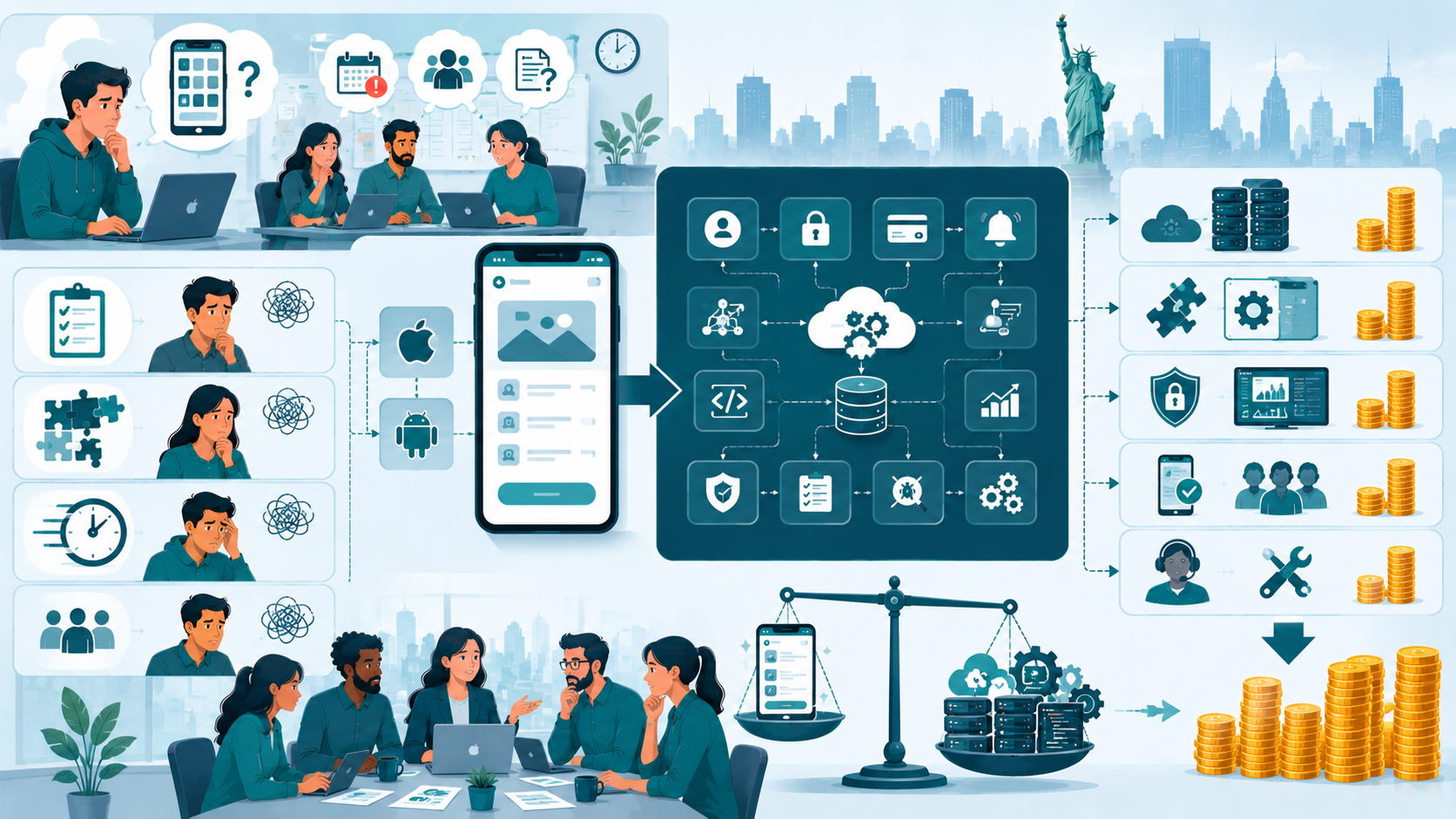
Why This Problem Happens in Real Teams
Most cost overruns begin long before the first developer writes code.
In early-stage products, teams often focus on visible features while ignoring the underlying engineering requirements.
Common causes include:
- Limited planning time
- Aggressive launch timelines
- Small engineering teams
- Unclear product requirements
- Incomplete technical specifications
- Underestimated maintenance needs
Many founders assume development cost is primarily determined by screen count or design complexity.
In practice, architecture decisions often have a larger impact.
For example, a mobile application with:
- User authentication
- Payment processing
- Third-party integrations
- Real-time notifications
- Analytics tracking
may require significantly more backend infrastructure than a simple content-based application.
As functionality increases, development effort grows across:
- Frontend implementation
- Backend services
- Database architecture
- Security controls
- Testing workflows
- Deployment processes
The result is a larger engineering investment than initially expected.
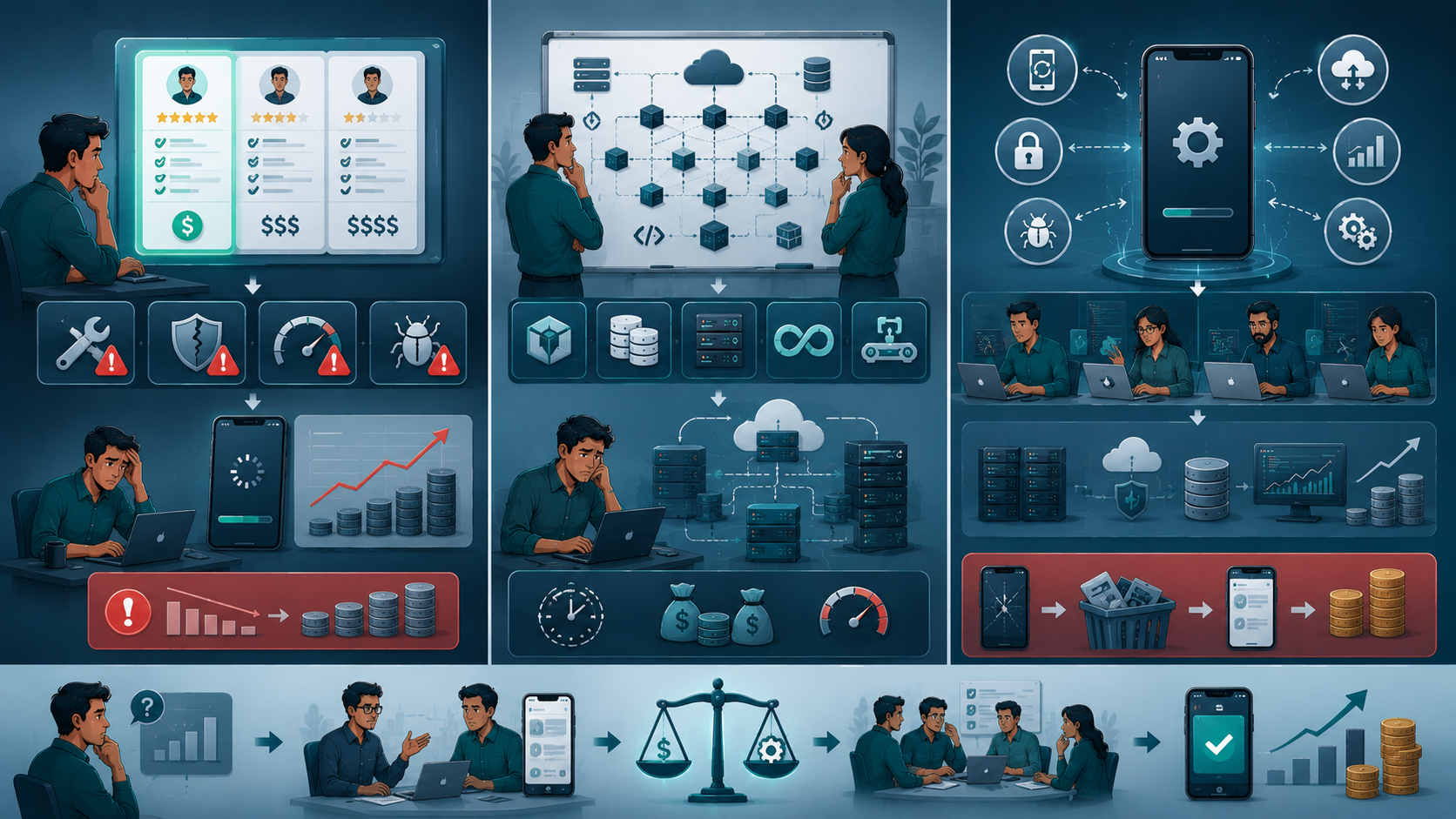
Where Most Teams Make the Wrong Decision
Focusing Only on Initial Development Pricing
Many startup teams choose the lowest development estimate without considering long-term costs. Ongoing expenses such as maintenance, security updates, cloud infrastructure, and performance improvements can significantly increase the total investment. Looking beyond the initial quote helps avoid costly surprises later.
Long-term expenses often include:
- Maintenance
- Security updates
- Infrastructure
- Cloud services
- Monitoring
- Performance optimization
I've seen products launched with low initial budgets that later required expensive rewrites because scalability was ignored.
Copying Enterprise Architecture Too Early
Small teams often adopt complex architectures inspired by large technology companies before their product actually needs them. This can increase development effort, infrastructure costs, and operational overhead. Simpler solutions are usually more practical during the early stages of growth.
Examples include:
- Microservices
- Complex cloud environments
- Excessive automation
- Multiple databases
- Advanced deployment pipelines
For small startups, this increases:
- Engineering effort
- Infrastructure costs
- Operational complexity
without delivering meaningful business value.
Ignoring Maintenance Costs
Launching an application is only the beginning of its lifecycle. Regular updates, security patches, dependency management, and bug fixes are necessary to keep the product stable and secure. Teams that overlook maintenance often face unexpected costs and technical challenges after release.
However, every application requires ongoing work:
- Operating system updates
- Dependency upgrades
- Security patches
- Feature improvements
- Bug fixes
Maintenance becomes part of the total cost of ownership.
Teams that ignore this often face unexpected expenses within the first year.
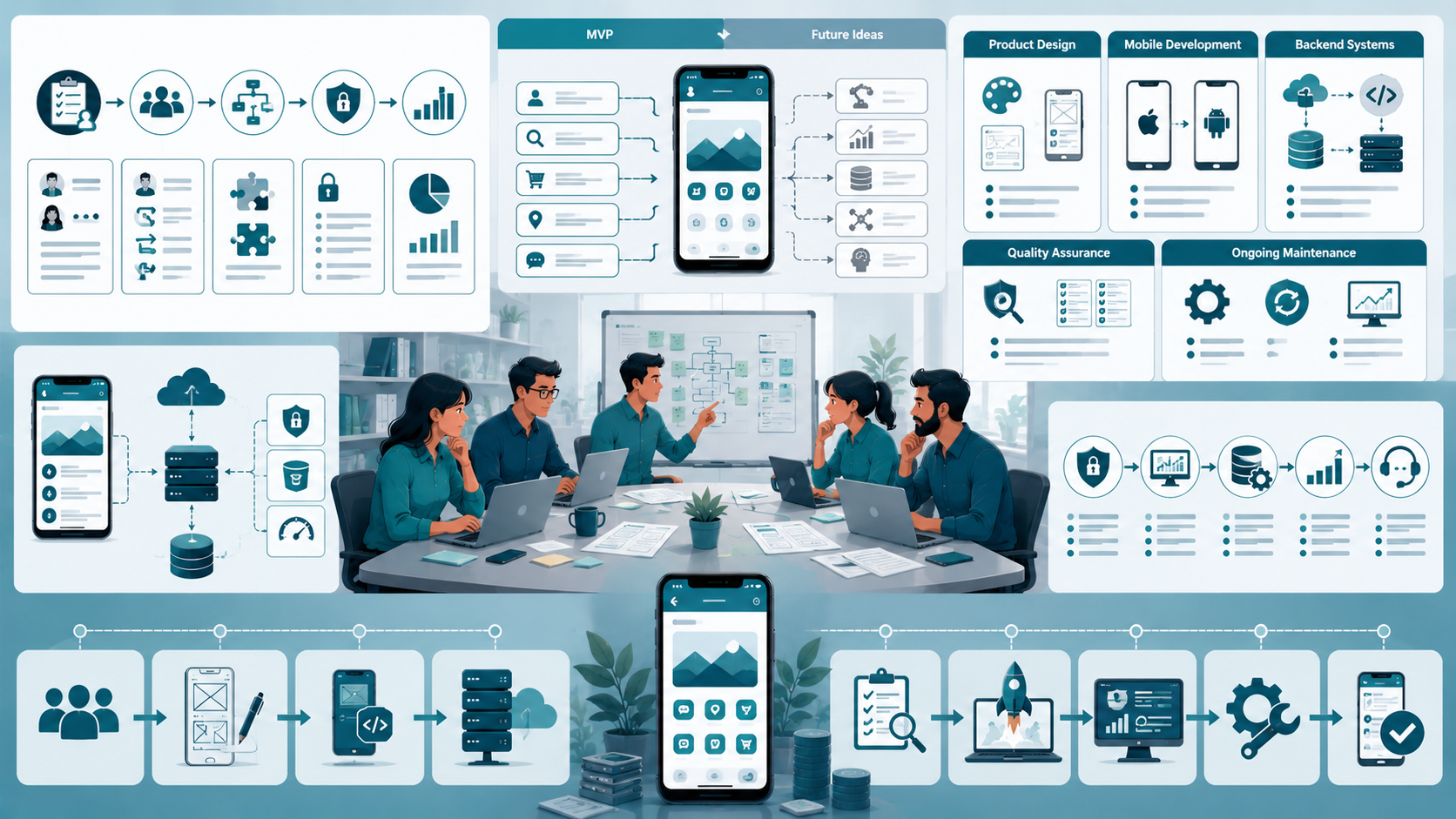
Practical Fixes That Actually Work
Define Functionality Before Requesting Estimates
Accurate cost estimates start with clear project requirements. Working with a US mobile app team for realistic project budgeting helps founders document user roles, workflows, integrations, security expectations, reporting needs, backend systems, and maintenance planning before discussing the final development budget.
Before discussing pricing, document:
- User roles
- Core workflows
- Integrations
- Security requirements
- Reporting needs
Clear requirements improve estimation accuracy.
Build an MVP First
Many startups try to launch with too many features, which increases development time and cost. Focusing on core functionality and essential user journeys allows teams to validate their product faster. An MVP helps reduce investment risk while gathering real user feedback.
Prioritize:
- Core functionality
- Essential user journeys
- Validation features
Avoid:
- Advanced automation
- Complex reporting
- Enterprise integrations
An MVP reduces development effort and lowers investment risk.
Separate Cost Drivers Into Categories
Breaking costs into specific categories makes budgeting more realistic and transparent. Instead of viewing development as a single expense, evaluate design, development, infrastructure, testing, and maintenance separately. This approach helps teams identify where resources are being allocated.
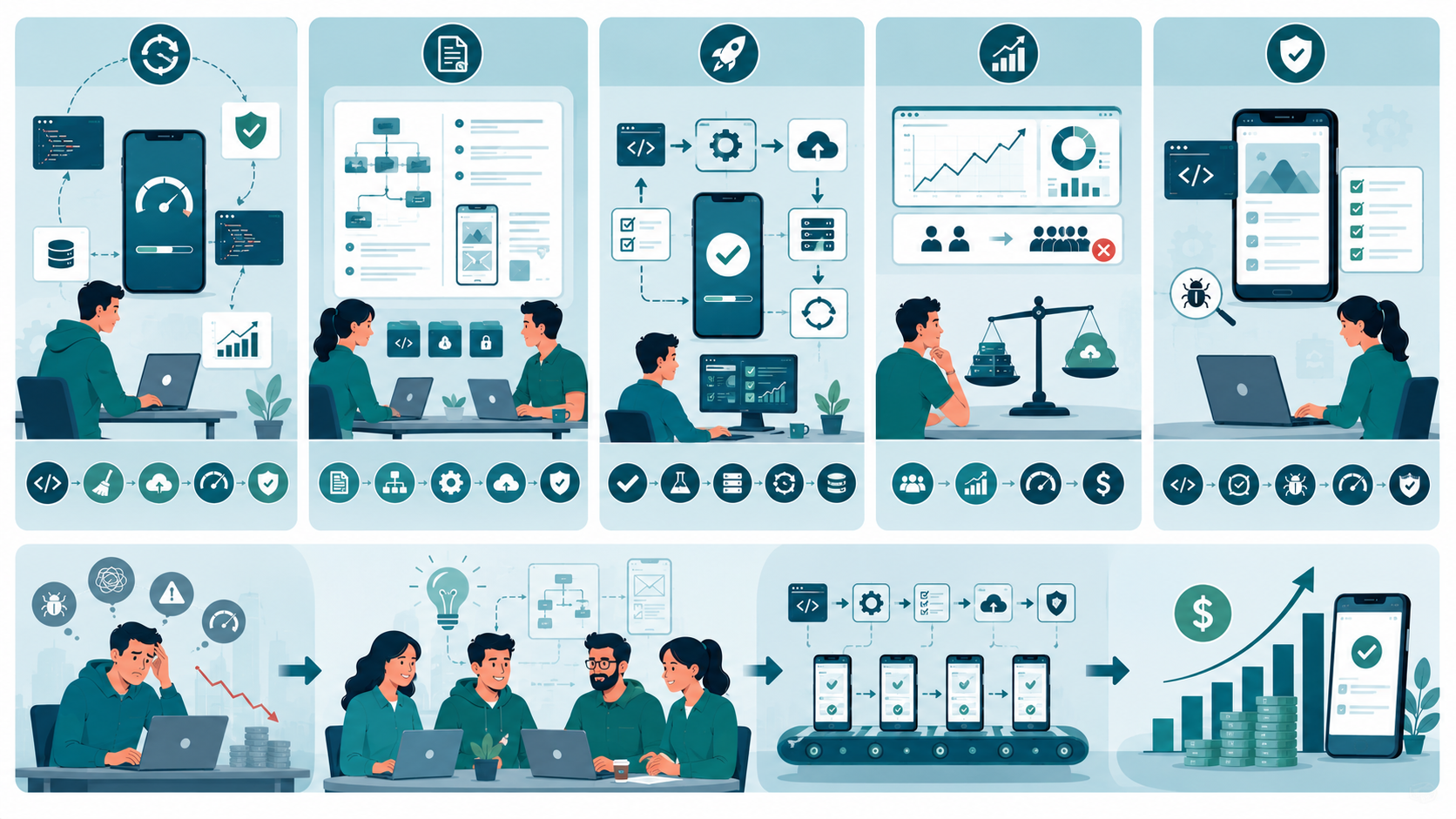
I recommend evaluating costs across five areas:
Product Design
Product design lays the foundation for a successful application by focusing on usability and user experience. Activities such as interface design, wireframing, and prototyping help teams validate ideas before development begins. Strong design decisions can reduce costly changes later.
Includes:
- User experience
- Interface design
- Prototyping
Mobile Development
Mobile development includes building the application for iOS, Android, or multiple platforms. The complexity of features, device compatibility requirements, and platform choices directly influence development effort. Careful planning helps control both timelines and costs.
Includes:
- iOS implementation
- Android implementation
- Cross-platform development
Backend Systems
Backend systems power the core functionality of an application behind the scenes. This includes APIs, authentication, database management, and business logic. A well-structured backend improves performance, reliability, and future scalability.
Includes:
- APIs
- Authentication
- Database management
- Business logic
Quality Assurance
Quality assurance ensures that the application works reliably across devices and user scenarios. Testing helps identify bugs, performance issues, and compatibility problems before launch. Investing in QA reduces the risk of costly fixes after release.
Includes:
- Functional testing
- Performance testing
- Device compatibility testing
Ongoing Maintenance
Applications require continuous maintenance even after deployment. Monitoring, security updates, performance improvements, and user support are necessary to keep the product stable and secure. Ongoing maintenance should always be included in long-term budget planning.
Includes:
- Monitoring
- Security updates
- Performance improvements
- Support
This approach produces more realistic project estimates.
Prioritize Simpler Architecture
Simple architectures are often easier for small engineering teams to build, maintain, and scale. Monolithic systems, managed cloud services, and straightforward deployment workflows reduce operational complexity. Keeping the architecture simple helps control both development and infrastructure costs.
For most startup applications:
- Monolithic backend systems
- Managed cloud services
- Simple deployment workflows
are easier to maintain than highly distributed architectures.
Simplicity reduces both development and operational expenses.

When This Approach Fails
While simplicity works for many startups, there are situations where larger investments become necessary.
Examples include:
High-Traffic Applications
Applications expecting rapid user growth often require more than a basic architecture. As traffic increases, teams may need advanced scalability planning, distributed infrastructure, and stronger security controls. These requirements add complexity and increase overall development and operational costs.
Products expecting significant user growth may require:
- Advanced scalability planning
- Distributed infrastructure
- Additional security controls
Highly Regulated Industries
Industries such as finance and healthcare must meet strict regulatory and security standards. Applications handling sensitive customer data often require additional compliance measures, audits, and security implementations. These requirements can significantly increase development effort and project costs.
Applications handling:
- Financial transactions
- Healthcare information
- Sensitive customer data
often require additional compliance work.
Complex Enterprise Products
Enterprise applications typically support large user bases, multiple organizations, and complex business processes. Features such as multi-tenant architecture, extensive integrations, and advanced permission systems require additional engineering resources. As product complexity grows, development costs naturally increase to support scalability, reliability, and maintainability.
Large enterprise platforms may need:
- Multi-tenant architecture
- Extensive integrations
- Advanced permission systems
In these cases, development costs naturally increase.
The goal is not minimizing investment at all costs.
The goal is aligning investment with actual product requirements.
Sustainable Practices for Small Engineering Teams
Reduce Technical Debt Continuously
Technical debt can grow quickly if it is ignored for long periods. Regular activities such as refactoring, dependency updates, and architecture improvements help keep systems maintainable and efficient. Small, consistent investments often prevent costly rebuilds in the future.
Schedule recurring work for:
- Refactoring
- Architecture cleanup
- Dependency updates
- Performance optimization
- Security improvements
Small investments prevent larger rebuilds.
Maintain Clear Documentation
Good documentation makes software easier to maintain and scale over time. Recording architecture decisions, API specifications, deployment processes, and security requirements helps teams work more effectively. Clear documentation also improves onboarding and reduces knowledge gaps.
Document:
- Architecture decisions
- API specifications
- Infrastructure dependencies
- Deployment workflows
- Security requirements
This improves collaboration across engineering teams.
Simplify Deployment Workflows
Complicated deployment processes can introduce unnecessary risks and delays. Teams should focus on repeatable deployments, automated testing, consistent environments, and reliable rollback procedures. Streamlined workflows improve stability and reduce operational overhead.
Focus on:
- Repeatable deployments
- Automated testing
- Consistent environments
- Rollback procedures
Reliable deployments reduce maintenance effort.
Avoid Premature Scaling
Many startups invest in complex architectures before their product actually requires them. Scaling should be driven by real user growth, performance data, and operational needs rather than assumptions. Taking a measured approach helps control costs and reduce unnecessary complexity.
Scale architecture only when:
- User growth demands it
- Performance data supports it
- Operational complexity becomes necessary
This keeps development costs under control.
Invest in Code Quality Early
Prioritizing code quality from the beginning makes applications easier to maintain and improve. Clean, well-structured code enhances reliability, developer productivity, and long-term scalability. Early attention to quality also reduces future maintenance and engineering costs.
Clean code improves:
- Reliability
- Productivity
- Maintainability
and reduces future engineering expenses.
Conclusion
The biggest mistake startup founders make when estimating mobile app development cost in the USA is assuming that development pricing is driven primarily by visible features.
In reality, architecture, integrations, infrastructure, testing, maintenance, and long-term support often contribute more to total cost than expected.
The most successful teams focus less on finding the lowest estimate and more on understanding the technical factors that drive investment over time.
A realistic budget starts with clear requirements, simpler architecture, and disciplined engineering decisions.
Mobile App Development Cost In USA: FAQ
Because project complexity is often hidden in backend systems, integrations, security requirements, testing, and ongoing maintenance.
Not necessarily. It can reduce development effort, but project requirements and functionality determine overall cost.
Teams should expect ongoing expenses for updates, security patches, monitoring, and feature improvements throughout the application's lifecycle.
Usually not. Most early-stage products benefit from simpler architecture that is easier to build and maintain.
Complex integrations, custom functionality, scalability requirements, security controls, and long-term maintenance are typically the largest cost drivers.
Reference
Written by

Paras Dabhi
VerifiedFull-Stack Developer (Python/Django, React, Node.js)
I build scalable web apps and SaaS products with Django REST, React/Next.js, and Node.js — clean architecture, performance, and production-ready delivery.
LinkedIn