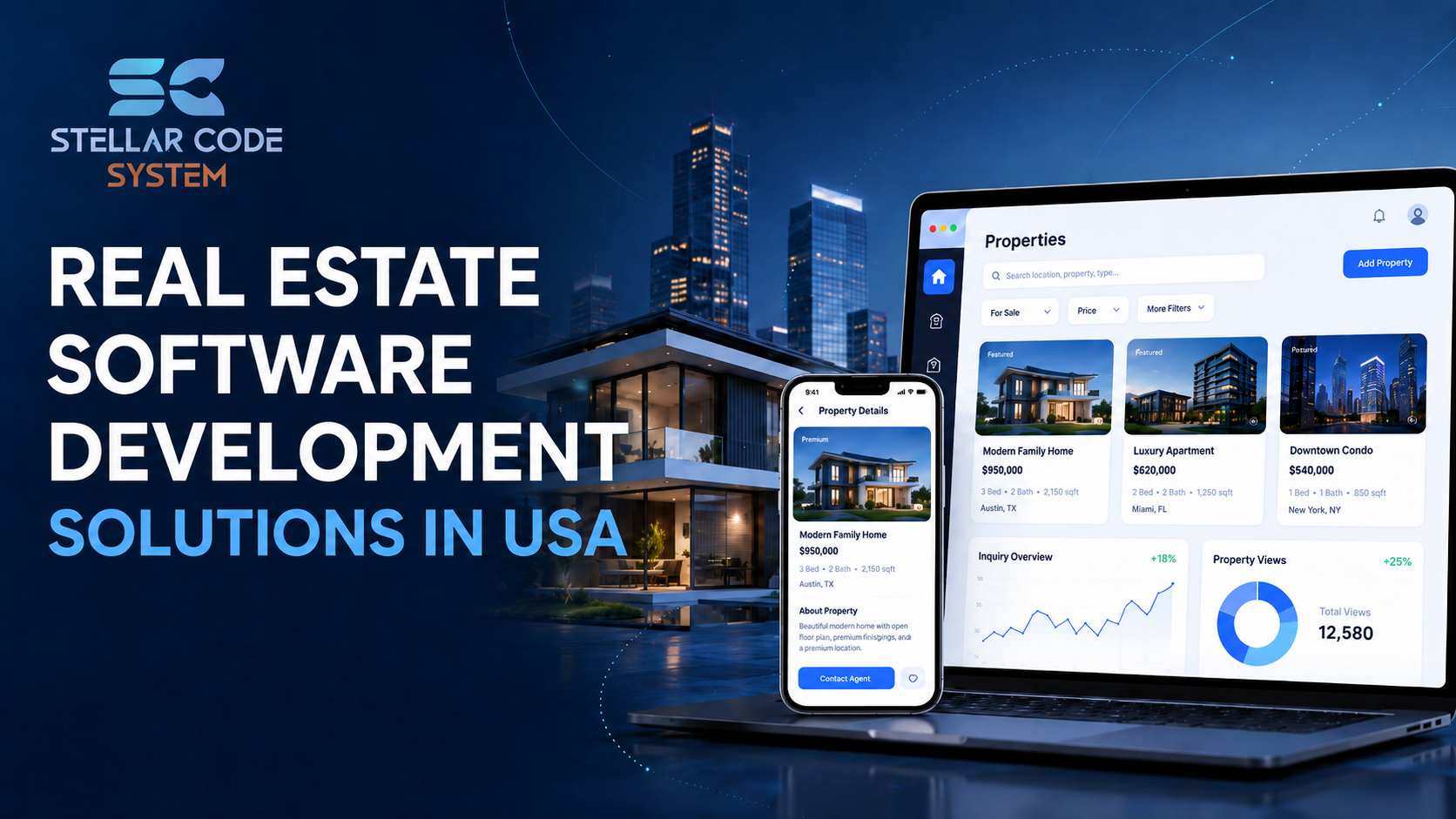
Real Estate Software Development Solutions In USA
Many real estate companies start software projects with a clear goal.
They want better property management, faster transactions, improved listings, stronger CRM capabilities, or a more efficient way to manage tenants and landlords.
The first version often works well.
Then growth begins.
More users arrive. New integrations are added. Additional workflows appear. Teams introduce reporting dashboards, MLS connections, mortgage processing, lease management, and investment tracking features.
After about a year, many real estate platforms become significantly harder to maintain than anyone expected.
I've seen this happen across startup teams, SaaS products, and growing engineering organizations. The problem is rarely the technology itself. Most of the issues come from early architectural decisions that were made when the product was much smaller.
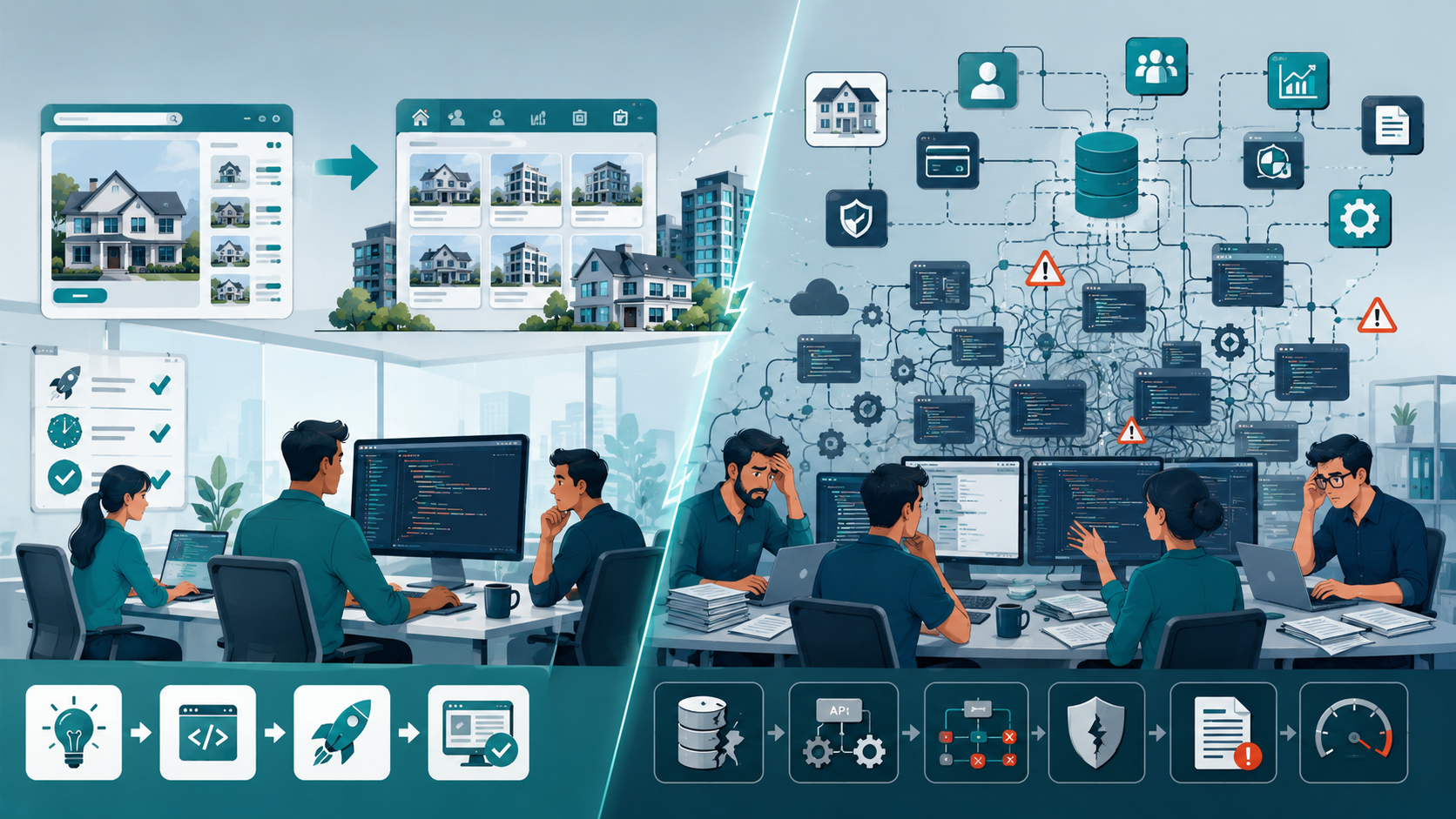
Why This Problem Happens in Real Teams
Real estate software is rarely simple.
Even a basic platform may require:
- Property listings
- User management
- CRM functionality
- Tenant tracking
- Document management
- Payment workflows
- Compliance requirements
- Reporting systems
The challenge is that most teams build for today's requirements instead of tomorrow's operational complexity.
Early development usually focuses on speed.
Founders want faster deployment.
Product teams want rapid feature delivery.
Engineering teams prioritize shipping functionality over long-term maintainability.
As a result, systems accumulate technical debt in several areas:
- Database structure
- API design
- Workflow automation
- Integration architecture
- Security controls
- Documentation
The system works initially.
The problems appear later when growth introduces new operational requirements.
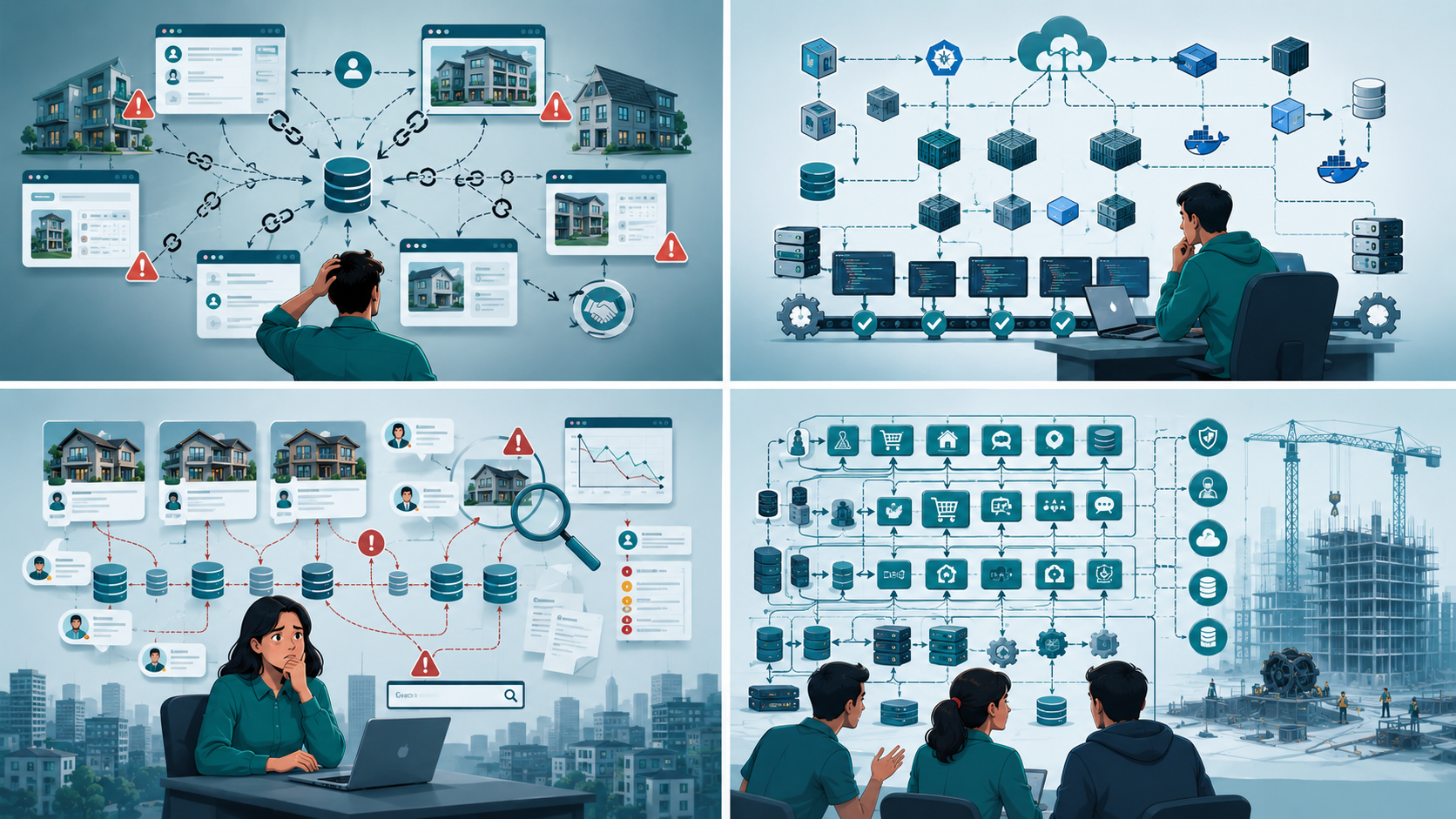
Where Most Teams Make the Wrong Decision
Treating Every Feature as a Separate System
One common mistake is creating isolated solutions for every business process.
A property management module becomes separate from leasing.
Leasing becomes disconnected from CRM.
CRM becomes disconnected from transaction management.
Over time, synchronization becomes increasingly difficult.
Data starts moving between multiple systems through custom integrations.
Maintenance costs increase rapidly.
Overengineering for Future Scale
Many startups build infrastructure for problems they do not have yet. Complex systems such as distributed services, multiple databases, and advanced deployment workflows often increase maintenance effort without delivering immediate value. Early-stage teams usually benefit more from simplicity and faster iteration.
Examples include:
- Distributed services
- Excessive cloud resources
- Multiple databases
- Complex deployment pipelines
- Enterprise-level workflow orchestration
The team assumes scalability problems will arrive immediately.
Most never do.
Instead, engineers spend valuable time maintaining infrastructure that delivers little practical benefit.
Ignoring Data Architecture
Data is the foundation of every real estate platform. Poor database design can lead to duplicate records, inconsistent information, reporting errors, and integration issues. Establishing a clear data structure early helps maintain reliability as the platform grows.
Property information, contracts, tenant records, ownership details, financing information, and inspections must remain consistent.
Poor database architecture creates:
- Duplicate records
- Reporting inaccuracies
- Broken integrations
- Search performance issues
- Compliance risks
Fixing these problems later becomes expensive.
Copying Large Marketplace Platforms
Large real estate marketplaces operate with specialized engineering teams and significant resources. Replicating their architecture too early often introduces unnecessary complexity for smaller teams. A simpler approach is usually easier to manage and better aligned with actual business needs.
The problem is that large organizations operate with:
- Dedicated infrastructure teams
- Security specialists
- Platform engineers
- Database administrators
Small engineering teams rarely have those resources.
The architecture becomes difficult to operate long before it delivers business value.
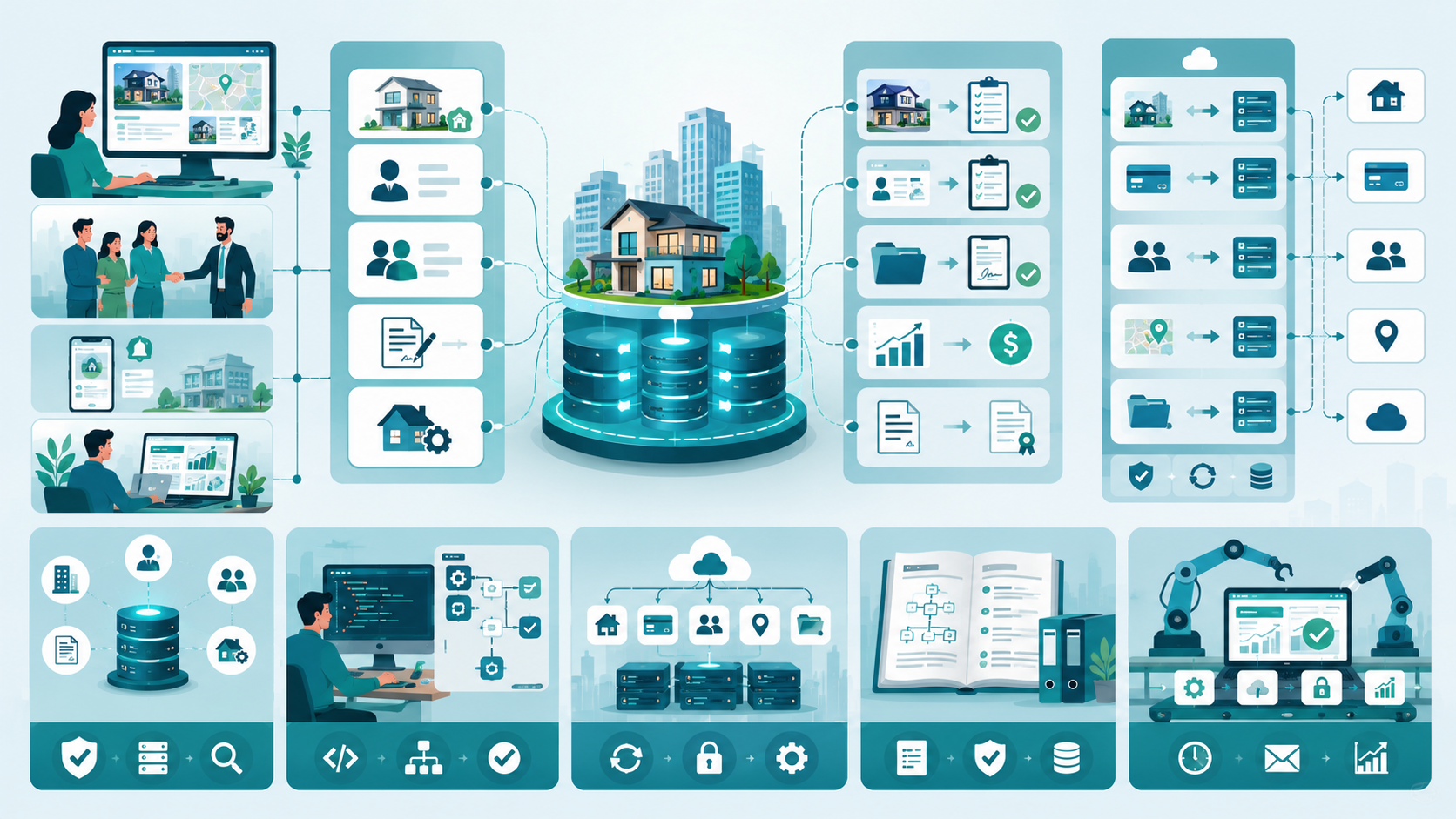
Practical Fixes That Actually Work
Keep Core Property Data Centralized
A centralized data model helps maintain consistency across the platform. Working with a US real estate software development team helps property businesses organize listings, tenant records, lease agreements, ownership data, CRM workflows, and reporting systems around one reliable source of truth.
Create a single source of truth for:
- Listings
- Ownership records
- Tenant information
- Lease agreements
- Property assets
Avoid maintaining multiple versions of the same data across systems.
This reduces synchronization problems and reporting inconsistencies.
Design APIs Around Business Workflows
APIs should reflect how users actually interact with the platform rather than how the database is structured. Organizing APIs around workflows such as property listings, inspections, and lease processing makes systems easier to maintain. This approach also improves developer productivity and integration efficiency.
A better approach is organizing APIs around actual business operations.
Examples include:
- Create property listing
- Schedule inspection
- Process lease application
- Generate valuation report
- Manage transaction workflow
This improves maintainability and developer productivity.
Standardize Integrations Early
Real estate software often depends on multiple third-party services. Establishing consistent integration patterns, authentication methods, and data formats early reduces technical complexity as the platform grows. Standardization also makes future integrations easier to manage and monitor.
Most real estate platforms eventually require:
- MLS integration
- Payment providers
- CRM synchronization
- Mapping services
- Document storage systems
Instead of creating custom integration logic everywhere:
- Create reusable integration layers
- Standardize authentication
- Normalize incoming data
- Centralize monitoring
This reduces operational complexity significantly.
Prioritize Documentation
Clear documentation becomes increasingly important as teams and systems expand. Recording architecture decisions, API behavior, database relationships, and deployment processes helps reduce onboarding time and prevents knowledge gaps. Well-maintained documentation improves long-term maintainability.
That becomes a major problem when teams scale.
Document:
- System architecture
- Database relationships
- API behavior
- Compliance requirements
- Deployment workflows
Good documentation reduces onboarding time and lowers maintenance risk.
Automate Operational Tasks
Manual operational processes can quickly become bottlenecks as usage increases. Automating tasks such as data validation, deployment checks, backups, and monitoring improves reliability while reducing human error. Small automation improvements often deliver significant operational benefits over time.
Focus on:
- Data validation
- Deployment checks
- Backup processes
- Security monitoring
- Reporting generation
Simple automation usually delivers more value than introducing additional infrastructure.

When This Approach Fails
No architecture works forever.
Centralized systems eventually face limitations.
This approach may struggle when:
Transaction Volume Becomes Extremely High
As real estate platforms grow and handle millions of transactions, a centralized architecture may struggle to meet performance demands. Higher traffic often requires distributed systems, database scaling strategies, and infrastructure designed for increased reliability and availability.
Multiple Independent Product Lines Emerge
When multiple independent product lines emerge, shared systems can become harder to coordinate. Separate business units may require different workflows, release cycles, ownership models, and integration boundaries. At that stage, stronger architectural separation may become necessary.
Compliance Requirements Increase Significantly
Growing regulatory obligations can introduce additional technical requirements. Enhanced security controls, auditing capabilities, data governance policies, and compliance reporting often require architectural changes that were unnecessary during the early stages of development.
Large Engineering Organizations Form
As engineering teams grow, coordination becomes more complex. Clear architectural boundaries, ownership models, and system separation help maintain productivity across multiple teams. Additional complexity becomes worthwhile when it improves collaboration and operational efficiency at scale.
At that stage, additional complexity can become justified.
The key is introducing complexity only when real operational needs exist.
Sustainable Practices for Small Engineering Teams
Long-term success depends less on technology choices and more on engineering discipline.
Reduce Technical Debt Continuously
Technical debt grows over time if left unaddressed. Regular efforts such as refactoring, database optimization, API cleanup, and dependency updates help keep systems maintainable. Small, consistent improvements are usually more effective than large-scale rebuilds later.
Schedule recurring work for:
- Refactoring
- Database optimization
- API cleanup
- Infrastructure maintenance
- Dependency upgrades
Small improvements prevent larger rebuilds.
Maintain Clean Collaboration Processes
Strong collaboration practices help distributed engineering teams work more efficiently. Clear ownership, consistent coding standards, regular code reviews, and shared documentation reduce misunderstandings and improve overall development quality.
Focus on:
- Code reviews
- Clear ownership
- Consistent standards
- Shared documentation
This improves collaboration across distributed teams.
Simplify Deployment Workflows
Complex deployment procedures often slow down development and increase operational risk. Repeatable deployments, automated testing, rollback strategies, and effective monitoring help teams release updates more reliably while minimizing disruptions.
Aim for:
- Repeatable deployments
- Automated testing
- Rollback procedures
- Monitoring visibility
Reliability often matters more than deployment sophistication.
Monitor Real Business Metrics
Technical decisions should be guided by measurable business outcomes. Tracking metrics such as listing activity, user engagement, transaction completion rates, and system performance helps teams focus on improvements that create the greatest impact.
Track metrics connected to business outcomes:
- Listing activity
- User engagement
- Transaction completion
- Search performance
- System availability
This helps teams prioritize improvements that actually matter.
Avoid Tool Proliferation
Adding too many tools can increase maintenance effort and operational complexity. Teams should adopt technologies that address real business needs rather than anticipated future challenges. Simpler technology stacks are often easier to manage, maintain, and scale.
Conclusion
Most real estate software development projects in the USA do not become difficult to maintain because of poor technology choices.
They become difficult because teams optimize for short-term feature delivery while ignoring long-term architecture, data management, integration strategy, and operational simplicity.
The biggest mistake is introducing complexity before the business actually needs it.
The most sustainable approach is building simple, maintainable systems that support property management, transactions, listings, CRM workflows, and reporting without creating unnecessary operational burden.
Teams that prioritize maintainability early usually spend less time fighting infrastructure and more time improving the product.
Real Estate Software Development Solutions in USA: FAQs
Growth introduces additional integrations, workflows, reporting requirements, and compliance needs that early architectures were not designed to support.
Usually not. Most small engineering teams gain more value from a well-structured monolithic architecture during the early stages.
Maintaining data consistency across listings, tenants, contracts, payments, and reporting systems.
Invest in refactoring, documentation, deployment automation, and architecture reviews on a regular schedule.
Clear workflows, maintainable architecture, reliable integrations, and disciplined engineering practices typically have a greater impact on long-term success.
Reference
Written by

Paras Dabhi
VerifiedFull-Stack Developer (Python/Django, React, Node.js)
I build scalable web apps and SaaS products with Django REST, React/Next.js, and Node.js — clean architecture, performance, and production-ready delivery.
LinkedIn