Software Development Lifecycle Explained: A Practical Guide for Developers
Most startup teams understand the Software Development Lifecycle when a product is new.
The process looks straightforward. Teams gather requirements, create a design, write code, perform testing, deploy features, and continue improving the product through feedback.
The challenge begins after the first successful release.
As products grow, engineering teams often stop following a structured lifecycle. New feature requests arrive constantly. Technical debt increases. Deployment schedules become unpredictable. Documentation falls behind. What started as a clean workflow slowly turns into a collection of urgent fixes and competing priorities.
I've seen this happen repeatedly across SaaS products, startup teams, and remote engineering organizations. The issue is rarely a lack of technical talent. More often, teams abandon lifecycle discipline because they believe moving faster requires fewer process controls.
In reality, most scaling problems emerge because the Software Development Lifecycle becomes fragmented.

Why This Problem Happens in Real Teams
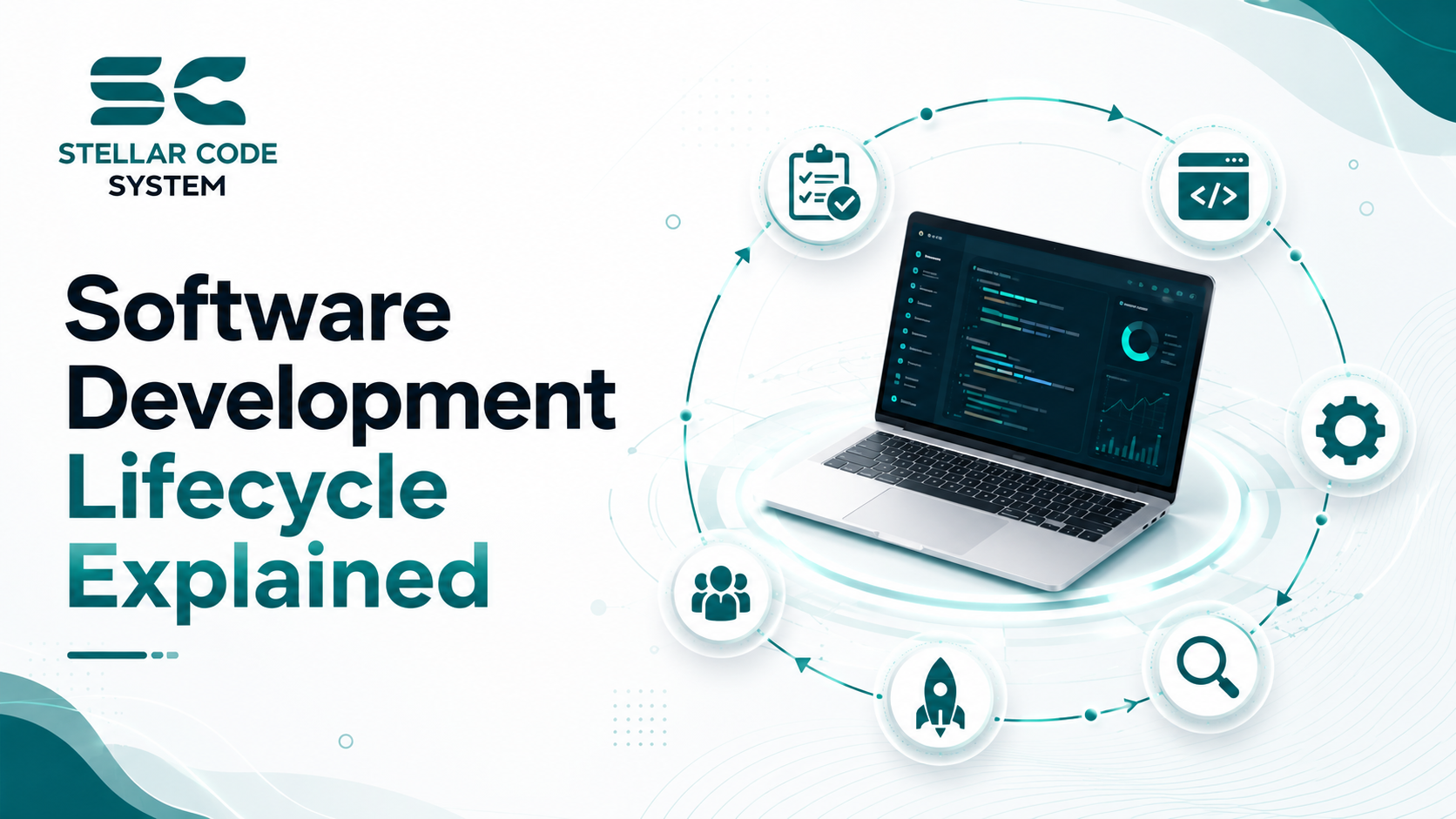
The Software Development Lifecycle is often presented as a linear process:
- Planning
- Requirements gathering
- Analysis
- Design
- Development
- Testing
- Deployment
- Maintenance
Real projects rarely follow this sequence perfectly.
Small engineering teams operate under constant pressure. Product deadlines shift. Customer feedback introduces new priorities. Backlogs expand faster than developers can complete work.
As a result, teams begin skipping lifecycle stages.
Common examples include:
- Development starts before requirements are fully understood.
- Architecture decisions happen during implementation.
- Testing becomes compressed before release deadlines.
- Documentation is postponed indefinitely.
- Maintenance work competes with new feature requests.
Remote teams face additional collaboration challenges. When communication becomes fragmented, assumptions replace analysis and validation.
Over time, the lifecycle still exists, but it becomes unstructured.

Where Most Teams Make the Wrong Decision
One of the biggest mistakes I see is treating process maturity as unnecessary overhead.
Many founders assume that agile development means eliminating structure.
In practice, Agile was never intended to remove planning, documentation, or quality controls. It simply encourages iteration and continuous feedback.
Common mistakes include:
Prioritizing Speed Over Requirements Analysis
Many teams start coding before fully understanding the problem they are trying to solve. This often leads to rework, duplicate features, and integration challenges later in the project. Taking time to validate requirements early helps reduce costly development mistakes and keeps the project aligned with business goals.
This often creates:
- Rework
- Duplicate functionality
- Integration issues
- Inconsistent user experience
A few hours spent validating requirements can save weeks of redevelopment.
Copying Enterprise Architecture Too Early
Startups frequently adopt complex architectures designed for large organizations before they actually need them. While scalability is important, introducing microservices and advanced infrastructure too soon can increase maintenance overhead. Simpler architectures are often easier to manage and support during the early growth stages.
I've seen startups introduce:
- Complex microservices
- Distributed infrastructure
- Advanced DevOps pipelines
- Multi-layer deployment environments
before product-market fit exists.
The architecture becomes harder to maintain than the product itself.
Scalability matters, but premature scalability creates unnecessary complexity.
Ignoring Documentation
As teams grow, documentation often gets pushed aside in favor of feature development. Over time, this creates knowledge gaps that make onboarding, troubleshooting, and decision-making more difficult. Well-maintained documentation acts as a reliable reference point and helps preserve important project knowledge. Many organizations work with a Trusted Software Development Company USA to establish documentation standards, maintain architectural records, and ensure critical project knowledge remains accessible as products and engineering teams continue to scale.
Developers assume knowledge will remain within the team.
Eventually:
- New engineers onboard slowly.
- Support requests increase.
- System reliability declines.
- Critical decisions become difficult to trace.
Documentation is not bureaucracy. It is operational memory.
Treating Testing as a Final Step
Testing is most effective when it is integrated throughout the development process rather than left until the end. Relying on last-minute testing can result in unexpected bugs, delayed releases, and performance issues. Continuous validation helps maintain software quality and reduces risks during deployment.
The most successful teams integrate validation throughout the lifecycle.
Waiting until release week often leads to:
- Last-minute bug fixes
- Delayed launches
- Performance issues
- Reduced product quality
Practical Fixes That Actually Work
The Software Development Lifecycle becomes manageable when teams focus on consistency rather than perfection.
Create Lightweight Planning Sessions
A short planning discussion before development begins can prevent confusion later in the project. By defining goals, success metrics, and dependencies upfront, teams reduce unnecessary work and make implementation more predictable. Even simple planning sessions can significantly improve project execution.
Before development begins, answer three questions:
- What problem are we solving?
- How will success be measured?
- What dependencies exist?
This simple planning process reduces unnecessary implementation work.
Separate Discovery From Development
Combining requirements gathering with development often leads to unclear priorities and unexpected challenges. Separating discovery activities from coding allows teams to validate requirements, evaluate technical options, and estimate effort more accurately. This results in smoother development and fewer mid-project changes.
A common mistake is mixing requirements gathering with coding.
Instead:
- Define requirements.
- Perform technical analysis.
- Review architecture options.
- Estimate effort.
- Start development.
This creates cleaner execution and fewer surprises.
Keep Architecture Simple
Many small engineering teams benefit from simple architectures that are easy to understand and maintain. A straightforward codebase and deployment process reduce operational complexity while supporting product growth. Complexity should be introduced only when there is a clear business or technical need.
For most SaaS products with fewer than 15 engineers:
- Monolithic applications remain effective.
- Simple deployment workflows reduce risk.
- Shared codebases improve collaboration.
Complex infrastructure should solve existing problems, not hypothetical future ones.
Establish Continuous Testing
Testing should be part of the entire development lifecycle rather than a final checkpoint before release. Regular validation helps identify issues early, improves software reliability, and reduces deployment risks. Continuous testing supports faster delivery without sacrificing quality.
Practical testing includes:
- Unit testing for critical business logic
- Integration testing for APIs
- Validation before deployment
- Monitoring after release
Testing should support development rather than block it.
Maintain a Prioritized Backlog
A well-organized backlog helps teams focus on the most valuable work at the right time. Separating immediate tasks from future ideas prevents planning sessions from becoming overwhelming. Clear prioritization improves sprint execution and keeps development aligned with business objectives.
Instead, classify work into:
- Immediate priorities
- Upcoming work
- Future considerations
This keeps sprint planning focused and realistic.
Automate Repetitive Tasks
Automation reduces the amount of manual effort required to build, test, and deploy software. By automating routine processes, teams can improve consistency, minimize human errors, and save valuable engineering time. This allows developers to focus more on product development and innovation.
Examples include:
- Automated testing
- Deployment automation
- Versioning processes
- Monitoring alerts
- Build validation
Automation allows developers to focus on engineering rather than operational tasks.

When This Approach Fails
No lifecycle process works in every situation.
These recommendations become less effective when:
Team Size Increases Significantly
Organizations with:
- Multiple product teams
- Hundreds of developers
- Complex compliance requirements
often require additional governance and formal processes.
Highly Regulated Industries
Products operating in:
- Healthcare
- Financial services
- Government sectors
typically require extensive documentation, validation, and compliance controls.
Lightweight processes may not satisfy regulatory obligations.
Large Distributed Systems
As infrastructure grows, architecture decisions become more complex.
Additional layers of planning, reliability engineering, and operational support may become necessary.
Sustainable Practices for Small Engineering Teams
Long-term success depends less on speed and more on maintaining a healthy engineering workflow.
Manage Technical Debt Continuously
Avoid large cleanup projects.
Instead:
- Refactor incrementally.
- Improve code quality during feature work.
- Resolve recurring issues early.
Improve Collaboration
Strong collaboration reduces lifecycle friction.
Helpful practices include:
- Shared design reviews
- Architecture discussions
- Clear ownership
- Consistent communication
Protect Documentation
Documentation should evolve alongside the product.
Maintain:
- Architecture diagrams
- API documentation
- Deployment procedures
- Operational guides
Strengthen Deployment Workflows
Reliable deployment processes improve product stability.
Effective teams focus on:
- Repeatable releases
- Rollback procedures
- Monitoring systems
- Performance tracking
Optimize for Sustainability
Burnout often damages productivity more than technical limitations.
Sustainable engineering teams:
- Limit unnecessary meetings
- Reduce context switching
- Maintain realistic sprint goals
- Prioritize quality over urgency
Velocity comes from consistency, not constant acceleration.
Conclusion
The Software Development Lifecycle is not a rigid framework that teams follow once and forget.
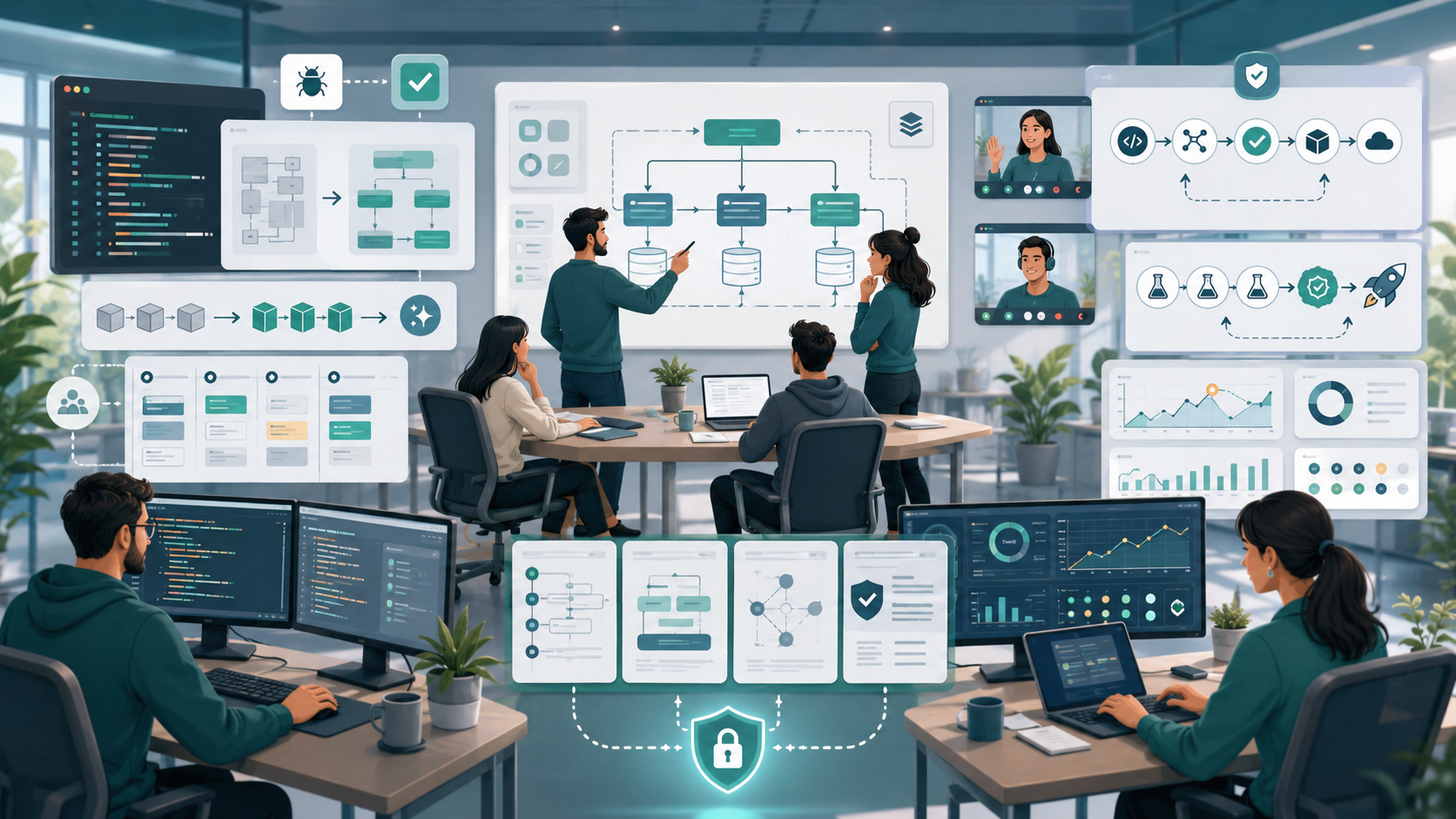
It is an ongoing process that connects planning, requirements, analysis, design, development, testing, deployment, maintenance, and continuous improvement.
The biggest mistake small SaaS teams make is assuming lifecycle discipline slows development.
In practice, the opposite is usually true.
Teams that maintain structured workflows, prioritize quality, document decisions, and automate repetitive tasks tend to deliver more reliable products with fewer engineering bottlenecks.
The goal is not to follow every process perfectly.
The goal is to create a lifecycle that remains sustainable as the product grows.
FAQ
The Software Development Lifecycle is a structured process used to plan, design, develop, test, deploy, maintain, and improve software products throughout their lifecycle.
Startup teams often face tight deadlines, limited engineering resources, changing requirements, and growing technical debt, which can disrupt lifecycle processes.
Yes. Agile is a framework used within the SDLC that emphasizes collaboration, iteration, continuous feedback, and incremental delivery.
Documentation improves collaboration, supports maintenance, speeds onboarding, and preserves important architectural decisions as teams grow.
Yes. Most small teams benefit from a lightweight SDLC that includes planning, development, testing, deployment, monitoring, and maintenance without excessive process overhead.
References
Written by

Paras Dabhi
VerifiedFull-Stack Developer (Python/Django, React, Node.js)
I build scalable web apps and SaaS products with Django REST, React/Next.js, and Node.js — clean architecture, performance, and production-ready delivery.
LinkedIn