Top AI Software Development Trends in USA 2026
Over the last two years, AI has moved from being an experimental feature to becoming part of everyday software development. Yet many startup teams are discovering that integrating AI into a product is far more complicated than adding an API call to a language model.
A pattern I've seen repeatedly across SaaS products is that teams rush to add AI because competitors are doing it. The feature gets launched quickly, users initially engage with it, and then engineering teams spend months dealing with unpredictable outputs, rising infrastructure costs, performance issues, and support tickets.
The assumption that AI automatically makes a product better is creating a new category of technical debt. In many cases, teams are solving the wrong problems with AI while ignoring the operational complexity it introduces.
As we move through 2026, the most important AI software development trends are not flashy model releases. For companies evaluating a software development company in USA for AI software development the real value comes from practical engineering decisions that help small teams build AI features that remain maintainable, reliable, and economically viable.
This is where many product teams are focusing their efforts today.
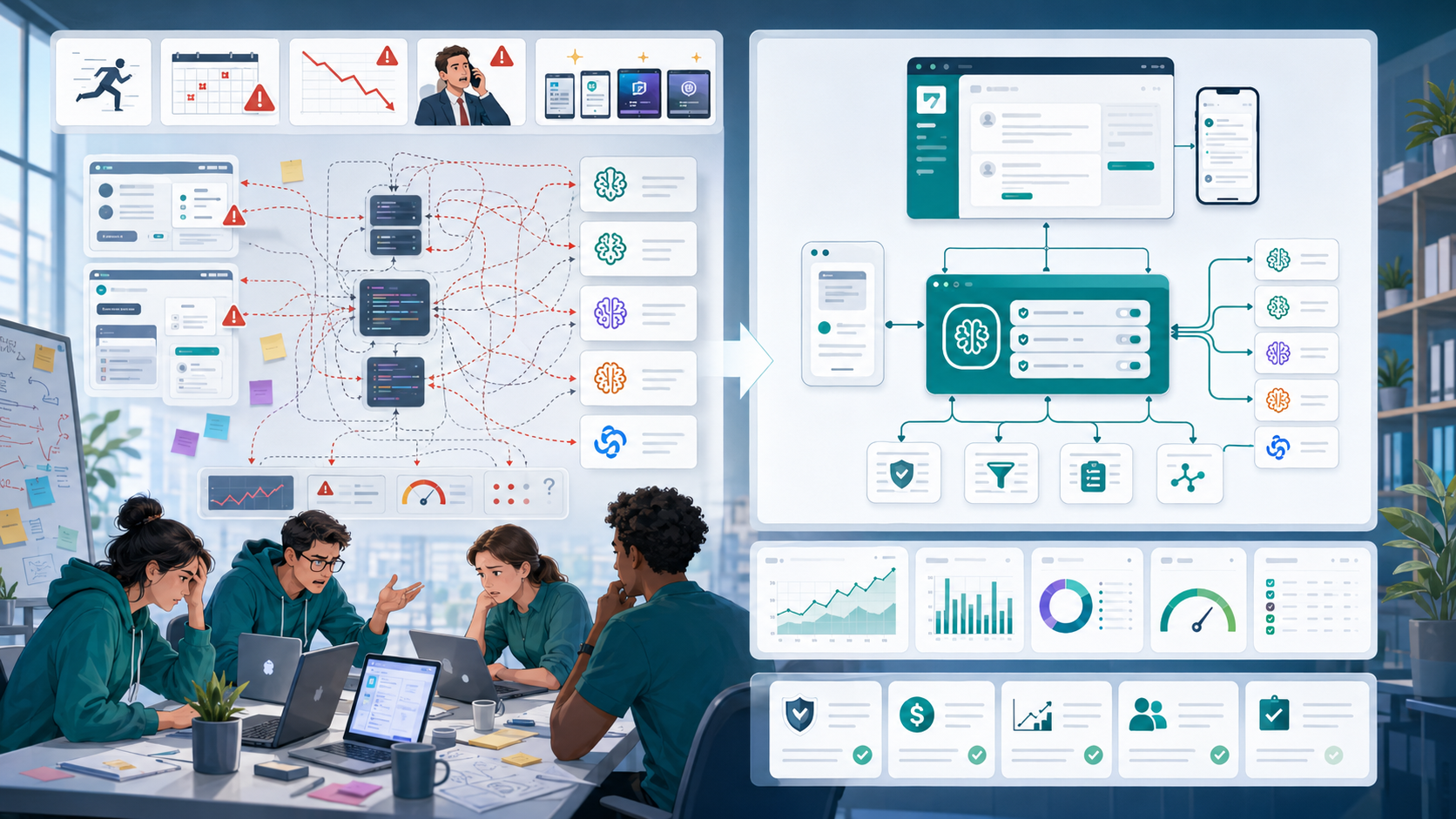
Why AI Development Challenges Happen in Real Teams
Most AI implementation problems are not caused by the models themselves.
They usually originate from how startups build and deploy AI features under pressure.
Small engineering teams often face:
- Aggressive release schedules
- Limited development resources
- Unclear product requirements
- Constant pressure from investors or stakeholders
- Competitive pressure from AI-enabled products
As a result, AI often gets introduced before teams establish proper workflows.
Typical development patterns include:
- Prompt logic scattered throughout the codebase
- No evaluation process for AI outputs
- Lack of monitoring for model behavior
- Missing cost controls
- Weak fallback mechanisms
In traditional software, deterministic systems behave predictably.
AI systems do not.
That difference changes how applications must be designed.
Many developers discover this only after production deployment.
Another factor is that AI capabilities evolve faster than most engineering processes. Teams frequently redesign implementations because model behavior, APIs, pricing, or platform limitations change within months.
This creates a maintenance burden that many startups underestimate.
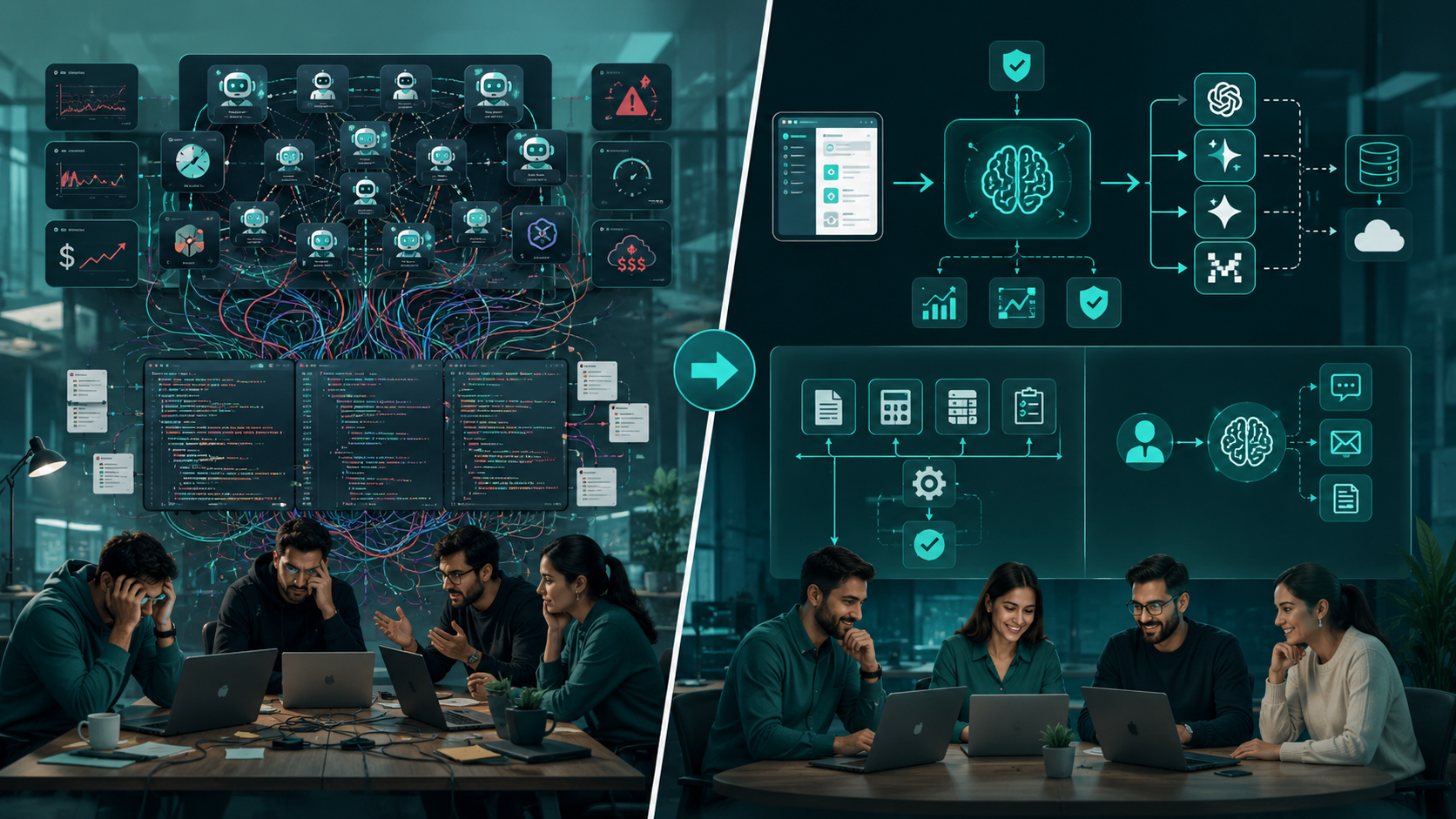
AI Trend #1: AI Orchestration Layers Are Replacing Direct Model Integrations
One of the biggest trends in 2026 is the shift away from hardcoded AI integrations.
In 2024 and 2025, many teams directly embedded prompts inside backend services.
Example:
Application
     ↓
LLM API
Simple.
Fast.
Easy to launch.
Difficult to maintain.
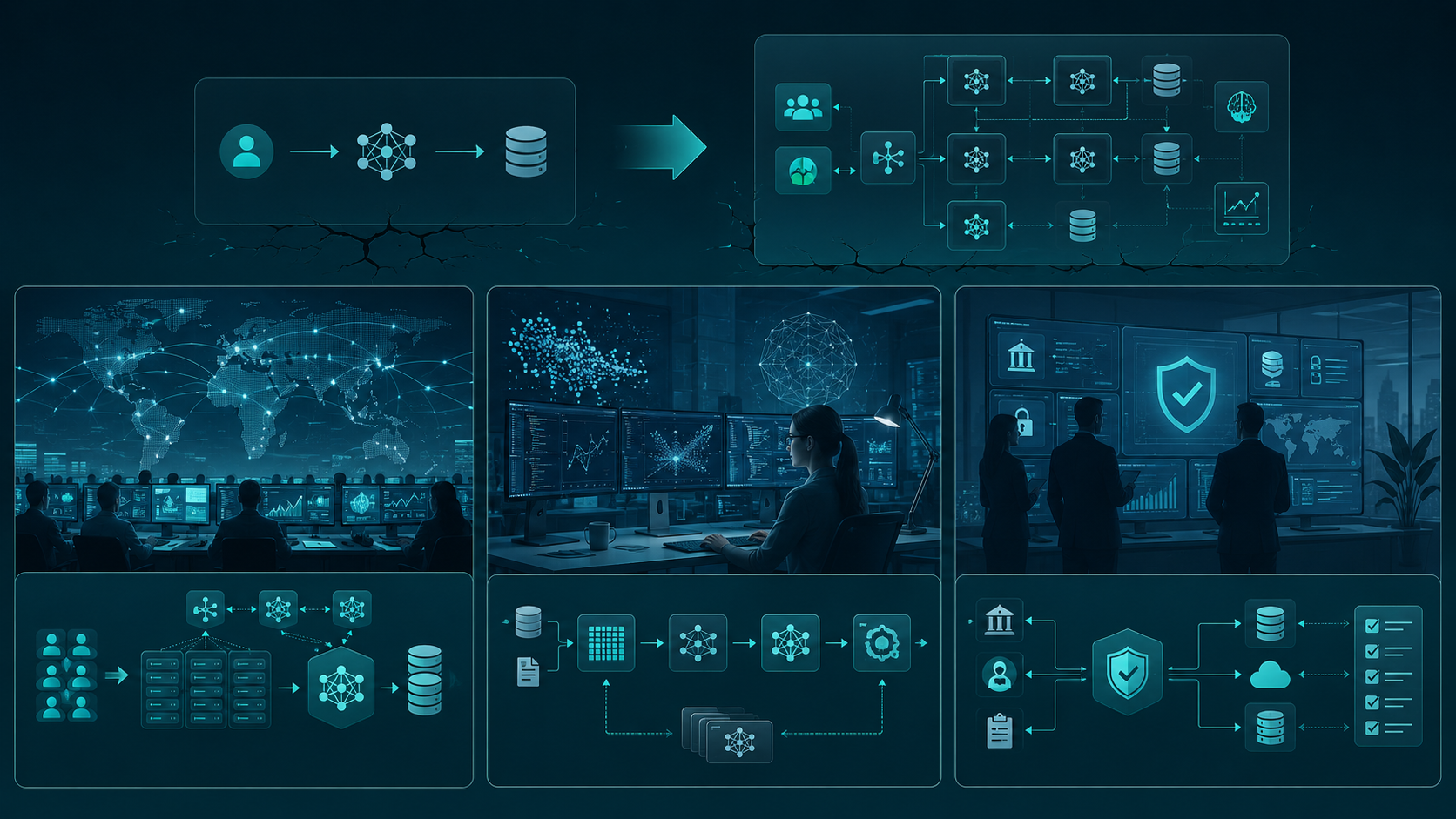
Today, more teams are introducing orchestration layers between their application and AI providers.
Instead of directly calling a model, requests pass through:
Application
     ↓
AI Orchestration Layer
     ↓
Model Providers
This allows teams to:
- Change models without rewriting application logic
- Test multiple providers
- Apply guardrails consistently
- Monitor AI performance
- Control costs centrally
For small SaaS products, this trend significantly reduces long-term maintenance risk.
Where Most Teams Make the Wrong Decision
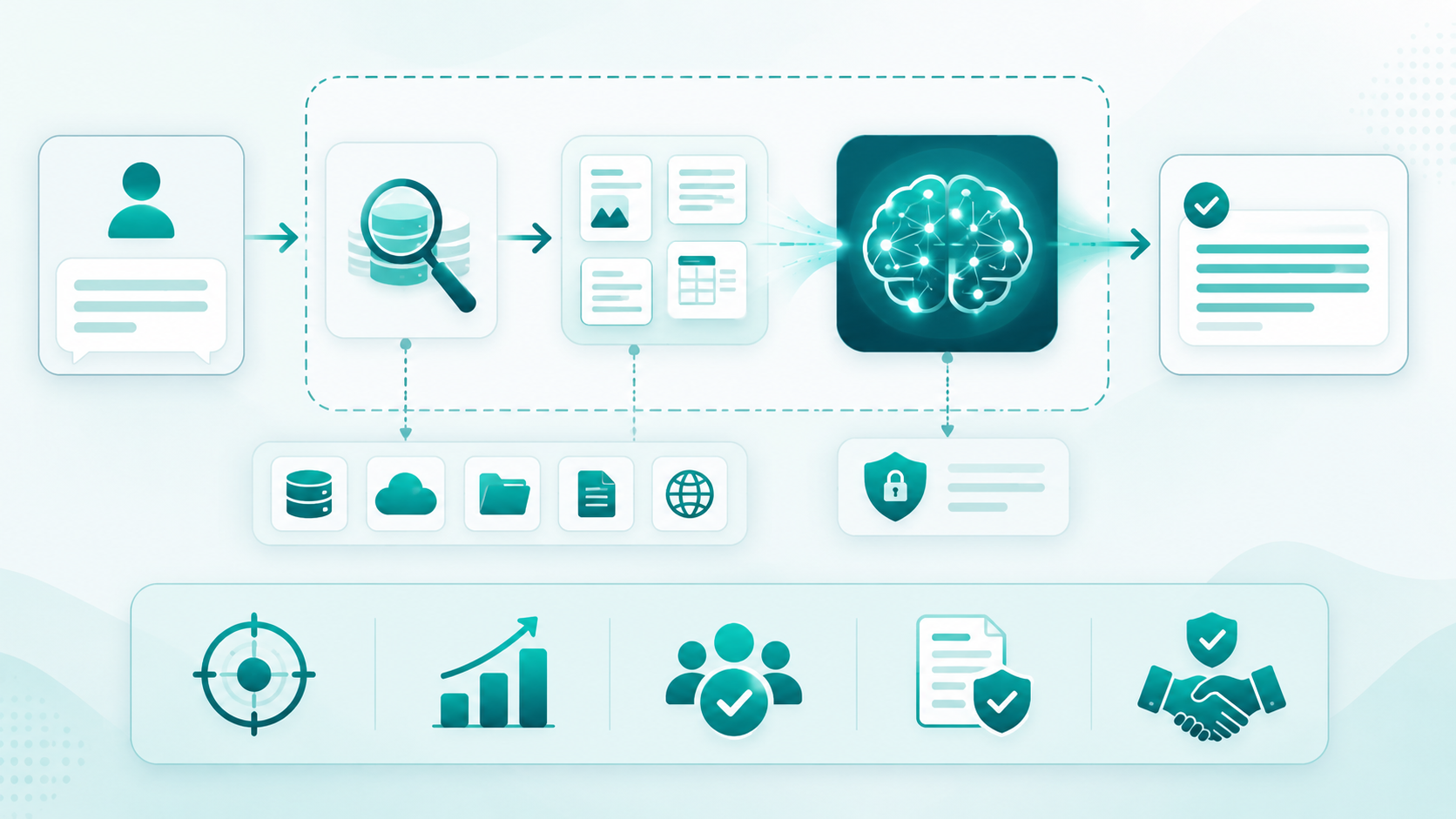
The most common mistake is copying architectures from large technology companies.
I've seen startups with five developers attempt to build AI infrastructures designed for organizations with hundreds of engineers.
Common examples include:
Premature Multi-Agent Systems
Many startups introduce multiple AI agents before validating whether the feature delivers meaningful business value. This often increases system complexity, debugging effort, and operational costs. For most SaaS products, a single well-designed AI workflow is easier to maintain and provides more predictable results.
This creates:
- Complex debugging workflows
- Increased latency
- Higher operational costs
- Difficult failure analysis
For many SaaS products, a single well-designed workflow performs better.
Excessive Model Switching Logic
Building complex routing systems to switch between multiple AI models can create unnecessary engineering challenges. Testing, monitoring, and troubleshooting become more difficult as the architecture grows. Small teams often achieve better reliability by using one primary model supported by a simple fallback option.
In practice:
- Testing becomes harder
- Monitoring becomes harder
- Reliability decreases
Most startups benefit from standardizing around one primary model and one fallback model.
AI Everywhere Strategy
A common mistake is assuming that every feature should include AI capabilities. Traditional software solutions are often more effective for business rules, calculations, validation, and workflow automation. Successful products use AI selectively in areas where human-like reasoning or uncertainty is genuinely required.
Not every workflow benefits from probabilistic outputs.
Examples where traditional software often performs better:
- Business rules
- Calculations
- Data validation
- Permission management
- Workflow automation
The strongest products in 2026 are selectively applying AI where uncertainty exists.
AI Trend #2: Retrieval-Augmented Generation (RAG) Is Becoming the Default Pattern
Many early AI products suffered from hallucinations.
Users quickly lose trust when answers are inaccurate.
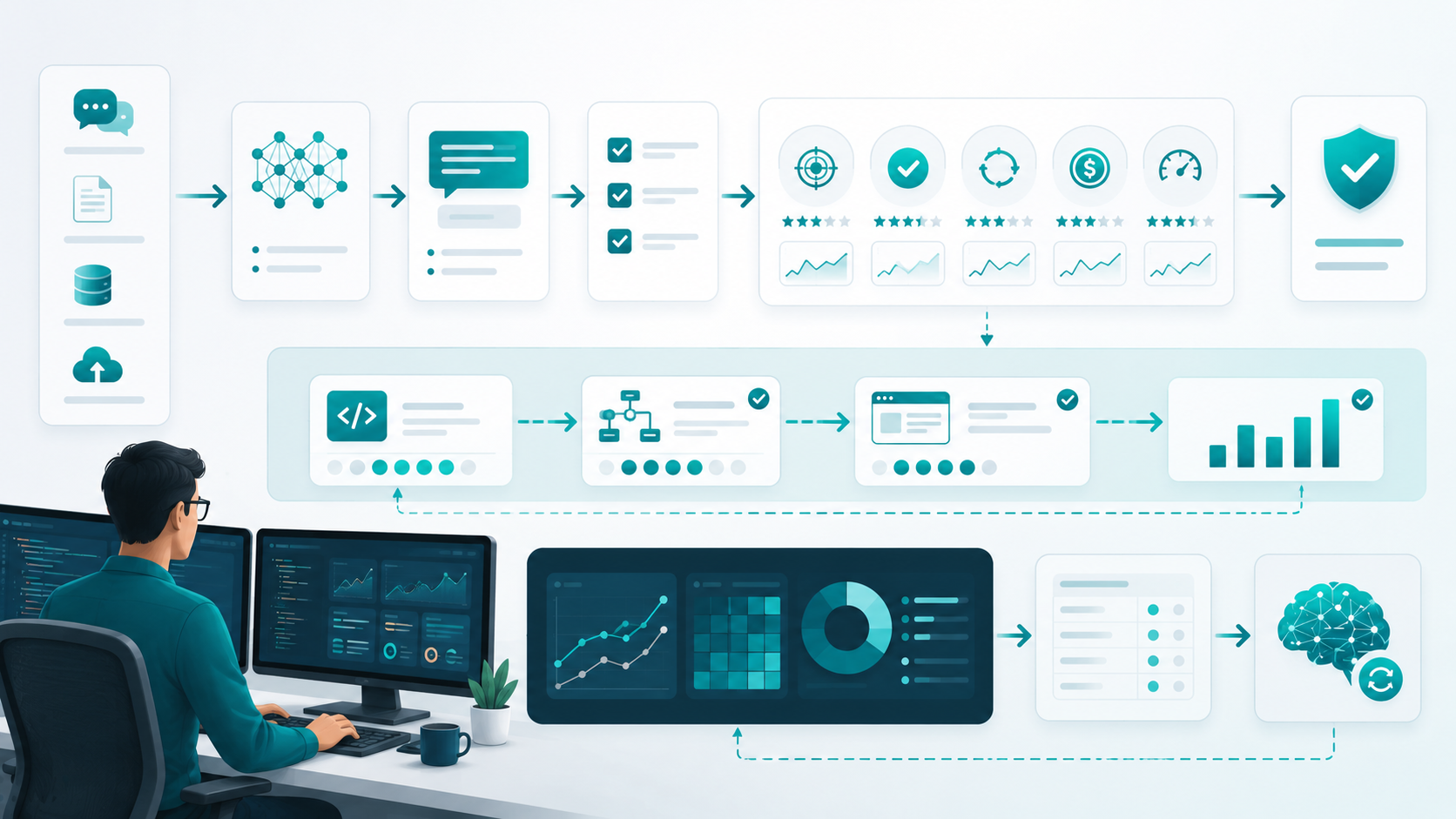
This is why Retrieval-Augmented Generation has become one of the most widely adopted patterns among SaaS teams.
Instead of relying solely on model training data, applications retrieve relevant information before generating a response.
Typical flow:
User Query
      ↓
Knowledge Retrieval
      ↓
Relevant Context
      ↓
Language Model
      ↓
Final Response- Better accuracy
- More relevant responses
- Reduced hallucinations
- Easier compliance management
- Improved enterprise adoption
Benefits include:
In practical projects, RAG often delivers more business value than switching to larger and more expensive models.
AI Trend #3: AI Evaluation Pipelines Are Becoming Standard Engineering Practice
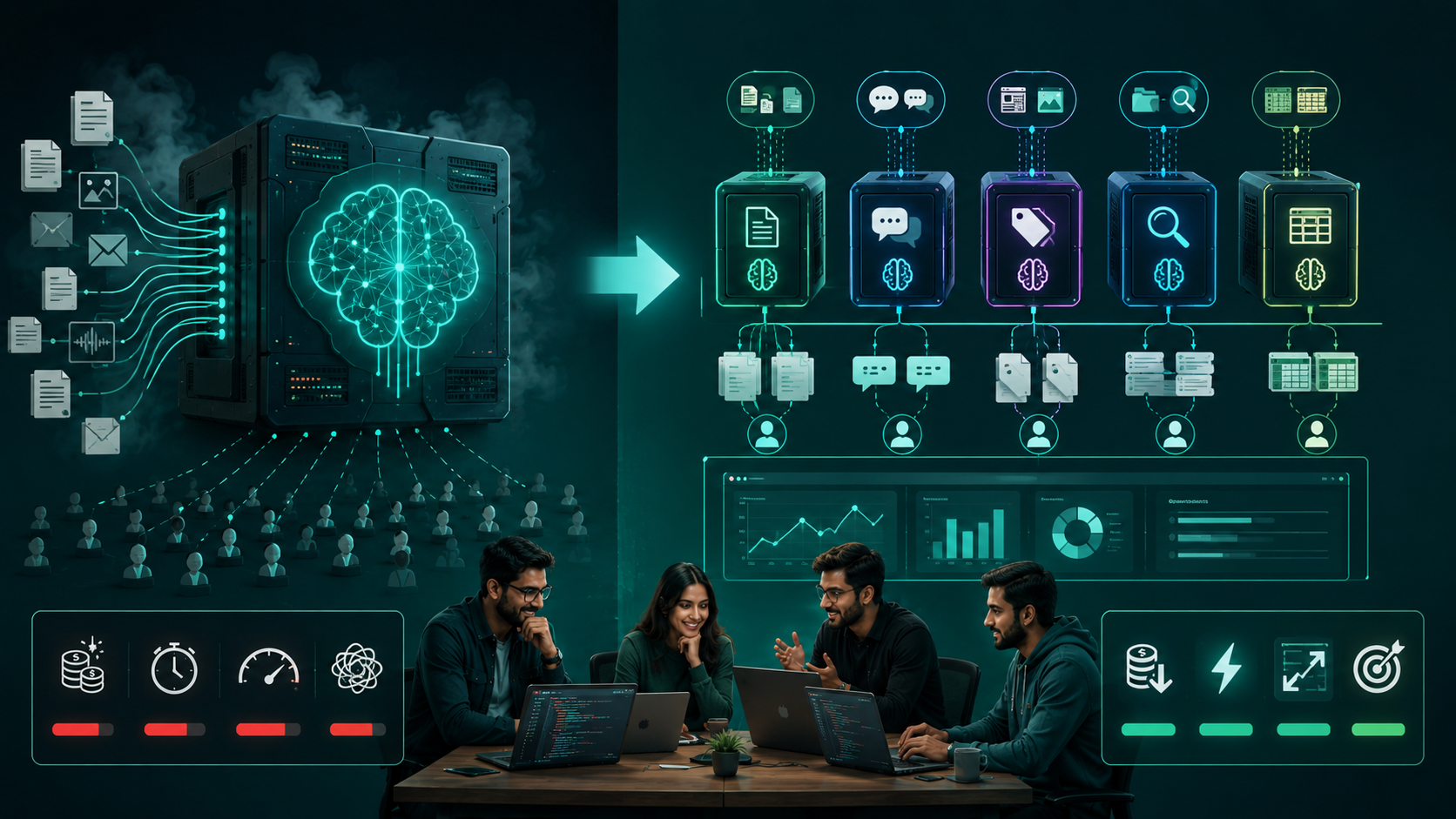
One of the biggest changes happening in 2026 is the rise of AI evaluation frameworks.
Traditional software testing focuses on:
- Unit tests
- Integration tests
- End-to-end tests
AI systems require additional validation.
Teams are increasingly building evaluation pipelines that measure:
- Response quality
- Accuracy
- Consistency
- Cost efficiency
- Latency
Without evaluation systems, AI features become difficult to improve.
I've seen teams spend months changing prompts without any measurable way to determine whether outputs improved.
The trend now is treating AI behavior as a measurable engineering problem rather than a subjective product discussion.
AI Trend #4: Smaller Specialized Models Are Replacing Large General Models
Another major shift is economic.
Many startups initially assumed bigger models would solve every problem.
Reality has been different.
For highly specific use cases:
- Document classification
- Customer support workflows
- Content categorization
- Internal search
- Data extraction
Smaller specialized models frequently provide:
- Lower costs
- Faster responses
- More predictable behavior
- Easier scaling
As infrastructure budgets become more important, teams are increasingly optimizing for efficiency rather than model size.
Practical Fixes That Actually Work
If your team is actively building AI-powered software in 2026, several practices consistently improve outcomes.
Centralize Prompt Management
Managing prompts across multiple services quickly becomes difficult as AI features grow. Keeping prompts in a centralized location improves consistency, simplifies updates, and makes testing easier. It also helps teams maintain ownership, version control, and documentation without creating unnecessary confusion.
Create a single location for:
- Prompt versions
- Ownership
- Testing
- Documentation
Measure AI Costs Early
AI costs can increase significantly as user activity grows. Tracking requests, token usage, latency, and feature-level expenses provides visibility into operational costs before they become a problem. Early monitoring helps teams make informed decisions about optimization and scalability.
Track:
- Requests
- Tokens
- Latency
- Feature-level costs
Many startups only discover AI expenses after user adoption increases.
Build Fallback Logic
AI systems are not always predictable and can fail due to outages, rate limits, or invalid responses. Implementing fallback mechanisms ensures that critical workflows continue functioning even when AI services are unavailable. This improves system reliability and user experience.
Prepare for:
- Provider outages
- Rate limits
- Invalid outputs
Graceful degradation improves reliability.
Introduce Evaluation Before Optimization
Many teams start optimizing prompts without understanding current performance. Establishing quality metrics, creating test datasets, and measuring baseline results provides a clear foundation for improvement. This approach prevents unnecessary changes and supports data-driven decision-making.
Before tuning prompts:
- Define quality metrics
- Build test datasets
- Measure baseline performance
Optimization without measurement often creates confusion.
Keep Architecture Boring
Simple architectures are often easier to maintain, troubleshoot, and scale than overly complex systems. Teams should introduce additional layers of complexity only when a real business or technical need exists. This reduces long-term maintenance challenges and engineering overhead.
Complexity should be introduced only when a measurable problem exists.
Limit AI Surface Area
Not every product feature requires artificial intelligence. AI works best in areas involving uncertainty, while deterministic workflows are often better handled by traditional software. Limiting AI usage to appropriate scenarios reduces operational risk and improves system stability.
Use AI where uncertainty exists.
Use traditional software where deterministic behavior is preferable.
This reduces operational risk significantly.
Document Decisions
Clear documentation helps engineering teams understand why specific AI-related decisions were made. Recording prompt ownership, model choices, cost assumptions, validation methods, and known limitations improves collaboration and supports future maintenance efforts. Good documentation also reduces onboarding time for new team members.
Maintain lightweight documentation for:
- Prompt ownership
- Model selection
- Cost assumptions
- Known limitations
- Validation strategies
- Future team considerations
When This Approach Fails
These recommendations work well for small engineering teams.
However, there are situations where they become insufficient.
For example:
High-Scale Consumer Platforms
Applications processing millions of requests daily may require:
- Custom inference infrastructure
- Advanced model routing
- Dedicated ML operations teams
Research-Driven Products
Organizations developing AI as their primary product often face challenges that go beyond standard software development. These teams may require custom training pipelines, model fine-tuning processes, and experimental architectures to achieve their objectives. As product complexity increases, specialized AI engineering practices become essential for long-term success.
Companies building AI as their core product often need:
- Custom training pipelines
- Fine-tuning workflows
- Experimental architectures
Large Enterprise Environments
Large enterprises and regulated industries typically operate under strict compliance and governance requirements. They often need audit trails, data residency controls, security policies, and regulatory oversight built into their systems. These additional requirements significantly influence architecture decisions and operational processes.
Regulated industries may require:
- Extensive compliance controls
- Audit systems
- Data residency management
- Additional governance layers
The key point is that architecture should match organizational complexity.
Many startups build enterprise-level systems long before they need them.

Sustainable Practices for Small Engineering Teams
The most successful AI projects I've worked on share several characteristics.
They prioritize maintainability over sophistication.
Key practices include:
Reduce Technical Debt Continuously
AI-related shortcuts may speed up development initially, but they often create maintenance challenges later. Making small improvements during each development cycle helps keep the codebase manageable and reduces the need for large, disruptive rewrites in the future.
Small improvements each sprint are easier than major rewrites later.
Maintain Clear Ownership
Every AI feature should have clearly defined technical and product ownership, along with measurable performance goals. Clear accountability improves decision-making, speeds up issue resolution, and prevents confusion that often occurs when responsibilities are shared across multiple teams.
Every AI feature should have:
- Technical ownership
- Product ownership
- Performance metrics
Shared ownership often becomes no ownership.
Simplify Deployment Workflows
AI deployments should follow the same structured processes used for standard software releases. Consistent deployment practices reduce operational complexity, minimize deployment risks, and help teams maintain reliable release cycles as products evolve.
Avoid special processes that create operational bottlenecks.
Improve Documentation Quality
Comprehensive documentation helps teams understand how AI systems behave and why specific decisions were made. Recording prompt updates, evaluation outcomes, and known limitations makes future maintenance easier and supports smoother onboarding for new developers.
Document:
- Prompt changes
- Evaluation results
- Known model limitations
Future developers will depend on this information.
Protect Team Velocity
Engineering teams should focus on building product value rather than spending excessive time maintaining AI infrastructure. When support and maintenance efforts begin outweighing business benefits, it may be time to simplify the architecture or reconsider the implementation approach.
If support costs exceed business value, architecture should be revisited.
Focus on Reliability
Users typically value consistent and dependable results more than access to the latest AI capabilities. Building reliable systems that perform predictably under real-world conditions improves user trust and creates a better long-term product experience.
Reliability often becomes the competitive advantage.
Conclusion
The most important AI software development trends in 2026 are not about bigger models or more complex architectures.
They are about building AI systems that remain maintainable after launch.
The biggest mistake startup teams continue to make is treating AI as a feature instead of a software system. Once AI enters production, it introduces new challenges around testing, monitoring, cost management, reliability, and architecture.
The teams succeeding with AI today are not necessarily using the most advanced models. They are creating simple, measurable, sustainable systems that their engineering teams can support long term.
That discipline is becoming far more valuable than chasing the latest AI release.
FAQs
No. Many AI-enabled products operate successfully using a well-structured monolith. Microservices should solve a specific scaling problem, not be adopted by default.
Prompt sprawl, missing evaluation systems, poor documentation, and changing model behavior often create maintenance challenges.
Usually not. Most small engineering teams gain more value from simple workflows before introducing additional complexity.
Use documented deployment processes, automated testing, evaluation datasets, and clear ownership of AI features.
Implementing retrieval-based architectures and evaluation pipelines typically provides more business value than continuously switching to newer models.
Reference
Written by

Paras Dabhi
VerifiedFull-Stack Developer (Python/Django, React, Node.js)
I build scalable web apps and SaaS products with Django REST, React/Next.js, and Node.js — clean architecture, performance, and production-ready delivery.
LinkedIn