Web Application Development Cost In USA
One of the biggest surprises for startup founders isn't launching a product. It's discovering how quickly web application development costs in the USA can grow after the first release.
I've worked with small engineering teams building SaaS products for startups in the US, Europe, Australia, and Canada. The initial budget usually looks reasonable. The estimate is based on a feature list, a planned timeline, and a team of experienced developers. Six months later, the project often costs far more than expected, even though nobody intentionally expanded the scope.
The problem usually isn't expensive developers or high hourly rates. In most cases, the real cost comes from technical decisions that create additional work throughout the software lifecycle. Every new feature affects the application, backend, database, integrations, deployment process, testing, and long-term maintenance.
Many founders assume development costs are mostly determined before coding begins. In reality, the architecture and engineering decisions made during the first few months have a much larger influence on the total investment than the original estimate.

Why This Problem Happens in Real Teams
When founders ask why development costs increased by 40% or more, I rarely point to a single mistake. Instead, I usually see several small engineering decisions combining into a much larger problem.
Requirements Change Faster Than Expected
Most startup products don't launch with perfect requirements.
Customer interviews generate new ideas.
Product teams discover missing functionality.
Competitors release new features.
Compliance requirements evolve.
Every change forces the engineering team to revisit earlier assumptions.
A feature that originally required two API endpoints may suddenly require ten. A simple dashboard grows into a reporting platform. Authentication expands into role-based security with multiple permission levels.
None of these changes are unusual. They simply increase development effort.
Architecture Gets Outgrown Quickly
I've seen many startups begin with a clean architecture that works perfectly for their MVP.
Then reality arrives.
More customers.
More integrations.
More backend services.
Larger databases.
Higher performance expectations.
Suddenly the original solution becomes harder to maintain.
Instead of building new functionality, engineers spend weeks modifying existing code just to support new business requirements.
The architecture wasn't wrong.
It simply wasn't designed for the product the company eventually became.
Integration Work Is Often Underestimated
API integration looks straightforward during planning.
In production, it rarely stays that way.
External providers update APIs.
Authentication methods change.
Rate limits appear.
Unexpected validation rules cause failures.
Error handling becomes more complex.
Every external integration increases the maintenance workload long after deployment.
I've worked on projects where integrating with third-party systems consumed nearly one-third of the engineering effort, despite appearing relatively small during planning.
Infrastructure Becomes More Expensive Over Time
Infrastructure isn't only about cloud hosting.
As applications grow, teams introduce:
- Additional servers
- Monitoring
- Logging
- Backup systems
- Security scanning
- Automated deployment pipelines
- Performance monitoring
- Disaster recovery
Each improvement increases reliability and availability, but also increases operational expenses.
Many startup budgets only consider the initial deployment instead of the infrastructure required to keep the application running reliably for years.
Small Technical Decisions Create Large Long-Term Costs
One shortcut rarely causes problems.
Hundreds of shortcuts do.
Skipping documentation.
Ignoring code reviews.
Copying similar logic.
Poor database design.
Temporary workarounds.
Incomplete testing.
These decisions save time today while increasing maintenance tomorrow.
Eventually developers spend more time understanding old code than building new functionality.
That's when productivity begins to decline.

Where Most Teams Make the Wrong Decision
After reviewing dozens of startup projects, I've noticed that the biggest cost increases rarely come from technology itself.
They come from engineering decisions made too early.
Building for Millions of Users Before Having Thousands
I've seen startups introduce complex cloud infrastructure before validating their product.
Multiple backend services.
Distributed databases.
Container orchestration.
Advanced deployment automation.
Event-driven architecture.
These technologies solve real scaling problems.
Most early-stage products simply don't have those problems yet.
Instead, engineering teams spend months maintaining infrastructure that provides little business value.
A simpler platform often delivers features much faster while keeping costs under control.
Prioritizing Technology Over Product Delivery
Developers naturally enjoy experimenting with new frameworks and modern architecture.
I've done it myself.
But startup products succeed because they solve customer problems—not because they use the newest technology.
Every additional framework introduces:
- More debugging
- More maintenance
- Additional documentation
- More onboarding time
- Higher engineering complexity
Unless the framework solves a real business problem, it usually increases development costs without improving customer experience.
Underestimating Quality Assurance
Testing is often treated as the final stage before deployment.
That approach usually creates expensive surprises.
Late testing reveals:
- Integration failures
- Database issues
- Performance bottlenecks
- Security vulnerabilities
- Broken functionality
Fixing these problems after multiple features have already been developed is significantly more expensive than identifying them earlier.
Continuous testing reduces both project risk and future maintenance effort.
Ignoring Developer Collaboration
Remote engineering teams are common today.
Without clear collaboration practices, costs increase quickly.
I've seen teams struggle because:
- Documentation was incomplete.
- API behavior wasn't documented.
- Deployment procedures existed only in someone's memory.
- Architecture decisions weren't recorded.
- Developers implemented similar functionality differently.
None of these issues are difficult individually.
Together they create weeks of unnecessary engineering work.
Strong collaboration isn't just about communication.
It's about making knowledge available to every engineer on the team.
Chasing Premature Optimization
Performance optimization is important.
Premature optimization is expensive.
Many applications perform well enough with straightforward solutions.
Instead of measuring real bottlenecks, some teams immediately optimize:
- Database queries
- Server response times
- Cloud infrastructure
- Caching layers
- Backend architecture
Months later they discover those optimizations solved problems users never experienced.
Meanwhile, important customer features remained unfinished.
In my experience, measuring performance first almost always leads to better engineering decisions than optimizing based on assumptions.
By the time a startup realizes development costs have increased, the original estimate is no longer the main issue. The larger challenge is that every new feature now requires more engineering effort because the application's architecture, integrations, infrastructure, and maintenance responsibilities have all grown together.
Understanding these patterns early is one of the most effective ways to keep web application development costs in the USA predictable without sacrificing quality, security, or long-term scalability.
Read More:
Mobile App Development Cost In USA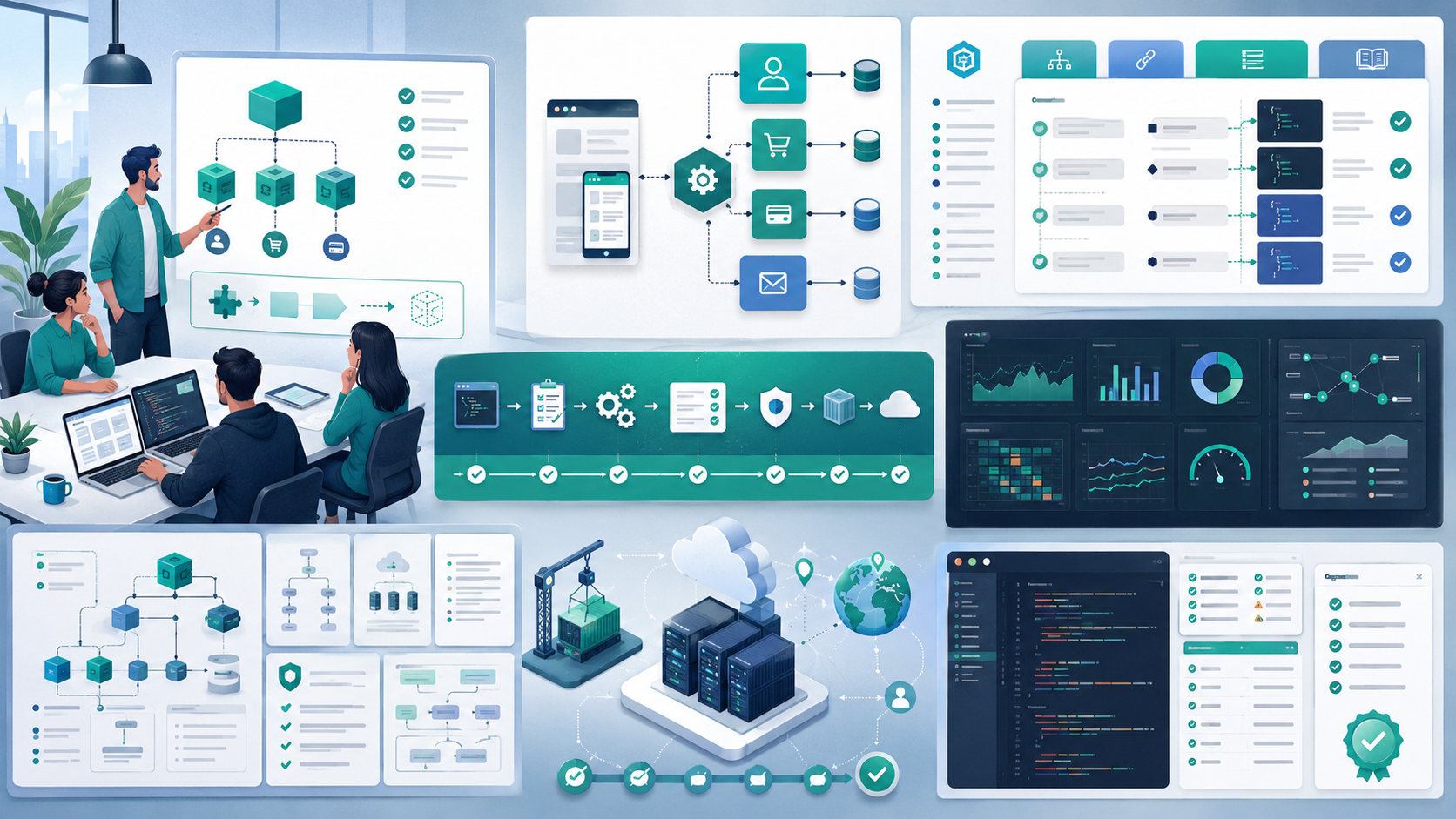
Practical Fixes That Actually Work
After working with startups of different sizes, I've found that reducing web application development costs in the USA isn't about choosing the cheapest developers or cutting corners. Working with a US web application team for sustainable product builds helps businesses make architecture, API, testing, documentation, infrastructure, and maintenance decisions that remain sustainable as the product evolves.
The teams that consistently stay within budget usually follow a few practical principles.
Design for Today's Product, Not Tomorrow's Scale
One mistake I repeatedly see is designing an application for traffic that may never arrive.
A startup with a handful of customers rarely needs an advanced distributed platform. A simpler architecture is easier to understand, faster to develop, and less expensive to maintain.
Instead of asking, "Will this scale to millions of users?" ask:
- Does this solve today's business problem?
- Can the engineering team maintain it comfortably?
- Can we improve it later without rewriting everything?
Simple solutions often reduce both development time and future expenses.
Keep the Technology Stack Small
Every additional technology introduces another learning curve.
It also creates more documentation, debugging, maintenance, and deployment work.
I prefer limiting the number of technologies unless there's a strong technical reason to introduce something new.
For example:
- Use one primary backend language.
- Standardize frontend development practices.
- Avoid multiple frameworks solving the same problem.
- Keep API patterns consistent across services.
This improves developer productivity and makes onboarding much easier.
Build APIs That Can Evolve
Many teams design APIs only for immediate functionality.
Months later they discover changing those APIs affects multiple frontend components, integrations, and customer workflows.
A better approach is to:
- Define clear API contracts.
- Version APIs when introducing breaking changes.
- Maintain consistent naming conventions.
- Return predictable response structures.
- Document every endpoint.
Good API design reduces future engineering effort far more than most teams expect.
Invest Early in Automated Testing
Testing shouldn't happen only before release.
As products grow, automated testing becomes one of the most valuable investments.
It improves:
- Quality
- Reliability
- Deployment confidence
- Maintenance
- Development speed
Engineers spend less time fixing regressions and more time delivering new functionality.
Testing isn't simply a cost.
It's protection against future costs.
Review Performance Using Real Data
Performance optimization should be driven by measurements rather than assumptions.
Before changing architecture or upgrading infrastructure, collect actual metrics.
Look for:
- Slow database queries
- High server response times
- Memory usage
- API latency
- Deployment duration
Once the bottleneck is identified, optimization becomes much more effective.
Improve Documentation Continuously
Documentation is often postponed because feature development feels more urgent.
Unfortunately, missing documentation usually becomes expensive later.
Every project should maintain clear documentation covering:
- Architecture decisions
- Deployment procedures
- Infrastructure configuration
- API specifications
- Security requirements
- Development workflows
This helps engineers contribute confidently without repeatedly asking the same questions.

When This Approach Fails
No engineering strategy works for every situation.
The recommendations above are highly effective for small startup teams, but there are situations where additional complexity becomes necessary.
Large Engineering Organizations
Once engineering teams grow beyond several dozen developers, communication becomes more difficult.
Multiple product teams working on the same application may require:
- Independent deployments
- Service ownership
- Separate release schedules
- Dedicated infrastructure
At that point, introducing additional architecture can reduce organizational bottlenecks.
Highly Regulated Industries
Products operating in healthcare, finance, or government environments often require strict compliance standards.
These applications typically demand additional investment in:
- Security controls
- Audit logging
- Infrastructure monitoring
- Authentication
- Authorization
- Data protection
The development cost naturally increases because regulatory requirements become part of the engineering work.
Global High-Traffic Platforms
Applications serving millions of users across multiple regions eventually outgrow simpler architectures.
Additional scalability strategies become necessary, including:
- Load balancing
- Distributed databases
- Advanced cloud infrastructure
- Geographic deployments
- High availability configurations
These improvements are justified because customer demand supports the additional operational cost.
Complex Enterprise Integrations
Products connecting with numerous enterprise systems often spend considerable engineering effort on integration work.
Every external dependency introduces:
- Maintenance
- Compatibility testing
- Error handling
- Deployment coordination
- Ongoing support
This isn't avoidable—it simply becomes part of the project's long-term investment.
Sustainable Practices for Small Engineering Teams
The startups that consistently control development costs usually aren't writing significantly better code.
They're maintaining healthier engineering practices.
Reduce Technical Debt Continuously
Technical debt accumulates gradually.
Instead of scheduling massive cleanup projects, allocate time during every sprint for small improvements.
Focus on:
- Refactoring duplicated code
- Improving architecture
- Removing outdated functionality
- Updating dependencies
- Simplifying complex logic
Small improvements prevent expensive rewrites later.
Keep Collaboration Simple
Effective collaboration doesn't require complicated processes.
Small engineering teams perform well when everyone understands:
- Current priorities
- Architecture decisions
- Deployment workflows
- Coding standards
- Project ownership
Simple communication reduces misunderstandings and improves overall efficiency.
Standardize Deployment
Manual deployment creates unnecessary risk.
Automated deployment improves:
- Reliability
- Productivity
- Development speed
- Release quality
It also reduces debugging time when production issues occur.
The goal isn't automation for its own sake.
The goal is making every deployment predictable.
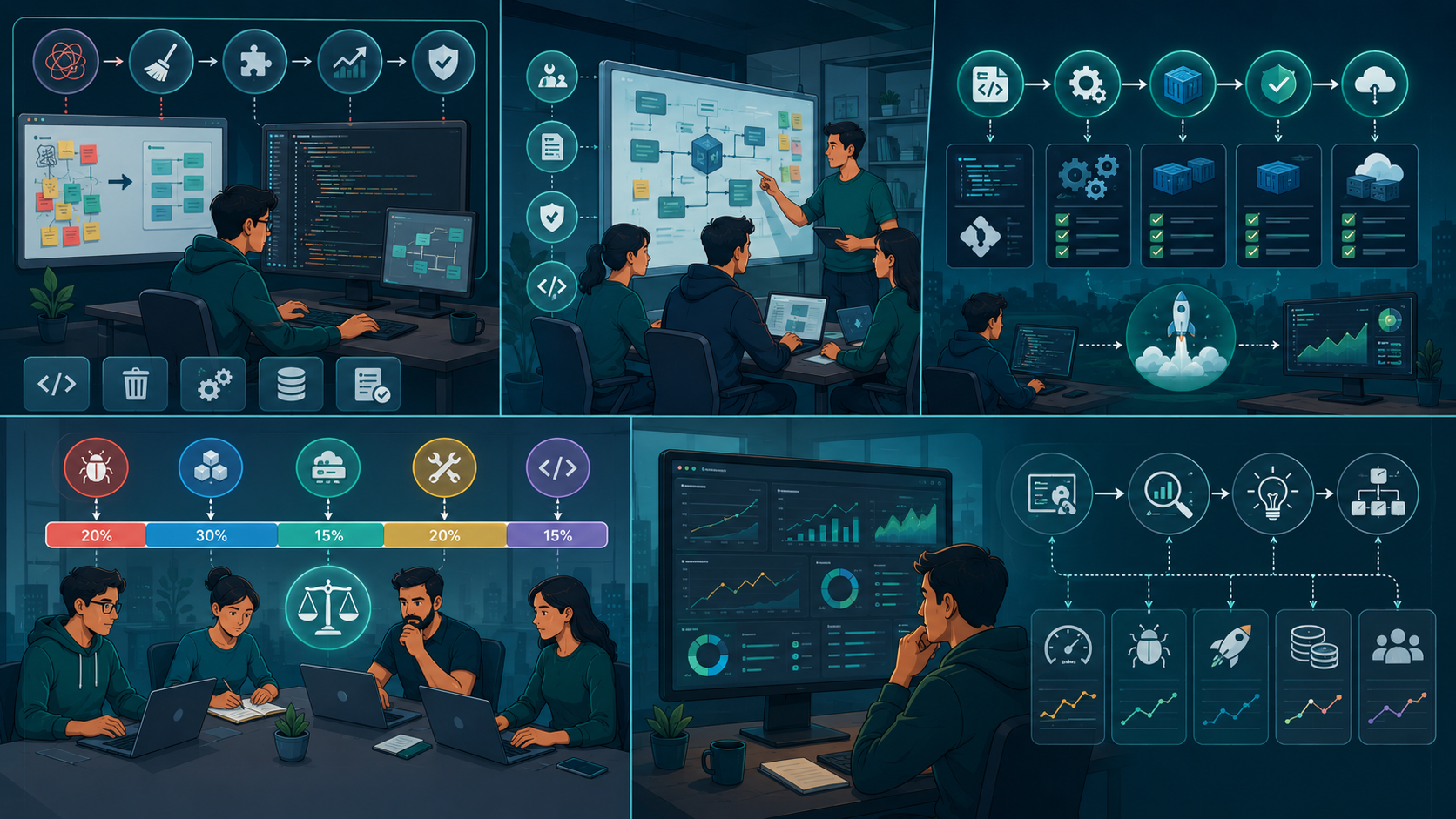
Protect Development Velocity
One overlooked challenge is maintaining consistent delivery speed.
Velocity decreases when developers constantly switch between:
- Emergency fixes
- New features
- Infrastructure work
- Maintenance tasks
- Technical debt cleanup
Successful teams reserve dedicated time for each category instead of handling everything simultaneously.
This creates more predictable timelines and more accurate project estimates.
Measure Before Changing
Engineering decisions should rely on measurable information.
Before changing architecture, infrastructure, or development processes, collect evidence.
Track metrics such as:
- Deployment frequency
- Bug resolution time
- Feature delivery speed
- Performance
- Infrastructure costs
- Development productivity
Good engineering decisions are based on data, not assumptions.
Conclusion
In my experience, the biggest factor influencing web application development costs in the USA isn't the hourly rate of developers or the choice of programming language.
It's the collection of engineering decisions made throughout the project.
Simple architecture, consistent development practices, clear documentation, automated testing, thoughtful API design, and disciplined maintenance usually have a greater impact on long-term costs than any individual technology choice.
Startups don't need perfect systems from day one.
They need systems that are understandable, maintainable, and capable of evolving alongside the product.
When engineering teams focus on sustainable decisions instead of premature complexity, they spend less time fixing old problems and more time building valuable functionality.
Frequently Asked Questions
The cost varies depending on project complexity, features, integrations, security requirements, and the size of the engineering team. An MVP generally costs much less than an enterprise-grade application with extensive infrastructure and compliance needs.
Requirements evolve, new functionality is added, integrations become more complex, and technical debt increases maintenance effort. These factors usually have a greater impact than the original estimate.
Keep the architecture simple, automate testing and deployment, document technical decisions, review code regularly, and address technical debt continuously instead of postponing it.
Yes. While cloud platforms simplify deployment and scalability, infrastructure expenses grow as applications require additional servers, monitoring, security, backups, and higher availability.
Yes, but only to solve current business problems. Building an architecture that is simple, maintainable, and adaptable usually provides better long-term value than overengineering for future scale.
Reference
Written by

Paras Dabhi
VerifiedFull-Stack Developer (Python/Django, React, Node.js)
I build scalable web apps and SaaS products with Django REST, React/Next.js, and Node.js — clean architecture, performance, and production-ready delivery.
LinkedIn