Trusted Website Development Company in New York City
A lot of early-stage teams think the hardest part of launching a product is getting version one into production. In reality, the real problems usually start six to twelve months later, after the first major feature expansion.
I’ve seen this happen repeatedly with SaaS products, internal business platforms, ecommerce systems, and even relatively simple marketing sites built by a fast-moving New York web development company, a US software development company for startup teams, or a small remote engineering team. The first release works. The product launches. Customers sign up. Then the roadmap changes.
Suddenly the frontend becomes difficult to modify. Deployment workflows slow down. API integration services start breaking unrelated features. Small UI changes require touching multiple components. Developers avoid refactoring because nobody fully understands the architecture anymore.
Most teams assume this only happens in large enterprise systems. It doesn’t. I’ve seen startup teams with four developers create more technical debt in twelve months than some enterprise engineering teams create in five years.
The issue usually isn’t bad developers. It’s rushed architecture decisions made under startup pressure.
Why This Problem Happens in Real Teams
Most startup engineering teams optimize for launch speed, not long-term maintainability.
That’s understandable. Investors want traction. Founders need customer validation. Product teams push aggressive timelines. Nobody wants to delay release cycles because of future scalability concerns.
The problem is that temporary shortcuts quietly become permanent architecture.
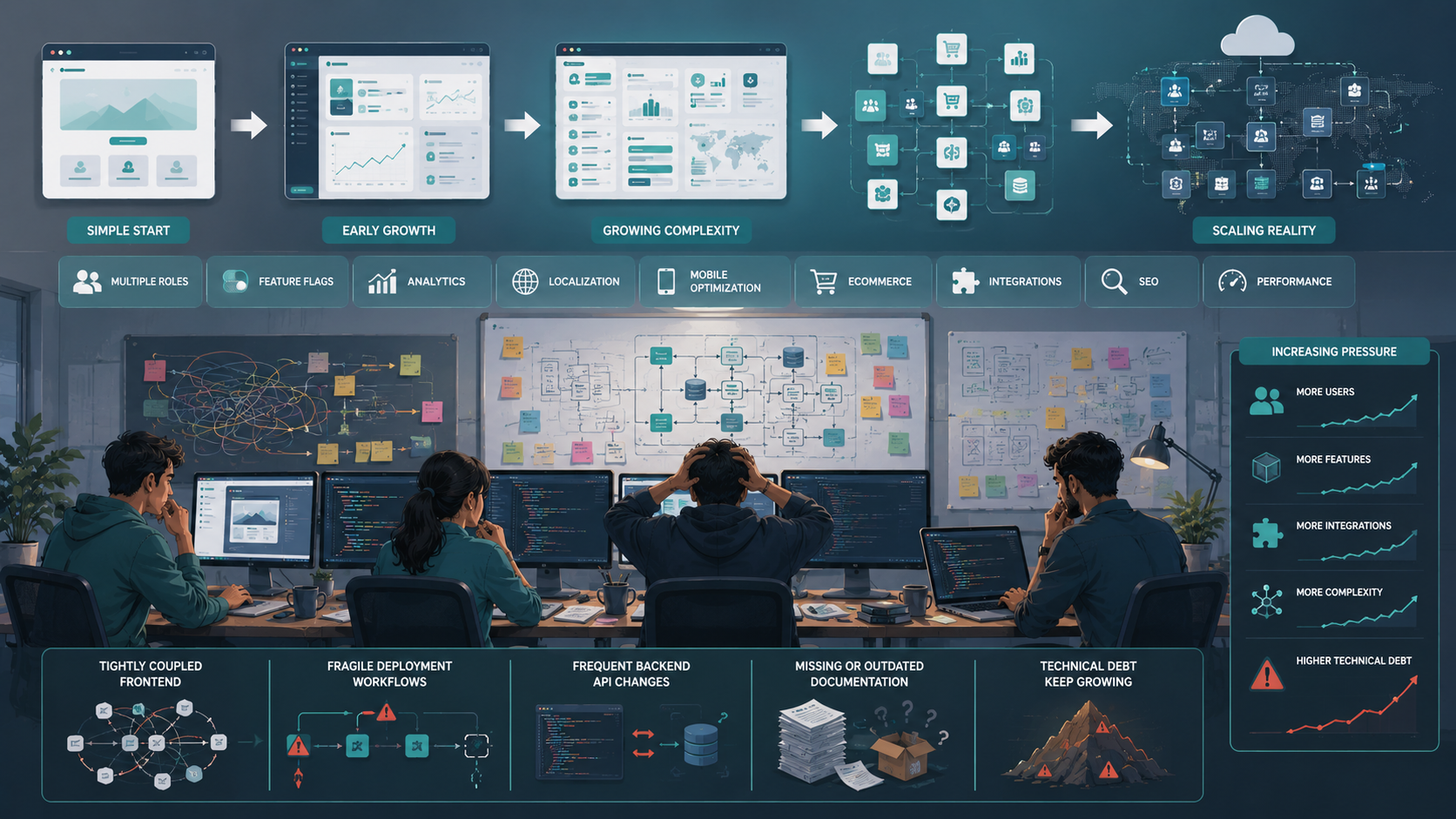
A typical startup website or SaaS dashboard starts small:
- A few landing pages
- Authentication
- Billing integration
- Basic admin panel
- CMS website development setup
- A handful of APIs
At that stage, almost any architecture feels manageable.
Then growth starts introducing complexity:
- Multiple user roles
- Feature flags
- Analytics dashboards
- Localization
- Mobile optimization requirements
- Ecommerce store development needs
- Third-party integrations
- Search engine optimized website requirements
- Performance optimization requests
This is where many startup teams struggle.
I’ve worked with remote developers across the USA, Germany, Australia, and the UK where the original frontend architecture was designed for speed, not adaptability. Components became tightly coupled. Backend systems evolved independently from the frontend. Documentation disappeared. Deployment workflows became fragile.
In many cases, the original product was built by a small Website design company NYC team or freelance contractors who optimized for delivery deadlines instead of operational longevity.
That decision usually becomes expensive later.
Where Most Teams Make the Wrong Decision
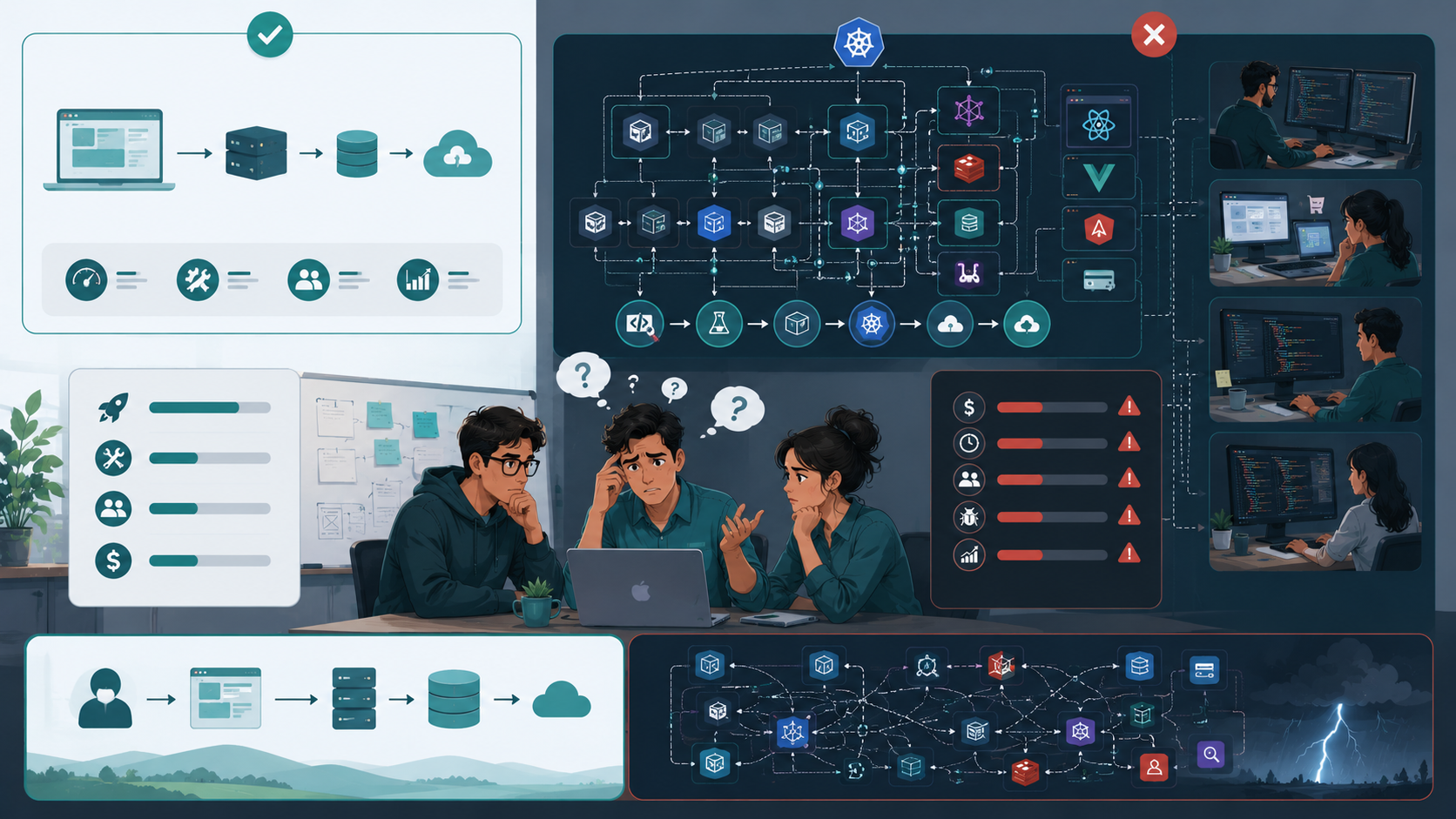
The biggest mistake small teams make is copying architecture patterns from companies operating at completely different scales.
A five-person startup does not need the same infrastructure complexity as Netflix or Spotify.
Yet I still see startups introducing:
- Kubernetes too early
- Premature microservices
- Overengineered CI/CD pipelines
- Multiple frontend frameworks
- Complex GraphQL layers nobody maintains
- Event-driven systems before product-market fit
A lot of this comes from online engineering content that ignores team size realities.
For example, a startup hiring a React JS development company for an MVP often ends up with unnecessary frontend abstraction layers because the architecture was designed to look scalable.
In practice, the codebase becomes harder to onboard new developers into.
I’ve also seen ecommerce website development New York projects split into separate services far too early:
- Product catalog service
- Cart service
- Payment service
- Recommendation engine
- User profile service
On paper, this looks modern.
In small engineering teams, it usually creates operational overhead nobody has time to manage.
Another common issue is frontend fragmentation.
A startup hires one responsive web design company for marketing pages, another full-stack web development company for dashboards, and later brings in separate contractors for landing page development or Shopify development services.
Within a year:
- UI consistency breaks
- Deployment standards differ
- State management becomes messy
- API contracts drift
- Performance degrades
The product technically works, but engineering velocity slows dramatically.
Remote teams feel this pain even more because coordination costs increase with architectural complexity.
Practical Fixes That Actually Work
The most sustainable systems I’ve worked on were usually the simplest ones.
Not simplistic. Just intentionally constrained.
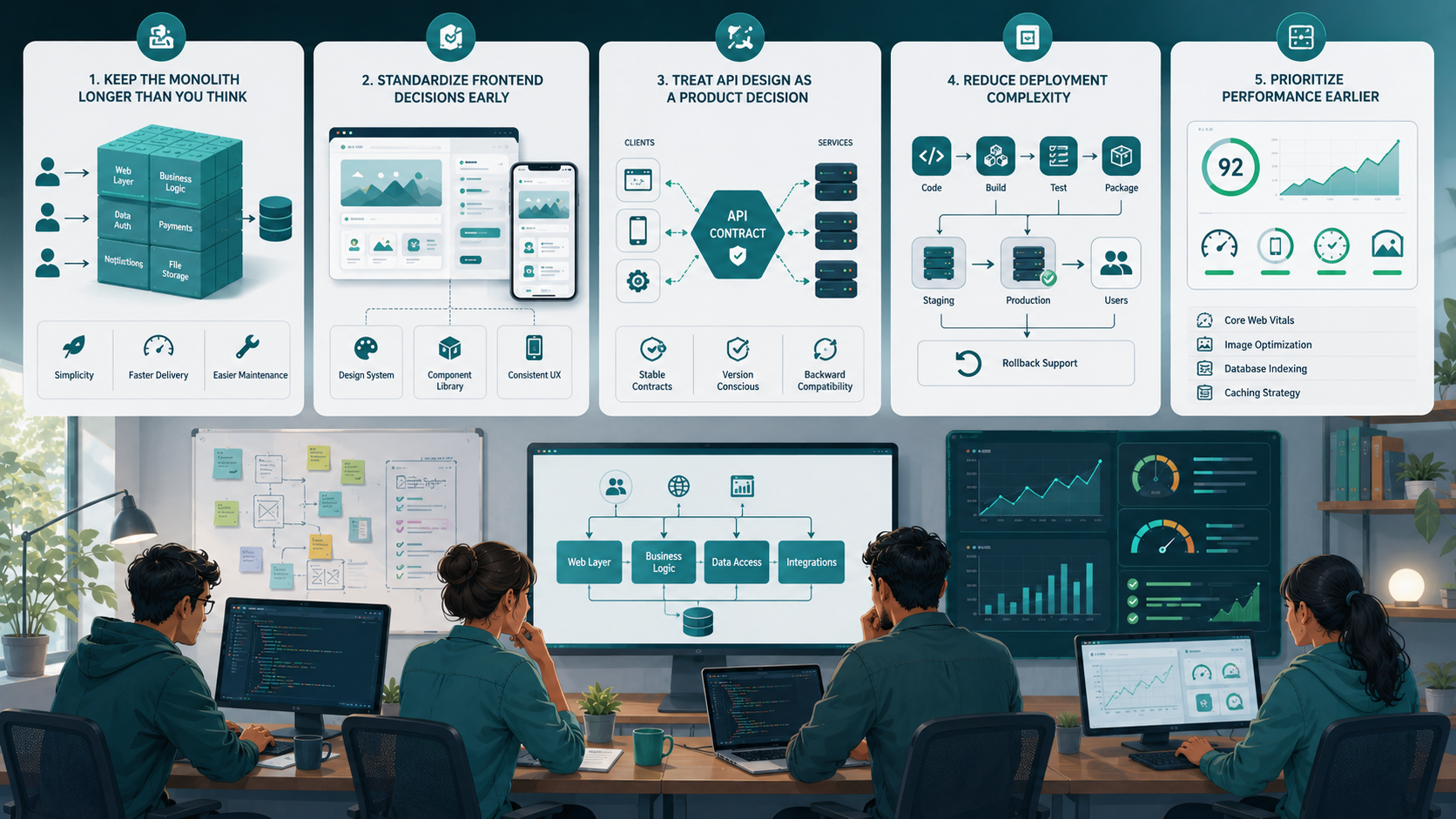
1. Keep the Monolith Longer Than You Think
Most SaaS products do not need microservices early.
A well-structured monolith with clean module boundaries is usually easier to maintain for teams under 15 developers.
Good examples include:
For many startup teams comparing web development services for startup teams, maintaining one deployable application improves velocity far more than distributed architecture ever will.
- Shared authentication
- Centralized logging
- Unified deployment workflows
- Single database ownership
- Consistent API structure
This reduces operational complexity significantly.
2. Standardize Frontend Decisions Early
Frontend inconsistency becomes expensive surprisingly fast.
Choose:
- One component structure
- One state management approach
- One styling convention
- One API communication pattern
Then document it clearly.
I’ve seen professional web developers in New York reduce frontend bugs dramatically simply by enforcing consistent conventions across product teams.
This matters even more in remote engineering environments.
3. Treat API Design as a Product Decision
Small teams often underestimate API maintenance costs.
Poor API structure eventually slows every frontend change.
A few practical improvements help immediately:
- Version APIs conservatively
- Avoid deeply nested response objects
- Standardize error handling
- Keep naming conventions predictable
- Write lightweight API documentation
Teams doing custom web application development often focus heavily on frontend velocity while ignoring backend contract stability.
That becomes painful later during scaling.
4. Reduce Deployment Complexity
A surprising number of deployment issues come from unnecessary tooling.
You do not always need:
- Multi-stage orchestration
- Complex infrastructure abstractions
- Five deployment environments
- Separate pipelines for every service
For small product teams, simpler deployment workflows usually improve reliability.
Some of the most stable systems I’ve worked on used:
- One staging environment
- One production environment
- Automated rollback support
- Minimal infrastructure abstraction
That’s enough for many SaaS product development teams.
5. Prioritize Performance Earlier
Many teams delay website performance optimization until traffic grows.
That’s usually backwards.
A fast-loading website creates fewer operational problems later.
Focus early on:
- Core Web Vitals
- Image optimization
- API response times
- Database indexing
- Frontend bundle size
- Cross-browser compatibility
This matters heavily for:
- Ecommerce website developers in New York
- Finance business website development
- Healthcare website development
- Real estate website development
Performance issues become significantly harder to fix after architecture complexity increases.
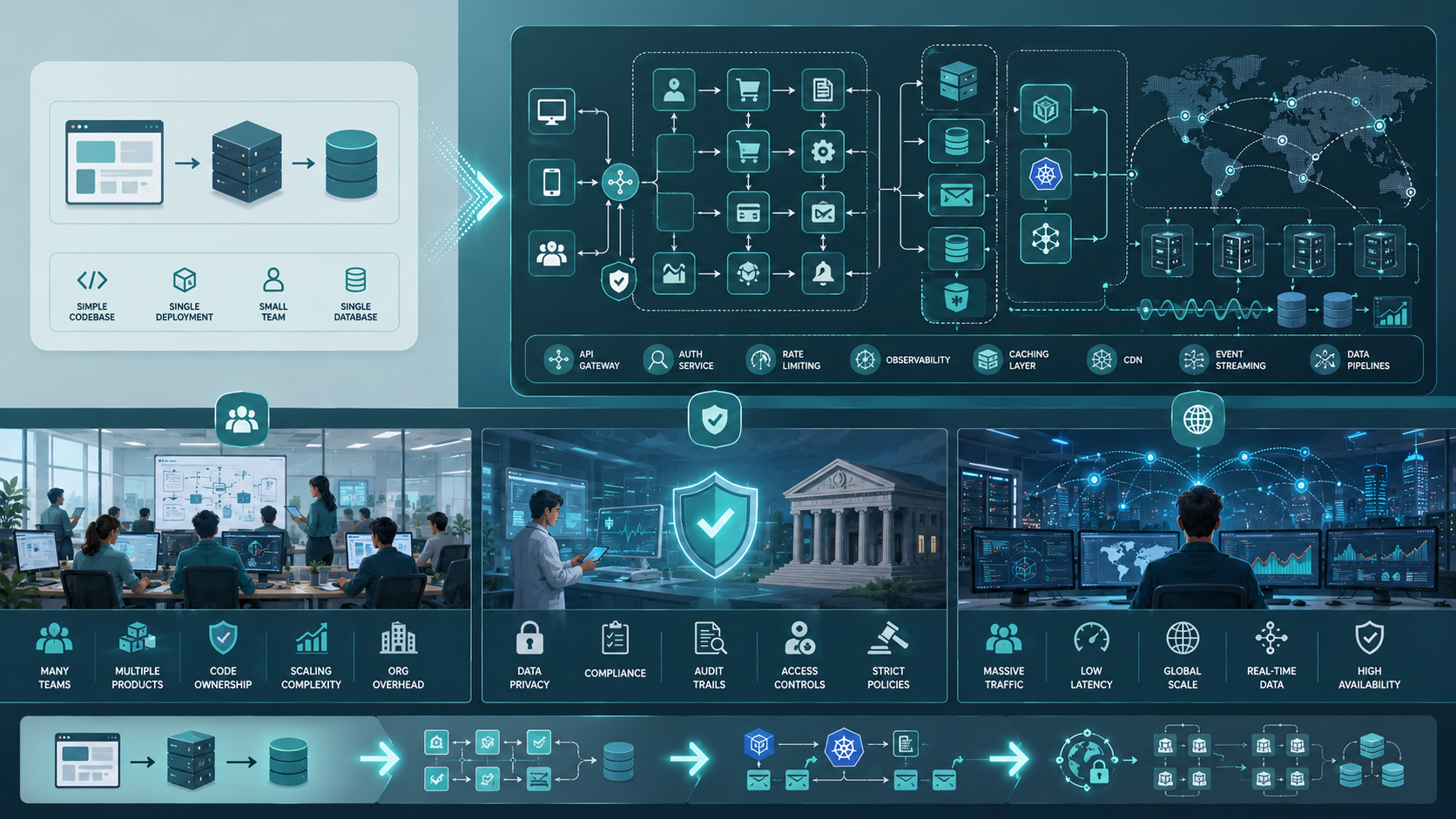
When This Approach Fails
Simple architecture is not universally correct.
There are situations where these recommendations stop scaling effectively.
Large Engineering Organizations
Once teams grow beyond 25–40 engineers, monolithic coordination often becomes difficult.
At that scale:
- Independent deployments matter more
- Service ownership becomes necessary
- Organizational boundaries affect architecture
- Microservices may become justified
Highly Regulated Industries
Some enterprise website development solutions New York environments require:
- Strict compliance isolation
- Security segmentation
- Separate operational controls
Healthcare and finance systems sometimes need additional infrastructure separation earlier than typical SaaS startups.
High-Traffic Distributed Systems
Products processing massive real-time workloads may genuinely need:
- Distributed event systems
- Advanced caching layers
- Regional infrastructure scaling
- Dedicated data pipelines
But most startups are nowhere near this stage when they begin overengineering.

Sustainable Practices for Small Engineering Teams
The healthiest engineering teams I’ve worked with usually focused less on perfect architecture and more on sustainable operational habits.
That difference matters.
Keep Documentation Lightweight but Current
Documentation should explain:
- Deployment steps
- API conventions
- Architectural decisions
- Shared frontend patterns
Not every implementation detail.
Outdated documentation is often worse than no documentation.
Reduce Developer Context Switching
Many small teams lose productivity because developers constantly switch between:
- Front-end development services
- Back-end development company tasks
- Infrastructure debugging
- QA support
- Emergency production fixes
Clear ownership reduces burnout significantly.
Avoid Constant Rewrites
One of the most expensive habits in startup engineering is restarting architecture every year.
I’ve seen teams rebuild:
- Laravel web development projects into Node systems
- PHP website development stacks into serverless platforms
- WordPress website development systems into custom CMS platforms
Often without solving the underlying operational issues.
Most scalability problems are caused by unclear boundaries and rushed product decisions — not programming language choice.
Build Operational Discipline Early
Even lean startup teams benefit from:
- Release checklists
- Consistent pull request reviews
- Shared coding conventions
- Monitoring dashboards
- Error tracking
- Rollback procedures
These practices matter far more than trendy tooling.
Optimize for Maintainability, Not Engineering Ego
A secure website development process with stable deployment workflows is usually more valuable than an impressive architecture diagram.
This is especially true for:
- Small business website design New York projects
- Startup website development NYC environments
- Ecommerce store development teams
- B2B website development company platforms
The goal is sustained delivery speed over multiple years.
Not temporary architectural excitement.
Conclusion
Most startup website architectures don’t fail because teams lack talent.
They fail because early engineering decisions optimize for perceived scalability instead of operational simplicity.
I’ve seen teams working with a NYC digital agency, a Website development agency Manhattan, or internal remote developers all run into the same problem: too much complexity introduced too early.
The most maintainable systems are usually the ones with:
- Clear boundaries
- Predictable deployment workflows
- Conservative architectural decisions
- Stable API contracts
- Consistent frontend standards
Small engineering teams move faster when systems stay understandable.
That matters far more than looking technically sophisticated.
FAQ
Usually not in the early stages. Most startups benefit more from a well-structured monolith until engineering teams and operational complexity grow significantly.
Rapid feature delivery, limited documentation, inconsistent frontend patterns, and rushed backend changes create technical debt faster than most teams expect.
In most cases, no. Small engineering teams often spend more time maintaining infrastructure complexity than improving product reliability.
Simpler deployment workflows, automated rollback support, lightweight documentation, and standardized release processes help significantly.
Frontend inconsistency, duplicated UI components, unstable API integration services, and rushed feature additions usually create long-term maintainability problems.
Written by

Paras Dabhi
VerifiedFull-Stack Developer (Python/Django, React, Node.js)
I build scalable web apps and SaaS products with Django REST, React/Next.js, and Node.js — clean architecture, performance, and production-ready delivery.
LinkedIn