What Is Custom Software Development? Complete Guide for Businesses
Most startup teams do not begin with custom software development.
They start with spreadsheets, SaaS subscriptions, automation plugins, and whatever tools help them move fast during the early stage. At first, this approach feels cost-effective, flexible, and efficient. Small teams can launch products quickly without worrying about infrastructure, scalability, or deployment complexity.
The real problems usually appear later.
I’ve worked with SaaS products where teams spent more time maintaining integrations between disconnected tools than actually improving the product itself. The workflow becomes fragmented. Analytics are inconsistent. Deployment pipelines become harder to manage. Security and compliance issues start appearing because data is spread across multiple platforms.
At some point, the engineering team realizes the business is adapting around software limitations instead of the software supporting the business.
That is usually the moment custom software development becomes necessary.

What Is Custom Software Development?
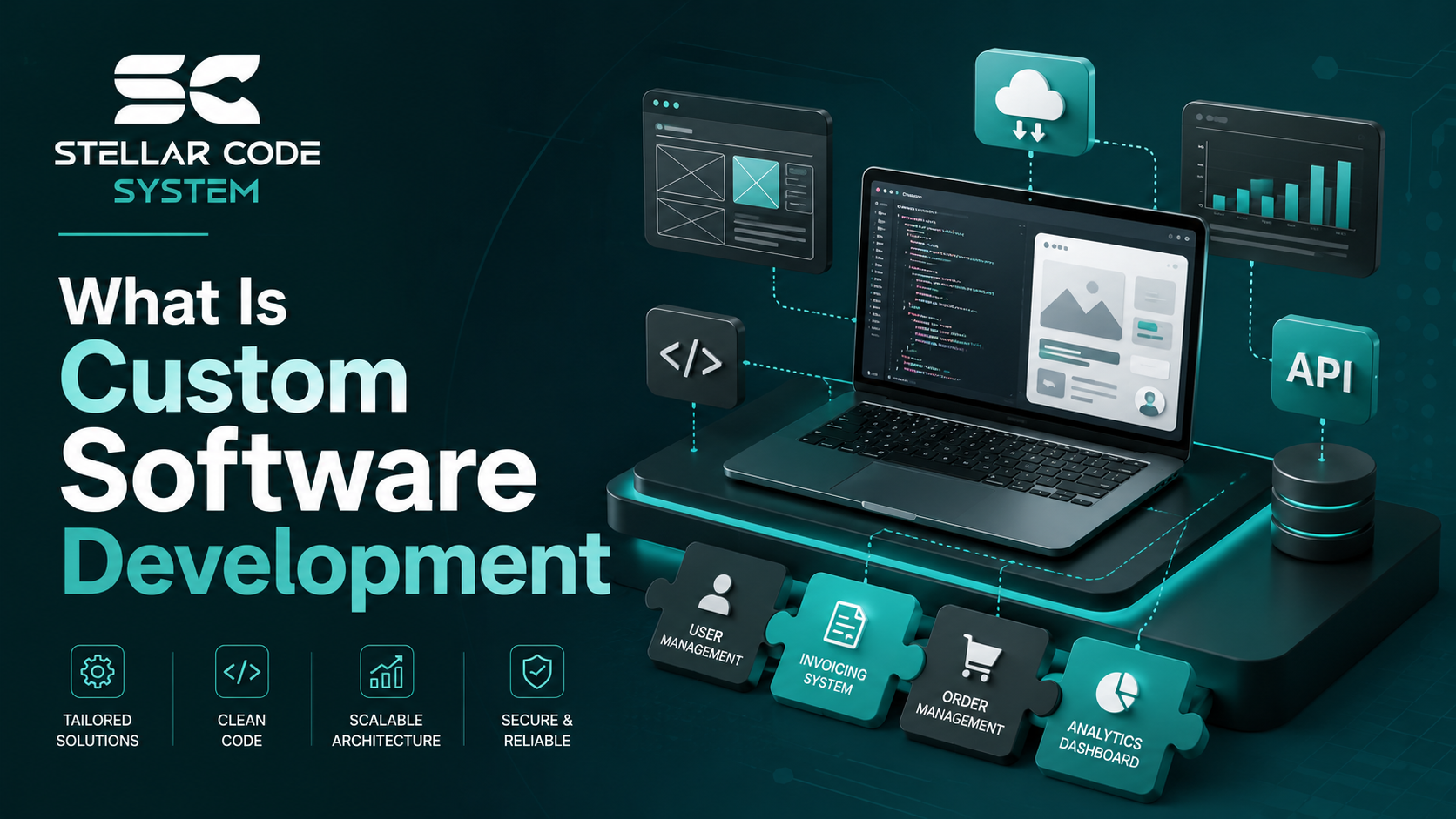
Custom software development is the process of designing, building, deploying, and maintaining software specifically for a company’s operational workflow, infrastructure, and business requirements. For businesses planning long-term platforms, custom software development services help turn those requirements into maintainable systems instead of disconnected tools.
Unlike generic SaaS platforms or off-the-shelf applications, custom systems are developed around how a business actually works.
In practical engineering terms, it means:
- Building architecture around real workflows
- Creating integrations that match internal systems
- Designing scalable infrastructure for future growth
- Improving security and compliance control
- Reducing dependency on disconnected third-party tools
- Optimizing performance for specific operational needs
Custom software is not always a massive enterprise platform.
Sometimes it is:
- A centralized internal dashboard
- A custom CRM
- A workflow automation system
- A SaaS backend
- A real-time analytics platform
- A deployment management tool
- A logistics synchronization platform
The goal is not complexity.
The goal is alignment between the software and the business process.

Why This Problem Happens in Real Teams
Most engineering bottlenecks begin long before teams realize they need custom software.
Early-stage startups prioritize speed. That decision is understandable. Small product teams often work under aggressive deadlines with limited engineering resources. Buying existing tools feels faster than building internal systems.
The issue is that temporary systems tend to become permanent infrastructure.
I’ve seen remote engineering teams manage:
- Five separate analytics platforms
- Multiple disconnected APIs
- Manual spreadsheet-based reporting
- Duplicate customer databases
- Inconsistent deployment workflows
Initially, these systems appear manageable.
But once the company grows, the lack of interoperability creates operational friction everywhere.
A few common patterns usually appear:
1. Integration Starts Breaking Down
Teams connect too many cloud-based services together without thinking about long-term maintainability.
Every new automation introduces:
- More dependencies
- More synchronization risks
- More API failures
- More debugging complexity
Eventually, reliability suffers because the architecture was never designed as a unified system.
2. Scalability Assumptions Become Expensive
Many startups assume scalability only matters when traffic increases.
That is incomplete.
Operational scalability matters earlier:
- More team members
- More workflows
- More customer data
- More deployment environments
- More compliance requirements
Without centralized architecture, the software ecosystem becomes difficult to maintain.
3. Productivity Drops Quietly
This problem is subtle.
Developers start spending time on:
- Manual reporting
- Repeated data entry
- Fixing broken integrations
- Maintaining outdated workflows
- Managing inconsistent infrastructure
Velocity decreases even though the team size increases.
That is usually a sign the existing software stack is no longer sustainable.

Where Most Teams Make the Wrong Decision
The internet often pushes startup teams toward overengineering.
This becomes dangerous during custom software projects.
I’ve seen startups introduce:
- Microservices too early
- Kubernetes before product-market fit
- Complex event-driven systems with small teams
- Enterprise-grade architecture without operational maturity
Most small engineering teams do not need extreme architectural complexity.
They need:
- Stability
- Maintainability
- Clear deployment workflows
- Simple collaboration patterns
- Predictable infrastructure
One of the biggest mistakes teams make is confusing modern architecture with effective architecture.
A monolith with good modularity often performs better for a 10-person SaaS team than a fragmented distributed system.
Another common issue is excessive customization.
Not every workflow requires a fully custom platform.
Sometimes the better decision is:
- Extending existing systems
- Building lightweight integrations
- Creating centralized internal tooling
- Improving accessibility and configurability gradually
The best engineering decisions are usually boring.
That is especially true in startup environments.

Practical Fixes That Actually Work
Custom software development succeeds when teams focus on operational clarity instead of technical ambition. Growing companies often need US software development teams for scalable products that can connect architecture, delivery, and long-term maintainability with real business workflows.
Here are the practices that consistently work in real engineering environments.
1. Centralize Core Business Logic
Do not spread critical workflows across multiple services too early.
Keep:
- Authentication
- Analytics
- Billing
- Customer management
- Deployment configuration
inside predictable centralized systems.
- Transparency
- Security
- Reliability
- Debugging speed
- Team collaboration
2. Build Modular Systems Without Overengineering
Modular architecture matters.
But modular does not automatically mean microservices.
A well-structured monolith can provide:
- Extensibility
- Maintainability
- Better performance
- Faster deployment cycles
- Easier onboarding
In smaller engineering teams, simpler architecture usually improves productivity.
3. Automate Repetitive Operational Work
Automation becomes valuable when it removes operational friction.
Good automation targets:
- Deployment workflows
- Data synchronization
- Testing pipelines
- Reporting systems
- Monitoring alerts
Bad automation creates hidden complexity.
I’ve seen teams automate unstable workflows instead of fixing the underlying operational problem.
That usually increases maintenance costs later.
4. Prioritize Documentation Early
Most startups delay documentation because of delivery pressure.
That works temporarily.
In remote teams, poor documentation eventually slows everything:
- Feature deployment
- Infrastructure updates
- Onboarding
- Debugging
- Compliance reviews
Even lightweight technical documentation improves long-term sustainability.
5. Design Around Real Usage Patterns
Custom software should solve operational pain points directly.
Not theoretical future scenarios.
Good engineering teams analyze:
- Real workflow bottlenecks
- Actual user behavior
- Deployment failure patterns
- System performance metrics
- Team collaboration friction
That leads to more adaptive and optimized systems.

When This Approach Fails
Custom software development is not automatically the right solution.
There are situations where it creates unnecessary operational overhead.
Small Teams Without Technical Ownership
If nobody internally understands the infrastructure, maintainability becomes risky.
Long-term dependency on external developers often reduces agility.
Rapidly Changing Product Requirements
In early experimentation phases, excessive customization can slow iteration speed.
Off-the-shelf systems may provide better flexibility temporarily.
Overbuilt Architecture
Enterprise-grade systems require:
- Monitoring
- DevOps maturity
- Documentation discipline
- Operational processes
- Dedicated maintenance
Small startup teams often underestimate this operational burden.
Poor Scope Control
Custom projects fail when teams continuously add features without architectural planning.
That creates:
- Technical debt
- Inconsistent workflows
- Performance issues
- Deployment instability
The software becomes difficult to scale or modernize later.

Sustainable Practices for Small Engineering Teams
Long-term software sustainability usually depends more on operational discipline than technical sophistication.
The healthiest engineering teams I’ve worked with followed relatively simple practices consistently.
Keep Infrastructure Predictable
Avoid unnecessary architecture shifts every few months.
Stable systems improve:
- Reliability
- Deployment consistency
- Collaboration
- Operational confidence
Reduce Technical Debt Continuously
Technical debt compounds quietly.
Small fixes performed consistently are far cheaper than large rewrites later.
Good teams allocate engineering time for:
- Refactoring
- Performance optimization
- Infrastructure cleanup
- Documentation updates
Optimize Collaboration Workflows
Remote development teams succeed when workflows are standardized.
This includes:
- Pull request discipline
- Shared deployment processes
- Clear ownership boundaries
- Consistent coding standards
Good collaboration reduces operational friction significantly.
Avoid Tool Obsession
New tools rarely solve structural engineering problems.
I’ve seen teams spend months migrating stacks while ignoring workflow inefficiencies that actually caused the problem.
Simplicity scales better than constant experimentation.
Conclusion
Custom software development becomes necessary when existing tools start limiting operational efficiency, scalability, and workflow consistency.
The biggest mistake small engineering teams make is assuming software complexity automatically creates scalability.
In practice, sustainable systems are usually:
- Modular
- Maintainable
- Centralized where necessary
- Operationally predictable
- Built around real workflows
The goal of custom software is not technical sophistication.
The goal is creating systems that allow product teams to move faster without creating long-term operational instability.
That balance is much harder than most startup teams expect.
FAQ
Not always. SaaS tools work well during early-stage operations. Custom software becomes valuable when workflow limitations, integration complexity, or scalability issues begin slowing the business down.
As operations expand, disconnected systems create synchronization problems, inconsistent analytics, deployment friction, and maintainability challenges.
Usually no. Most small SaaS teams benefit more from modular monolith architecture during the early growth stage.
It reduces manual workflows, centralizes infrastructure, improves automation, and aligns software functionality with actual business processes.
Many teams build overly complex systems before they have the operational scale or engineering maturity to maintain them properly.
Reference
Written by

Paras Dabhi
VerifiedFull-Stack Developer (Python/Django, React, Node.js)
I build scalable web apps and SaaS products with Django REST, React/Next.js, and Node.js — clean architecture, performance, and production-ready delivery.
LinkedIn