Who Owns Custom Software After Development
A custom software project can be technically complete while ownership is still unclear.
The application works. The repository has been handed over. The database is running in production. Developers have finished the agreed deliverables. Everyone assumes the client now owns the software.
That assumption can create problems later.
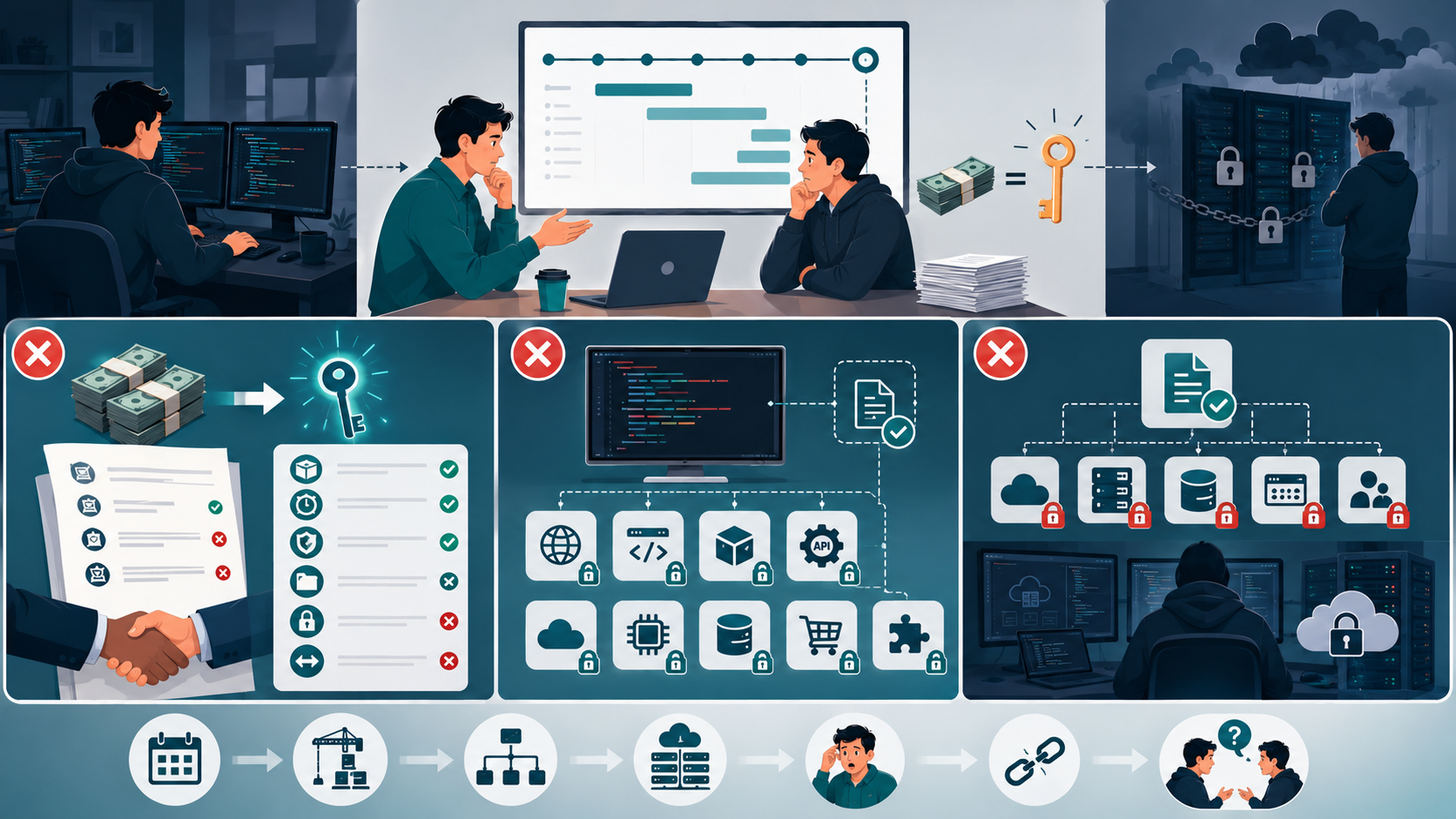
I’ve seen ownership questions become important months after development ends. A company wants another developer to modify the code, but the original vendor controls the repository. A founder wants to migrate infrastructure, but nobody has the deployment credentials. A team discovers that some components or libraries cannot legally be transferred because they were licensed separately.
The difficult part is that owning custom software is not necessarily the same as possessing the code. Ownership can involve intellectual property, copyright, licensing, contractual rights, access, infrastructure, documentation, and the ability to modify or reuse what was delivered.
The exact legal position depends on the contract and applicable law, but from an engineering perspective, there is a practical question every client and development team should answer before the project ends:
Who controls the software, what exactly has been transferred, and what remains with the developer?
Why Software Ownership Becomes Confusing After Development
The confusion usually starts because teams use the word ownership to describe several different things.
A client may say:
We paid for the software, so we own everything.
A development company may think:
We built the system, so some of our code and components remain ours.
Both statements can potentially be true in different circumstances.
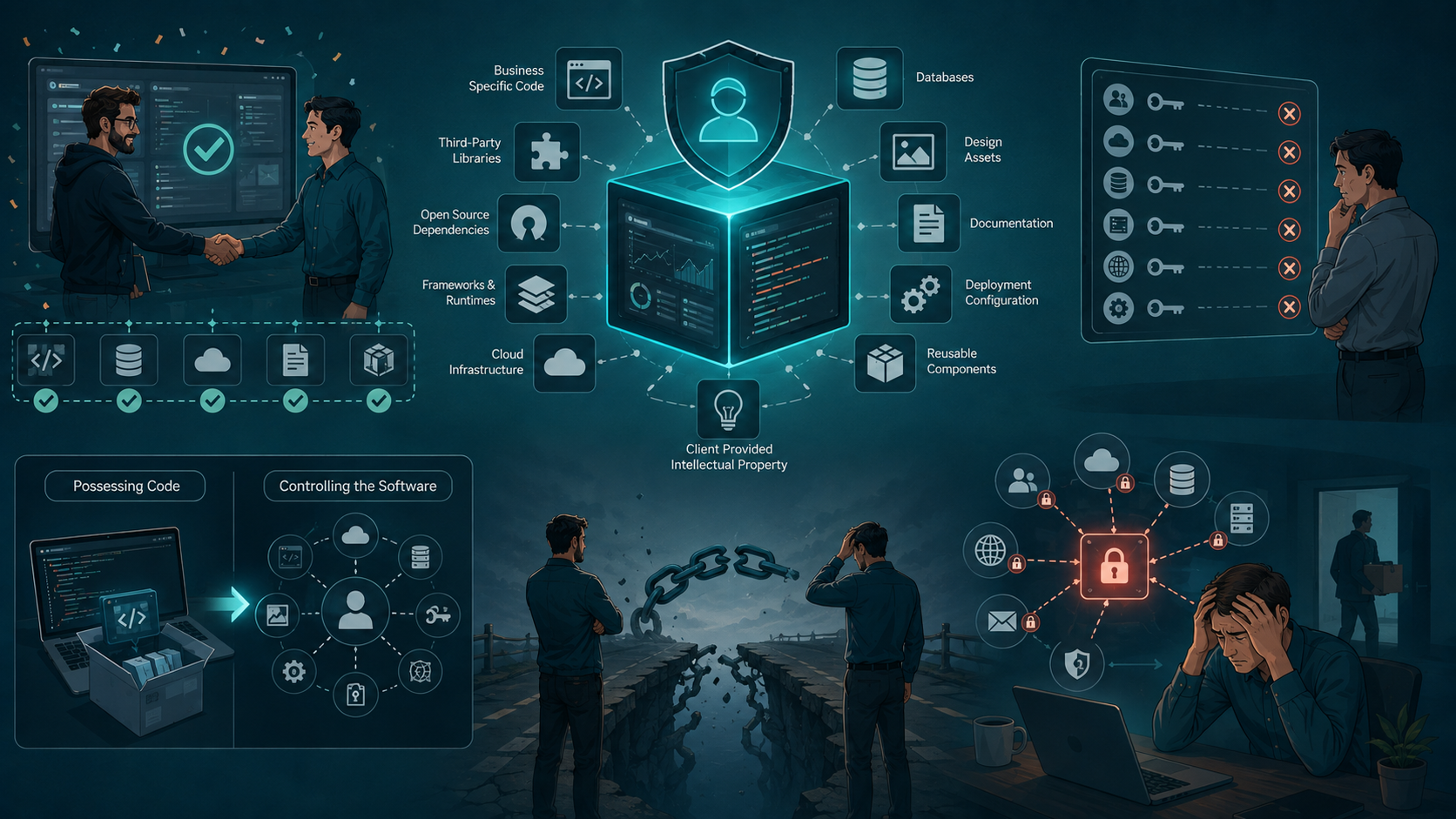
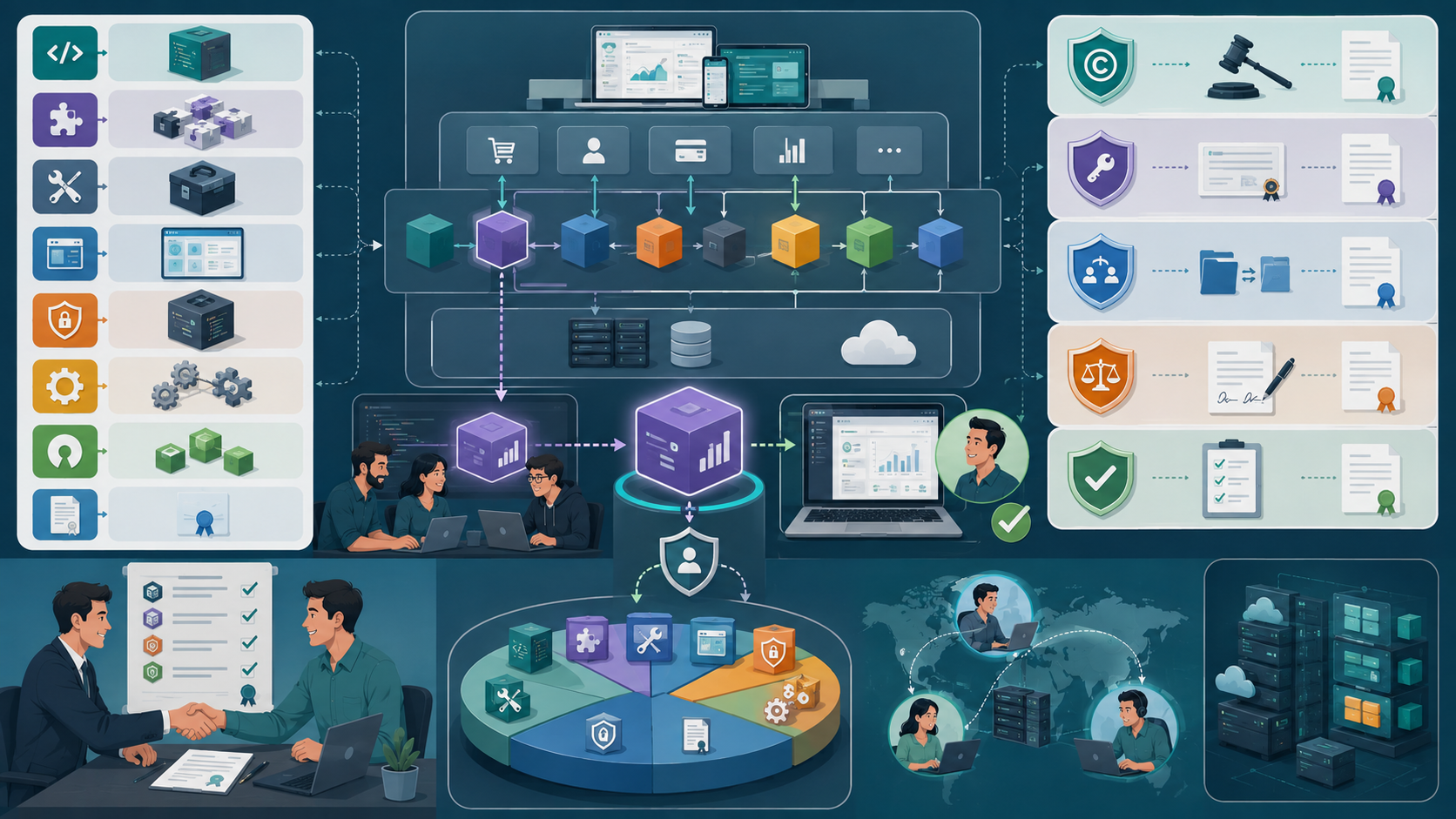
A custom application can contain several layers:
- Business-specific code
- Third-party libraries
- Open-source dependencies
- Frameworks
- Cloud infrastructure
- Databases
- Design assets
- Documentation
- Deployment configuration
- Developer-created reusable components
- Client-provided intellectual property
The contract and licensing terms should determine which rights belong to whom.
This is why ownership should not be treated as a final administrative task. It should be considered during project planning.
Ownership Is More Than the Source Code
Suppose a development team delivers a SaaS platform.
The client receives the source code but does not receive:
- Repository administrator access
- Cloud account authority
- Database credentials
- Deployment credentials
- Technical documentation
- Domain access
- Monitoring access
- Third-party account ownership
Technically, the client has the code.
Operationally, the client may still not have complete control.
That distinction becomes extremely important when the relationship with the original vendor ends.
What Should Actually Be Transferred to the Client?
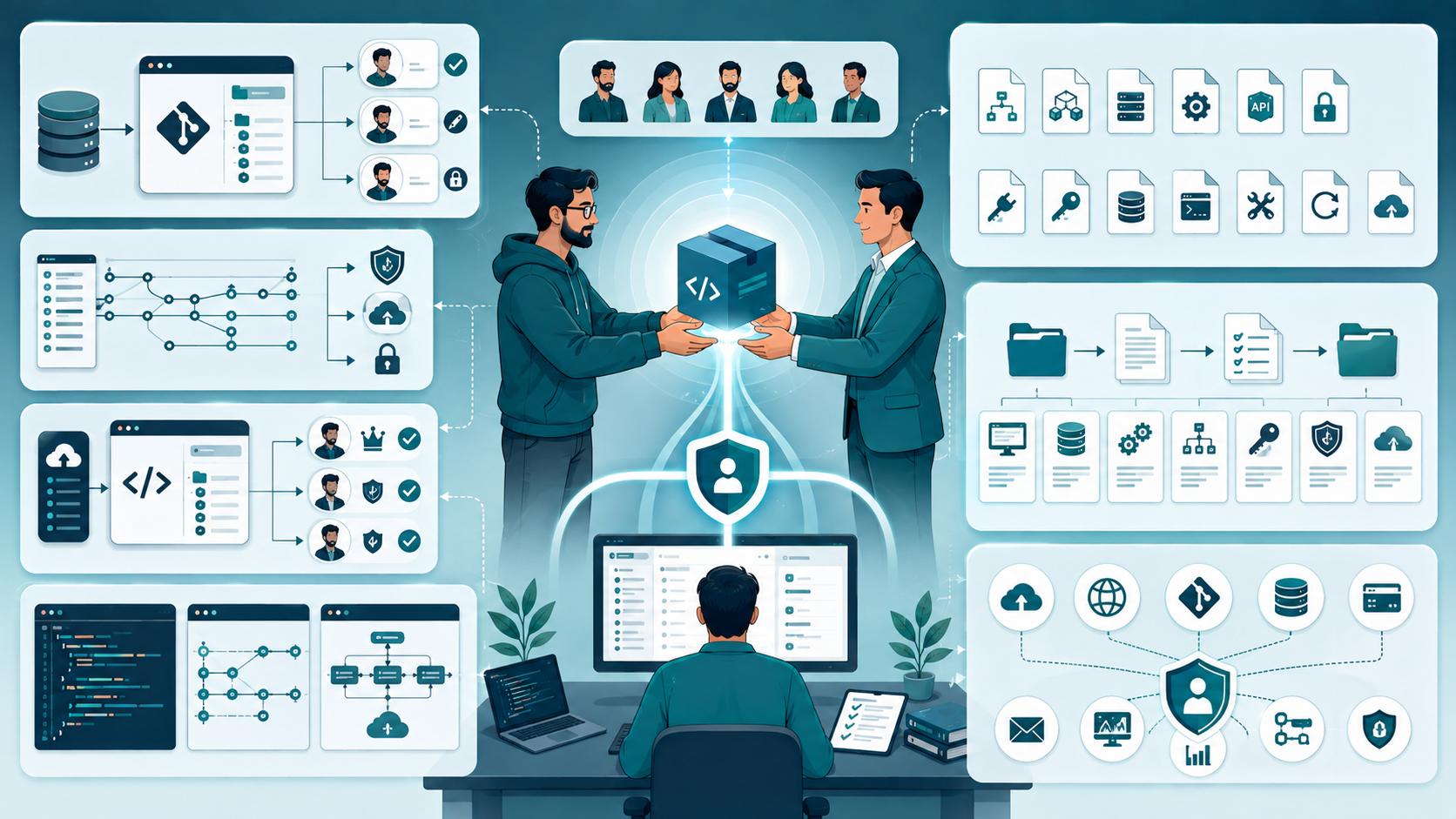
A proper handover should cover more than a ZIP file containing source code.
At minimum, the client should understand what happens to the following areas.
1. Source Code and Repository
The repository is often the most obvious deliverable.
The agreement should make it clear who has:
- Repository ownership
- Administrative access
- Read and write access
- Branch management authority
- Deployment permissions
- Historical commit access
For a long-term product, I generally prefer the client or product owner to control the primary repository.
Developers can receive the access they need without becoming the permanent owner of the company's core software.
2. Documentation
A codebase without useful documentation can be difficult to operate.
A reasonable handover may include:
- Architecture documentation
- Environment configuration
- Deployment instructions
- Database information
- API documentation
- Authentication details
- Integration information
- Troubleshooting procedures
- Backup procedures
The level of documentation should match the complexity of the system.
A small internal application doesn't need a 100-page technical manual. A production SaaS platform probably needs considerably more than a README file.
3. Credentials and Accounts
Credentials should be handled carefully.
The client should know which accounts exist and who controls them, including:
- Cloud infrastructure
- Domain registration
- Source control
- Database services
- Payment providers
- Email services
- Monitoring systems
- Analytics
- CI/CD platforms
- Security services
A common mistake is creating these accounts under a developer's personal or company account.
That creates unnecessary dependency.
If the software is a business asset, critical accounts should generally be structured so the business can maintain authority and access independently of a particular developer.
Intellectual Property Ownership Is a Separate Question
One of the biggest mistakes is assuming that receiving the code automatically means receiving every intellectual property right associated with it.
The contract should address intellectual property, including relevant copyright, licensing, assignment, and usage rights.
For example, a development company may create:
- Custom business logic specifically for the client
- A reusable authentication module
- Internal development tools
- Generic UI components
- Proprietary libraries
- Integration utilities
The parties need to establish what is being transferred and what remains with the developer.
This is particularly important when the developer uses pre-existing assets.
Custom Code vs. Pre-Existing Components
Imagine a development company already has a reusable reporting component.
During a new project, the component is integrated into the client's SaaS application.
Does the client own the underlying reusable component?
Not necessarily.
The answer depends on the agreement, the applicable license, and how the component was created and supplied.
This is why contracts should distinguish between:
- Client-specific deliverables
- Pre-existing developer assets
- Third-party components
- Open-source software
- Licensed software
- New project-specific code
Without that distinction, ownership discussions become unnecessarily complicated.
Where Most Teams Make the Wrong Decision
The biggest mistake is waiting until the final week of development to discuss ownership. Working with a US software development team for source code handover helps clients clarify repository control, source code access, infrastructure ownership, documentation, credentials, reusable components, third-party licensing, and handover responsibilities before the project ends.
By that point, the architecture has already been created, repositories have been established, infrastructure has been configured, and dozens of dependencies may have been introduced.
Changing control at the end can be painful.
Treating Payment as Automatic Ownership
Payment and ownership are related to the commercial relationship, but they are not necessarily the same thing.
A contract can define:
- What the client receives
- When rights are transferred
- What conditions apply
- Which deliverables are included
- What license is granted
- Which developer assets are excluded
- What happens if the project ends early
The terms matter.
Assuming Every Line of Code Belongs to the Client
A modern application rarely consists entirely of newly written code.
It may depend on:
- Frameworks
- Libraries
- Open-source packages
- APIs
- Cloud services
- Commercial components
The client cannot simply own every external component in the same way.
Some software is provided under a license rather than transferred through ownership.
Ignoring Infrastructure
I've seen teams focus heavily on the repository while ignoring the actual production environment.
That creates a strange situation:
The client owns the application code but the vendor controls the production infrastructure.
If the vendor disappears tomorrow, the client may struggle to deploy or maintain the system.
Software control therefore needs to include the operational environment, not only the code.
Practical Fixes That Actually Work
A clean ownership model can be established without making the project unnecessarily complicated.
1. Define Ownership Before Development Starts
Before writing significant code, document who owns each major category.
For example:
| Area | Ownership / Responsibility to Define |
|---|---|
| Custom source code | Client or developer, according to contract |
| Repository | Client or agreed party |
| Documentation | Define delivery and usage rights |
| Infrastructure | Define account ownership |
| Database | Define access and operational responsibility |
| Third-party software | Governed by applicable license |
| Open-source components | Governed by their licenses |
| Design assets | Define rights and transfer |
| Developer tools | Usually separate from project deliverables |
| Deployment configuration | Include in handover where appropriate |
This simple exercise exposes ambiguity before it becomes expensive.
2. Separate Ownership From Access
A person having access does not necessarily mean they have ownership.
A developer might have administrative access to AWS, GitHub, or a database because they need it to perform their work.
That does not automatically mean they should retain permanent authority after development ends.
Define:
- Who owns the account
- Who administers it
- Who can access it
- Who can revoke access
- Who is responsible for security
This creates clearer accountability.
3. Make the Handover an Actual Deliverable
Don't treat handover as a casual email at the end of a project.
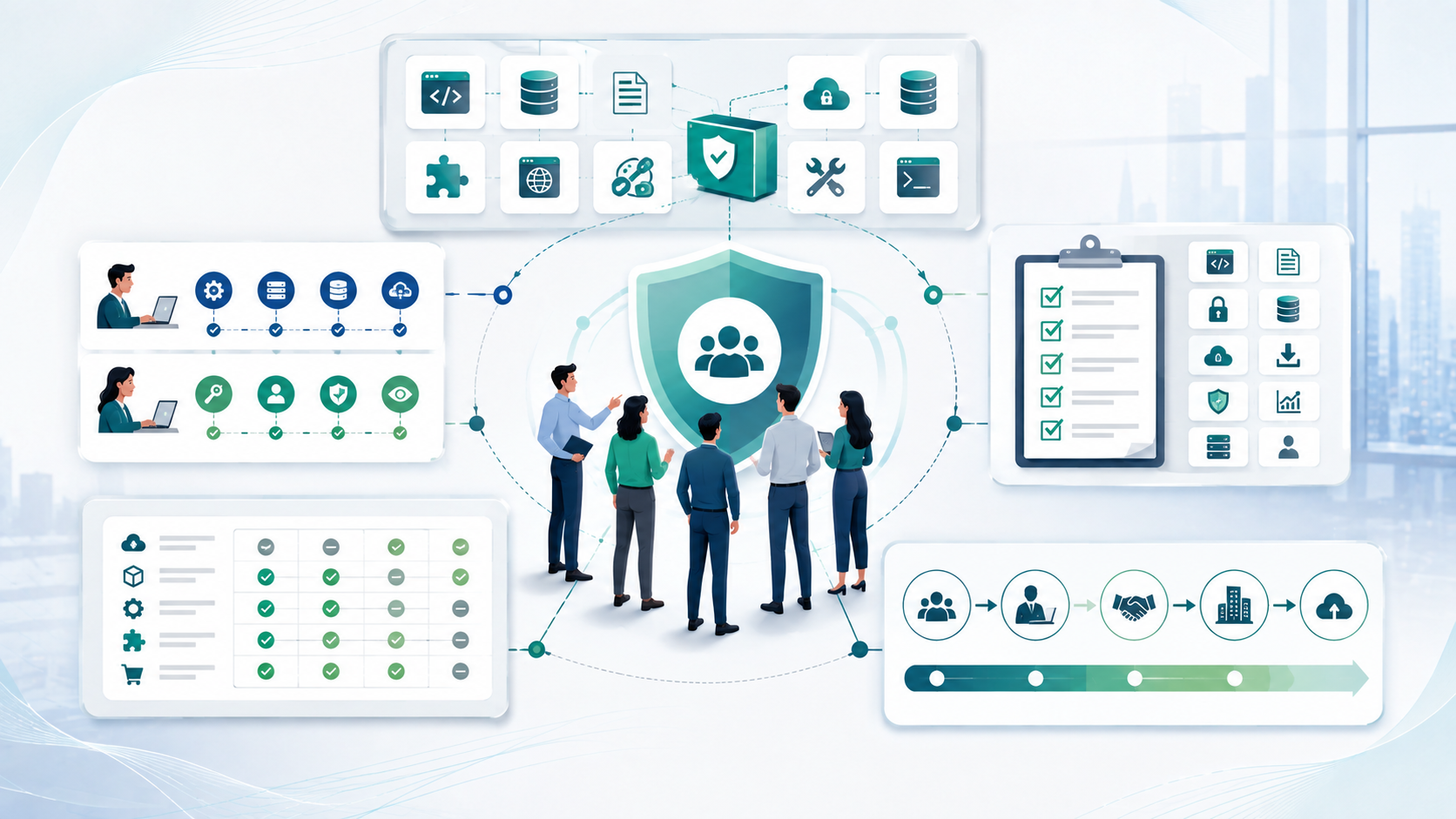
Create a structured checklist covering:
- Repository
- Documentation
- Credentials
- Infrastructure
- Database
- Deployment
- Backups
- Monitoring
- Dependencies
- Third-party services
- Outstanding issues
The handover should happen while the original development team is still available to answer questions.
4. Document Third-Party Licensing
Create an inventory of important dependencies.
For each component, identify:
- Name
- Version
- License
- Purpose
- Source
- Whether modification is permitted
- Whether redistribution is restricted
- Whether a commercial subscription is required
This becomes especially important when the software is later sold, distributed, or transferred.
5. Establish a Clear Exit Process
A strong development relationship should not depend on permanent vendor control.
Define what happens when:
- Development ends
- Maintenance ends
- The vendor relationship terminates
- Another developer takes over
- The company sells the product
- The product is migrated to another infrastructure provider
This is where transfer, assignment, and handover processes become practical rather than merely contractual concepts.
What About Reusing the Code for Another Client?
This is another area where teams often misunderstand their rights.
Suppose a development company creates a generic utility while building a client's application.
The company may want to reuse parts of that work in future projects.
Whether it can do so depends on what was agreed.
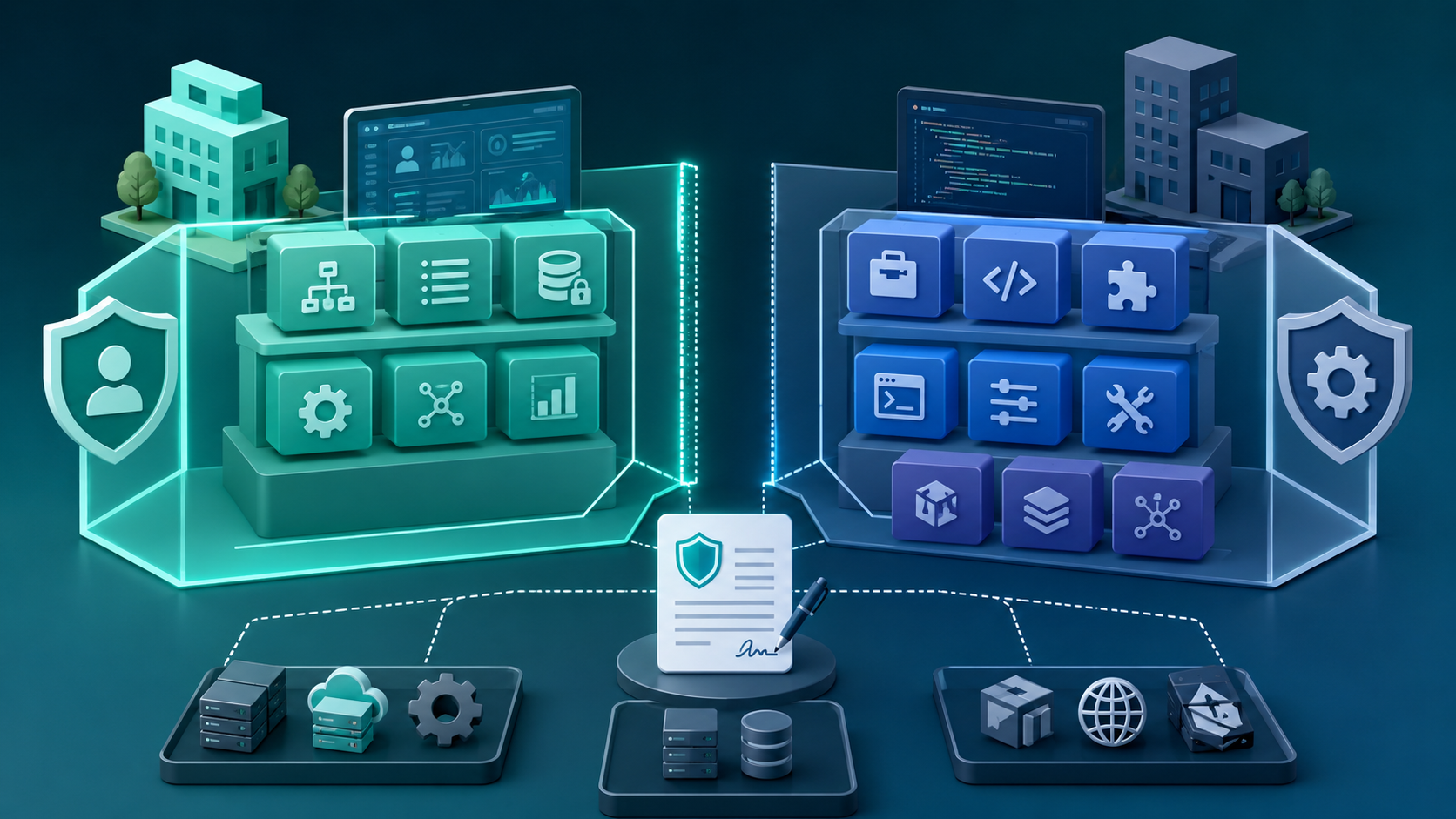
A client may have broad rights over project-specific code while the developer retains rights to general-purpose tools or pre-existing components.
The important point is to avoid ambiguity.
A contract should clearly distinguish between:
- Client-owned work
- Developer-owned pre-existing assets
- Generic reusable components
- Third-party software
- Confidential business logic
- Project-specific assets
This protects both sides.
A client doesn't want its proprietary business logic appearing in another product. A development company doesn't necessarily want to lose every reusable engineering component it has developed over many years.

When This Approach Fails
Even a carefully planned ownership and handover process has limitations.
Highly Regulated Software
Healthcare, finance, government, and other regulated systems may have additional requirements involving security, records, compliance, and access.
Ownership alone does not determine whether a system can legally be operated or transferred.
Complex Vendor Ecosystems
A SaaS product may rely on dozens of external services.
Transferring the application does not automatically transfer:
- API subscriptions
- Commercial licenses
- Cloud agreements
- Payment accounts
- Vendor contracts
Each dependency may have its own rules.
Large Legacy Systems
A mature system can contain years of undocumented code, old frameworks, abandoned libraries, and infrastructure that nobody fully understands.
A simple repository transfer won't solve that problem.
International Projects
For projects involving the USA, UK, Germany, Australia, Canada, or other jurisdictions, the applicable legal framework can differ.
Terms such as copyright, assignment, work-for-hire, licensing, and intellectual property transfer should therefore be reviewed according to the governing law in the actual contract.
For significant commercial projects, legal review is worth considering. Engineering teams should not treat a technical handover as a substitute for legal advice.

Sustainable Practices for Long-Term Software Control
The best ownership model is one that remains workable after the original developers leave.
Keep Business-Critical Accounts Under Business Control
The company should have appropriate authority over critical systems.
Developers should not become the single point of failure.
Maintain Documentation During Development
Documentation created continuously is much more useful than documentation written in a panic during the final week.
Even lightweight documentation covering architecture, deployment, dependencies, and operational procedures can significantly improve maintainability.
Track Dependencies
A dependency inventory helps teams understand what they actually control.
This includes frameworks, libraries, external services, and proprietary components.
Review Ownership When Scope Changes
A project can start as a simple MVP and become a substantial SaaS platform.
When the scope changes, revisit the original agreement.
New deliverables, infrastructure, components, and assets may require clarification.
Build for Maintainability, Not Vendor Dependency
A good development partner should help the client become more capable of operating its software over time.
That means reducing unnecessary vendor dependency rather than making the client permanently dependent on one team.
This is particularly important for small engineering teams where losing one external developer can create a major operational risk.

The Practical Answer: Who Actually Owns the Software?
There isn't one universal answer.
The contract, applicable law, and specific software components determine the legal ownership and rights.
From an engineering perspective, however, a client should be able to clearly answer:
- Who owns the custom code?
- Who controls the repository?
- Who has production access?
- Who owns the cloud accounts?
- Who controls the database?
- Who has the right to modify the software?
- Who can appoint another development team?
- Which components are licensed rather than owned?
- Which assets can the developer reuse?
- What happens when the relationship ends?
If nobody can answer these questions, the software may be technically complete but operationally dependent on the original development team.
That's the real problem.
Software ownership is not simply about possessing source code. It's about having clearly defined rights, authority, access, responsibility, and control over the system throughout its useful life.
Conclusion
Custom software makes more sense when standard tools force your business to compromise on workflows, integrations, scalability, or control. Off-the-shelf software can be the better choice when your requirements are common and the existing product solves the problem without major workarounds.
The real decision is not about choosing custom over packaged software. It is about understanding where your business is losing efficiency, flexibility, and control and whether building software can solve those problems sustainably.
A practical approach is to compare the long-term cost, required functionality, integration needs, maintenance responsibility, scalability, and ownership before making the decision. If an existing product genuinely fits the business, use it. If your processes have become too specific or constrained by standard software, custom development may be the more sustainable option.
Who Owns Custom Software After Development: FAQs
Ownership depends primarily on the development contract, applicable law, and the specific assets involved. The agreement should clearly identify ownership of custom code, intellectual property, documentation, infrastructure, and other deliverables.
Not necessarily. Payment does not by itself answer every question about copyright, licensing, assignment, or other rights. The contract should explicitly define what is transferred to the client.
For many client-owned products, giving the client control of the primary repository is a sensible operational arrangement. Developers can retain the access they need to work without becoming the permanent point of control.
Usually, third-party software is governed by its own license rather than being transferred to the client as if it were custom code. The development team should document important dependencies and their licensing requirements.
There should be a structured handover covering source code, repository access, documentation, credentials, infrastructure, database access, deployment processes, dependencies, and outstanding technical issues. The exact rights and responsibilities should also be consistent with the project contract.
Reference
Written by

Paras Dabhi
VerifiedFull-Stack Developer (Python/Django, React, Node.js)
I build scalable web apps and SaaS products with Django REST, React/Next.js, and Node.js — clean architecture, performance, and production-ready delivery.
LinkedIn