How to Choose AWS Cloud Migration Company in India for SaaS Products
I’ve seen this play out more times than I can count.
A SaaS product starts on a basic VPS. Things work fine until they do not. Traffic increases, performance drops, deployments get messy, and suddenly someone says: Let’s just move everything to Amazon Web Services.
Then comes the real question: do we handle this ourselves, or hire an AWS cloud migration company in India?
That decision is where most teams mess up.
Why SaaS products struggle with AWS migration (especially in small teams)
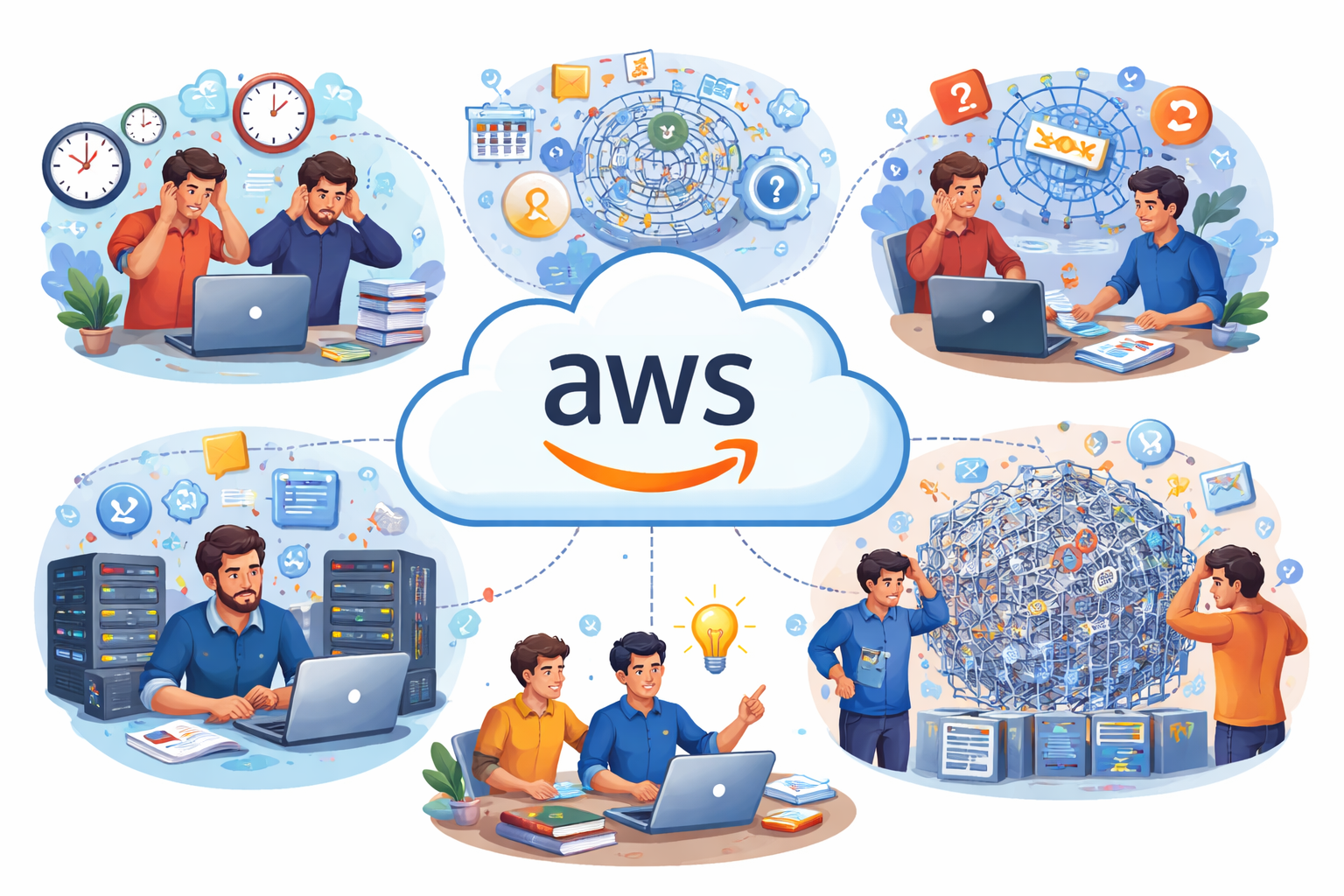
On paper, AWS migration looks straightforward. In reality, it rarely is.
In small teams, the problem is not lack of intelligence. It is constraints.
Deadlines don’t wait for architecture
In most SaaS teams, migration decisions are not driven by engineering readiness. They are driven by pressure to scale fast. Sales and product teams push for quick fixes when performance drops.
That leads to rushed architecture without proper planning, and those shortcuts usually come back as bigger issues later.
No real DevOps ownership
In small teams, infrastructure responsibility is often unclear. Backend developers handle AWS alongside feature work, which works initially but breaks under scale.
Without dedicated ownership, things like monitoring, security, and cost optimization get ignored. Problems only surface when they start impacting users or bills.
Overconfidence in learning on the go
Many teams assume they can figure out AWS while migrating live systems. That mindset works for simple setups, but not when networking, IAM roles, and scaling all collide.
Learning during migration adds risk and delays. What looks like speed often turns into rework.
Underestimating data complexity
Code migration is usually straightforward, but data migration is where things get tricky. Handling live databases without downtime requires careful planning and testing.
Most teams underestimate replication, consistency, and rollback challenges. That is where timelines quietly double.
In one project, a migration that looked like a weekend move took two weeks, mostly fixing things that were never planned for.

Where most founders choose the wrong AWS cloud migration company in India
This is the part that causes long-term damage.
Founders often spend money on migration and then spend more fixing what the agency broke.
Here is where things go wrong:
Choosing based on lowest cost
Cheap migration often means:
- no proper architecture planning
- copy-paste infrastructure
- zero cost optimization
Hiring generic IT vendors
Many companies offer AWS migration without understanding SaaS realities like:
- multi-tenancy
- scaling patterns
- usage-based billing
Falling for we do everything agencies
If someone claims they handle all types of apps equally, that is usually a red flag.
Ignoring post-migration reality
Most agencies focus on moving, not running:
- no monitoring setup
- no cost alerts
- no scaling strategy
Teams usually regret this within two months when AWS bills spike or performance drops under load.
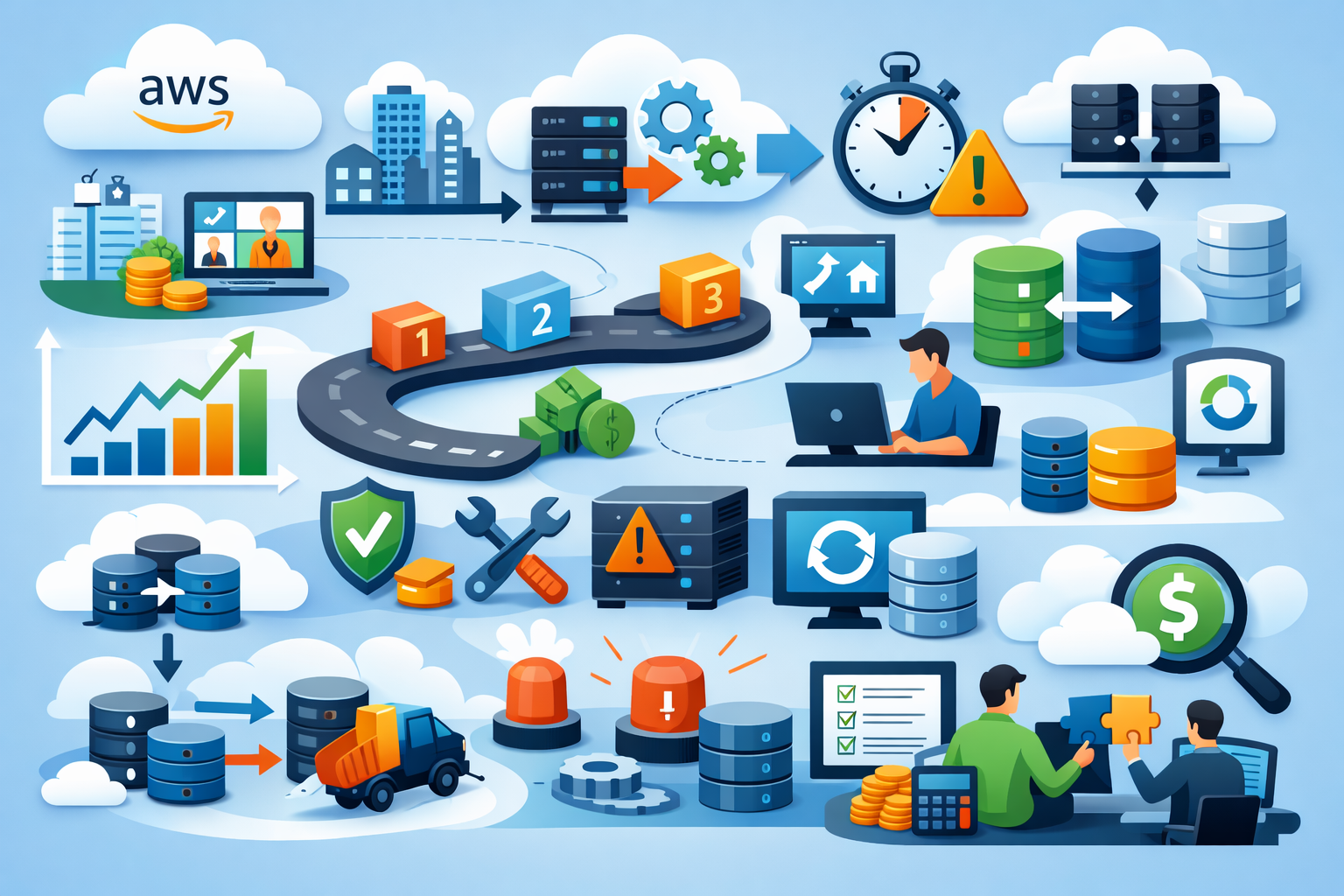
What actually matters when choosing an AWS cloud migration company
If you are considering an AWS cloud migration company in India for your SaaS product, do not look at sales decks.
Look at how they think.
Here is what actually matters:
1. SaaS-specific experience
Not every migration experience translates well to SaaS. Multi-tenant systems, usage spikes, and subscription models create unique challenges.
A team that understands these patterns can avoid common scaling and performance issues. Without this, you will end up fixing architecture decisions later.
Not just we migrated apps, but:
- have they handled multi-tenant systems
- do they understand user growth patterns
- have they worked with subscription-based scaling
2. Clear migration approach
Vague migration plans are a red flag. A reliable team should clearly explain the sequence of migration, how downtime will be managed, and what fallback options exist.
Without this clarity, small issues can turn into production failures. Planning reduces both risk and confusion.
A good team should explain:
- what moves first (app, DB, services)
- how downtime will be handled
- what happens if something fails
3. Database migration strategy
Most migration failures happen at the database level. Decisions like replication vs dump/restore directly impact downtime and data consistency.
A proper strategy includes rollback planning and testing before going live. Skipping this usually leads to extended outages.
Ask:
- will they use replication or dump/restore
- how do they minimize downtime
- what is the rollback plan
4. Cost awareness (not just setup)
AWS setup is easy. Controlling cost is not. Many teams over-provision resources or choose the wrong configurations.
A good migration approach considers long-term usage, not just initial deployment. Without cost monitoring, bills can grow faster than expected.
A good team should:
- suggest right instance types
- avoid over-provisioning
- set up basic cost monitoring
5. Post-migration ownership clarity
Migration does not end after deployment. Someone needs to handle issues, monitor performance, and manage costs continuously.
If ownership is not clearly defined, responsibilities fall back on your internal team. That is when things start slipping unnoticed.
After migration:
- who handles issues
- who monitors performance
- who optimizes cost
If this is not clear, you will end up doing it yourself anyway.
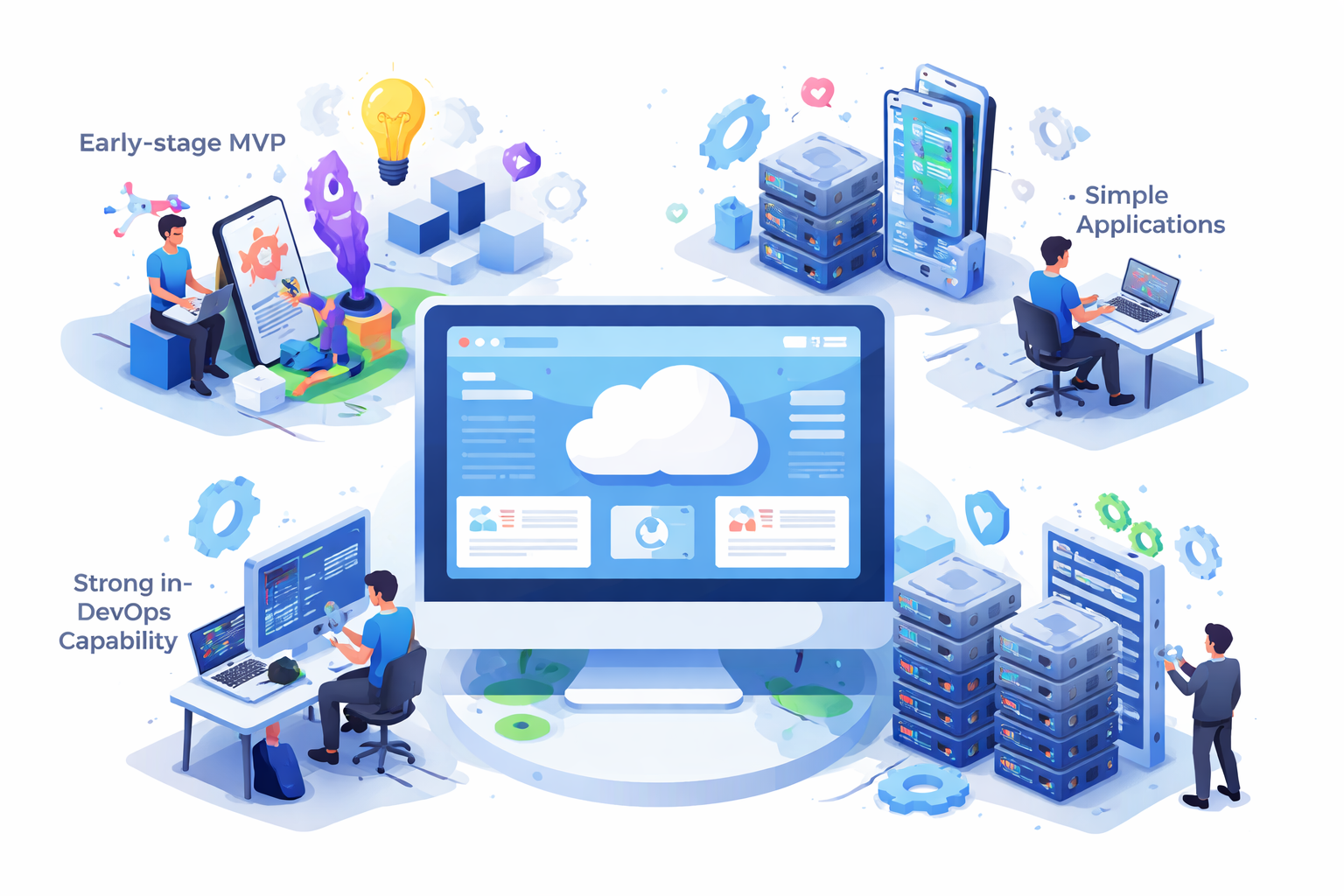
When you should NOT hire a cloud migration company
Hiring a company is not always the smart move.
In fact, in some cases, it is a waste of money.
Early-stage MVP
If you are still validating your product, do not over-invest in infrastructure.
Simple applications
Basic apps with low traffic can often be migrated in-house with some effort.
Strong in-house DevOps capability
If someone on your team has done AWS migrations before, you probably do not need an agency.
Startups often spend ₹5–10 lakhs on migration when their app did not even need that complexity yet.
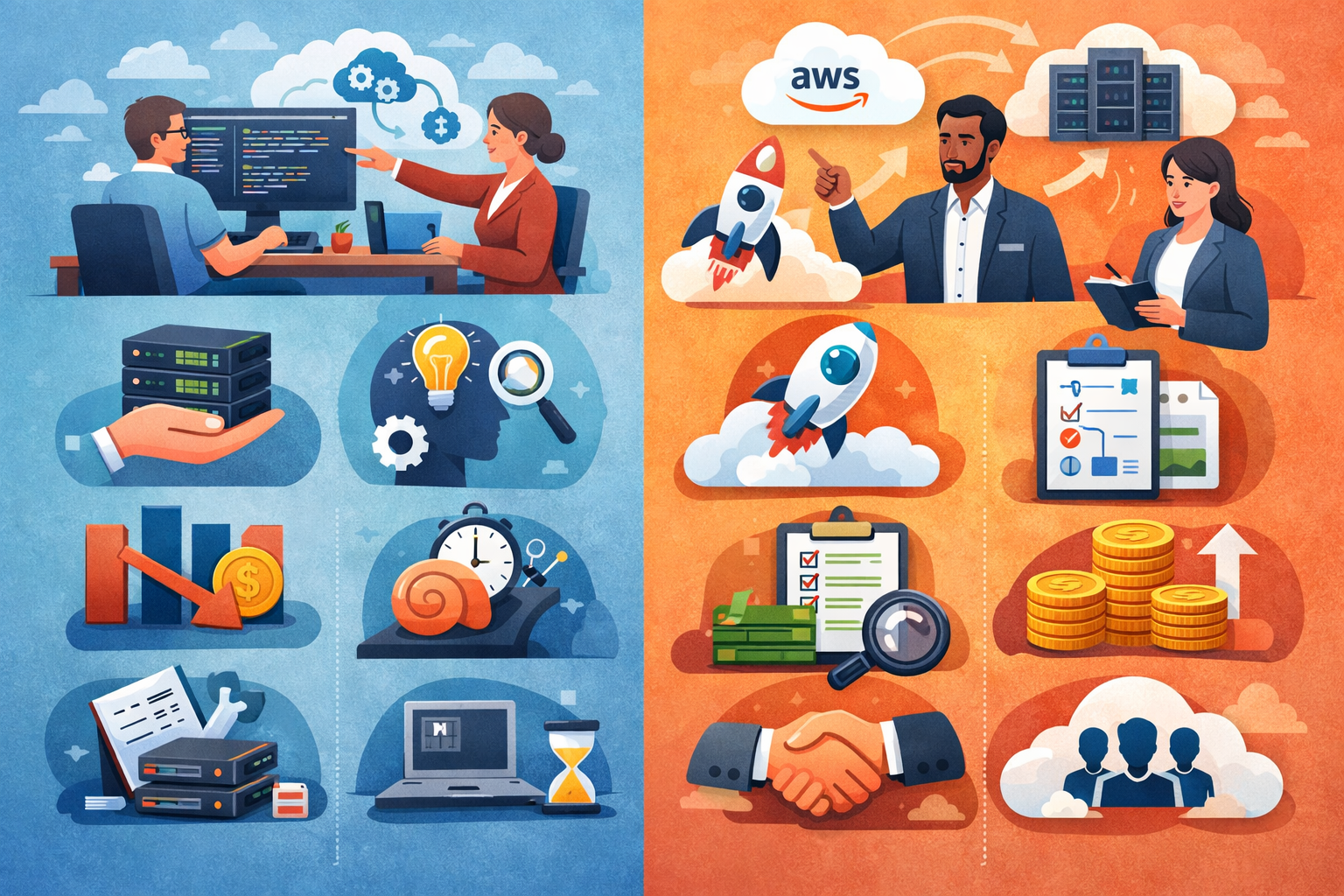
In-house vs AWS migration company — what actually works
This decision depends on your team, not just your budget.
In-house migration
Handling migration internally gives you full control and helps your team build long-term AWS expertise. It is usually cheaper upfront, which makes it appealing for early-stage startups.
But the trade-off is slower execution and a higher chance of mistakes. The learning curve can also pull focus away from core product development.
Pros:
- full control
- better long-term understanding
- lower upfront cost
Cons:
Hiring an AWS cloud migration company in India
Working with an external team can speed up migration and reduce risk, especially if they’ve handled similar SaaS setups before. Choosing a SaaS cloud migration company in India with real experience in scaling, rollback planning, and post-migration support can help SaaS teams avoid costly architecture and deployment mistakes during the move to AWS.
However, this comes with higher upfront cost and the risk of choosing the wrong vendor. You also become somewhat dependent on them for future changes.
Pros:
- faster migration
- experience with edge cases
- structured approach
Cons:
From practical experience, small teams with no AWS background usually avoid costly mistakes by hiring the right company early.
But if the team already has one or two strong backend or DevOps engineers, handling migration in-house often gives better control and flexibility.
The right choice depends more on team capability than budget alone.
Best practices I follow when migrating SaaS apps to AWS
These are things learned the hard way.
1. Never migrate directly to production
Jumping straight to production is one of the fastest ways to break things. A staging environment lets you test real scenarios without risking users.
Using near-production data and simulated traffic helps uncover issues early. It is a small effort that prevents major downtime later.
Always:
- set up staging
- test with real-like data
- simulate traffic
2. Avoid full migration in one go
Trying to move everything at once increases risk and makes debugging harder. Breaking migration into smaller steps keeps things manageable.
Start with stateless services, then background jobs, and finally the database. This approach reduces failure impact and makes rollback easier.
Break it down:
- move stateless services first
- then background jobs
- database last
This reduces risk significantly.
3. Plan rollback before migration
Most teams focus only on moving forward, not on what happens if things fail. A clear rollback plan ensures you can recover quickly without long downtime.
If you cannot reverse changes fast, you are taking unnecessary risk.
Ask:
- if this fails, how do we go back in 10 minutes
If there is no answer, the migration is not ready.
4. Monitor cost from day one
AWS costs do not spike immediately. They grow quietly over time. Without early monitoring, teams do not notice issues until the bill arrives.
Setting up alerts and tracking usage keeps spending under control.
Set up:
- budget alerts
- usage tracking
- basic logging
5. Don’t over-engineer early
Many teams try to build for scale before they actually need it. Complex architectures add overhead and slow development.
Starting simple keeps systems easier to manage and debug. You can always scale later when real demand justifies it.
You do not need:
- complex microservices
- overly distributed systems
Start simple. Scale when needed.
Conclusion
Migrating a SaaS product to AWS is not just a technical task. It is a decision that affects cost, scalability, and team productivity.
Hiring an AWS cloud migration company in India can help, but only if you choose the right one for the right reasons.
Most mistakes happen because teams rush the decision, founders rely on pricing instead of expertise, and migration is treated as a one-time task.
The reality is simple: the success of your migration depends more on how you plan it than who you hire.
FAQs
It depends on your team’s DevOps capability. For teams without AWS experience, it reduces risk but adds upfront cost.
Costs vary widely, but most startups underestimate ongoing AWS expenses more than migration fees.
Yes, but only if someone has real cloud experience. Otherwise, mistakes can become expensive quickly.
Ignoring database migration complexity and not planning for downtime or rollback is usually the most expensive mistake.
It depends on complexity, but most realistic migrations take weeks, not days, when done properly.
Reference
Written by

Paras Dabhi
VerifiedFull-Stack Developer (Python/Django, React, Node.js)
I build scalable web apps and SaaS products with Django REST, React/Next.js, and Node.js — clean architecture, performance, and production-ready delivery.
LinkedIn