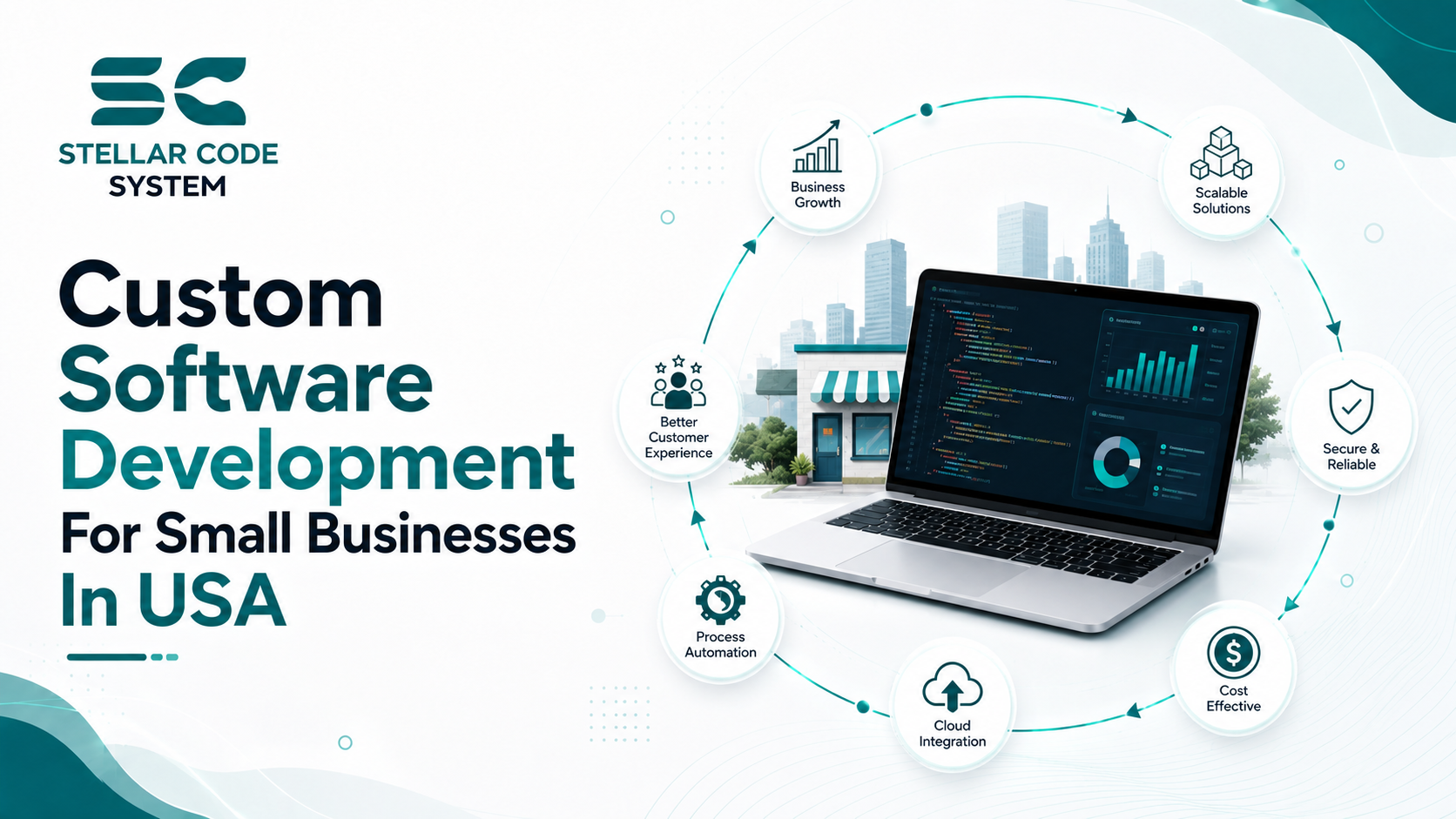
Custom Software Development For Small Businesses In Usa
Small businesses rarely struggle because they lack ideas. More often, they struggle because the software they rely on no longer fits the way they actually operate.
I've worked with startup teams and growing companies that began with a handful of cloud-based subscriptions, spreadsheets, and manual workflows. Everything seemed manageable during the first few months. But as the customer base grew, employees spent more time switching between applications than serving customers or improving the product.
The assumption is understandable: buying an existing software solution should be faster, cheaper, and less risky than building something tailored to the business. In reality, that assumption only holds true when business processes closely match what the software platform was designed to support.
Once operations become more specialized, the limitations start appearing everywhere. Teams create workarounds, duplicate information across multiple systems, rely on manual exports, and spend valuable hours fixing problems that automation should have eliminated.
Custom software development isn't about replacing every commercial application. It's about solving the operational problems that packaged software cannot solve efficiently. For many small businesses in the USA, that difference becomes the deciding factor between sustainable growth and operational frustration.
Why This Problem Happens in Real Teams
Most engineering problems don't begin with bad code. They begin with business decisions made under pressure.
Small businesses operate with limited budgets, tight deadlines, and small teams. The immediate goal is usually simple: launch quickly, start serving customers, and generate revenue. Purchasing existing software feels like the safest path because implementation takes days instead of months.
Initially, that decision makes sense.
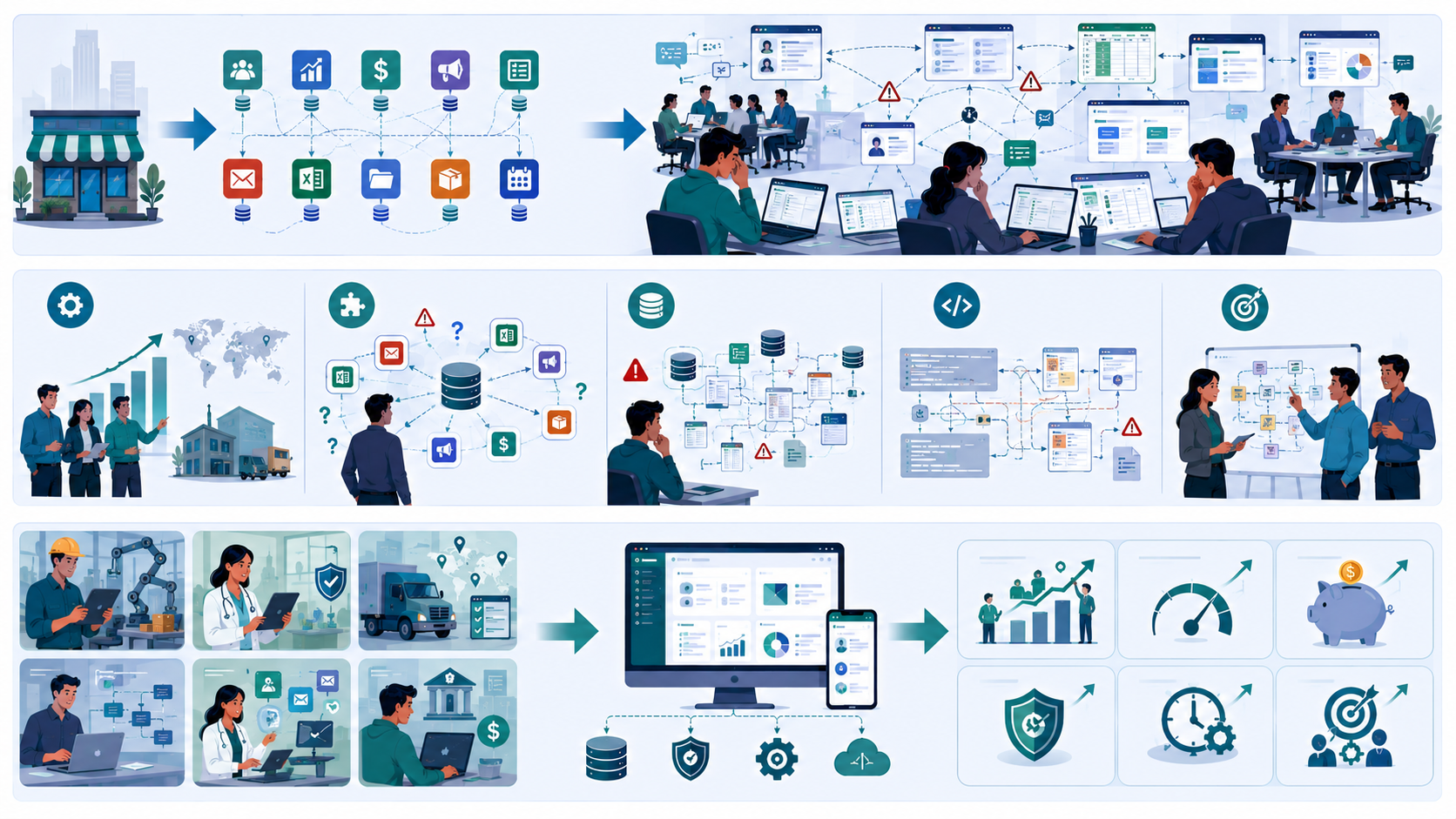
A CRM handles customer information.
An accounting platform manages invoices.
A project management application organizes work.
An inventory system tracks products.
Each application performs its own task reasonably well.
The challenge appears when these independent systems must work together.
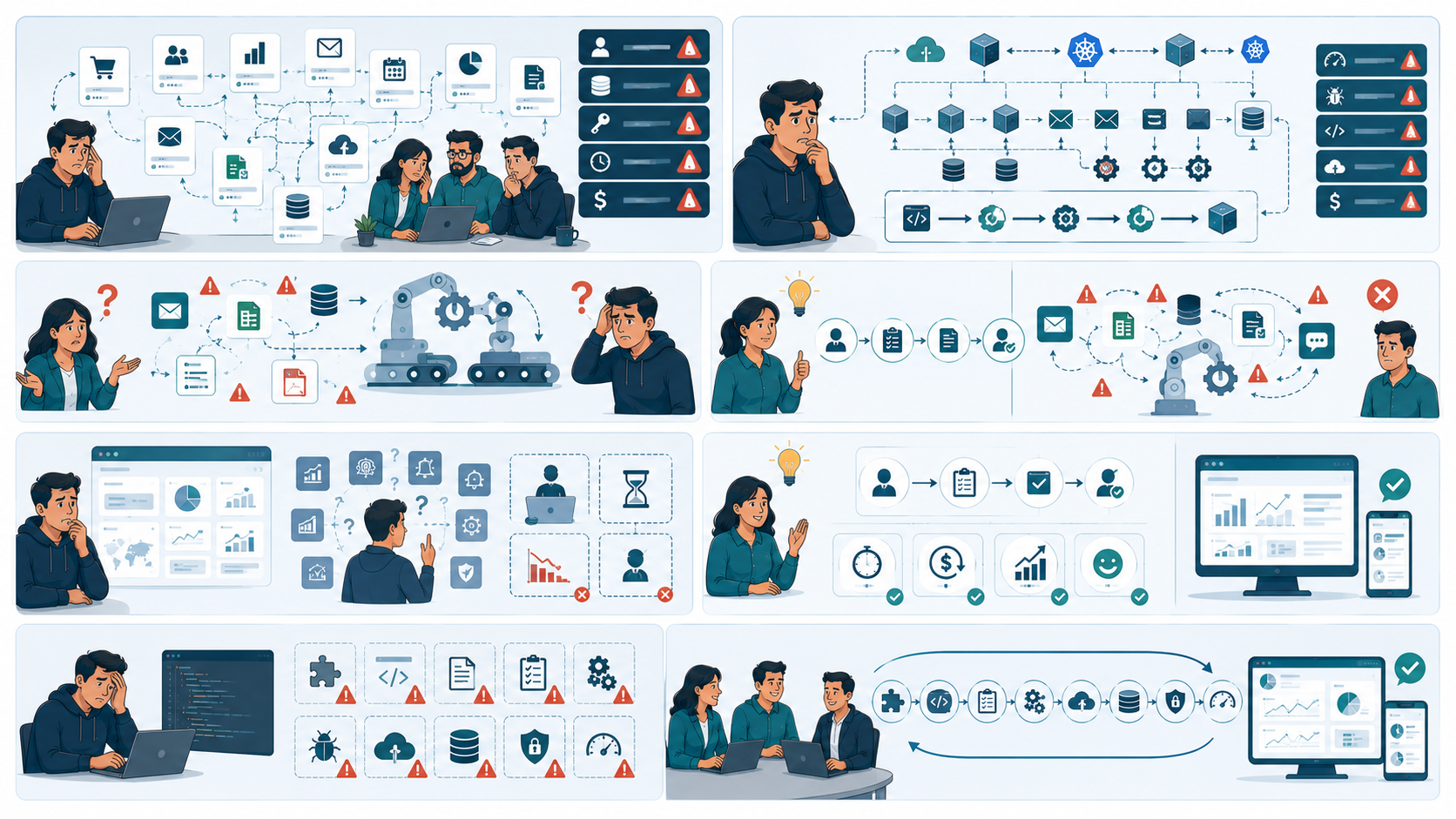
As businesses expand, employees begin entering the same customer information into multiple databases. Sales teams update one platform while operations update another. Finance exports spreadsheets every week because API integration between systems is limited or unavailable. Management builds dashboards manually because analytics are scattered across disconnected applications.
Eventually, software exists everywhere, but information flows nowhere.
Growth Changes the Requirements Faster Than Expected
One pattern I've seen repeatedly across SaaS companies and product teams is that business growth almost always happens faster than software planning.
A company may launch with five employees and one straightforward workflow.
Within eighteen months it may have:
- Multiple departments
- Remote development and operations teams
- Customer support staff
- External partners
- Compliance requirements
- More complex approval workflows
- Higher security expectations
- Performance requirements that didn't exist before
The original software stack wasn't designed for this level of operational complexity.
Instead of simplifying work, technology starts creating bottlenecks.
Every New Tool Introduces Another Integration Challenge
Many businesses try solving operational gaps by purchasing another application.
Need reporting?
Add another dashboard.
Need automation?
Add another platform.
Need collaboration?
Buy another subscription.
Need customer support?
Deploy another system.
Each purchase appears inexpensive on its own.
Collectively, however, they increase infrastructure complexity, maintenance effort, subscription costs, user management, security responsibilities, and integration work.
Soon the business owns dozens of disconnected software products.
Instead of one reliable workflow, employees constantly move between browser tabs while copying information manually.
The hidden cost isn't the subscription fee.
It's the productivity lost every single day.
Custom Development Becomes Valuable When Processes Create Competitive Advantage
Custom software shouldn't exist simply because a business wants unique technology.
It becomes valuable when existing platforms force the business to change proven operational processes instead of supporting them.
Examples include:
- A logistics company with unique shipment approval workflows.
- A healthcare provider managing specialized compliance documentation.
- A manufacturing business coordinating production across multiple facilities.
- A SaaS startup requiring customer-specific onboarding automation.
- A financial services firm integrating proprietary reporting across several internal systems.
In these situations, forcing standardized software onto specialized operations often reduces efficiency instead of improving it.
A custom application allows the software architecture to reflect how the business actually works rather than forcing employees to adapt to software limitations.
Technical Debt Often Starts Before the First Line of Code
One misconception is that technical debt only affects companies building their own software.
That's rarely true.
I've seen businesses accumulate technical debt without writing a single line of code.
The debt appears through disconnected platforms, duplicated databases, inconsistent reporting, manual approvals, spreadsheet-based workflows, and unsupported API integrations.
Every workaround introduces another operational dependency.
Every manual process increases maintenance.
Every disconnected system creates another opportunity for data inconsistency.
Eventually, leadership spends more time discussing software problems than business strategy.
At that point, the organization isn't constrained by customer demand or market opportunity.
It's constrained by its own technology stack.
The Business Problem Is Bigger Than Technology
Many founders assume software decisions belong exclusively to engineering teams.
In practice, they affect nearly every part of the business.
Poor integration slows operations.
Limited scalability restricts growth.
Inconsistent data affects decision-making.
Weak security increases compliance risk.
Manual workflows reduce productivity.
Disconnected systems hurt customer experience.
All of these issues directly influence operational efficiency and return on investment.
That is why custom software development should never begin with choosing a framework, cloud provider, or programming language.
It should begin with understanding which business processes create value, which workflows consume unnecessary time, and which systems prevent the organization from growing efficiently.
Only after those questions are answered does the technology architecture become clear.
In my experience, the most successful small businesses don't invest in custom software because it's trendy or innovative. They invest because they reach a point where customization becomes the simplest way to remove operational friction, improve collaboration, increase reliability, and build a scalable foundation for long-term growth.
Where Most Teams Make the Wrong Decision
One of the biggest mistakes I see isn't choosing the wrong technology. It's solving business problems by continuously adding more software instead of simplifying the overall system.
Many founders assume every operational challenge requires another platform. A new CRM, another reporting dashboard, another automation tool, another integration service. Individually, each purchase looks inexpensive and easy to justify. Together, they create a technology ecosystem that becomes increasingly difficult to manage.
I've worked with startup teams running more than fifteen SaaS subscriptions while only eight people actually used them. Every new application introduced another login, another database, another API, another maintenance responsibility, and another potential point of failure.
The business wasn't becoming more efficient.
It was becoming more complicated.
Copying Enterprise Architecture Too Early
Another common mistake is copying architecture from companies that operate at an entirely different scale.
It's easy to read engineering blogs from large technology companies and conclude that every growing business should adopt microservices, Kubernetes, event-driven systems, or complex DevOps pipelines.
In reality, those companies built those architectures because they had thousands of engineers, millions of users, and highly specialized engineering teams.
Most small businesses don't have those requirements.
I've seen startups with five developers spend months separating a simple application into multiple microservices. Instead of improving scalability, they introduced distributed debugging, service communication issues, deployment dependencies, API version management, and additional infrastructure costs.
The original monolithic application could have supported their growth for several more years.
Premature complexity rarely creates business value.
Automating Broken Workflows
Automation sounds attractive because it promises higher productivity.
The problem is that automation doesn't fix inefficient processes.
It simply executes them faster.
One project involved a customer onboarding workflow spread across four different applications. Instead of redesigning the process, the team invested weeks building automation between the existing systems.
The result?
The workflow became faster but remained confusing.
Employees still didn't know which application contained the correct customer information.
Automation amplified the underlying operational problem.
Before introducing automation, ask a simple question:
Would this workflow still make sense if every step were performed manually?
If the answer is no, redesign the workflow before automating it.
Chasing Features Instead of Solving Problems
Software vendors compete by adding features.
Businesses often compare platforms by counting those features.
In practice, feature count has very little relationship with operational value.
Most organizations consistently use only a small percentage of the functionality available inside enterprise software.
Everything else increases training time, complicates user interfaces, and creates unnecessary maintenance.
I've watched engineering teams spend months integrating advanced functionality that employees barely touched after launch.
Meanwhile, genuinely valuable improvements—such as reducing manual approvals or simplifying customer workflows—remained untouched.
The better question isn't:
"Which platform has the most features?"
It's:
"Which solution removes the most friction from our daily operations?"
Treating Custom Software as a One-Time Project
Another misconception is believing custom software development ends after deployment.
In reality, deployment is simply the beginning.
Business requirements evolve.
Customers change expectations.
Compliance rules are updated.
New integrations become necessary.
Performance requirements increase.
If the software architecture cannot adapt without major rewrites, maintenance quickly becomes expensive.
Successful custom applications aren't designed only for launch.
They're designed for continuous improvement.
That means thinking about maintainability from day one:
- Modular architecture
- Well-defined APIs
- Consistent coding standards
- Documentation
- Automated testing
- Reliable deployment workflows
- Database optimization
- Security reviews
- Performance monitoring
These investments rarely attract attention during project planning, but they determine whether the application remains reliable three years later.
Practical Fixes That Actually Work
After working with startup founders, SaaS companies, and growing product teams, I've noticed that successful custom software projects usually follow the same practical principles. Working with a US software development partner for small business operations helps growing companies map business processes, reduce disconnected tools, improve integrations, automate repeatable workflows, and build maintainable software around real operational needs.
None of them involve complicated technology.
They focus on reducing operational complexity before adding technical complexity.
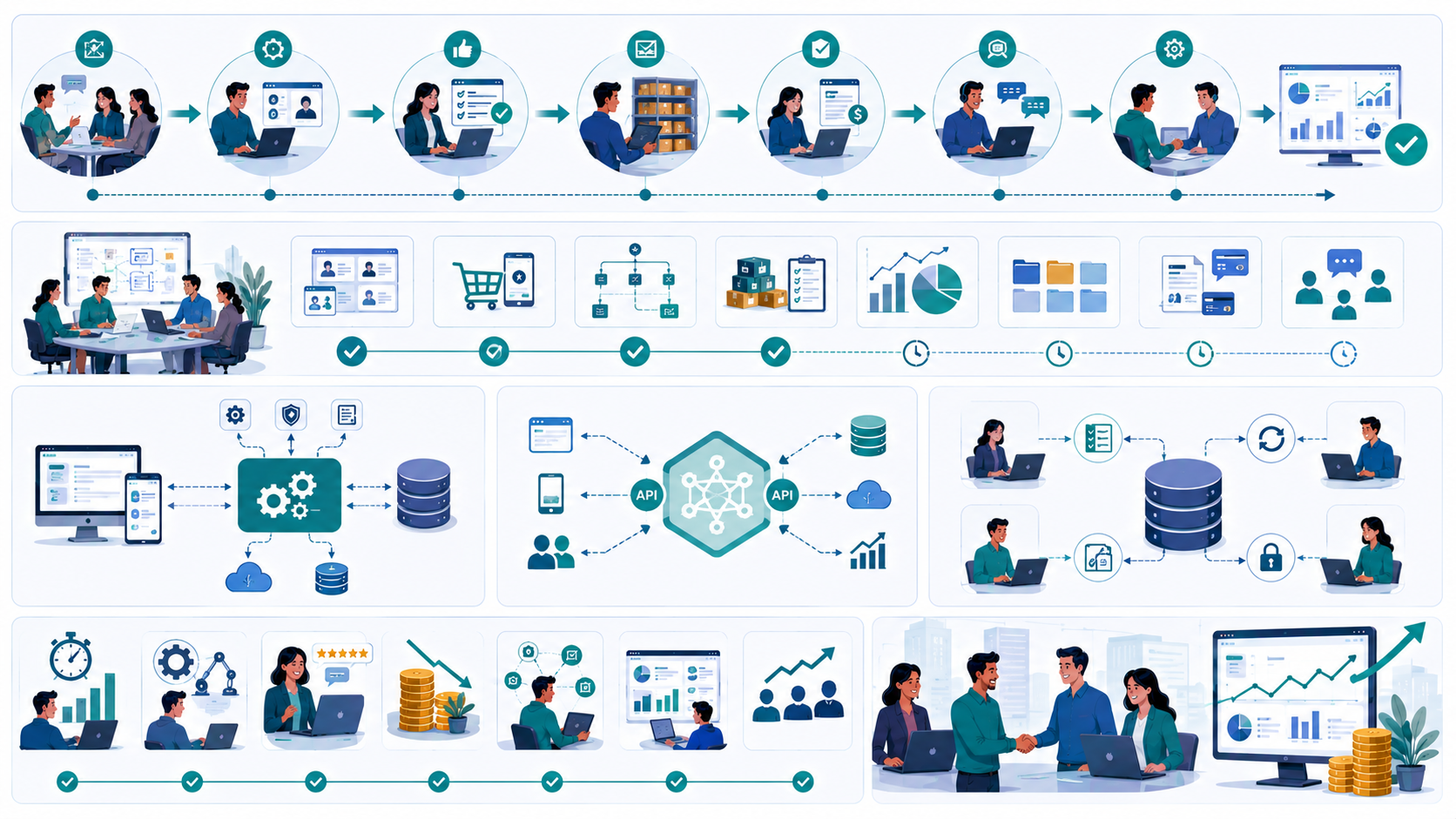
1. Map Business Processes Before Writing Code
Many development projects begin with feature lists.
That's backwards.
Instead, document how work currently moves through the business.
For example:
- Customer submits a request.
- Sales reviews the request.
- Operations approves it.
- Finance generates an invoice.
- Support receives implementation details.
Once the workflow is visible, unnecessary steps become obvious.
Sometimes removing one manual approval delivers more value than building an entirely new application.
2. Build Around Core Operations First
Every business has a handful of processes that directly generate value.
Focus development efforts there first.
For many small businesses, these include:
- Customer management
- Order processing
- Internal workflow automation
- Inventory management
- Reporting and analytics
- Document management
- Billing
- Team collaboration
Leave secondary improvements for later iterations.
Trying to solve every operational problem in version one usually delays deployment and increases project risk.
3. Keep the Architecture Simple
Simple systems are easier to understand, maintain, and improve.
For most growing businesses, a well-structured modular monolith offers a better balance than introducing multiple distributed services.
A practical architecture might include:
- A clear backend layer for business logic
- A responsive frontend for employees and customers
- A centralized database
- REST or GraphQL APIs for future integrations
- Cloud deployment with automated backups
- Role-based security
- Logging and monitoring from the beginning
This structure provides flexibility without unnecessary infrastructure overhead.
4. Design APIs for Future Growth
Even if the first release doesn't require external integrations, future versions probably will.
Partners may need access.
Customers may request integrations.
Accounting software may need synchronization.
Analytics platforms may consume business data.
Designing clean APIs early reduces future migration work.
An API should expose business capabilities rather than internal implementation details.
That approach keeps integration predictable while allowing backend systems to evolve independently.
5. Prioritize Data Consistency
Data problems become expensive surprisingly quickly.
When customer records exist in multiple databases, nobody knows which version is correct.
Instead:
- Define one authoritative data source.
- Minimize duplicate information.
- Validate inputs consistently.
- Automate synchronization where necessary.
- Audit critical business changes.
Reliable data improves reporting, customer support, compliance, and strategic decision-making.
6. Measure Business Outcomes, Not Technical Activity
Many engineering teams celebrate completed features.
Business leaders care about different metrics.
Ask questions such as:
- Did order processing become faster?
- Were manual tasks eliminated?
- Has customer response time improved?
- Did operational costs decrease?
- Are employees spending less time switching between systems?
- Has reporting become more accurate?
- Can the business handle higher customer volume without hiring additional staff?
Those outcomes demonstrate real return on investment.
Technology should support business growth—not become another operational burden.
A Practical Mindset That Consistently Works
Across dozens of projects, one lesson keeps repeating itself.
The most effective custom software isn't the system with the newest framework, the largest infrastructure, or the most sophisticated architecture.
It's the system that quietly removes friction from everyday operations.
When employees stop copying data between applications, when reporting becomes trustworthy, when deployments happen predictably, and when customers experience smoother workflows, the software is doing exactly what it should.
That kind of improvement rarely comes from adding more technology.
It comes from making thoughtful engineering decisions that balance scalability, reliability, security, maintainability, and long-term business value.
When This Approach Fails
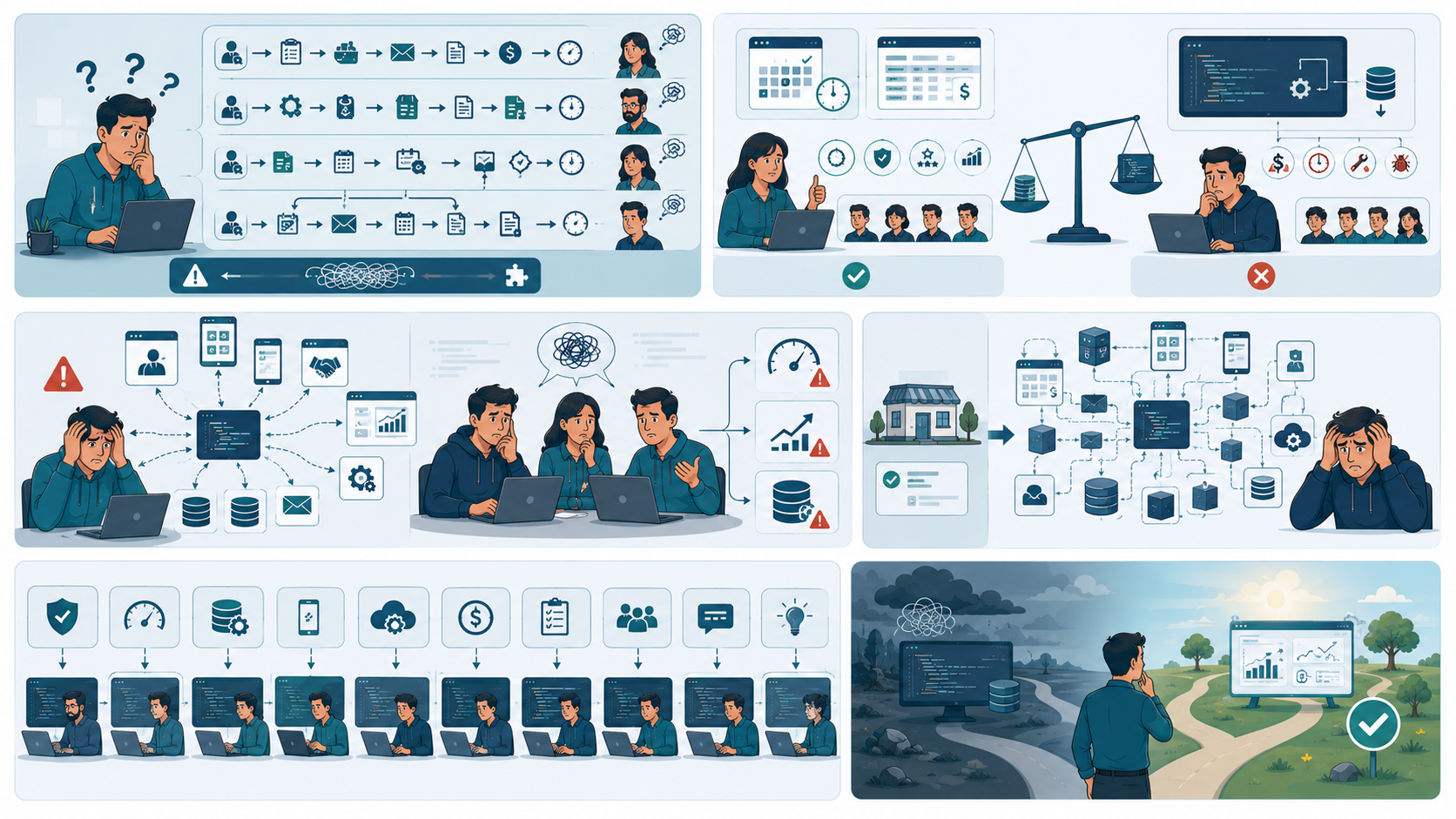
Custom software development is not the right answer for every small business. I've also seen companies spend significant time and budget building software that never delivered enough value because the business problem wasn't clearly defined.
One situation where custom development often struggles is when the company has not yet standardized its internal processes.
If employees complete the same task differently every week, developers have no stable workflow to build around. The software keeps changing because the business process keeps changing.
Another challenge appears when the expected return on investment doesn't justify the development effort.
For example, if a business needs a simple appointment booking system or a basic accounting solution, building a custom platform rarely makes financial sense. Mature commercial products already solve those problems reliably and receive continuous maintenance and security updates.
Team size also matters.
A small engineering team can successfully maintain a focused internal platform. But if the application expands into multiple customer portals, mobile applications, partner integrations, analytics platforms, and several independent backend systems, additional engineering capacity becomes necessary.
I've also seen businesses underestimate long-term maintenance.
Launching the application is only one milestone.
After deployment, the team must continue handling:
- Security updates
- Performance optimization
- Database maintenance
- API compatibility
- Infrastructure monitoring
- Cloud cost optimization
- Compliance requirements
- Customer feedback
- New feature requests
Ignoring these responsibilities eventually reduces system reliability and creates technical debt.
The lesson is simple: custom software succeeds when it solves an ongoing business problem, not when it's built simply because customization sounds attractive.
Sustainable Practices for Small Engineering Teams
The healthiest engineering teams I've worked with weren't the ones writing the most code.
They were the teams making thoughtful decisions that reduced unnecessary complexity.
Here are the practices that consistently produce better long-term outcomes.
Build for Today's Business While Preparing for Tomorrow
Trying to predict every future requirement usually leads to overengineering.
Instead, build a solid foundation that supports gradual growth.
A modular architecture, clean APIs, and well-organized databases provide enough flexibility without introducing unnecessary complexity.
Document Decisions, Not Just Code
Documentation shouldn't explain every function.
It should explain why important technical decisions were made.
Future developers can usually understand the code.
Understanding the reasoning behind architecture choices is much harder without documentation.
Keep records for:
- System architecture
- Integration flows
- Deployment process
- Database design
- API contracts
- Security decisions
- Business rules
This dramatically improves collaboration, especially for remote engineering teams.
Keep Deployment Predictable
Deployment should become routine rather than stressful.
Reliable deployment workflows generally include:
- Automated testing before release
- Version-controlled infrastructure
- Rollback procedures
- Backup verification
- Deployment checklists
- Post-release monitoring
Predictable releases reduce production issues and increase confidence across product, engineering, and operations teams.
Schedule Time for Maintenance
One mistake many growing companies make is dedicating every sprint to new features.
Maintenance deserves its own capacity.
Regularly review:
- Slow database queries
- Outdated dependencies
- API performance
- Cloud resource usage
- Security vulnerabilities
- Logging quality
- Monitoring alerts
- Technical debt backlog
Small improvements made consistently prevent expensive rewrites later.
Protect Developer Focus
Context switching quietly reduces productivity.
When developers constantly move between support tickets, feature work, infrastructure issues, and urgent requests, overall delivery slows down.
Successful engineering teams protect focused development time by improving collaboration between product managers, support teams, and developers.
Clear priorities produce better software than constant urgency.
Measure Operational Improvements
Technology should improve measurable business outcomes.
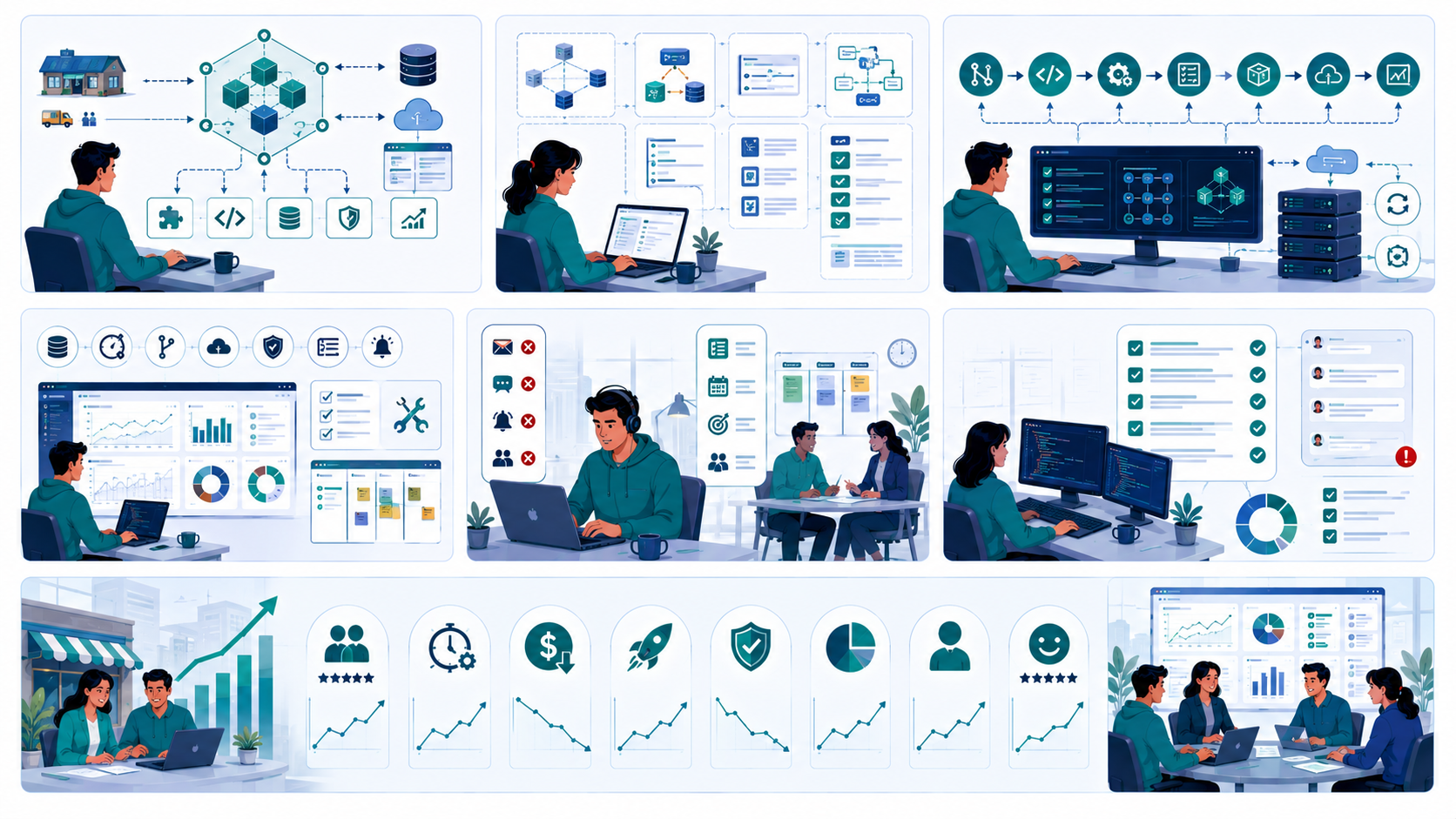
Review metrics such as:
- Faster customer response times
- Reduced manual processing
- Lower operational costs
- Improved deployment success rates
- Fewer production incidents
- Better reporting accuracy
- Higher employee productivity
- Greater customer satisfaction
These indicators reveal whether the software is creating real business value.
Conclusion
The biggest mistake I see small businesses make is assuming that buying more software automatically solves operational problems.
In many cases, it simply introduces more systems, more integrations, and more complexity.
Custom software development becomes valuable when existing platforms begin limiting growth instead of supporting it.
That doesn't mean every business should replace commercial applications. It means identifying the workflows that create the most operational friction and solving those problems with a solution designed around the business rather than forcing the business to adapt to generic software.
Over the years, I've learned that successful projects rarely stand out because of the technologies they use.
They stand out because the architecture stays simple, the workflows remain clear, the data is reliable, and the software continues supporting the business as it grows.
For small businesses in the USA, that's usually where the strongest long-term return on investment comes from—not from building the biggest platform, but from building the right one.
Custom Software Development For Small Businesses In Usa: FAQs
Yes, when standard software creates operational bottlenecks or requires constant manual work. If your business has unique workflows, customer processes, or integration requirements, custom software can improve efficiency and deliver a stronger long-term ROI.
Consider custom development when multiple applications no longer work together efficiently, manual data entry is increasing, reporting is inconsistent, or existing platforms cannot support business growth without costly workarounds.
The timeline depends on the project's complexity. A focused internal business application may take a few months, while a larger platform with multiple integrations, dashboards, and customer-facing features can require considerably more time. Starting with an MVP and expanding in phases is usually the most practical approach.
Not always. For many startup teams and growing businesses, a well-structured modular monolith is easier to maintain, deploy, and scale. Microservices become more valuable when independent teams, high traffic, or complex distributed systems justify the added operational overhead.
Reduce technical debt by keeping the architecture simple, documenting key decisions, reviewing code regularly, automating testing and deployment, monitoring system performance, and scheduling ongoing maintenance instead of focusing only on new features.
Reference
Written by

Paras Dabhi
VerifiedFull-Stack Developer (Python/Django, React, Node.js)
I build scalable web apps and SaaS products with Django REST, React/Next.js, and Node.js — clean architecture, performance, and production-ready delivery.
LinkedIn