Custom Software Development Pricing In Ahmedabad

A founder once showed me three quotes for the same software project.
One was ₹3 lakh, another ₹9 lakh, and the third almost ₹18 lakh.
Naturally, the first question was: “Why are these prices so different if the product idea is the same?”
If you’re planning custom software development in Ahmedabad, this situation is extremely common.
The confusing part is that most businesses compare quotes without understanding what is actually included.
Why Custom Software Development Pricing Varies in Ahmedabad

From my experience working in small teams, startups, and client agencies, pricing differences usually come from how the project is scoped and who is building it, not just the city or company.
Developer experience levels
Developer experience is one of the biggest factors affecting software development pricing. Senior developers usually charge more because they bring deeper technical knowledge and problem-solving skills. Their experience often helps avoid architectural mistakes that can become costly later.
In Ahmedabad, you’ll see big differences between:
- Junior freelancers
- Mid-level developers
- Senior engineers with system architecture experience
A developer who has built scalable systems before will naturally charge more than someone still learning how production systems work.
Why experience changes pricing
Experienced developers tend to build systems that are more scalable, secure, and easier to maintain. This reduces the chances of major issues during later stages of development. As a result, their higher rates often reflect long-term value rather than just coding time.
The difference isn’t just skill — it affects:
- Code quality
- Architecture decisions
- Long-term scalability
These factors influence the total project cost over time.
Freelancer vs agency structure
Freelancers and development agencies structure their pricing very differently. Freelancers typically charge for development work only, while agencies often include design, testing, project management, and deployment support. This difference in scope is a major reason why quotes vary.
A freelancer may estimate only:
- Development hours
But agencies usually include:
- Project management
- UI/UX design
- QA testing
- Deployment
- Documentation
Scope differences most businesses miss
I’ve seen founders compare a freelancer’s ₹3 lakh quote with an agency’s ₹10 lakh quote without realizing the scope is completely different.
Team size involved in the project
Some projects require multiple specialists to complete efficiently. A typical custom software project might involve frontend developers, backend developers, designers, and QA testers. When more roles are required, the overall project cost naturally increases.
A typical custom software system may need:
- Backend developer
- Frontend developer
- UI designer
- QA tester
- DevOps support
Why multiple roles increase cost
Freelancers sometimes try to handle everything themselves, which lowers the price but can slow down development.
Project complexity and unclear requirements
Software pricing depends heavily on how complex the system is and how clearly the requirements are defined. When project details are vague, developers have to estimate based on assumptions. This often leads to large variations in pricing between different teams.
Many projects start with vague ideas like:
- “We need a CRM system”
- “We want a marketplace platform”
- “We want something like Uber but for X”
Why unclear scope affects pricing
If the project scope is not clearly defined, developers may interpret requirements differently. One team might include advanced features while another estimates only the basic functionality. These differences create large gaps between development quotes.
The real cost depends on:
- user roles
- automation rules
- integrations
- reporting features
Without clear requirements, developers estimate differently.
Hidden work most people forget
Many businesses assume software development only involves writing code. In reality, a large portion of the work happens in testing, debugging, optimization, and deployment. These tasks are essential for stability but are often overlooked during initial budgeting.
There is also:
- Testing
- Bug fixing
- Deployment
- Security configuration
- Database design
- Performance optimization
The hidden time factor
Activities like bug fixing, performance testing, and system configuration can take significant time. In many real projects, these tasks can account for up to 30–40% of the total development effort. Ignoring them can lead to unrealistic cost expectations.
Where Most Businesses Misunderstand Software Pricing

After working with many startup founders, I’ve noticed some common misunderstandings.
Expecting a fixed price too early
Many founders request a fixed project cost before providing detailed requirements. Without proper planning and documentation, accurate estimates are difficult to produce. Developers often need deeper discussions before determining realistic budgets.
Why early quotes are inaccurate
Early quotes are often based on assumptions rather than detailed specifications. As the project becomes clearer, additional features or technical challenges may appear. This can cause pricing adjustments later in the development process.
Comparing hourly rates without comparing scope
I’ve seen founders say:
Businesses sometimes compare developers purely based on hourly rates. However, pricing differences often come from the services included in the project. A lower hourly rate may exclude tasks that another team includes in their estimate.
What actually matters
Instead of focusing only on hourly cost, businesses should evaluate project scope, technical expertise, and long-term support. These factors play a bigger role in overall project success. A slightly higher rate may lead to better long-term results.
Instead of comparing rates, businesses should compare:
- feature scope
- development approach
- long-term scalability
Underestimating backend complexity
The backend of a system handles core functionality such as data management, integrations, and business logic. While users mainly see the interface, most development effort happens behind the scenes. This complexity often increases project timelines and costs.
Where the real work happens
Backend development includes tasks like database architecture, authentication systems, and API integrations. These components ensure the software runs reliably and securely. Because of this complexity, backend work often takes more time than expected.
Most complexity lives in:
- backend logic
- database design
- integrations
- security systems
Ignoring maintenance costs
Many businesses assume development costs end once the product launches. In reality, software requires ongoing updates, bug fixes, and security improvements. Maintenance plays an important role in keeping the system stable over time.
Ongoing work after launch
After release, developers often continue improving the system based on user feedback. Tasks such as performance optimization and feature updates become part of the maintenance process. Planning for this stage helps avoid unexpected expenses.
After release, teams still handle:
- bug fixes
- feature updates
- server upgrades
- API changes
Practical Ways to Estimate Custom Software Development Costs
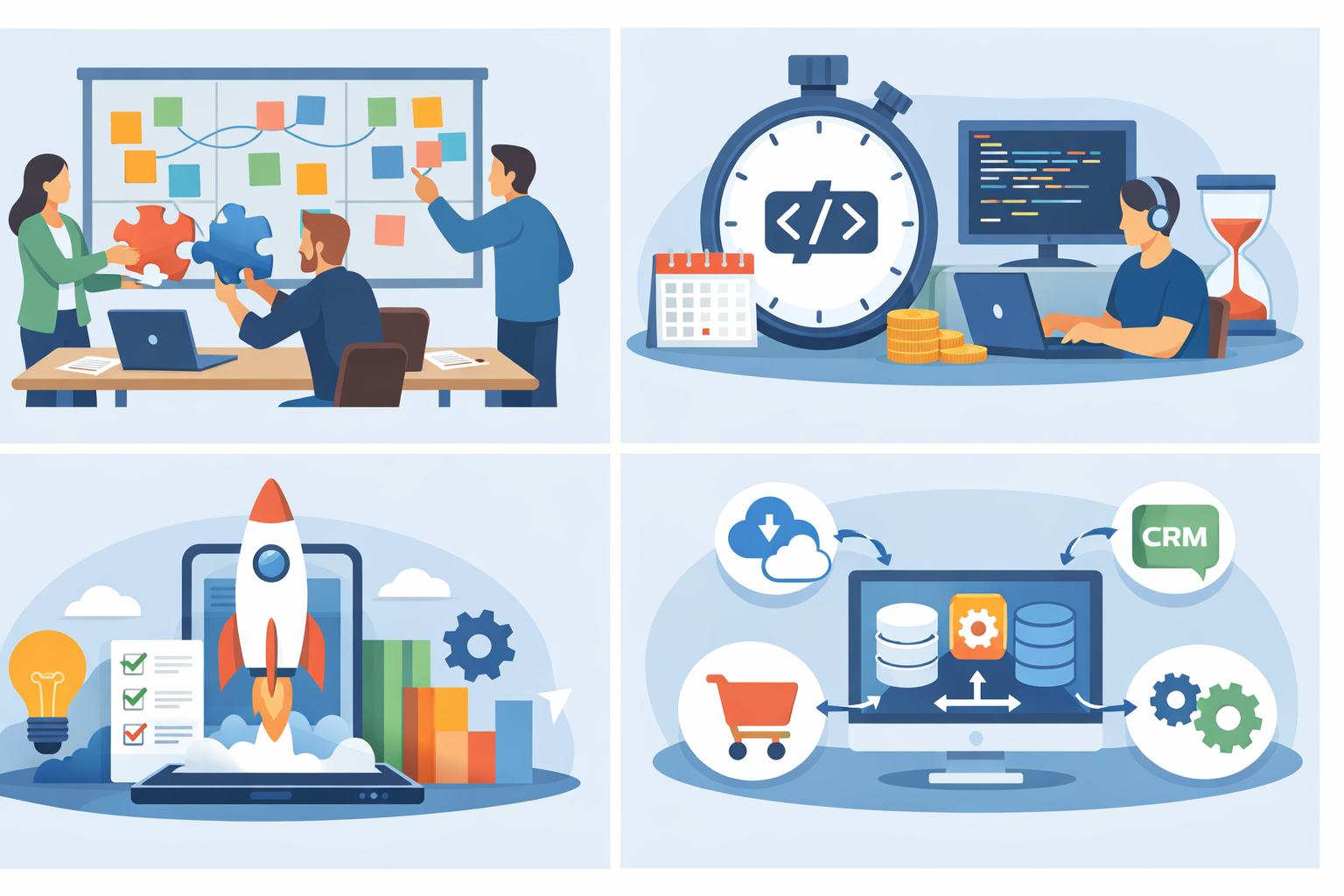
Businesses can estimate software costs more realistically using a few simple methods.
Break the project into modules
Dividing a software project into smaller modules makes cost estimation easier. Each module can be analyzed and estimated individually. This approach helps both developers and businesses understand how the total project cost is calculated.
Instead of estimating everything together, divide the system into modules.
Example modules:
- User authentication
- Dashboard
- Data management
- Reporting
- Admin panel
Why modular estimation works
When projects are broken into modules, developers can estimate time and effort more accurately. It also allows businesses to prioritize important features first. This method reduces risk and makes budgeting more manageable.
Estimate developer hours
Software pricing often depends on the number of hours required to complete the work. Developers estimate how long each feature will take to build and test. Multiplying these hours by hourly rates provides a realistic cost range.
Typical hourly ranges in Ahmedabad:
- Junior developer → ₹600–₹1000/hour
- Mid-level developer → ₹1200–₹2000/hour
- Senior developer → ₹2500+/hour
Example estimation
For example, a simple internal management system might require several hundred development hours. Larger systems with integrations and automation can require even more time. This is why many custom software projects reach several lakhs in cost.
A mid-sized business system may require:
- 500–1000 development hours
This is why many custom software projects reach several lakhs.
Start with an MVP instead of a full product
Building a full-featured system from the beginning can significantly increase development costs. A better approach is to start with a Minimum Viable Product (MVP). This version focuses only on the core features needed to launch the product.
Example MVP approach
Instead of building a complex platform immediately, businesses can start with essential features like user accounts and basic workflows. Once the system proves useful, additional features can be added gradually. This approach reduces financial risk.
Instead of building a full marketplace, start with:
- user registration
- core transactions
- simple admin dashboard
Additional features can be added later.
Clarify integrations early
Many business systems rely on integrations with external platforms. Examples include payment gateways, CRMs, and logistics systems. Identifying these integrations early helps developers provide more accurate estimates.
Common integrations
Typical integrations in business software include payment processing, accounting tools, and third-party APIs. Each integration requires additional development and testing. Understanding these requirements helps prevent unexpected cost increases.
Examples include:
- payment gateways
- ERP systems
- logistics APIs
- CRM platforms
When Cost Estimates Still Fail
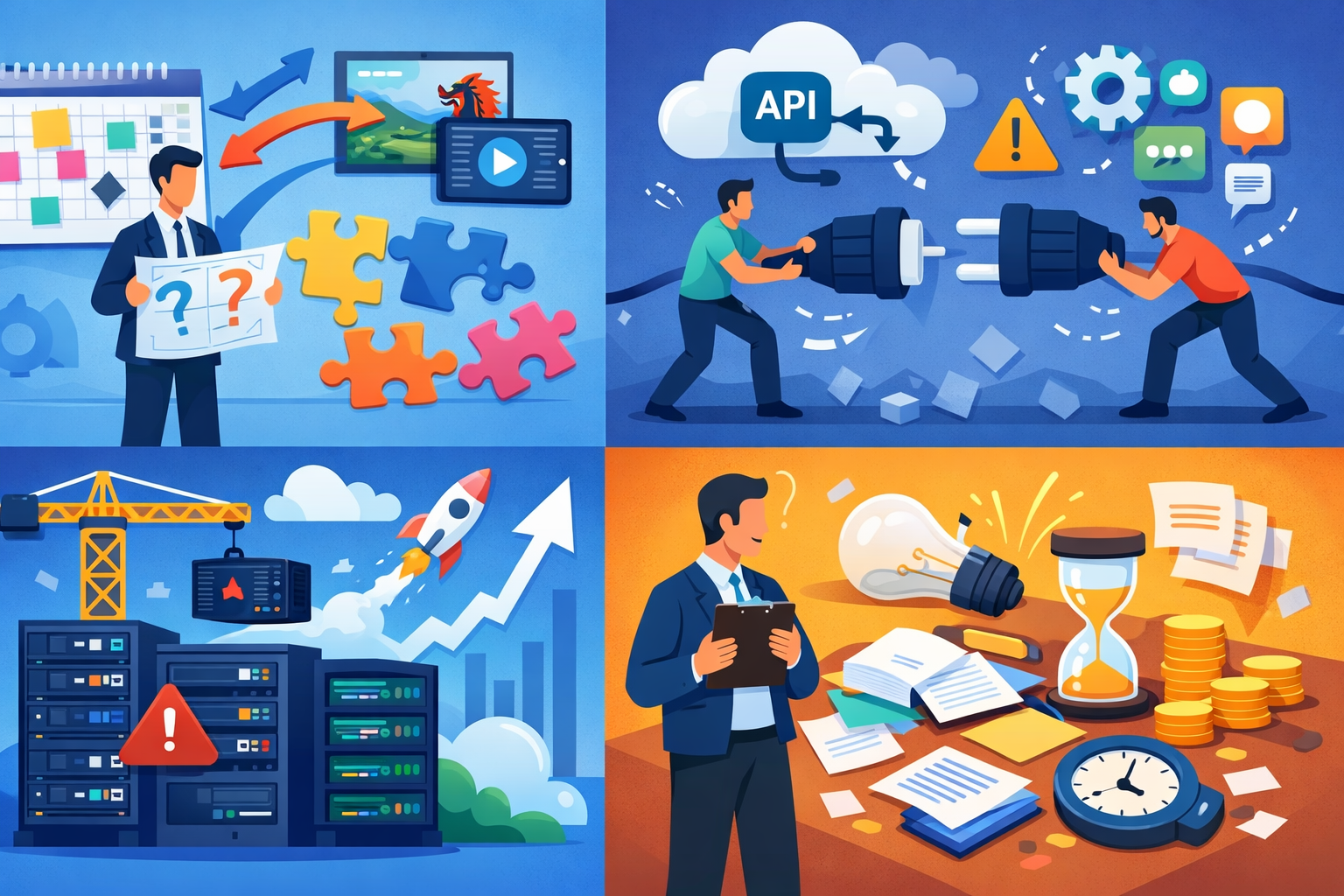
Even good estimates can change.
Scope changes during development
It is common for businesses to request new features once development begins. As the system evolves, new ideas or requirements may appear. These changes can increase both development time and project cost.
Third-party integration challenges
External APIs and services do not always behave exactly as expected. Developers may encounter limitations or undocumented features during integration. These challenges can slow development and increase overall effort.
Common API issues
Typical API issues include outdated documentation, request limitations, or unexpected data formats. Developers often need additional time to troubleshoot and adjust integrations. This can affect both timelines and budgets.
- incomplete documentation
- unexpected limitations
- changing endpoints
Infrastructure scaling
As software gains more users, the system infrastructure may need to scale. This can involve upgrading servers, optimizing databases, or improving system architecture. These changes require additional technical work.
Poor initial planning
Projects that start without clear planning often face delays and cost increases. When requirements are incomplete, developers may need to redesign parts of the system later. This can significantly impact the project budget.
Best Practices for Planning a Realistic Software Development Budget

These practices help businesses control costs.
Start with a clear feature list
Before requesting development quotes, businesses should define the main features they need. Even a simple feature list can help developers understand the project scope. This makes cost estimates much more accurate.
Before requesting quotes, define:
- core features
- user roles
- workflows
Budget for maintenance
Software maintenance should be considered part of the overall project budget. Regular updates and improvements help ensure the system remains secure and reliable. Ignoring maintenance can lead to larger problems later.
Recommended planning
A common guideline is to allocate around 15–20% of the development cost each year for maintenance. This budget covers updates, bug fixes, and infrastructure adjustments. Planning ahead helps avoid unexpected expenses.
Avoid choosing purely based on price
Selecting a development team only because they offer the lowest quote can be risky. Lower prices sometimes mean reduced testing, poor documentation, or limited support. These issues may lead to higher costs in the long run.
Work in phases
Breaking a project into development phases makes budgeting easier to manage. Businesses can launch an MVP first and expand the system gradually. This approach reduces risk while allowing the product to evolve over time.
Example phases
- MVP development
- Feature expansion
- Automation and scaling
Conclusion
The biggest reason custom software development pricing in Ahmedabad varies so much is not just developer hourly rates.
Pricing differences usually come from:
- unclear project scope
- different development approaches
- varying developer experience
- hidden technical work
Businesses should focus on understanding project complexity first, rather than simply comparing quotes.
Once scope becomes clear, development pricing becomes much easier to evaluate.
FAQ
Costs vary depending on complexity, but many business systems typically start from a few lakhs and increase based on features and integrations.
Quotes vary because developers estimate different scopes, experience levels, and support requirements.
Freelancers may cost less initially, but agencies usually include testing, project management, and long-term support.
Start with an MVP and limit features in the first version to control development budgets.
About the Author
Paras Dabhi
VerifiedFull-Stack Developer (Python/Django, React, Node.js) · Stellar Code System
Hi, I’m Paras Dabhi. I build scalable web applications and SaaS products with Django REST, React/Next.js, and Node.js. I focus on clean architecture, performance, and production-ready delivery with modern UI/UX.

Paras Dabhi
Stellar Code System
Building scalable CRM & SaaS products
Clean architecture · Performance · UI/UX