Enterprise software development services company in india
I’ve worked with several startups that decided to hire an enterprise software development services company in India to build their core platform.
On paper, it always looks like the right move. Lower cost, experienced engineers, and faster development cycles.
But after a few months, founders often start asking questions like:
“Why are features taking longer than expected?”
“Why does the development team keep asking for clarification?”
In most cases, the problem isn’t developer capability or cost.
The real issue is the mismatch between how startups operate and how enterprise development teams are structured.
Why This Problem Actually Happens
Enterprise development teams and startups operate with very different expectations.
Startups move quickly and often change direction based on product feedback. Enterprise development companies typically rely on more structured workflows.
That difference creates friction.
Enterprise Processes Are Built for Stability
Enterprise software teams usually follow structured processes designed to deliver predictable and reliable outcomes. These processes include defined workflows, approvals, and documentation to reduce risk in large projects. While this approach works well for long-term enterprise systems, it can sometimes feel slower for startups that are used to rapid changes and quick decisions.
Multiple layers of communication
In many enterprise development teams, communication typically passes through several roles such as account managers, project managers, and tech leads before reaching developers. While this structure improves coordination and accountability, it can sometimes slow down decision-making and feedback.
Requests often pass through several roles:
Typical enterprise workflow
- Founder → Account Manager → Project Manager → Tech Lead → Developer
Each step improves accountability but slows communication.
In a startup environment, developers often talk directly with decision makers. When that direct connection disappears, small questions can delay work for hours or even days.
Requirements Are Expected to Be Stable
Enterprise development teams usually prefer clearly defined and stable requirements before starting development. This helps them plan timelines, resources, and technical architecture more accurately, but it can create challenges when product requirements change frequently.
Enterprise software teams usually assume that requirements are finalized before development starts.
Startups rarely work like that.
Startups refine features during development
Startups often improve or adjust features while the product is being built based on early user feedback or testing results. This flexible approach helps them move faster, but it can sometimes create confusion for development teams that expect fixed requirements.
Product ideas evolve as founders learn more about users.
Example
A startup might release a feature quickly to test user behavior.
An enterprise development team may prefer detailed specifications before starting implementation.
This difference in working style often creates delays and frustration on both sides.
Where Most Developers or Teams Get This Wrong

A lot of the issues I’ve seen come from incorrect expectations rather than technical problems.
Treating Enterprise Teams Like Startup Teams
Many founders assume enterprise development teams will work with the same flexibility as small startup teams. However, enterprise teams usually follow structured processes and defined workflows, which means they often require clearer planning and documentation before starting work.
Enterprise teams rely on structure
They usually require:
- documented requirements
- defined milestones
- formal sprint planning
Why this matters
Without structure, developers may hesitate to proceed because they’re unsure whether decisions will change later.
Expecting Speed Without Clear Ownership
In many projects, teams expect fast development but fail to define who is responsible for product or technical decisions. Without clear ownership, developers often pause work to wait for approvals or clarification, which slows progress.
Developers wait for decisions
When product or technical decisions are not clearly owned by someone, developers often have to pause their work and wait for clarification. This delay can slow development progress, even if the actual task itself is simple.
Result
Small decisions that should take minutes sometimes take days.
Constantly Changing Priorities
In many startups, product priorities change frequently as founders respond to user feedback or new ideas. While this flexibility can help improve the product, constant shifts can disrupt development planning and slow down progress.
Enterprise teams depend on sprint planning
Enterprise development teams usually organize work through sprint planning, where tasks are scheduled and prioritized for a specific time period. When priorities change frequently during a sprint, it can disrupt the workflow and make it harder for the team to deliver planned features on time.
Impact
Instead of writing code, teams spend time reorganizing the development plan.
Practical Solutions That Work in Real Projects

After working with both startups and enterprise development companies in India, a few practical habits make collaboration much smoother.
Assign a Technical Decision Maker
Every project needs someone responsible for making technical and product decisions quickly. When a clear decision maker is present, developers can move forward without waiting for approvals or clarification from multiple people.
Possible roles
- Technical founder
- Fractional CTO
- Senior developer
Why this role matters
Developers need a single source of technical direction to avoid delays.
Break Development Into Smaller Milestones
Instead of planning large features all at once, breaking development into smaller milestones helps teams focus on manageable tasks. This approach makes progress easier to track and allows adjustments without disrupting the entire project.
Example of smaller milestones
- authentication system
- basic API structure
- first dashboard prototype
Benefit
Smaller milestones allow teams to move faster while still maintaining structure.
Reduce Communication Layers
Too many communication layers can slow down information flow between developers and decision makers. Allowing more direct interaction helps resolve questions faster and keeps development moving without unnecessary delays.
Weekly technical sync
A short weekly technical meeting helps developers and decision makers stay aligned on priorities and progress. It also provides a quick space to resolve blockers before they slow down development.
Typical outcome
A 30-minute discussion often resolves issues that would otherwise take days through message chains.
Use Simple Documentation
Clear but lightweight documentation helps developers understand feature requirements without confusion. Even short notes about goals, expected behavior, and edge cases can reduce repeated questions and keep development moving smoothly.
Keep documentation lightweight
Documentation doesn’t need to be long or complex to be useful. Short, clear notes about features, workflows, and key decisions are usually enough for developers to understand what needs to be built.
Helpful format
- feature goal
- expected behavior
- edge cases
- user flow example
When This Approach Does NOT Work

Hiring an enterprise software development services company in India is not always the right choice.
Very Early Stage Startups
In very early-stage startups, the product idea is often still evolving and changing frequently. Because of this uncertainty, structured development processes can feel slow and make it harder to experiment with new ideas quickly.
Better approach
At a very early stage, it’s usually better to work with a small and flexible development setup. A smaller team can experiment faster, test ideas quickly, and adapt the product without heavy processes slowing things down.
Products That Require Rapid Experimentation
Some products need constant testing and quick changes to find what actually works for users. In these cases, development teams must move quickly and adjust features frequently, which can be difficult within structured enterprise workflows.
Examples
- AI prototypes
- early consumer apps
- experimental SaaS tools
Why enterprise teams struggle here
Structured workflows make constant experimentation difficult.
Founders Who Want Minimal Involvement
Some founders expect the development team to handle everything without much input from their side. In reality, developers still need product direction and priorities from the founder to build the right features and move the project forward.
Enterprise teams execute — they don’t define products
Without product guidance
Projects can drift without clear priorities.
Best Practices for Small Development Teams
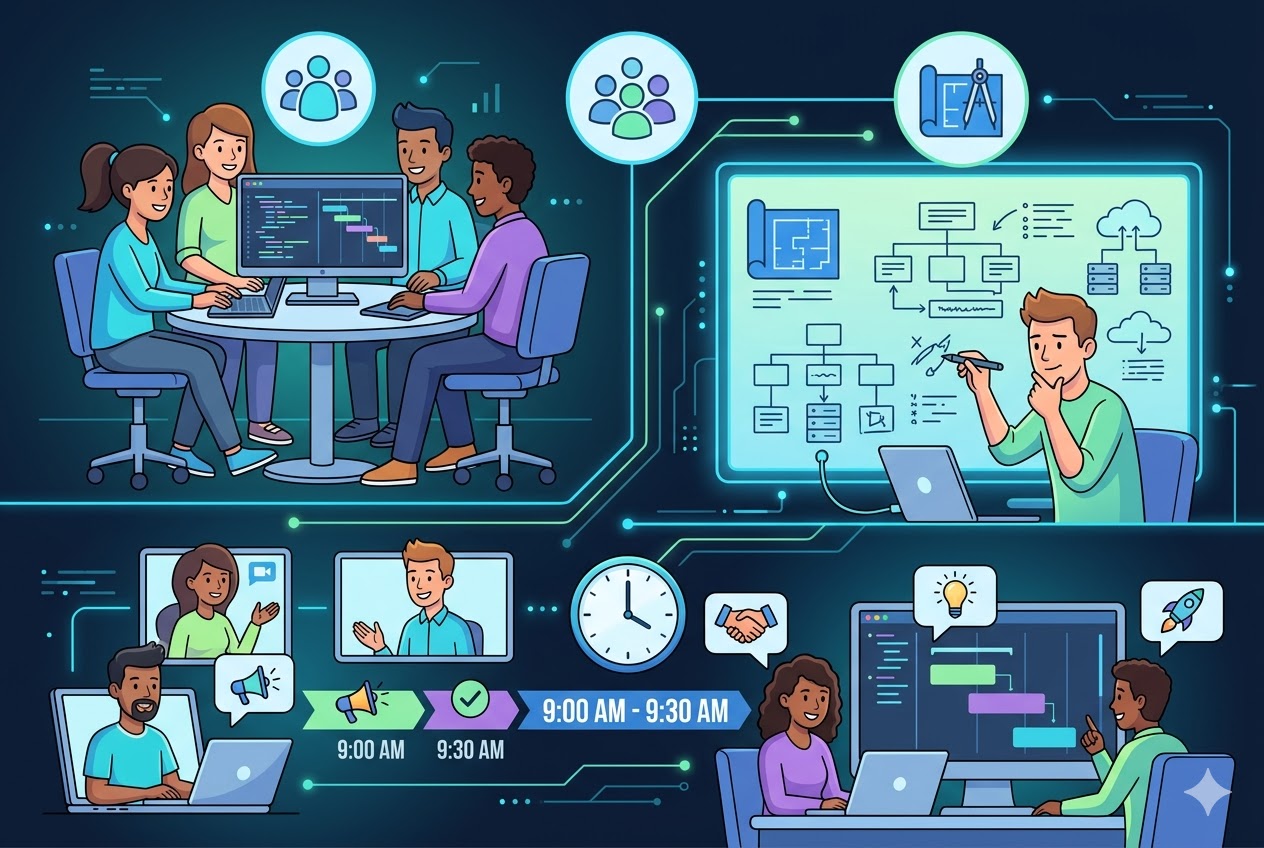
If a startup works with an enterprise software development company, a few habits improve long-term success.
Keep the Initial Team Small
Starting with a small development team helps maintain faster communication and clearer responsibilities. Smaller teams can make decisions quickly and adapt to changes without the coordination challenges that larger teams often face.
Recommended starting structure
- 2–3 developers
- 1 technical lead
Why small teams work better
Smaller teams communicate faster and make decisions quicker.
Document Architecture Early
Documenting the basic system architecture early helps the team understand how different parts of the application will connect and work together. This clarity reduces confusion later and prevents costly changes as the project grows.
Important areas to document
- API structure
- database models
- service responsibilities
Long-term benefit
This reduces technical debt and avoids costly rewrites.
Create Structured Communication Windows
Setting fixed times for communication helps teams stay aligned without constant interruptions. Regular check-ins, like weekly reviews or technical discussions, allow issues to be addressed quickly while keeping development work focused.
Typical schedule
- weekly product review
- weekly technical sync
Result
Communication stays efficient without slowing development.
Conclusion
Working with an enterprise software development services company in India can be very effective for startups, but only if both sides understand how each other operates.
Startups move quickly and often change direction. Enterprise development teams focus on stability, planning, and predictable delivery.
When communication is clear, milestones are small, and product decisions have clear ownership, the collaboration becomes far more productive.
Most problems don’t come from technical limitations.
They come from mismatched expectations.
FAQ
It can work well if the startup has clear product direction and structured communication with the development team.
Their workflow depends on clear requirements to maintain predictable delivery timelines.
Starting with two or three developers and a technical lead is usually easier to manage.
They can if the project requirements change constantly without structured planning.
Expecting developers to make product decisions without clear guidance.
About the Author
Paras Dabhi
VerifiedFull-Stack Developer (Python/Django, React, Node.js) · Stellar Code System
Hi, I’m Paras Dabhi. I build scalable web applications and SaaS products with Django REST, React/Next.js, and Node.js. I focus on clean architecture, performance, and production-ready delivery with modern UI/UX.

Paras Dabhi
Stellar Code System
Building scalable CRM & SaaS products
Clean architecture · Performance · UI/UX