
How Local Businesses Build Software In Ahmedabad
I've worked with multiple local businesses in Ahmedabad trying to build internal systems — CRMs, inventory tools, or simple customer apps.
Most of these projects don't fail immediately. They just keep dragging.
Deadlines slip, costs increase, and the final product feels incomplete or hard to use.
The real issue is not coding quality. It's the mismatch between business expectations and how software actually gets built.

Why this problem actually happens
In most local businesses, software is treated like a one-time task.
Something like: "We'll build it once, and then it will run the business."
That assumption breaks quickly.
No clear product thinking
Most local projects begin with a vague idea instead of a clearly defined workflow. There's usually no clarity on how users will actually interact with the system in daily operations. Because of this, developers end up guessing requirements as they go. Over time, the product feels disconnected from the real needs of the business.
Budget-first decisions
In many cases, decisions are driven primarily by cost rather than long-term usability or structure. This leads to cutting corners early in development, especially in planning and architecture, which is why thoughtful Custom Software Development matters much more than most local businesses expect at the start. While it may seem cost-effective at first, these shortcuts create bigger issues later. The project often ends up exceeding the original budget due to rework.
No technical ownership
When no one takes responsibility for technical decisions, the project lacks direction. Developers simply follow instructions without questioning whether they are sustainable. This becomes even riskier in products that may later expand into broader internal tools, customer portals, or operational systems. This results in inconsistent implementations across different parts of the system. Eventually, the software becomes difficult to maintain or scale.
Rush to launch
Local businesses often push for quick delivery to start using the system as soon as possible. While speed is important, skipping planning and validation creates fragile systems. Features may work individually but fail under real usage conditions. This leads to more time spent fixing issues than building new functionality.
Communication gaps
Business owners usually explain requirements in terms of operations, while developers think in terms of features and logic. This difference in perspective creates misunderstandings early in the project. Small misinterpretations can turn into major functional issues later. Without proper alignment, the system rarely matches expectations.
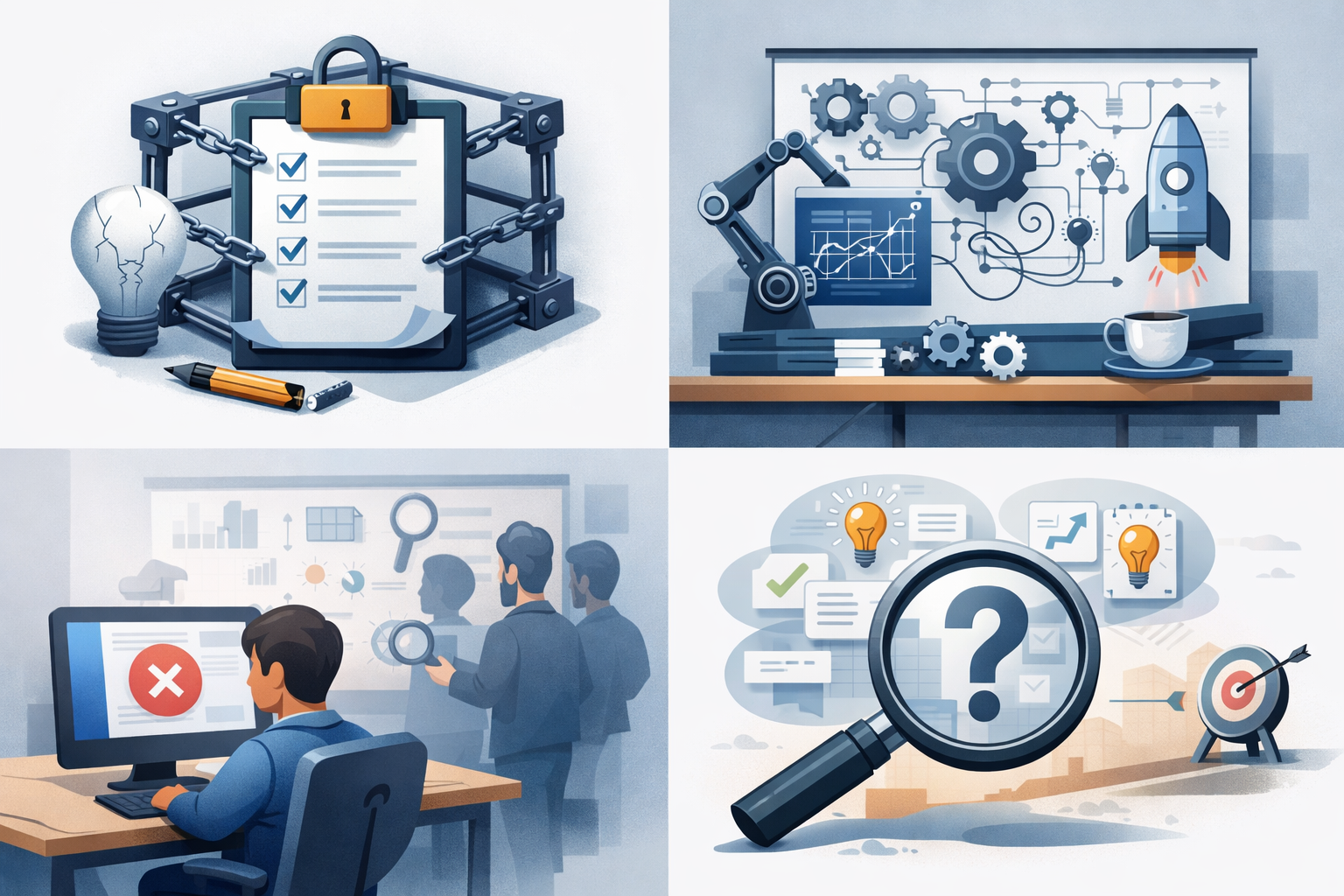
Where most developers or teams get this wrong
It's not just the business side. Developers make this worse in many cases.
Treating requirements as fixed
Many teams assume that requirements will remain unchanged once development begins. In reality, businesses refine their needs after seeing the system in action. This leads to constant changes that disrupt the development process. As a result, timelines stretch and frustration increases on both sides.
- Constant changes mid-project
- Rework on completed features
- Frustration on both sides
Over-engineering from the start
Developers often try to build systems that can handle future scale right from the beginning. This introduces unnecessary complexity in architecture and code, especially in projects that are nowhere near needing platform-level complexity yet. For small business projects, this level of planning is rarely needed early on. It slows down development and makes the system harder to understand.
- Flexible architecture no one needs yet
- Too many abstractions
- Covering edge cases too early
In most Ahmedabad-based projects, this just slows down delivery.
Ignoring real user workflows
Teams sometimes focus on building individual features without testing how they work together. While each module may function correctly, the overall workflow breaks during real usage. Employees struggle to complete tasks efficiently within the system. This creates frustration despite the system being technically complete.
Each feature works individually. But when an actual employee tries to use the system end-to-end, it breaks.
Assuming instead of validating
Developers often make assumptions about how a business operates instead of verifying it. They skip direct interaction with actual users and rely on second-hand information. These assumptions lead to incorrect implementations that don't match real-world usage.
They don't sit with real users. They don't observe how tasks are actually done. Small assumptions turn into big usability issues later.

Practical solutions that work in real projects
These are not theoretical fixes. This is what actually works.
Start with workflows, not features
Understanding how work actually happens in the business is more important than simply listing features. Businesses often get better results when they collaborate with an experienced team for custom software solutions that can translate real workflows into practical systems. When workflows are clearly defined, features naturally fall into place. This approach reduces confusion during development and ensures the system aligns with real operational needs.
Before writing code:
- Map how work happens today
- Identify who uses the system
- Understand decisions at each step
Even a rough flow is enough to start.
Build in small iterations
Breaking the project into smaller parts allows teams to deliver usable pieces quickly. Instead of waiting for a full release, progress is visible early. This makes it easier to identify issues and adjust direction. Over time, this approach leads to a more stable and usable system.
Step-by-step approach
- Week 1 → Basic working flow
- Week 2 → Add missing steps
- Week 3 → Improve based on feedback
Trade-off
- Slower initial progress
- But faster overall delivery
Validate with real users early
Early testing with actual users reveals problems that planning cannot predict. Watching how people interact with the system highlights usability issues quickly. This is why local businesses increasingly rely on a software development company ,that follows an iterative, feedback-driven process rather than building in isolation.
Don't wait for a "complete system." Give a usable version to actual users and ask:
- Where do you get stuck?
- What feels confusing?
You'll get better insights in 2 days than in 2 weeks of planning.
Keep the tech simple
Using simple and stable technologies reduces complexity in both development and maintenance. For most local business needs, basic solutions are enough, and unnecessary infrastructure should not be added unless the project genuinely needs more advanced scaling support. Simplicity makes the system easier to manage and scale gradually.
Avoid:
- Microservices
- Overly complex architecture
- Experimental stacks
Simple systems are easier to fix, extend, and maintain.
Assign one decision-maker
Having a single person responsible for decisions keeps the project focused. It avoids delays caused by conflicting opinions or unclear priorities. Without this role, progress becomes inconsistent.
This person should:
- Approve requirements
- Prioritise features
- Resolve confusion quickly
Use lightweight documentation
Documentation should focus on what truly matters for the team. Writing everything in detail often wastes time and effort. Instead, capturing workflows, key decisions, and logic is enough. This keeps the team aligned without slowing down development.
Just document:
- Core workflows
- Key decisions
- Known limitations
This helps new developers and avoids repeated mistakes.

When this approach does NOT work
This approach works well for small to mid-scale business systems.
Large-scale platforms
When building systems intended for large user bases, simple approaches are not enough. These projects require proper planning around scalability and performance. Early decisions have a bigger impact in such cases. This adds complexity compared to small business systems.
Compliance-heavy industries
Industries like finance or healthcare require strict adherence to rules and standards. Documentation, validation, and approvals are mandatory in these cases. Quick iteration is often not possible due to regulatory constraints. Mistakes can lead to serious consequences.
Multiple stakeholders
When multiple people are involved in decision-making, alignment becomes difficult. Each stakeholder may have different priorities and expectations. This leads to frequent changes and delays. Developers struggle to move forward without clear direction.

Best practices for small development teams
These habits make a big difference over time.
Prioritise clarity over speed
Taking time to fully understand requirements leads to better decisions. Rushing into development without clarity creates more problems later. Fixing those problems takes more time than planning properly. A clear start reduces long-term delays.
Avoid perfect architecture early
Trying to design a perfect system from the beginning is unrealistic. Requirements are not stable enough to justify complex planning. Keeping the architecture simple allows flexibility. It can be improved as the system evolves.
Use weekly checkpoints
Weekly reviews provide a clearer picture of actual progress. Daily updates often focus on small tasks rather than outcomes. Regular checkpoints help identify issues early. They also keep the team aligned with project goals.
Keep feedback loops short
Quick feedback helps teams correct mistakes early in the process. Waiting too long to validate increases the cost of changes. Frequent interaction with users improves decision-making. This keeps the project moving in the right direction.
Share knowledge
Relying on a single developer creates risk for the project. If that person is unavailable, progress slows down significantly. Sharing knowledge ensures continuity within the team, and stronger operational practices also become easier to maintain when system understanding is not stuck with one person. It also improves collaboration and long-term stability.
Expect change
In small business projects, requirements rarely stay the same from start to finish. As the system is used, new needs and gaps become visible. Trying to lock everything early only creates friction and delays. It's better to plan for change from the beginning and keep the system flexible enough to adapt.
Conclusion
Local businesses in Ahmedabad don't struggle with software because they lack effort.
They struggle because expectations don't match how software actually gets built.
The solution isn't more developers or better tools.
It's simple: build in small steps, validate with real users, and keep decisions clear.
That's what turns a "never-ending project" into something that actually works.
FAQ
Because requirements change during development, but the process isn't designed to handle that.
Focus on workflows and outcomes, not technical details, and assign one clear decision-maker.
It is, if the problem is clear and the system is built in small, validated steps.
Because real user workflows weren't tested properly during development.
Build smaller features, test early with real users, and avoid locking requirements too soon.
References
Written by

Paras Dabhi
VerifiedFull-Stack Developer (Python/Django, React, Node.js)
I build scalable web apps and SaaS products with Django REST, React/Next.js, and Node.js — clean architecture, performance, and production-ready delivery.
LinkedIn