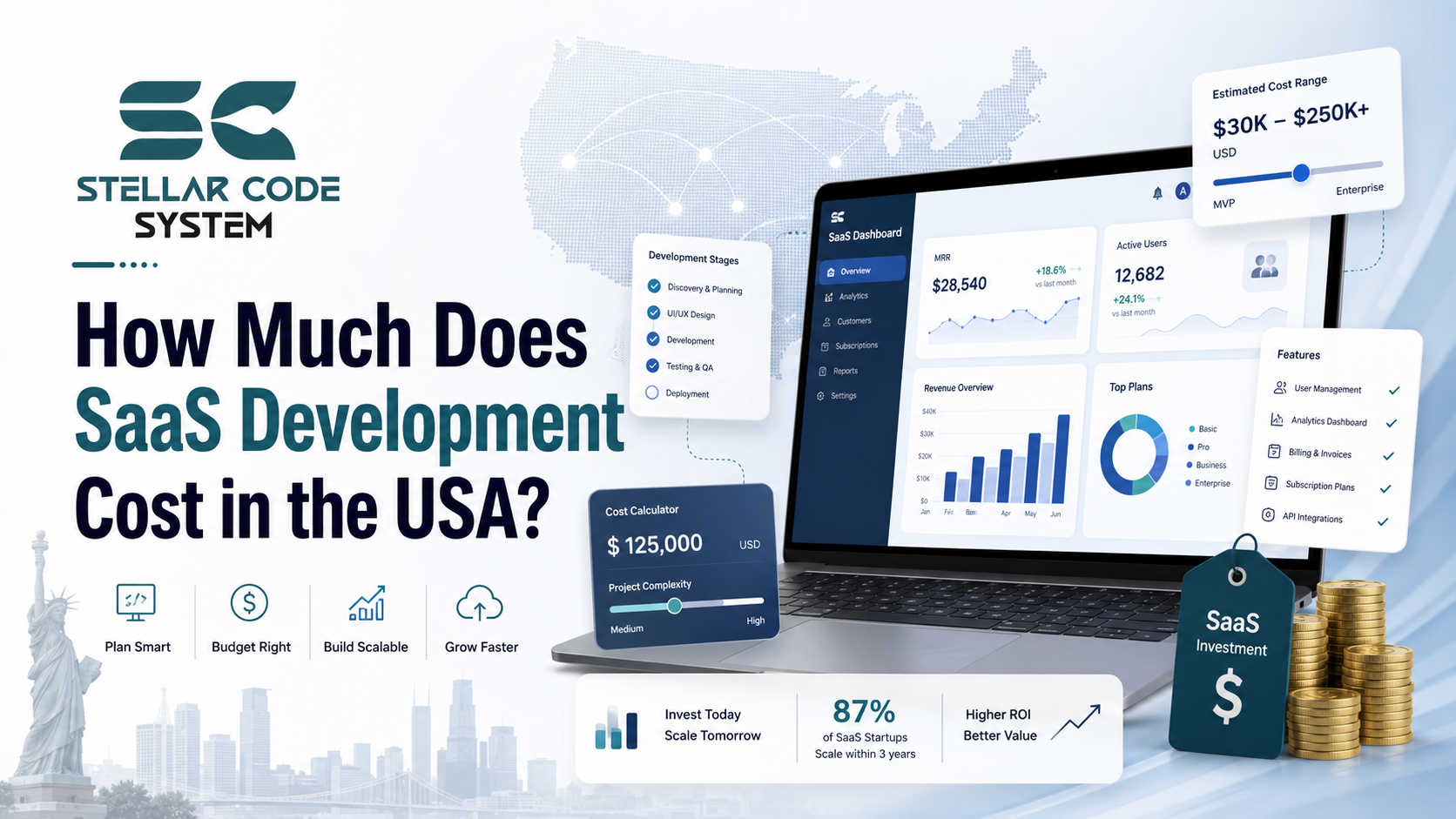
How Much Does SaaS Development Cost in the USA?
Software-as-a-Service (SaaS) has become one of the most profitable business models in the technology industry. From startups launching innovative solutions to enterprises building large-scale platforms, SaaS applications continue to drive digital transformation across industries.
One of the most common questions business owners ask is: How much does SaaS development cost in the USA?
The answer depends on multiple factors, including feature complexity, technology stack, development team size, cloud infrastructure requirements, security compliance standards, and long-term maintenance costs.
In this guide, we will break down SaaS development costs, explain key pricing factors, and help you understand the total investment required to build a successful SaaS product.

Understanding SaaS Development
SaaS development refers to creating cloud-based software that users access through a web browser or mobile application via a subscription model.
Unlike traditional software licensing models, SaaS applications are hosted in the cloud and continuously updated by the provider.
Common examples include:
- Customer Relationship Management (CRM) platforms
- Project management software
- Accounting systems
- Marketing automation tools
- Enterprise collaboration platforms
Because SaaS products require ongoing updates, scalability, and security, their development expenses are often higher than standard software projects.

Average SaaS Development Cost in the USA
The average software development cost for a SaaS product in the USA ranges from:
| Project Type | Estimated Cost |
|---|---|
| Basic MVP Development | $25,000 – $75,000 |
| Mid-Level SaaS Application | $75,000 – $200,000 |
| Enterprise SaaS Platform | $200,000 – $1,000,000+ |
The final development budget depends heavily on project requirements and business goals.
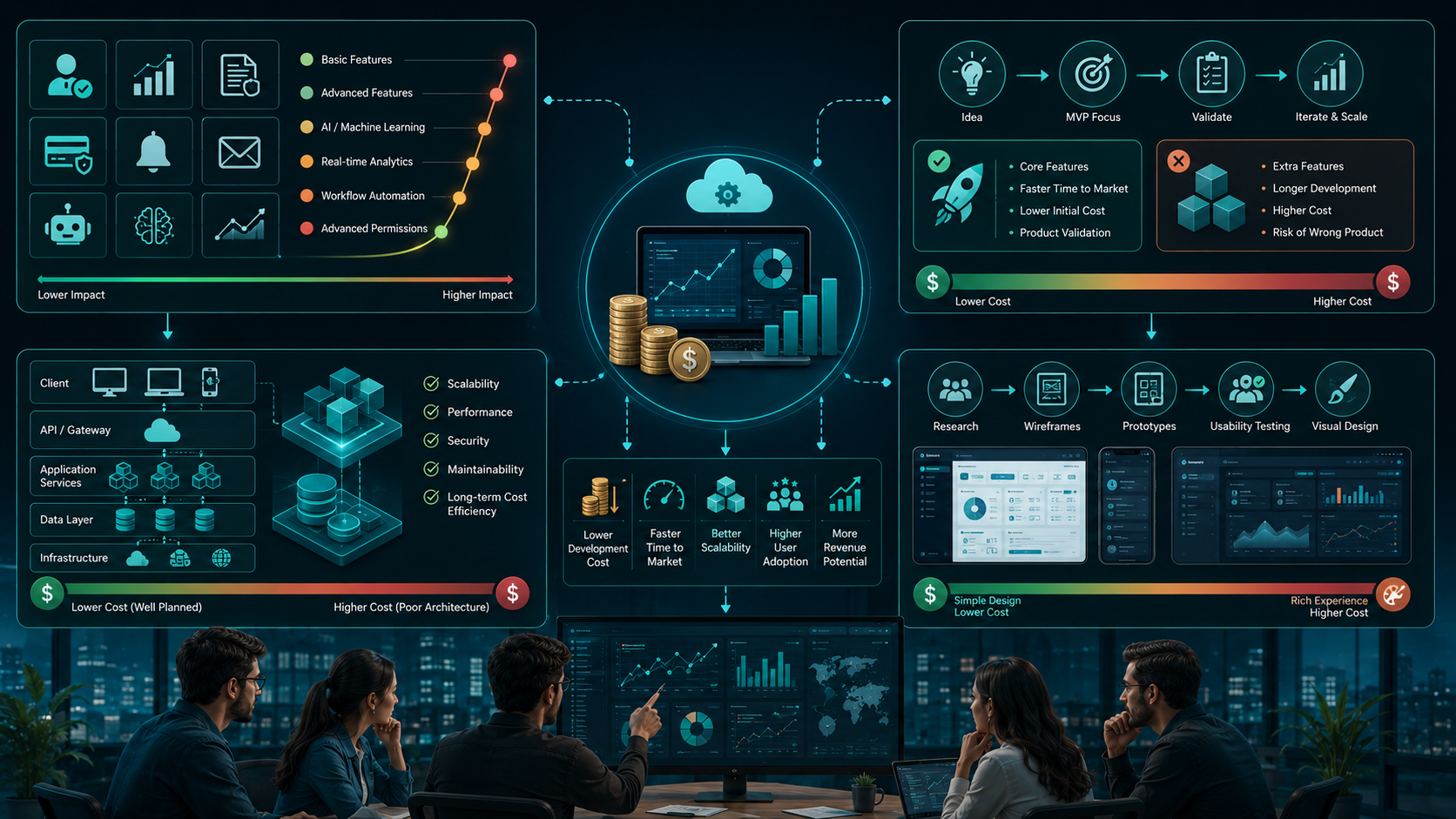
Key Factors Affecting SaaS Pricing
1. Feature Complexity
Feature complexity plays a major role in determining SaaS development costs. Basic applications may only require user registration, dashboards, reporting, and payment processing, while advanced platforms often include AI, machine learning, workflow automation, and multi-tenant architecture. More sophisticated features require additional development time, expertise, and testing.
Simple SaaS products may include:
- User registration
- Dashboards
- Basic reporting
- Payment processing
Advanced SaaS applications often require:
- Artificial intelligence
- Machine learning
- Real-time analytics
- Workflow automation
- Advanced permissions
- Multi-tenant architecture
The more sophisticated the functionality, the higher the project estimation.
2. MVP Development Requirements
MVP (Minimum Viable Product) development helps businesses launch a product with essential features while minimizing initial investment. It allows startups to validate their ideas, gather user feedback, and reduce risks before committing to full-scale development. This approach is often the most cost-effective way to enter the market quickly.
An MVP focuses on core features needed to validate a business idea before investing in a full-scale platform.
Benefits include:
- Lower initial development expenses
- Faster launch timeline
- Reduced investment risk
- Early customer feedback
A typical SaaS MVP development cost in the US ranges between $25,000 and $100,000.
3. Software Architecture
Software architecture serves as the foundation of a SaaS application and directly affects performance, scalability, and security. Choosing a software development company in USA for SaaS cost planning helps businesses plan architecture, development scope, cloud infrastructure, and long-term maintenance before costs increase. A well-planned architecture supports future growth, simplifies maintenance, and improves system reliability.
Architectural decisions influence:
- Development timeline
- Infrastructure costs
- System reliability
- Security compliance
Poor architecture can significantly increase future support services and maintenance costs.
4. UI/UX Design
UI/UX design focuses on creating intuitive and engaging user experiences that improve customer satisfaction and retention. The process typically includes user research, wireframing, prototyping, and usability testing. Investing in quality design can enhance product adoption and contribute to long-term business success.
Design expenses typically include:
- User research
- Wireframing
- Interactive prototypes
- User testing
- Interface design
Investing in strong user experiences often improves return on investment (ROI) over time.
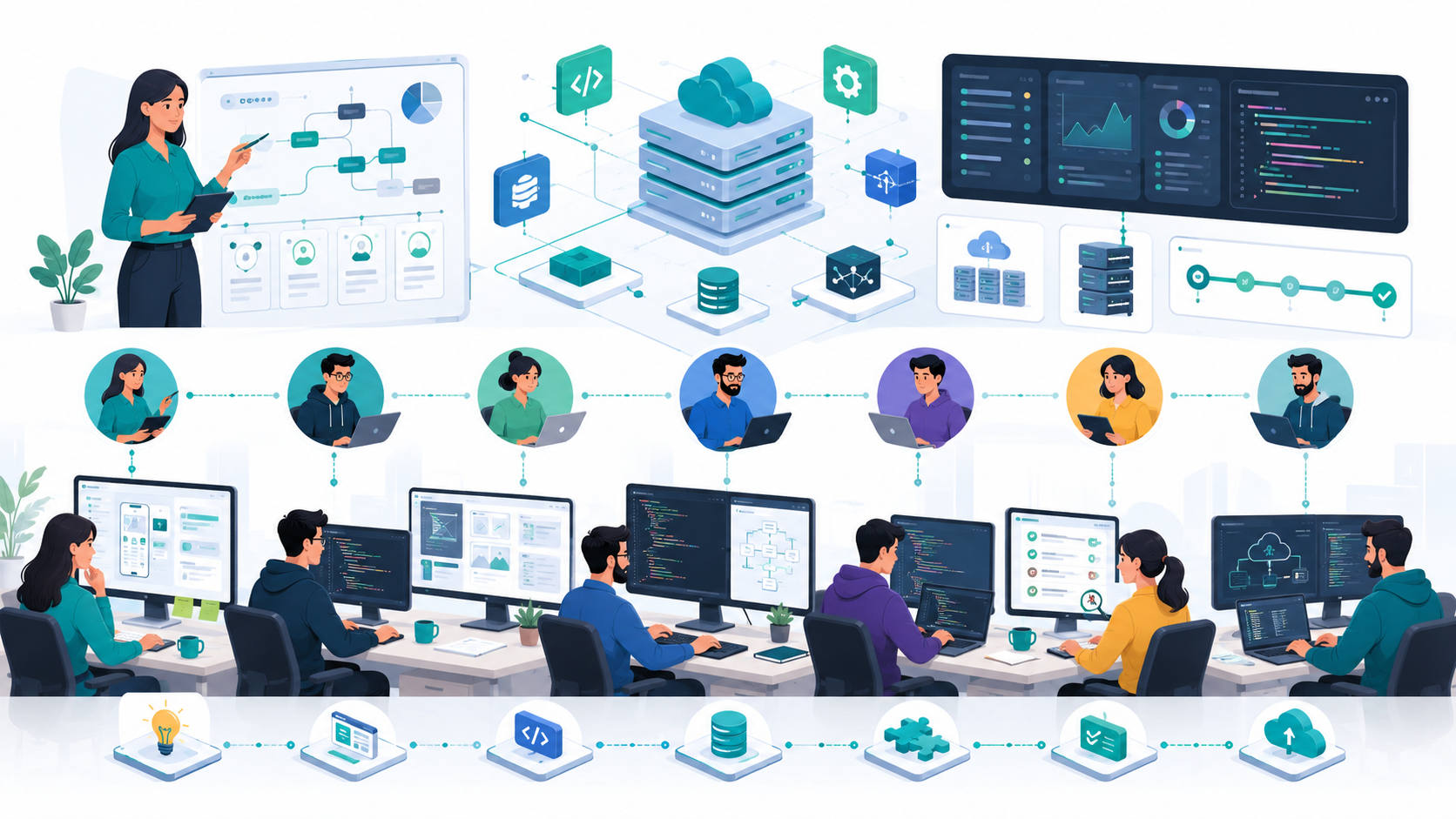
Development Team Structure and Costs
The size and expertise of the development team greatly affect SaaS pricing.
Typical team members include:
Product Manager
A Product Manager oversees the overall direction of a SaaS project, ensuring that business goals align with development efforts. They define the product roadmap, gather business requirements, and coordinate communication among stakeholders. Their role helps keep the project focused, organized, and aligned with market needs.
Responsible for:
- Product roadmap
- Business requirements
- Stakeholder communication
Software Engineers
Software Engineers are responsible for building the core functionality of a SaaS application. They write, test, and maintain code while ensuring the system performs efficiently and reliably. Their expertise is essential for transforming product requirements into working software.
Front-End Development Team
The Front-End Development Team creates the visual and interactive elements users engage with daily. They focus on designing responsive interfaces, improving usability, and ensuring consistent experiences across devices. Their work directly impacts user satisfaction and engagement.
Handles:
- User interfaces
- User interactions
- Responsive design
Back-End Development Team
The Back-End Development Team manages the server-side components that power a SaaS application. They develop APIs, handle database operations, implement security measures, and ensure smooth data processing. Their work supports the application's performance, stability, and scalability.
Responsible for:
- Server-side logic
- APIs
- Databases
- Security
Full-Stack Development Specialists
Full-Stack Developers possess expertise in both front-end and back-end development. They can build complete application features, manage integrations, and contribute across multiple stages of the development lifecycle. This versatility makes them valuable for startups and agile teams.
Quality Assurance Engineers
Quality Assurance Engineers ensure that software meets performance, functionality, and reliability standards before release. They conduct software testing, identify defects, track bugs, and validate system performance. Their efforts help deliver a stable and high-quality user experience.
Responsible for:
- Quality assurance
- Software testing
- Bug tracking
- Performance validation
DevOps Engineers
DevOps Engineers streamline software delivery by automating deployment and infrastructure processes. They manage monitoring systems, optimize cloud environments, and improve operational efficiency. Their role helps development teams release updates faster while maintaining system reliability.
Manage:
- DevOps services
- Deployment automation
- Monitoring systems
- Infrastructure management
Technology Stack Selection
The chosen technology stack significantly impacts development rates and long-term costs.
Popular technologies include:
Front-End Technologies
Front-end technologies are responsible for the visual and interactive components of a SaaS application. Popular frameworks such as React, Angular, and Vue.js help developers build responsive, user-friendly interfaces that deliver a smooth experience across devices. The choice of technology can impact development speed, performance, and scalability.
- React
- Angular
- Vue.js
Back-End Technologies
Back-end technologies power the server-side functionality of a SaaS platform. Frameworks and languages like Node.js, .NET, Python, and Java handle business logic, data processing, API management, and application security. Selecting the right back-end technology ensures reliable performance and supports future growth.
- Node.js
- .NET
- Python
- Java
Databases
Database development supports the data layer of a SaaS platform and affects performance, reporting, analytics, and long-term scalability.
Database development often uses:
- PostgreSQL
- MySQL
- MongoDB
Cloud Platforms
Cloud platforms provide the infrastructure needed to host, scale, and manage SaaS applications. Leading providers like AWS, Microsoft Azure, and Google Cloud offer services for computing, storage, networking, and security. These platforms help businesses improve reliability while reducing the need for costly on-premises infrastructure.
Cloud infrastructure solutions include:
- AWS
- Microsoft Azure
- Google Cloud
Enterprise-grade platforms often require larger hosting costs and infrastructure investments.
Read More:
What Is SaaS Application Development?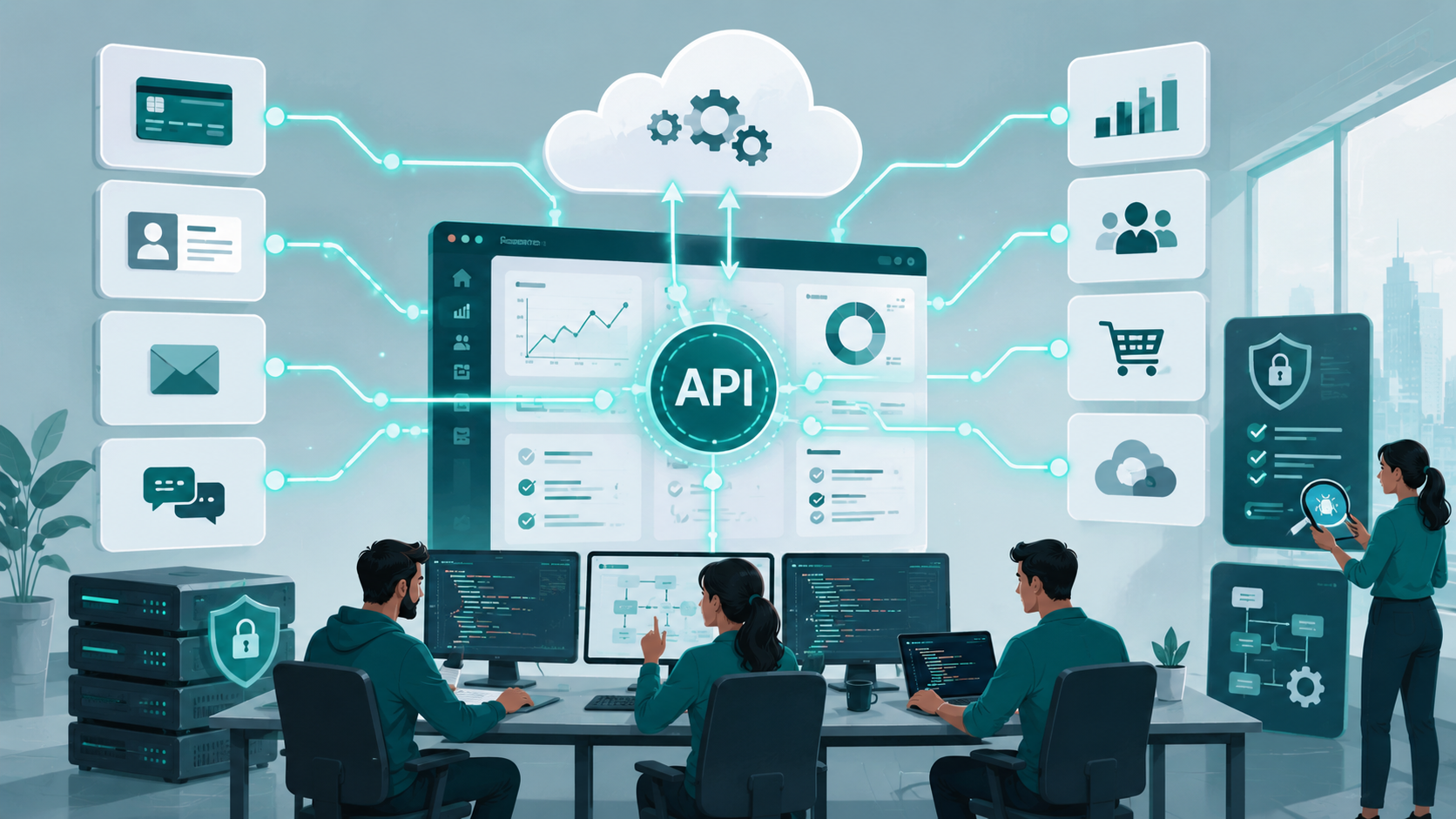
API Integration Costs
Modern SaaS products rarely operate independently.
Common API integration requirements include:
- Payment gateways
- CRM systems
- Marketing tools
- Analytics platforms
- Communication services
Each integration increases development effort and testing requirements.

Security Compliance Requirements
Security is critical for every SaaS application.
Industries such as healthcare and finance require strict security compliance standards.
Common compliance frameworks include:
- HIPAA
- GDPR
- SOC 2
- PCI DSS
Security investments often cover:
- Data encryption
- Access controls
- Security audits
- Vulnerability testing
These requirements increase development costs but reduce business risk.

Multi-Tenant Architecture and Scalability
Most SaaS platforms rely on multi-tenant architecture.
This allows multiple customers to use the same software environment while keeping data isolated.
Benefits include:
- Lower infrastructure costs
- Easier updates
- Better scalability
- Improved resource utilization
However, designing scalable systems requires experienced software engineering teams and advanced architectural planning.
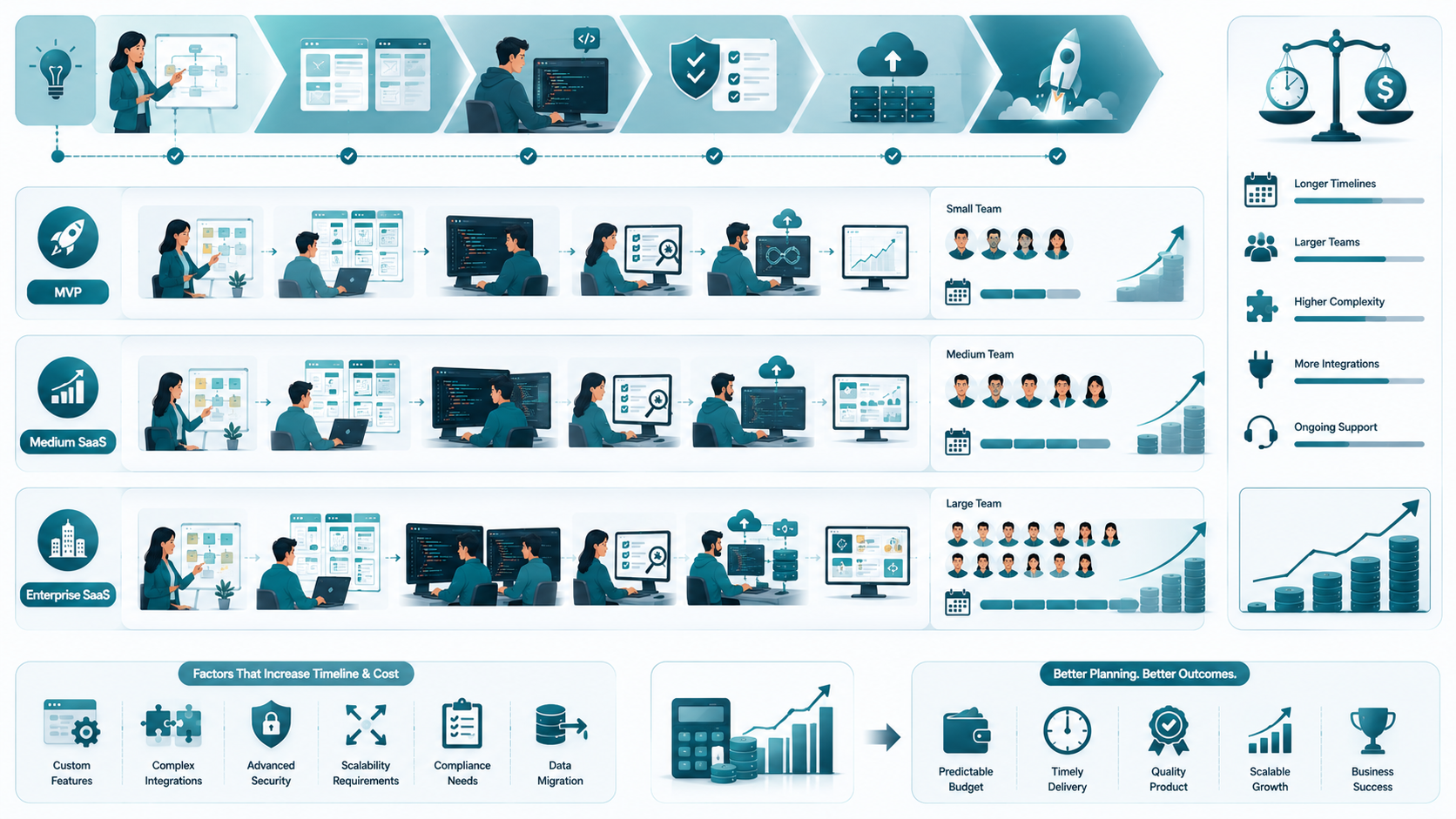
Development Timeline and Cost Impact
The overall development timeline directly influences pricing.
Typical timelines include:
| Project Type | Timeline |
|---|---|
| SaaS MVP | 2–4 Months |
| Medium SaaS Product | 4–8 Months |
| Enterprise SaaS | 8–18+ Months |
Longer projects require larger budgets due to additional staffing and resource allocation.

Onshore vs Offshore Development
Onshore Development
Onshore development involves hiring software development teams located within the United States. These teams typically charge higher hourly rates but offer advantages such as easier communication, overlapping time zones, and stronger cultural and business alignment. Many organizations choose onshore teams for complex projects that require close collaboration and faster decision-making.
US-based teams typically charge:
- $100–$250+ per hour
Advantages:
- Better communication
- Similar time zones
- Strong business alignment
Offshore Development
Offshore development refers to outsourcing software development work to teams located in other countries. This approach can significantly reduce development costs while providing access to a larger talent pool. However, businesses should carefully manage communication, time zone differences, and project coordination to ensure successful outcomes.
Offshore development teams may charge:
- $25–$80 per hour
Advantages:
- Lower development rates
- Reduced development budget
Challenges:
- Time zone differences
- Communication barriers
Many businesses adopt hybrid models using dedicated developers from offshore regions while maintaining local project management.
Maintenance Costs After Launch
SaaS implementation does not end after deployment.
Ongoing maintenance costs typically represent 15–25% of the initial development cost annually.
Maintenance includes:
- Security updates
- Performance optimization
- Infrastructure upgrades
- Feature enhancements
- Bug fixes
Continuous support services are essential for long-term product success.

Cost Breakdown of a Typical SaaS Project
| Component | Percentage of Budget |
|---|---|
| UI/UX Design | 10–15% |
| Front-End Development | 20–25% |
| Back-End Development | 25–35% |
| Database Development | 10–15% |
| API Integration | 5–15% |
| Quality Assurance | 10–15% |
| DevOps Services | 5–10% |
| Security Compliance | 5–15% |
This cost breakdown helps businesses create more accurate cost estimation models.
Enterprise SaaS vs Startup SaaS Costs
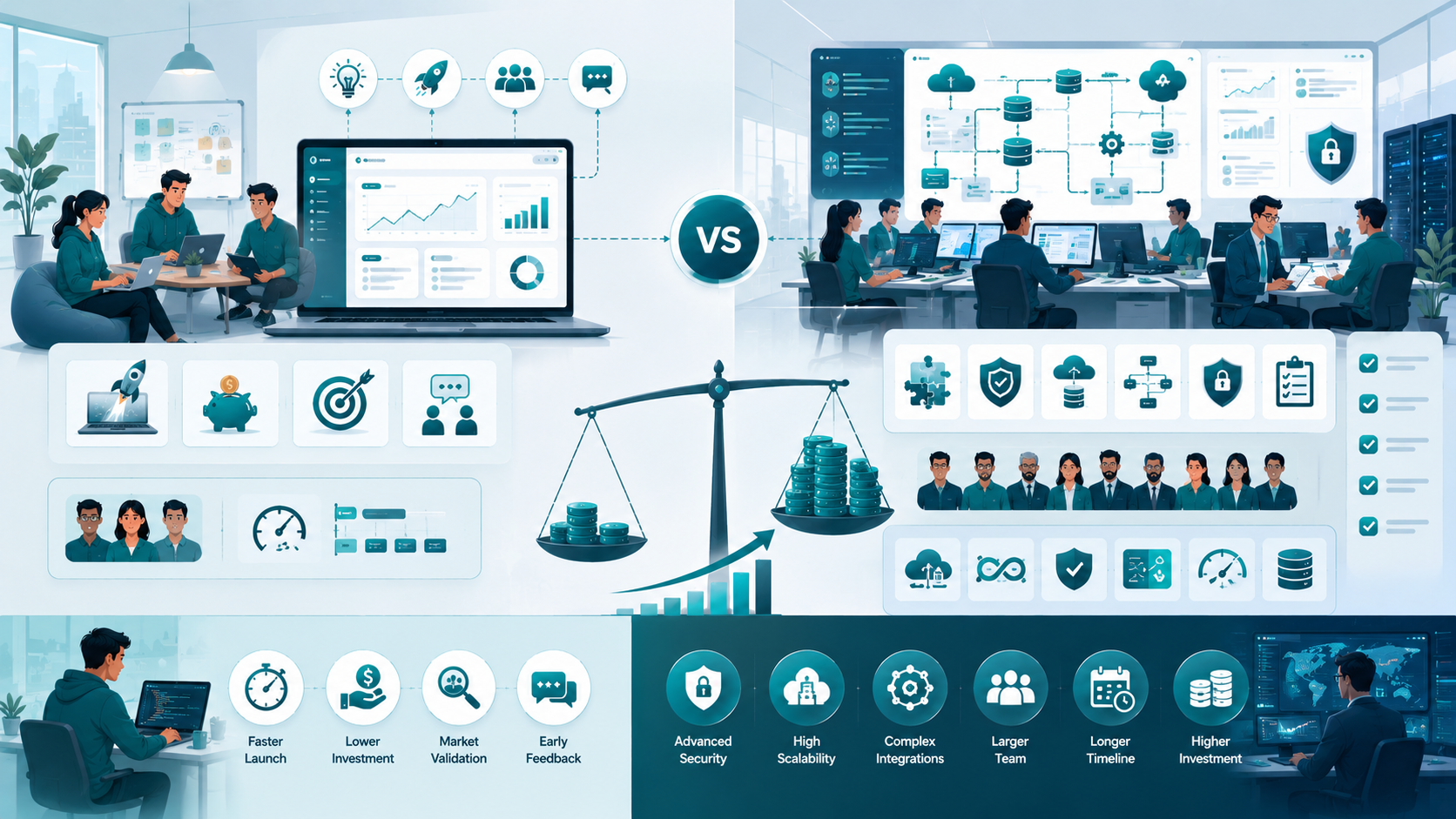
Startup SaaS
Startup SaaS products are typically designed to validate a business idea and enter the market quickly. They often focus on MVP development, essential features, and lean budgets to minimize risk and accelerate growth. This approach allows startups to gather user feedback and refine their product before making larger investments.
Startup SaaS products prioritize:
- MVP development
- Faster launches
- Lean budgets
- Market validation
Estimated cost:
$25,000–$150,000
Enterprise SaaS
Enterprise SaaS solutions are built to support large organizations with complex operational requirements. These platforms often require advanced integrations, strict security compliance, high scalability, and sophisticated workflows. As a result, enterprise SaaS projects involve greater development effort, longer timelines, and higher overall costs.
Enterprise SaaS solutions require:
- Advanced integrations
- Security compliance
- High scalability
- Complex workflows
Estimated cost:
$200,000–$1,000,000+

Evaluating Total Cost of Ownership (TCO)
Many businesses focus only on initial development expenses.
However, the Total Cost of Ownership (TCO) includes:
- Development
- Hosting costs
- Software licensing
- Maintenance
- Support services
- Infrastructure upgrades
- Security management
Understanding TCO helps organizations make smarter investment decisions.

Measuring Return on Investment (ROI)
When evaluating SaaS development costs, businesses should also consider ROI.
Benefits often include:
- Recurring subscription revenue
- Reduced operational costs
- Improved customer retention
- Process automation
- Increased productivity
A well-executed SaaS implementation can generate substantial long-term returns that outweigh initial development investments.
Conclusion
The cost of SaaS development in the USA varies significantly depending on project scope, feature complexity, software architecture, cloud infrastructure, security compliance requirements, and development team structure.
For most businesses, SaaS development costs range from $25,000 for a basic MVP to over $1,000,000 for enterprise-grade platforms.
Careful project estimation, selecting the right technology stack, building a scalable architecture, and planning for long-term maintenance costs are essential for success. By evaluating both the initial development budget and the total cost of ownership (TCO), organizations can make informed decisions and maximize their return on investment (ROI) from SaaS product development.
How Much Does SaaS Development Cost in the USA: FAQs
The cost of SaaS development in the USA typically ranges from $25,000 to over $1,000,000, depending on the project's complexity, features, technology stack, and development team size. Basic MVPs cost less, while enterprise-grade platforms require significantly larger investments.
Several factors influence SaaS development costs, including feature complexity, UI/UX design, software architecture, cloud infrastructure, API integrations, security compliance requirements, and ongoing maintenance needs. The development team's experience and location also impact pricing.
A SaaS MVP (Minimum Viable Product) generally costs between $25,000 and $100,000 in the United States. The exact cost depends on the number of core features, development timeline, and technical requirements needed to validate the business idea.
Software architecture serves as the foundation of a SaaS application, affecting scalability, performance, security, and maintainability. A well-designed architecture helps reduce future development expenses and supports long-term business growth.
Onshore development involves hiring US-based teams, which typically offer better communication and business alignment but at higher rates. Offshore development uses teams in other countries, providing lower costs but sometimes requiring additional project management due to time zone and communication differences.
Reference
Written by

Paras Dabhi
VerifiedFull-Stack Developer (Python/Django, React, Node.js)
I build scalable web apps and SaaS products with Django REST, React/Next.js, and Node.js — clean architecture, performance, and production-ready delivery.
LinkedIn