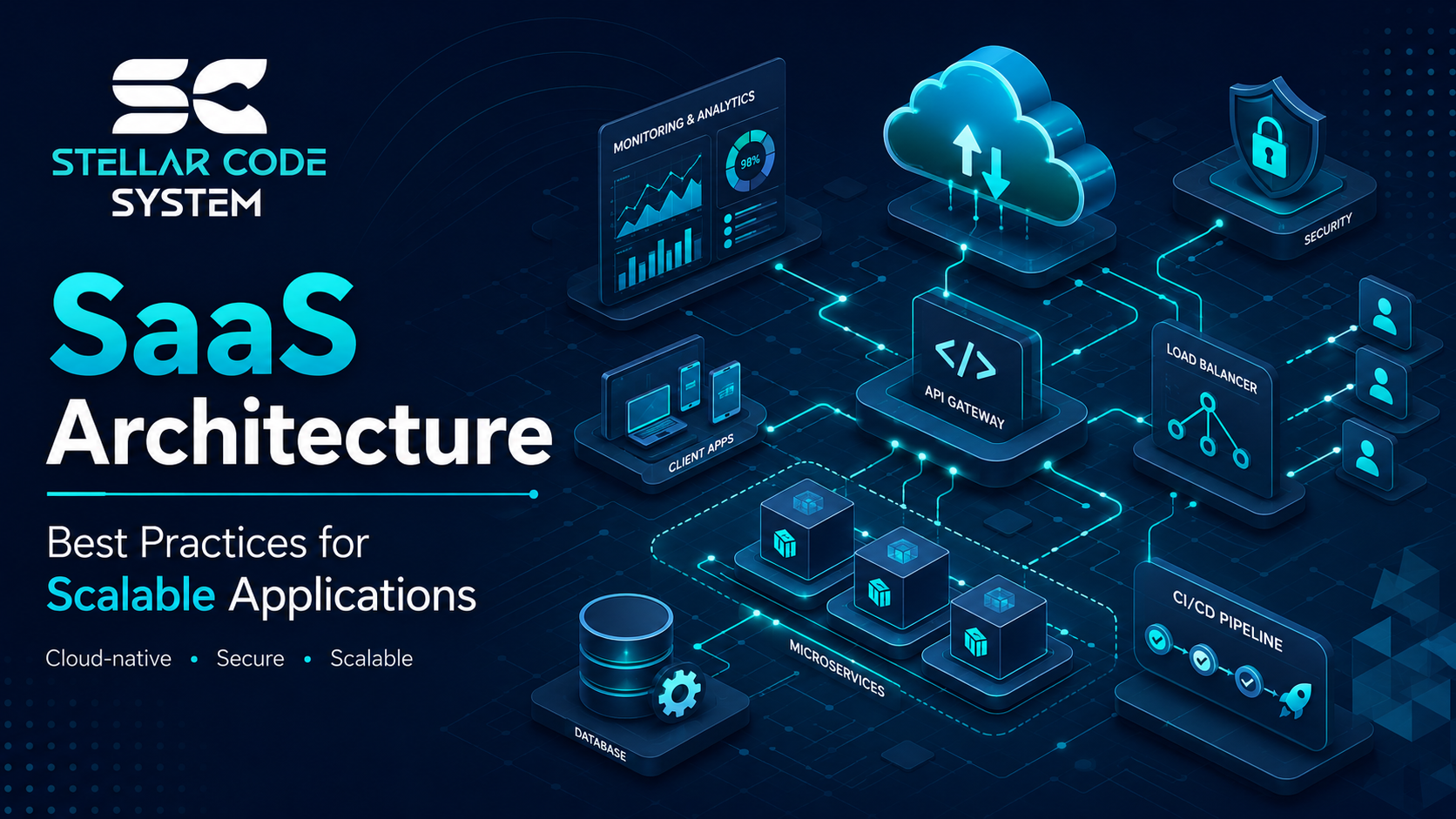
SaaS Architecture Best Practices for Scalable Applications
Most SaaS products do not struggle because of traffic spikes.
They struggle because the architecture that worked for the first hundred users starts creating friction when the product reaches a few thousand customers, more developers join the team, and new features arrive every sprint.
I've seen startup teams spend months building advanced infrastructure for scaling problems they never encounter, while ignoring the architectural issues that eventually slow development down.
The assumption is usually simple: if we adopt the same architecture patterns used by large technology companies, scalability will take care of itself.
In reality, scalable SaaS architecture is less about choosing complex technologies and more about making practical decisions that support growth without creating operational overhead.

Why This Problem Happens in Real Teams
Most architecture problems begin long before applications experience serious scale.
Limited Engineering Resources
Small engineering teams often operate with limited manpower while managing multiple responsibilities across development, operations, and support. Because resources are stretched, architecture decisions tend to prioritize quick delivery over long-term maintainability. This approach helps teams move faster initially but can create challenges as the product grows.
The same people are responsible for:
- Feature delivery
- Bug fixes
- Infrastructure
- Security
- Deployment workflows
- Customer support escalations
Under these conditions, architecture decisions are usually optimized for speed rather than long-term maintainability.
Startup Deadlines Drive Shortcuts
Fast-moving startup environments frequently prioritize shipping features over architectural planning. As deadlines approach, documentation, API consistency, and database design may receive less attention than immediate business needs. These shortcuts often seem harmless at first but can lead to technical debt that becomes difficult to manage later.
As a result:
- Database schemas evolve without planning
- APIs grow inconsistently
- Documentation is skipped
- Technical debt accumulates
None of these decisions seem dangerous initially.
The problems appear months later when scaling becomes necessary.
Misunderstanding Scalability
Many teams view scalability solely as the ability to handle more users or traffic. However, true scalability also involves supporting larger engineering teams, managing deployments efficiently, and maintaining system reliability during rapid product evolution. Operational complexity often becomes a bigger challenge than traffic growth itself.
In practice, scalability also means:
- Supporting more developers
- Managing more services
- Handling more deployments
- Maintaining reliability during rapid product changes
A system can handle thousands of users and still become difficult to scale operationally.
Early Architectural Assumptions
Teams commonly adopt advanced architectural patterns based on future expectations rather than current requirements. Technologies like microservices, Kubernetes, and distributed systems can introduce significant complexity when implemented too early. The issue is rarely the technology itself but choosing it before the business and product actually need it.
Teams frequently assume they will eventually need:
- Microservices
- Kubernetes
- Event-driven architecture
- Distributed systems
The assumption itself is not wrong.
The timing usually is.

Where Most Teams Make the Wrong Decision
Introducing Microservices Too Early
Many startups adopt microservices because they expect rapid future growth, even when their current product does not require that level of complexity. While microservices offer flexibility at scale, they also introduce additional operational overhead. For small engineering teams, a well-structured monolith is often easier to maintain, deploy, and evolve.
A simple SaaS application often functions perfectly as a monolith.
Yet teams split services prematurely because they expect future growth.
This creates:
- API management overhead
- Additional deployment complexity
- Service communication issues
- More monitoring requirements
- Increased debugging difficulty
Small teams rarely benefit from these trade-offs early on.
Copying Big-Tech Architecture
Large technology companies build complex architectures to solve problems related to massive user bases and global infrastructure. Startups often attempt to replicate these patterns without facing the same challenges. This can lead to unnecessary complexity, higher maintenance costs, and slower development cycles without delivering meaningful business value.
Their architectures often include:
- Service-oriented architecture (SOA)
- Complex message queues
- Extensive redundancy
- Multiple data stores
- Advanced tenant isolation models
These solutions exist because they operate at massive scale.
Smaller SaaS products usually do not.
Overinvesting in Infrastructure
Many teams assume that adopting advanced infrastructure automatically improves scalability and performance. In reality, tools like Kubernetes and cloud-native platforms cannot compensate for poor application design or inefficient database operations. Focusing on actual bottlenecks often delivers better results than investing heavily in infrastructure too early.
In reality, containerization alone does not solve architectural problems.
I've seen teams spend weeks managing:
- Docker configurations
- Kubernetes clusters
- Infrastructure as Code (IaC)
- Cloud-native tooling
Meanwhile, their actual bottleneck was a poorly optimized database query.
Ignoring Operational Scalability
Scalability is not only about handling more users; it also involves managing operations efficiently as systems grow. Without proper monitoring, logging, deployment processes, and incident management, operational complexity can quickly become a major challenge. Strong operational foundations help teams maintain reliability while continuing to scale their applications.
Teams must also scale:
- Monitoring
- Logging
- Observability
- Security architecture
- Deployment processes
Without these foundations, growth introduces operational chaos.
Practical Fixes That Actually Work
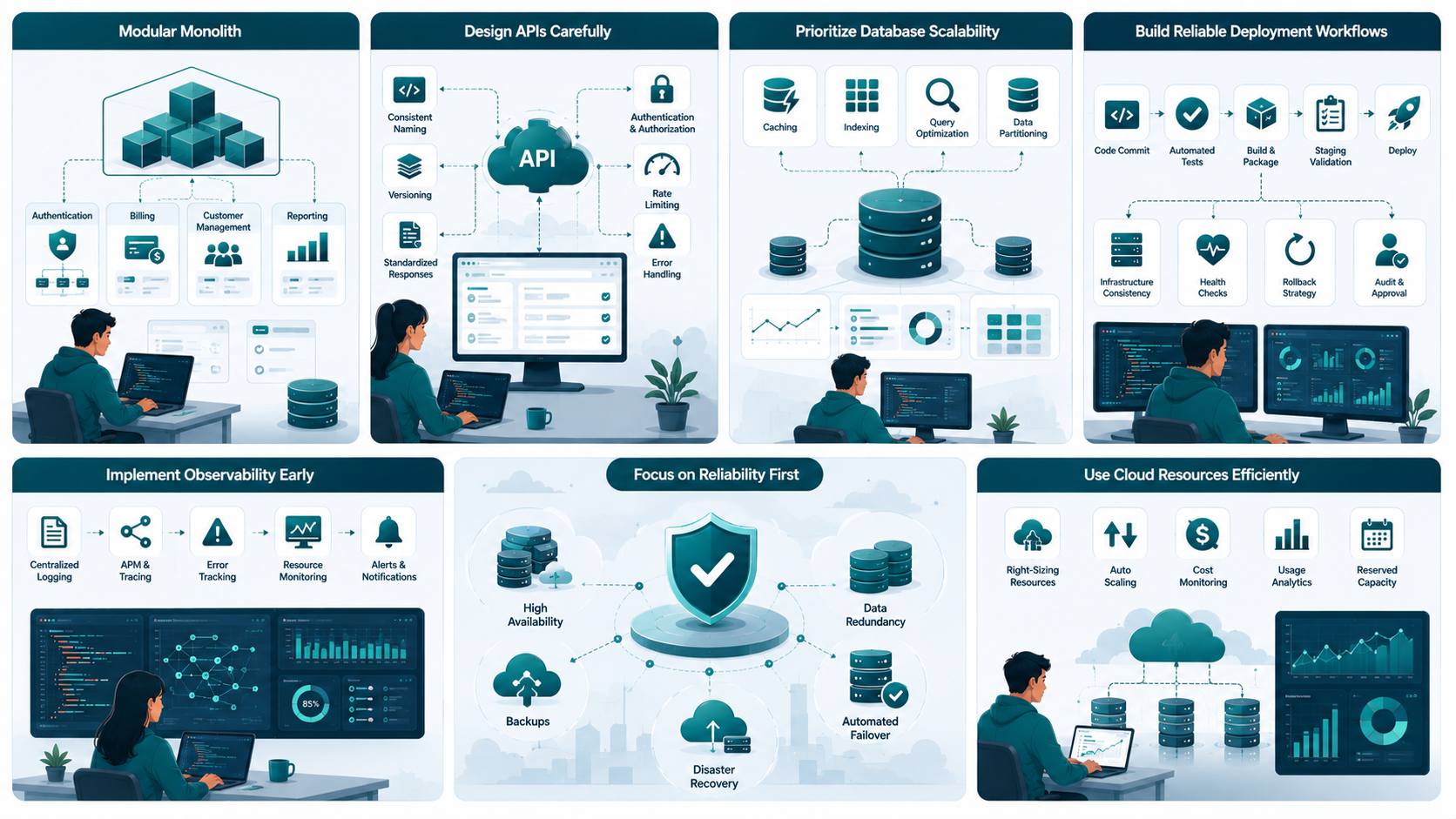
Start with a Modular Monolith
For most SaaS applications, a modular monolith provides the right balance between simplicity and scalability. Choosing a software development company in USA for scalable SaaS architecture helps businesses plan clear service boundaries, reliable deployment workflows, and maintainable cloud infrastructure before unnecessary complexity slows the product down.
Benefits include:
- Simpler deployments
- Lower operational costs
- Easier debugging
- Faster onboarding
Focus on clear internal boundaries before considering microservices.
Example structure:
- Authentication module
- Billing module
- Customer management module
- Reporting module
When growth eventually demands service separation, the boundaries already exist.
Design APIs Carefully
Well-designed APIs create a strong foundation for future development and integrations. Consistent naming conventions, versioning strategies, and standardized responses help reduce confusion across engineering teams. Investing in API design early prevents costly maintenance and compatibility issues as the application evolves.
Recommended practices:
- Version APIs early
- Use consistent naming conventions
- Standardize error responses
- Document authentication requirements
Strong API design reduces future integration problems.
Prioritize Database Scalability
The database is often the first component to experience performance bottlenecks as a SaaS product grows. Optimizing queries, implementing caching, and improving data organization can significantly improve performance without major architectural changes. Most applications can scale effectively with these improvements before considering more advanced solutions.
Practical improvements include:
- Caching frequently accessed data
- Database indexing
- Data partitioning
- Query optimization
Database sharding should only be considered when genuine scale requires it.
Most applications can grow significantly before reaching that point.
Build Reliable Deployment Workflows
Reliable deployment processes reduce the risk of production failures and improve development velocity. Automated testing, validation checks, and rollback mechanisms help teams release changes with greater confidence. A stable deployment pipeline often contributes more to scalability than introducing additional infrastructure components.
Key practices:
- Automated testing
- Deployment validation
- Rollback procedures
- Infrastructure consistency
A stable deployment pipeline often delivers greater value than introducing additional services.
Implement Observability Early
Observability provides visibility into system behavior before problems affect users. By establishing logging, monitoring, error tracking, and performance analysis early, teams can identify issues faster and make informed decisions. Strong observability practices also simplify troubleshooting as applications become more complex.
Establish:
- Centralized logging
- Application Performance Monitoring (APM)
- Error tracking
- Resource monitoring
This improves troubleshooting and helps identify scaling issues before customers notice them.
Focus on Reliability First
Scalability is difficult to achieve without a reliable foundation. Systems should be designed to handle failures gracefully through redundancy, fault tolerance, and recovery planning. Prioritizing reliability helps maintain customer trust while supporting sustainable long-term growth.
Invest in:
- High availability
- Fault tolerance
- Backup strategy
- Disaster recovery planning
A fast system that frequently fails is not scalable.
A reliable system creates confidence for both customers and engineering teams.
Use Cloud Resources Efficiently
Cloud platforms offer flexibility and scalability, but unmanaged growth can quickly increase infrastructure costs. Effective resource planning, monitoring, and automated scaling policies help ensure resources match actual demand. This approach supports sustainable growth while maintaining operational efficiency.
However, uncontrolled scaling can increase costs quickly.
Implement:
- Resource provisioning rules
- Capacity planning
- Usage monitoring
- Automated scaling thresholds
This ensures infrastructure grows alongside actual demand.
When This Approach Fails
No architecture strategy works forever.
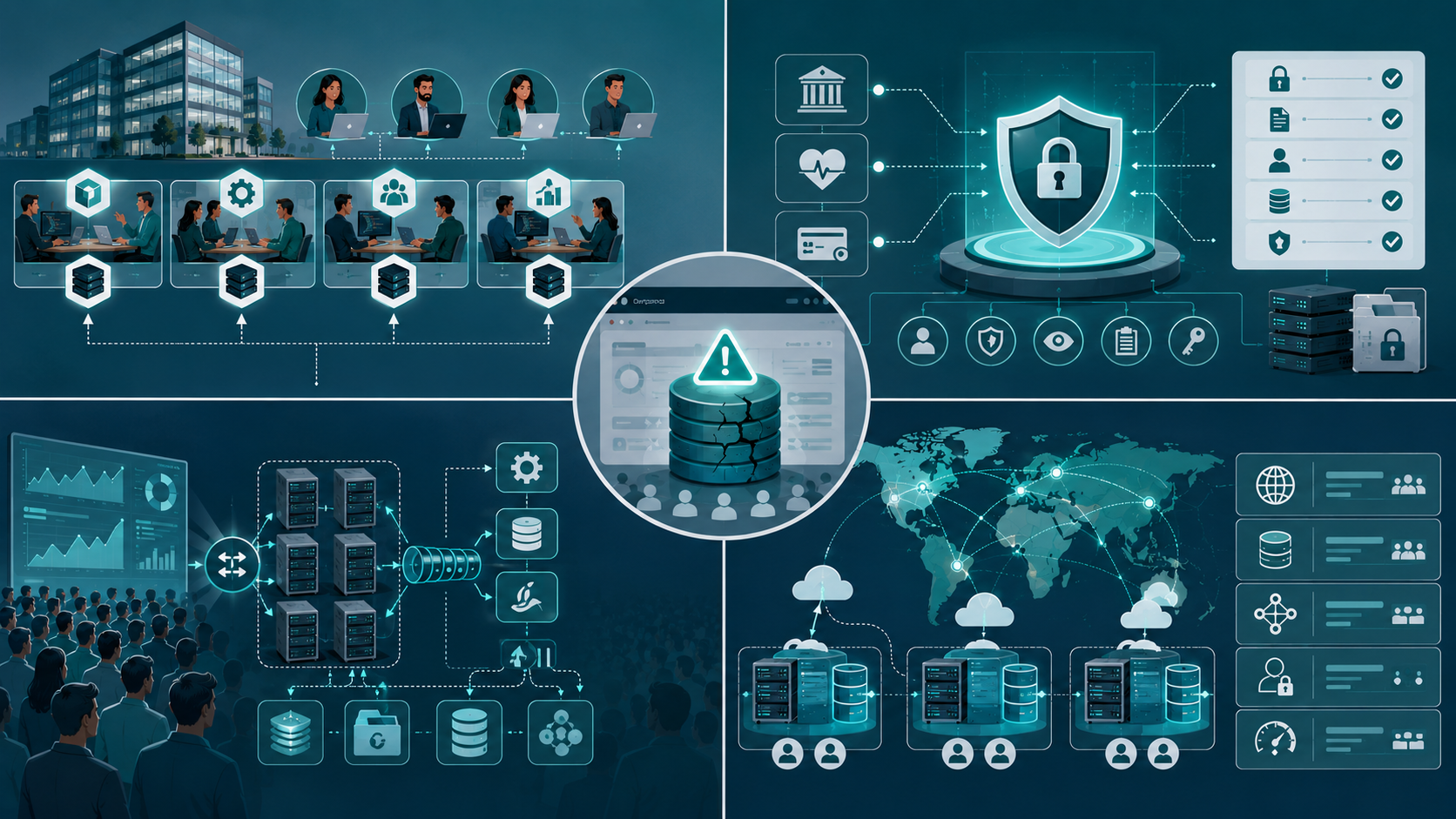
Large Distributed Enterprises
As engineering organizations grow, coordinating development across multiple teams becomes increasingly challenging. A modular monolith that works well for smaller teams may begin to limit autonomy and release flexibility. Independent services often become necessary to support faster delivery, clearer ownership, and better scalability across departments.
Independent services may become necessary for:
- Team autonomy
- Faster release cycles
- Domain ownership
Highly Regulated Environments
Applications operating in regulated industries must meet strict security, privacy, and compliance requirements. This often requires stronger tenant isolation, advanced access controls, and specialized security measures. As a result, additional architectural complexity becomes necessary to satisfy regulatory standards and reduce risk.
Applications operating under strict compliance requirements may require:
- Strong tenant isolation
- Advanced access control
- Specialized security architecture
Additional complexity becomes unavoidable.
Extremely High Traffic Workloads
Applications serving large volumes of users and transactions often outgrow simple architectural patterns. Supporting this level of scale may require distributed systems, event-driven processing, and advanced scaling strategies. While these approaches improve performance, they also introduce greater operational complexity and maintenance demands.
At substantial scale, teams may require:
- Horizontal scaling
- Event-driven architecture
- Distributed systems
- Message queues
- Multiple data storage layers
The operational burden increases significantly.
Complex Global Products
Products serving customers across multiple regions face challenges that extend beyond application functionality. Factors such as network latency, regional compliance requirements, authentication management, and data residency rules can significantly influence architecture decisions. Over time, these demands may require more sophisticated infrastructure and system design.
Products supporting multiple regions often encounter:
- Network architecture challenges
- Data residency requirements
- Authentication complexity
- Latency optimization concerns
Simple architectures eventually reach their limits.
Sustainable Practices for Small Engineering Teams
Reduce Technical Debt Continuously
Technical debt can accumulate gradually and eventually slow down development, increase maintenance costs, and introduce reliability issues. Regular refactoring, dependency updates, and architecture reviews help keep systems manageable over time. Consistent small improvements are often more effective than large-scale rewrites.
Allocate dedicated time for:
- Refactoring
- Dependency updates
- Architecture reviews
- Code cleanup
Small improvements prevent larger rewrites later.
Maintain Strong Documentation
Clear documentation helps teams share knowledge and reduce reliance on individual contributors. Documenting architecture decisions, deployment processes, API contracts, and security practices makes onboarding easier and improves collaboration. This becomes especially valuable as teams grow or work remotely.
At minimum, document:
- System architecture
- Deployment workflows
- API contracts
- Security decisions
This becomes especially important for remote developers.
Keep Security Simple but Consistent
Security should be integrated into the development process from the beginning rather than added later as an afterthought. Consistent authentication, authorization, encryption, and identity management practices help reduce vulnerabilities. A straightforward security strategy is often easier to maintain and enforce across teams.
Core security practices should include:
- Authentication controls
- Authorization policies
- Data encryption
- Identity management standards
Security becomes difficult when added retroactively.
Improve Team Collaboration
As engineering teams expand, communication challenges can become a significant obstacle to productivity. Clear ownership, structured review processes, and shared responsibilities help teams coordinate more effectively. Strong collaboration practices also improve system quality and long-term maintainability.
Practical improvements include:
- Clear ownership
- Architecture review processes
- Lightweight design discussions
- Shared operational responsibilities
These practices support long-term system reliability.
Automate Repetitive Work
Automation reduces manual effort and helps maintain consistency across development and operations workflows. Tasks such as testing, deployments, infrastructure management, and monitoring can often be automated with significant benefits. This allows teams to focus more on product development and less on repetitive operational tasks.
Good candidates include:
- Testing
- Deployments
- Infrastructure provisioning
- Monitoring alerts
Automation reduces operational mistakes while preserving engineering velocity.
Measure What Matters
Effective architecture decisions should be guided by real performance data rather than assumptions. Tracking metrics related to reliability, deployment quality, resource utilization, and application performance provides valuable insights. Data-driven improvements help teams scale systems more efficiently and confidently.
Track metrics related to:
- Performance optimization
- Deployment success rates
- System reliability
- Infrastructure utilization
Data-driven decisions are usually better than architectural assumptions.
Conclusion
The biggest mistake small SaaS teams make is treating scalability as a technology problem instead of an engineering discipline.
Scalable applications are not created by adopting microservices, Kubernetes, or distributed systems early.
They are built through thoughtful architecture decisions, reliable deployment workflows, sensible API design, effective monitoring, and continuous attention to maintainability.
In most cases, a simple architecture that the team fully understands will outperform a complex architecture copied from larger organizations.
Growth eventually introduces new requirements, but sustainable scalability starts with reducing unnecessary complexity long before those challenges arrive.
SaaS Architecture Best Practices for Scalable Applications: FAQs
Usually not during the early stages. Most startups gain more value from a modular monolith until team size, deployment frequency, or system complexity justify service separation.
Only if there is a clear operational need. Managing Kubernetes introduces complexity that many early-stage SaaS products do not require.
Premature scaling. Teams often introduce complex infrastructure before validating actual technical requirements.
Extremely important. Monitoring, logging, and Application Performance Monitoring help teams detect problems before they affect customers.
Only after simpler solutions such as indexing, caching, query optimization, and data partitioning are no longer sufficient.
Reference
Written by

Paras Dabhi
VerifiedFull-Stack Developer (Python/Django, React, Node.js)
I build scalable web apps and SaaS products with Django REST, React/Next.js, and Node.js — clean architecture, performance, and production-ready delivery.
LinkedIn