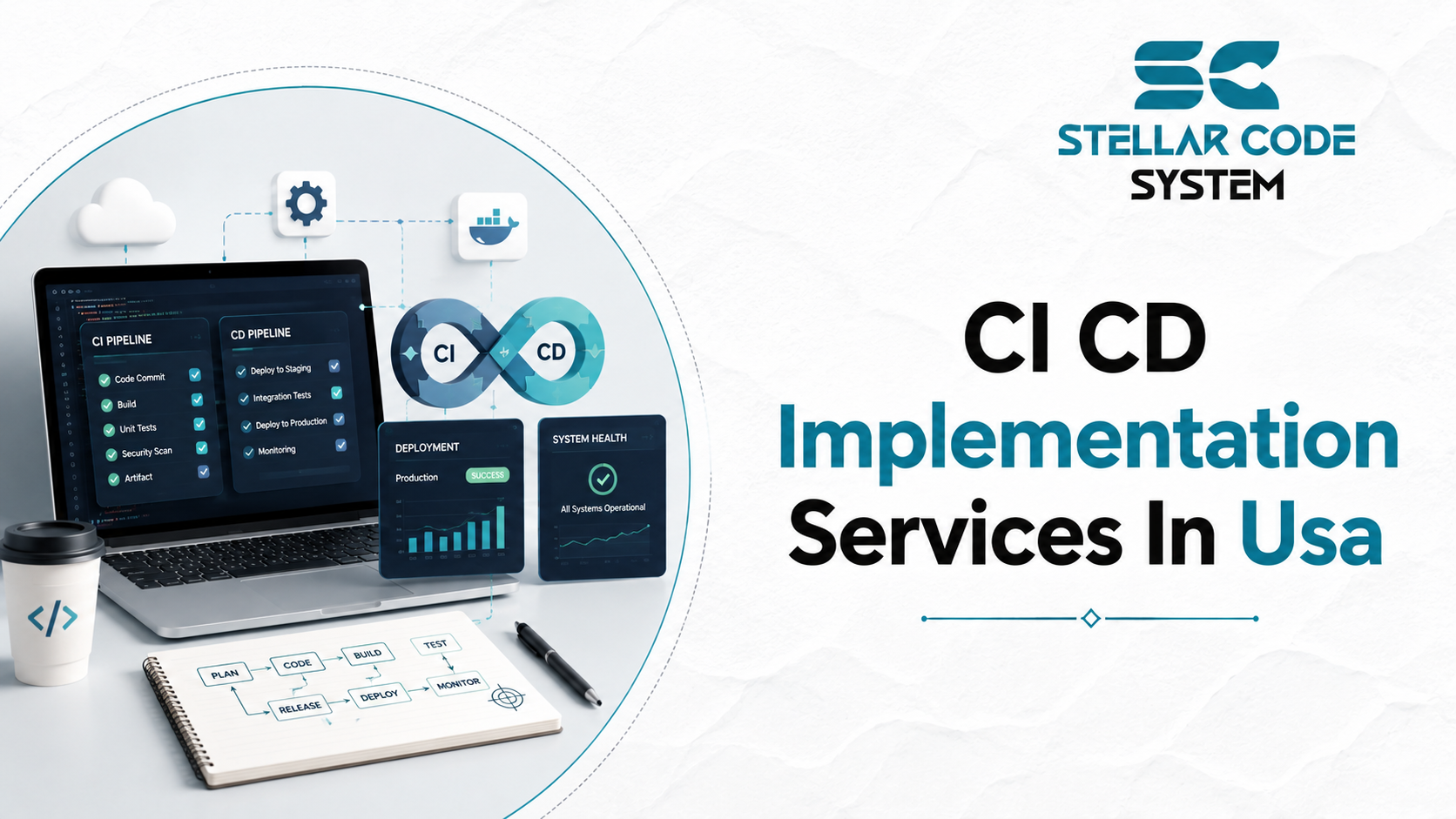
CI CD Implementation Services In USA
A surprising number of startup teams invest months into improving their deployment process only to discover that releases are slower than before. They automate everything they can, introduce a sophisticated CI/CD Pipeline, and adopt modern DevOps practices, yet engineers still spend hours troubleshooting failed builds, broken deployments, and inconsistent environments.
The problem usually isn't the technology. It's how the implementation evolves under pressure. Early product teams often optimize for speed without considering how their engineering workflow will change as more developers join, features grow, and production traffic increases.
I've seen this happen across remote engineering teams building SaaS products for clients in the USA, Europe, Australia, and Canada. Teams often believe that introducing automation will immediately solve delivery problems. Instead, poorly planned CI/CD implementation creates new bottlenecks because the underlying development process never improved.
Successful CI/CD Implementation Services in USA focus on making software delivery predictable rather than simply adding more automation. The goal isn't building the most advanced pipeline—it's creating a reliable process that developers trust every day.
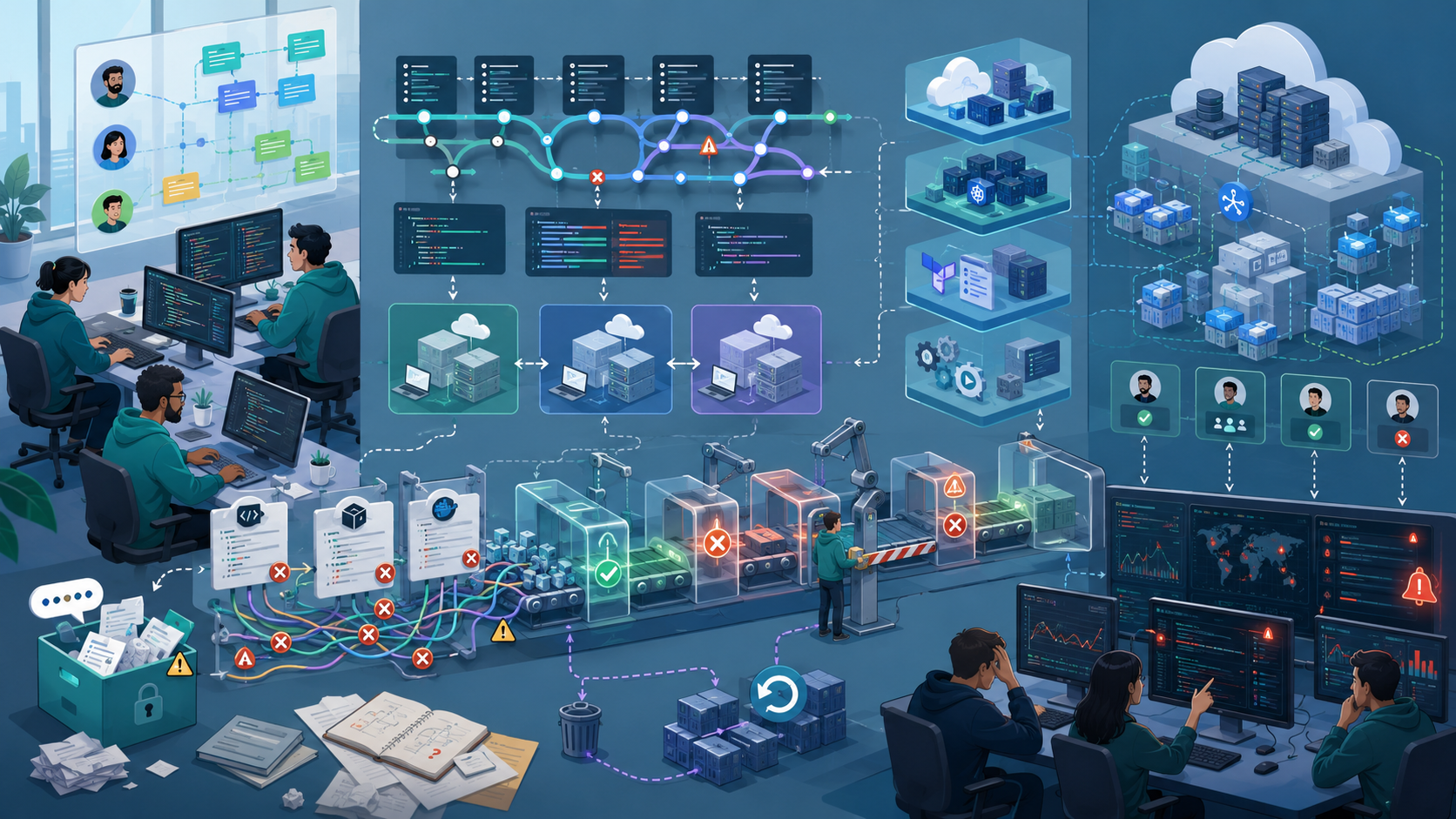
Why This Problem Happens in Real Teams
Most engineering problems around CI/CD begin long before the first deployment pipeline is created. They usually start with business deadlines.
Small startup teams rarely have dedicated DevOps engineers. Backend developers, frontend developers, and product engineers share responsibility for infrastructure while continuing to deliver product features. Under these conditions, engineering decisions naturally favor immediate delivery instead of long-term maintainability.
Several patterns appear repeatedly.
The Repository Grows Faster Than the Process
Many teams begin with a single Repository containing every service.
Initially this works well.
As more developers contribute, however, frequent Commit operations introduce conflicting changes. Long-lived Branch strategies become difficult to maintain, and complex Merge conflicts delay releases.
Instead of simplifying collaboration, version control starts slowing everyone down.
Without clear development guidelines, developers begin bypassing review processes simply to keep features moving.
Automation Without Consistency
Many organizations introduce Automation before standardizing their engineering practices.
For example:
- Different developers use different build scripts.
- Local environments don't match production.
- Environment variables are manually maintained.
- Dependencies differ across machines.
When the CI/CD system executes an automated Build, failures become unpredictable because the automation exposes inconsistencies that already existed.
Automation accelerates good processes.
It also accelerates broken ones.
Testing Is Often Treated as a Separate Activity
One of the biggest misconceptions is that Testing happens after development.
In mature engineering teams, validation occurs continuously.
Every pipeline should include:
- Automated unit tests
- Integration testing
- Static analysis
- Security scanning
- Deployment verification
Without proper Validation, teams lose confidence in automated releases.
Developers eventually delay deployments because they no longer trust the pipeline.
Ironically, automation begins creating manual work.
Infrastructure Evolves Faster Than Documentation
Many startups move quickly toward cloud-native deployment.
They provision cloud resources across AWS, Azure, or hybrid Cloud environments while simultaneously introducing Infrastructure automation using Terraform and Ansible.
The infrastructure itself isn't usually the problem.
The lack of documentation is.
Configuration changes become tribal knowledge.
Environment differences accumulate.
Production begins behaving differently from staging.
Soon nobody knows which configuration is actually correct.
Containerization Solves Packaging, Not Engineering Discipline
Modern teams frequently adopt Docker and Containerization early because containers simplify deployment.
Containers certainly improve consistency.
However, containerizing an unstable application doesn't eliminate architectural problems.
Poor dependency management.
Inconsistent runtime configuration.
Unclear service ownership.
Weak release processes.
All of these issues remain after containerization.
Containers package applications.
They don't improve engineering discipline.
Pipeline Complexity Grows Quietly
Many projects begin with a simple deployment workflow.
Over time, new requirements appear.
Additional environments.
Approval gates.
Security checks.
Performance testing.
Multiple release targets.
Rollback procedures.
Before long, the original Pipeline becomes difficult to understand.
Every new feature introduces another condition into the workflow.
Instead of improving Delivery, the pipeline itself becomes the largest maintenance burden.
Monitoring Arrives Too Late
Teams often focus on getting deployments working before thinking about operational visibility.
That's backwards.
Without proper Monitoring and centralized Logging, failed deployments become investigations instead of quick fixes.
Engineers spend valuable time asking questions like:
- Which version reached production?
- Which service failed?
- What changed?
- Which deployment introduced the issue?
Good monitoring dramatically shortens recovery time.
Without it, every release carries unnecessary uncertainty.

Where Most Teams Make the Wrong Decision
The internet offers no shortage of CI/CD advice.
The problem is that much of it comes from organizations operating with hundreds of engineers, dedicated platform teams, and years of internal tooling.
Small SaaS teams often copy those architectures far too early.
I've watched startups with fewer than ten developers deploy infrastructure that looked impressive on paper but created far more operational work than customer value.
Chasing Every New Tool
Many teams assume better tooling automatically produces better engineering.
Within a few months they introduce:
- Jenkins
- GitHub Actions
- GitLab CI
- Kubernetes clusters
- Infrastructure automation
- Secret management
- Multiple deployment environments
Each tool individually makes sense.
Collectively, they create unnecessary operational overhead.
Instead of improving software delivery, engineers spend more time maintaining tooling than building product features.
Introducing Kubernetes Before It's Needed
One pattern appears repeatedly.
Teams adopt Kubernetes because successful technology companies use it.
But Kubernetes introduces its own operational responsibilities:
- Cluster maintenance
- Networking
- Storage
- Service discovery
- Security policies
- Deployment orchestration
For products with only a handful of services, Kubernetes frequently increases operational complexity without improving customer outcomes.
Simple deployments become engineering projects.
Confusing Scalability With Immediate Needs
Many founders worry about future traffic before validating product demand.
They optimize everything for Scalability.
Highly distributed services.
Independent deployment pipelines.
Complex infrastructure.
Advanced orchestration.
Yet their application serves only a modest user base.
Engineering effort shifts toward preparing for hypothetical growth instead of solving current customer problems.
Ignoring Configuration Management
Application Configuration is often scattered across:
- Environment variables
- Deployment scripts
- Cloud consoles
- Manual documentation
As new environments are created through Provisioning, configuration drift becomes inevitable.
Eventually:
- Development behaves differently from staging.
- Staging differs from production.
- Production differs from disaster recovery.
Developers lose confidence because deployments become unpredictable.
Overengineering Security Too Late
Many teams postpone Security until the application reaches production.
Then they suddenly introduce:
- Authentication
- Authorization
- Encryption
- Compliance reviews
- Governance policies
Retrofitting these capabilities into an existing pipeline is considerably harder than designing them into the delivery process from the beginning.
Security shouldn't be the final checklist before release.
It should be integrated throughout the pipeline.
Treating Reliability as an Afterthought
Reliable delivery depends on much more than successful deployments.
Teams need confidence that every release maintains:
- Availability
- Reliability
- Application Performance
- Consistent version control
- Repeatable deployments
This becomes especially important when deploying Microservices, where one failed release can affect multiple dependent systems.
Without proper release discipline, engineers rely on emergency Rollback procedures instead of preventing deployment failures altogether.
Rollback is an important safety mechanism.
It should never become the primary deployment strategy.
Forgetting That CI/CD Is About Engineering Workflow
The most successful implementations I've worked with shared one characteristic.
They treated CI/CD as an engineering practice rather than a tooling project.
The focus wasn't choosing between GitHub, GitLab, Jenkins, or another platform.
The focus was creating a repeatable Workflow where every Artifact could be tracked, every deployment could be reproduced, every release followed proper Versioning, and every improvement contributed to continuous Optimization.
Whether applications eventually evolved into cloud-native Serverless platforms or larger distributed systems became a later decision.
The early priority was always the same: build a delivery process that developers trust, one that grows with the product instead of becoming another engineering bottleneck.
Practical Fixes That Actually Work
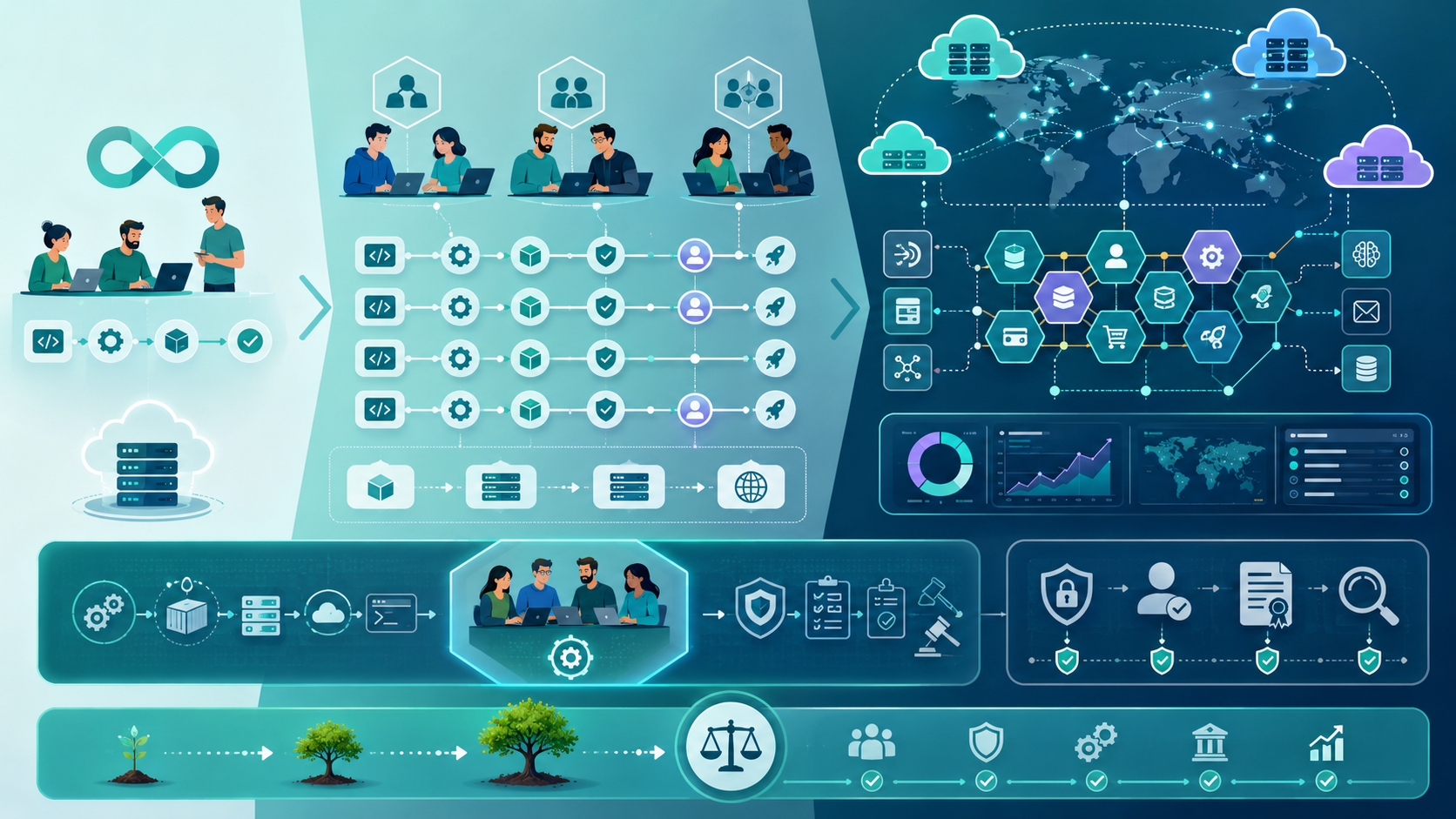
After working with startup teams and product engineering groups across multiple countries, I've noticed that the teams with the smoothest delivery process don't necessarily have the most advanced infrastructure. A US software delivery team for reliable CI/CD workflows helps businesses create fewer moving parts, clear engineering standards, predictable pipelines, automated validation, and deployment workflows that developers can trust every day.
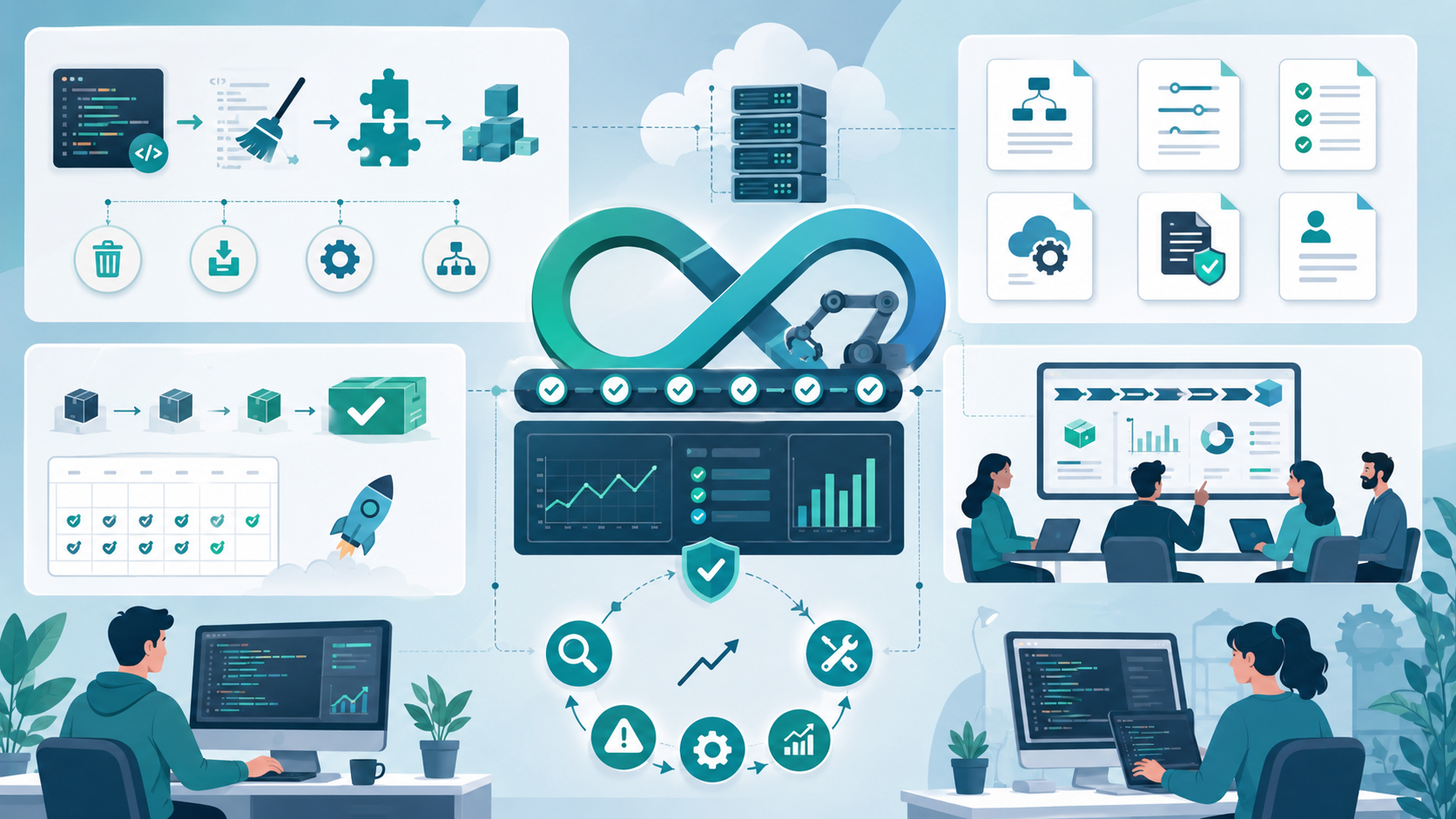
Here are the practices that consistently produce better results.
Standardize the Development Workflow First
Before improving the pipeline, make sure every developer follows the same development process.
Keep it simple:
- Use a consistent branching strategy.
- Define clear code review requirements.
- Automate formatting and linting.
- Require every pull request to pass the same validation checks.
- Keep builds reproducible on every machine.
When every engineer works the same way, the CI/CD pipeline becomes much more predictable.
Build Small, Reliable Pipelines
Many teams create one massive pipeline that handles every possible deployment scenario.
That usually becomes difficult to maintain.
Instead, separate responsibilities.
For example:
- Build the application.
- Run automated tests.
- Perform security scanning.
- Package deployment artifacts.
- Deploy to staging.
- Require approval before production deployment.
- Verify deployment health.
Smaller pipelines are easier to troubleshoot and update as the product evolves.
Automate Only What Creates Consistent Value
Automation should remove repetitive engineering work.
It shouldn't automate every possible task.
Good candidates include:
- Code quality checks
- Unit and integration tests
- Dependency validation
- Container image creation
- Infrastructure provisioning
- Deployment verification
- Rollback triggers
If a process changes every week, keep it manual until it becomes stable.
Treat Infrastructure Like Application Code
Infrastructure changes deserve the same engineering discipline as application code.
That means:
- Store infrastructure definitions in version control.
- Review infrastructure changes.
- Test infrastructure updates before production.
- Document architecture decisions.
- Avoid manual production changes whenever possible.
Infrastructure as Code makes environments repeatable, but only when teams consistently review and maintain those definitions.
Measure Pipeline Performance
Many teams know how often deployments fail.
Fewer know why.
Track practical engineering metrics such as:
- Build duration
- Deployment frequency
- Failed deployment rate
- Mean recovery time
- Test execution time
- Production rollback frequency
These numbers quickly reveal where engineering effort should be invested.
Keep Architecture Simple
One lesson keeps repeating across successful SaaS products.
Simple architecture scales surprisingly well.
Before introducing another deployment environment, another service, or another automation layer, ask:
Does this solve a problem we have today?
If the answer is no, postpone it.
Future complexity can wait until future requirements actually exist.
When This Approach Fails
No engineering practice works forever.
The recommendations above are designed for startup teams, early SaaS companies, and engineering groups with roughly two to fifteen developers.
Eventually, the product reaches a different stage.
For example, this approach becomes limiting when:
- Multiple engineering teams deploy independently.
- Hundreds of releases occur every day.
- Strict regulatory requirements demand extensive approval workflows.
- Infrastructure spans several cloud providers.
- Platform engineering becomes a dedicated function.
At that point, additional investment in deployment orchestration, service ownership, platform automation, and governance becomes worthwhile.
Another limitation appears with highly distributed systems.
Large event-driven architectures, globally distributed applications, and products supporting thousands of production deployments each month often require more sophisticated deployment strategies than a small startup needs.
The mistake isn't adopting advanced practices.
The mistake is adopting them years before they're justified.
Engineering maturity should grow alongside product maturity.

Sustainable Practices for Small Engineering Teams
The most sustainable engineering teams aren't the ones delivering the most code.
They're the ones consistently delivering reliable software without exhausting developers.
That requires discipline more than technology.
Reduce Technical Debt Continuously
Technical debt grows quietly.
Allocate time during every sprint for:
- Refactoring
- Removing obsolete code
- Updating dependencies
- Improving deployment scripts
- Simplifying architecture
Small improvements prevent expensive rewrites later.
Keep Documentation Practical
Documentation should answer questions engineers actually ask.
Document:
- Deployment workflow
- Environment configuration
- Release process
- Infrastructure decisions
- Recovery procedures
- Service ownership
Avoid documentation that nobody maintains.
Short, accurate documentation is more valuable than extensive outdated documentation.
Make Releases Routine
Releases shouldn't feel stressful.
Frequent, smaller deployments reduce risk because each change is easier to understand and verify.
Large monthly releases usually introduce more uncertainty than several small weekly deployments.
Confidence comes from repetition.
Share Operational Knowledge
Avoid creating deployment experts.
Every engineer should understand:
- How the pipeline works
- How releases are performed
- How production incidents are investigated
- How rollback procedures work
- Where monitoring data is located
Shared knowledge reduces operational risk and improves collaboration across remote engineering teams.
Continuously Improve the Process
The best deployment workflow isn't designed once.
It's refined continuously.
After every production incident, ask:
- What failed?
- Why wasn't it detected earlier?
- Which manual step should become automated?
- Which automation is creating unnecessary complexity?
Small process improvements accumulated over time usually outperform complete engineering overhauls.
Conclusion
Most CI/CD implementation problems aren't caused by the choice of tools.
They're caused by introducing complexity before the engineering team is ready to manage it.
Small SaaS teams often assume that adopting enterprise-grade deployment practices will automatically improve software delivery. In reality, reliable delivery comes from consistent workflows, disciplined engineering practices, clear documentation, and gradual automation.
The strongest CI/CD implementations I've seen weren't built around the newest platform or the most sophisticated architecture. They were built around predictability. Every developer understood the workflow, every deployment followed the same process, and every release could be reproduced with confidence.
If there's one lesson worth remembering, it's this: optimize for reliability first, sophistication second. A simple pipeline that your entire team trusts will almost always outperform a complex system that only a few engineers fully understand.
CI CD Implementation Services In USA: FAQs
Usually not. If your product has a small engineering team and only a few services, Kubernetes often adds operational complexity without delivering enough practical value. Simpler deployment approaches are easier to maintain in the early stages.
Frequent, smaller deployments are generally safer than large, infrequent releases. Many successful SaaS teams deploy multiple times per week because smaller changes are easier to validate and recover if needed.
The most common mistake is automating an inconsistent development process. Automation amplifies both good and bad practices, so standardizing workflows should come before expanding the pipeline.
Yes, provided the infrastructure remains simple. Managing infrastructure definitions in version control improves consistency, simplifies reviews, and makes environments easier to reproduce as the product grows.
Use standardized development workflows, automated validation, clear documentation, centralized monitoring, and small production releases. Consistency across the team is more valuable than adding additional deployment tools.
Reference
Written by

Paras Dabhi
VerifiedFull-Stack Developer (Python/Django, React, Node.js)
I build scalable web apps and SaaS products with Django REST, React/Next.js, and Node.js — clean architecture, performance, and production-ready delivery.
LinkedIn