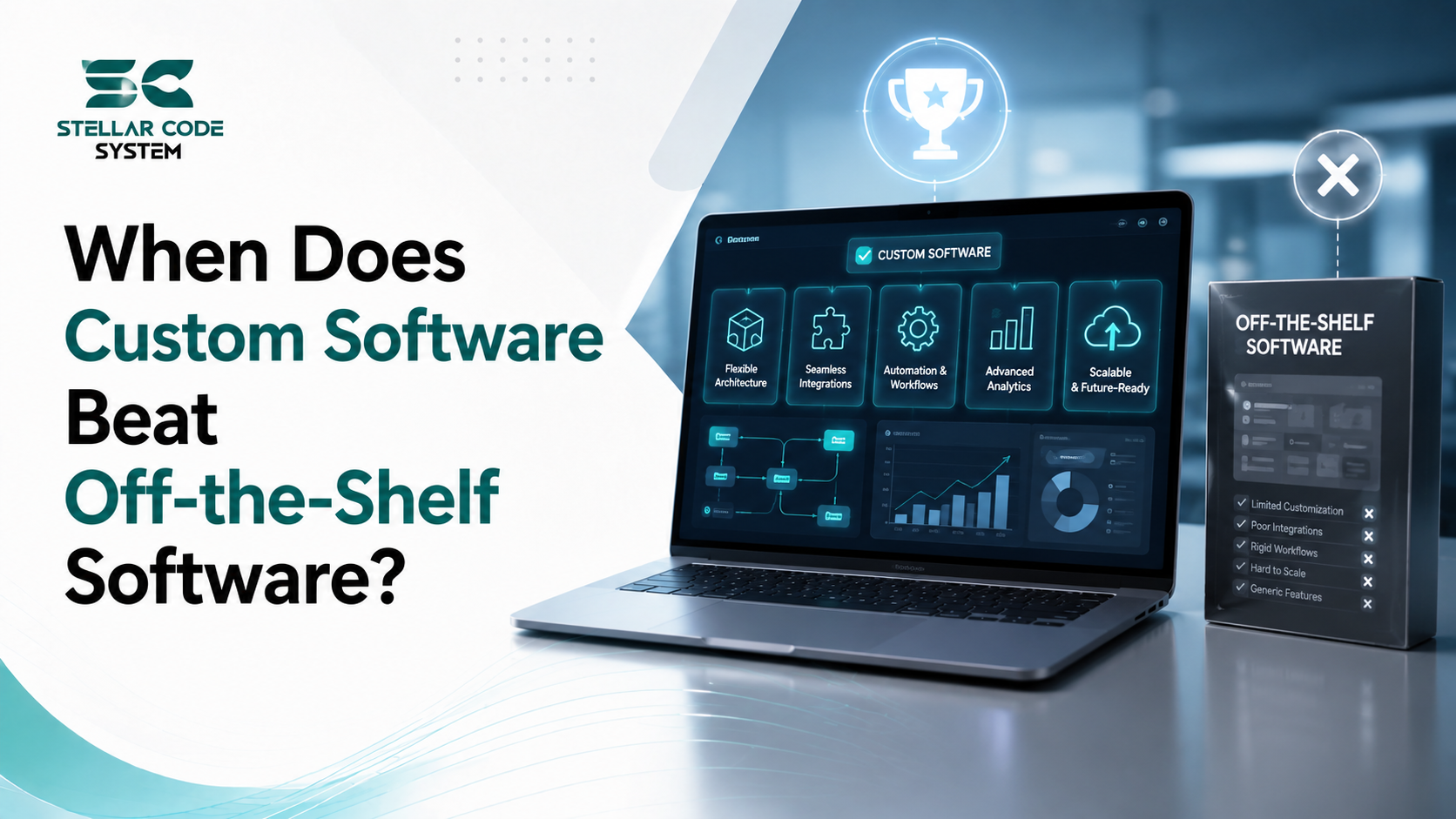
When Does Custom Software Beat Off-the-Shelf Software?
Choosing between custom software and an off-the-shelf product is rarely just a technology decision.
For many businesses, the real question is simpler:
Does the software fit the way the business actually works, or does the business have to change to fit the software?
Off-the-shelf software can be the right choice when requirements are common, implementation needs to be quick, and customization is limited. But when workflows are unusual, integrations are complex, scalability matters, or software becomes strategically important to the business, custom development can create significantly more value.
The challenge is knowing when the additional investment, maintenance, and implementation effort of custom software is justified.
This guide explains where custom software can beat off-the-shelf software, where it cannot, and how businesses can make a practical build-versus-buy decision.
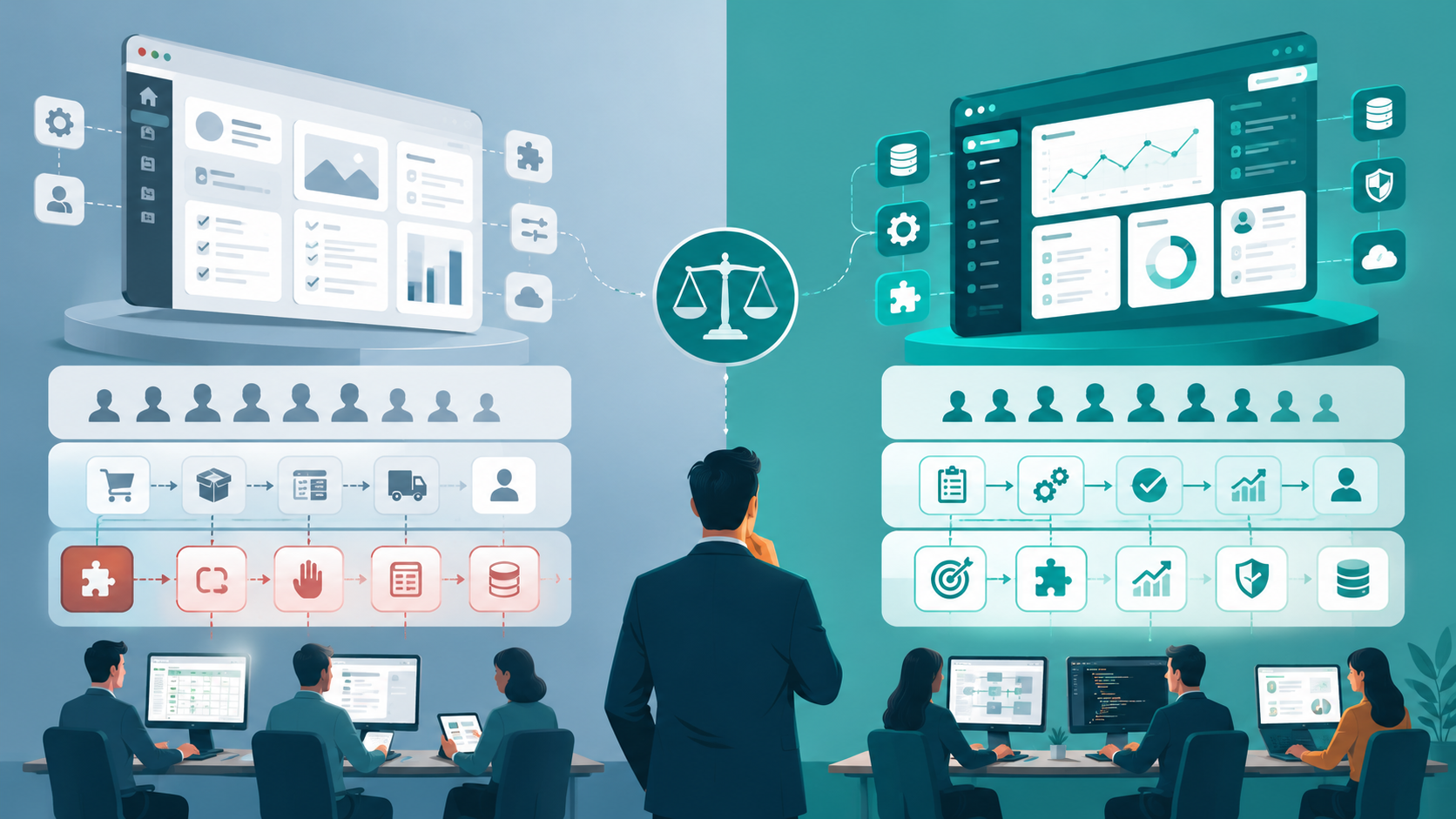
What Is the Difference Between Custom and Off-the-Shelf Software?
Off-the-shelf software is designed for a broad group of users. It generally provides standardized functionality, predefined workflows, existing integrations, and configurable settings.
Custom software, on the other hand, is developed around specific business requirements.
The distinction is not simply about having more features.
It is about control, flexibility, ownership, and alignment with the organization's processes.
An off-the-shelf product may provide 80% of what a business needs. The remaining 20% may require workarounds, manual processes, additional tools, or changes to existing workflows.
Custom software approaches the problem from the opposite direction.
The architecture, functionality, configuration, integration, and user experience can be designed around the actual requirements.
That difference becomes important when the remaining 20% represents the most valuable part of the business process.
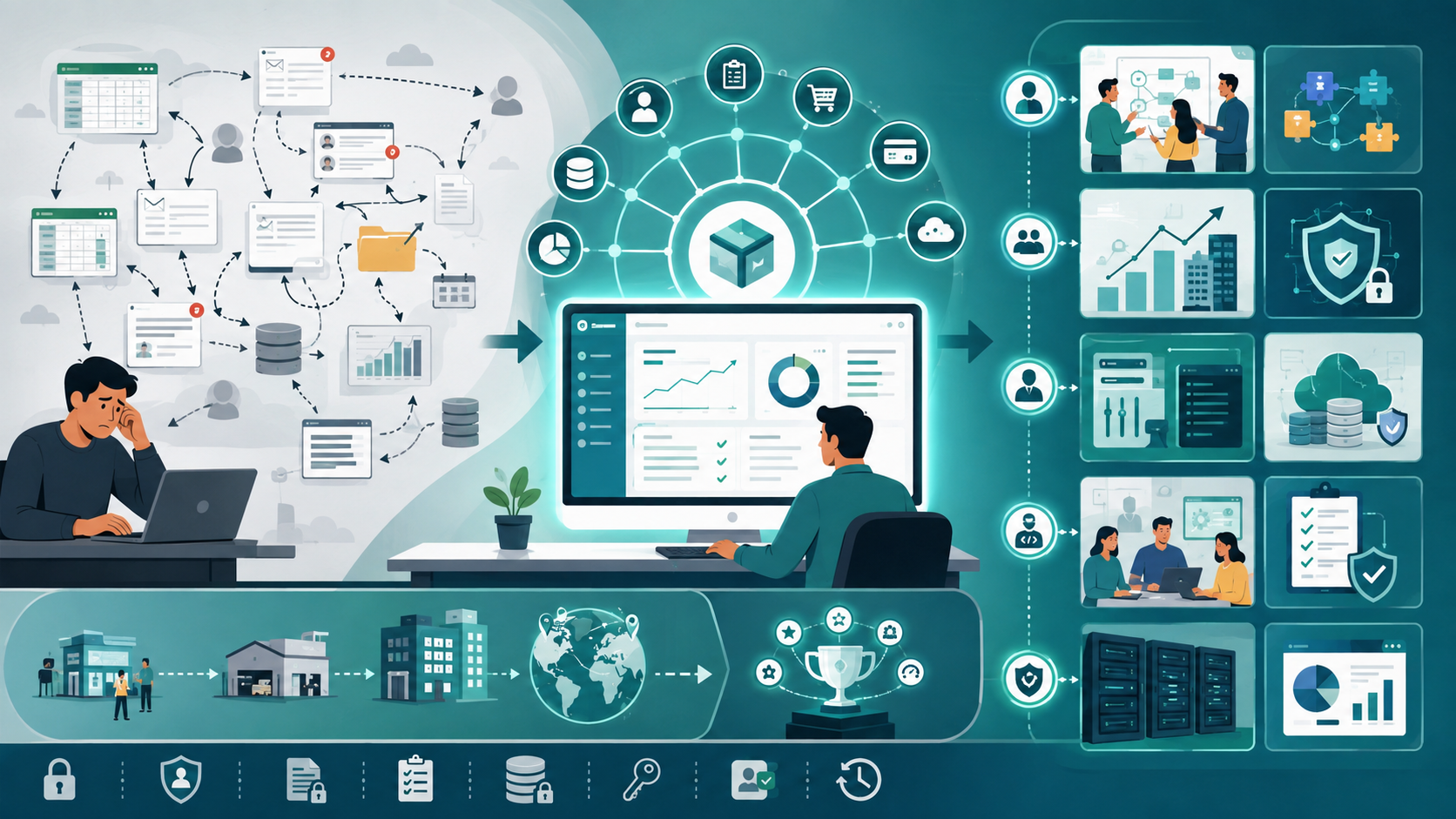
When Does Custom Software Beat Off-the-Shelf Software?
Custom software generally becomes more attractive when the business has requirements that standard products cannot handle efficiently.
Several situations make the case for custom development stronger.
1. Your Business Has Unique Workflows
Every business has processes, but not every process is standardized.
For example, a manufacturing company might have a workflow involving:
- Custom production stages
- Quality-control approvals
- Supplier coordination
- Inventory dependencies
- Internal authorization
- Customer-specific requirements
- Specialized reporting
An off-the-shelf application may support some of these processes, but the business might need to redesign its workflow around the software.
Custom software allows the application to follow the existing process instead.
This can reduce complexity and eliminate unnecessary manual steps.
Why This Matters
When employees constantly create workarounds because software does not match their workflow, productivity can gradually decline.
People may rely on spreadsheets, emails, messaging applications, or manual data entry to fill the gaps.
At that point, the organization is effectively maintaining multiple systems.
Custom software can consolidate these processes into a more coherent environment.
2. Standard Software Creates Too Many Workarounds
A few workarounds may not be a serious problem.
But when workarounds become part of everyday operations, they can create operational friction.
Imagine a team using an application that requires employees to:
- Export data.
- Modify it manually.
- Upload it into another system.
- Send an approval request.
- Update another database.
- Generate a separate report.
The software may technically support the business process, but the overall workflow is inefficient.
Custom automation can connect these steps and reduce unnecessary intervention.
The objective isn't to automate everything.
It is to remove repetitive work where automation genuinely improves efficiency and reliability.
3. Integration Is a Core Requirement
Integration is one of the strongest reasons businesses consider custom software.
Modern organizations rarely operate a single system.
They may use:
- CRM platforms
- ERP systems
- Payment providers
- Accounting software
- Inventory systems
- Customer portals
- Communication platforms
- Internal databases
- Third-party APIs
An off-the-shelf application may provide integrations, but those integrations may not support every required workflow.
Custom software can be designed around the organization's integration architecture.
For example, an application might need to:
Receive an order → validate customer information → update inventory → process payment → notify the warehouse → generate an invoice → update the CRM.
If existing software cannot coordinate these processes properly, custom development may provide a better solution.
4. Your Requirements Are Too Specific
Specificity is another important factor.
A standard product works best when your requirements are relatively common.
But consider a business with requirements such as:
- Industry-specific calculations
- Specialized approval rules
- Custom reporting
- Complex user permissions
- Unique pricing models
- Specialized compliance workflows
- Custom operational dashboards
Trying to force these requirements into generic software can create unnecessary complexity.
Custom development allows the functionality to be built around the actual requirement instead of relying on configuration limitations.
5. The Business Needs Greater Scalability
Scalability isn't simply about handling more users.
A growing business may also need to handle:
- More transactions
- More customers
- More locations
- More integrations
- More data
- More business rules
- More teams
- More complex workflows
An off-the-shelf platform may scale technically but become restrictive operationally.
For example, a company could grow from 20 employees to 500 employees while its software continues functioning.
But if every new department requires manual workarounds, the software may become a constraint.
Custom architecture can be designed around anticipated growth.
This doesn't automatically make custom software more scalable, but it gives the business greater control over how scalability is addressed.
6. The Software Is Part of Your Competitive Advantage
Not every software system provides strategic value.
Email software, accounting tools, or common collaboration platforms usually don't differentiate a company.
But imagine a company whose competitive advantage depends on a proprietary workflow.
In that situation, software may become part of the business itself.
Custom software can help protect and strengthen that differentiation.
The application can reflect the organization's unique processes, decision-making, customer experience, and operational model.
This is where custom development can move from being a technology expense to a strategic investment.
7. You Need More Control Over the Software
Ownership and control can become important as software becomes critical to the business.
With an off-the-shelf product, the vendor typically controls:
- Product roadmap
- Feature releases
- Pricing
- Licensing
- Infrastructure decisions
- Upgrade schedules
- Support policies
The business has limited influence over those decisions.
Custom software provides greater autonomy.
Depending on the agreement and development model, the organization may have greater control over the source code, architecture, infrastructure, upgrades, and future functionality.
That doesn't mean custom software eliminates dependency.
A poorly documented custom application can create dependency on the original development team.
Therefore, ownership should include documentation, architecture knowledge, deployment access, and maintainability—not simply source code possession.
8. Vendor Dependency Is Becoming a Problem
Vendor dependency becomes more noticeable when software is deeply embedded into business operations.
A vendor may change:
- Subscription pricing
- Licensing models
- APIs
- Features
- Usage limits
- Support policies
- Product direction
The business has to adapt.
With custom software, the organization has greater autonomy over its technology decisions.
However, this comes with responsibility.
The business becomes responsible for maintenance, security, infrastructure, upgrades, and long-term support.
So the real question isn't:
Can we avoid vendor dependency?
It is:
Which type of dependency gives us the most control and acceptable risk?
9. Security and Privacy Requirements Are Unusual
Security requirements vary considerably between businesses.
Some organizations need specialized:
- Access controls
- Authentication workflows
- Authorization rules
- Audit trails
- Data isolation
- Encryption policies
- Data retention rules
Off-the-shelf applications can provide strong security, but their security model may not match every organization's requirements.
Custom software can provide greater control over how sensitive information is handled.
However, custom does not automatically mean more secure.
Custom systems also require proper architecture, secure development practices, testing, monitoring, patching, and ongoing maintenance.
The advantage is control—not guaranteed security.
10. The User Experience Needs to Match the Business
Usability is often underestimated when comparing software options.
A standard application may provide dozens of features, but employees may use only a small portion of them.
A custom application can focus the experience around the tasks users actually perform.
For example, instead of navigating through several screens to complete an approval, a custom workflow could provide:
Review → Approve → Notify
The goal isn't simply to make the interface attractive.
It is to reduce unnecessary complexity and make important workflows easier to execute.
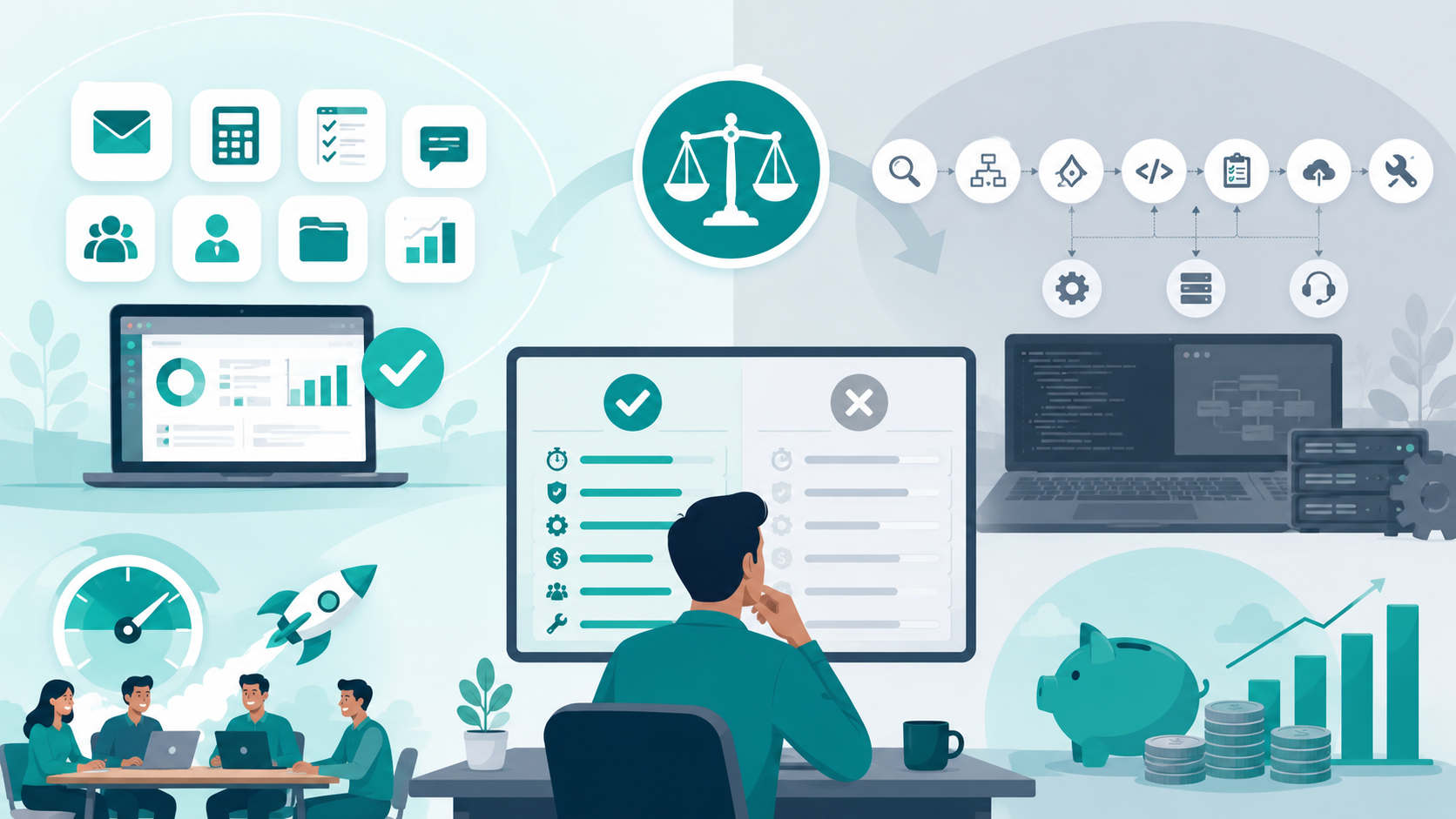
When Off-the-Shelf Software Is Actually Better
Custom software isn't automatically the better choice.
There are many situations where an existing product makes more sense.
Common Requirements
If your requirements are already well supported by mature software, building a new system may provide little additional value.
For example:
- Accounting
- Project management
- Team communication
- Basic CRM
- Document management
In these cases, an off-the-shelf product can provide proven functionality without the investment required for custom development.
Faster Implementation
Implementation speed can be a major advantage.
A mature product may be configured and deployed within weeks, while custom development may require months.
If the business needs a solution immediately, buying existing software can be the practical choice.
Lower Initial Investment
Custom software requires investment in:
- Discovery
- Architecture
- Design
- Development
- Testing
- Deployment
- Infrastructure
- Maintenance
An existing subscription may have a much lower initial cost.
But businesses should compare total cost of ownership, rather than looking only at the initial price.
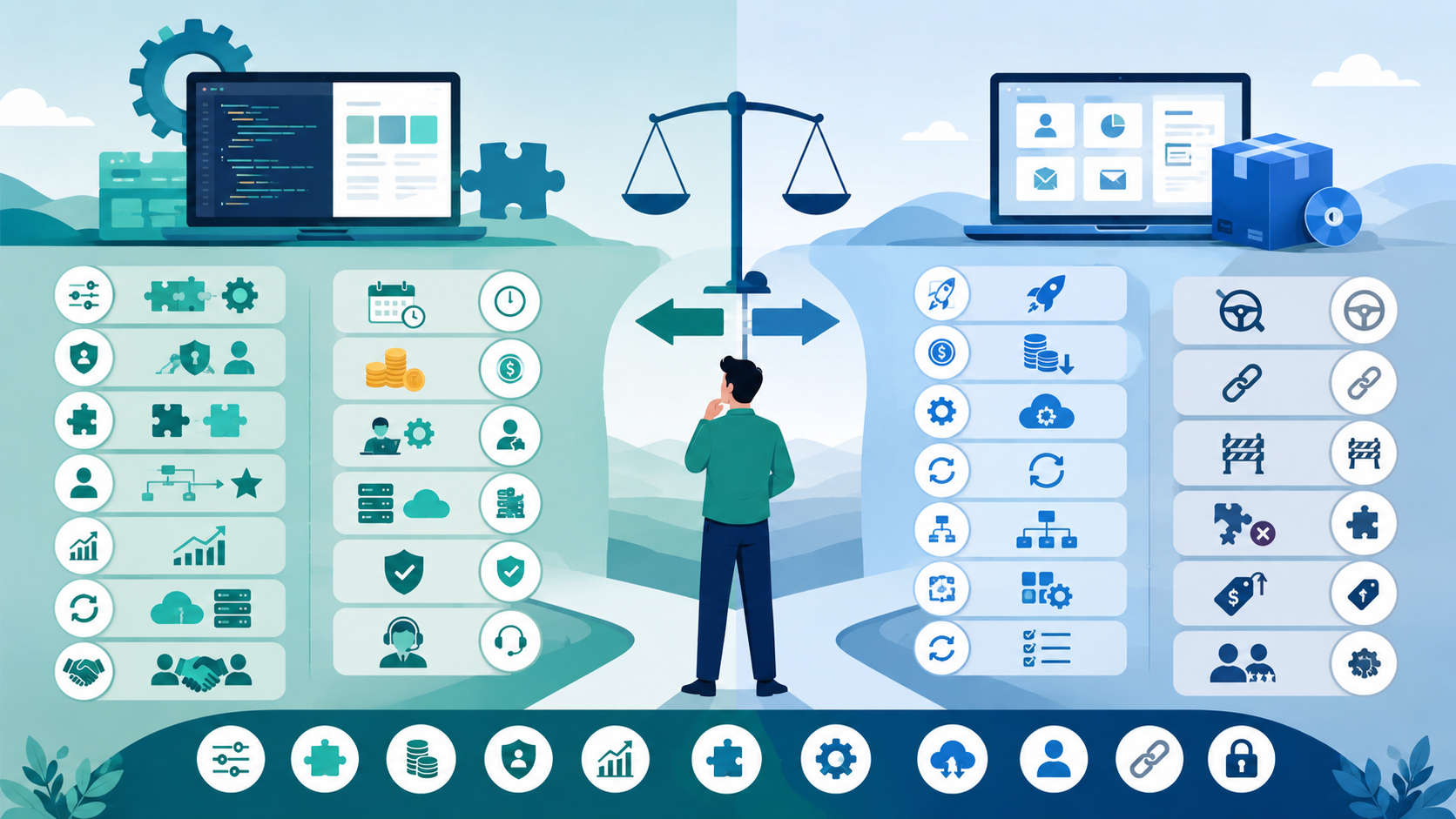
Custom Software vs. Off-the-Shelf: The Real Trade-Off
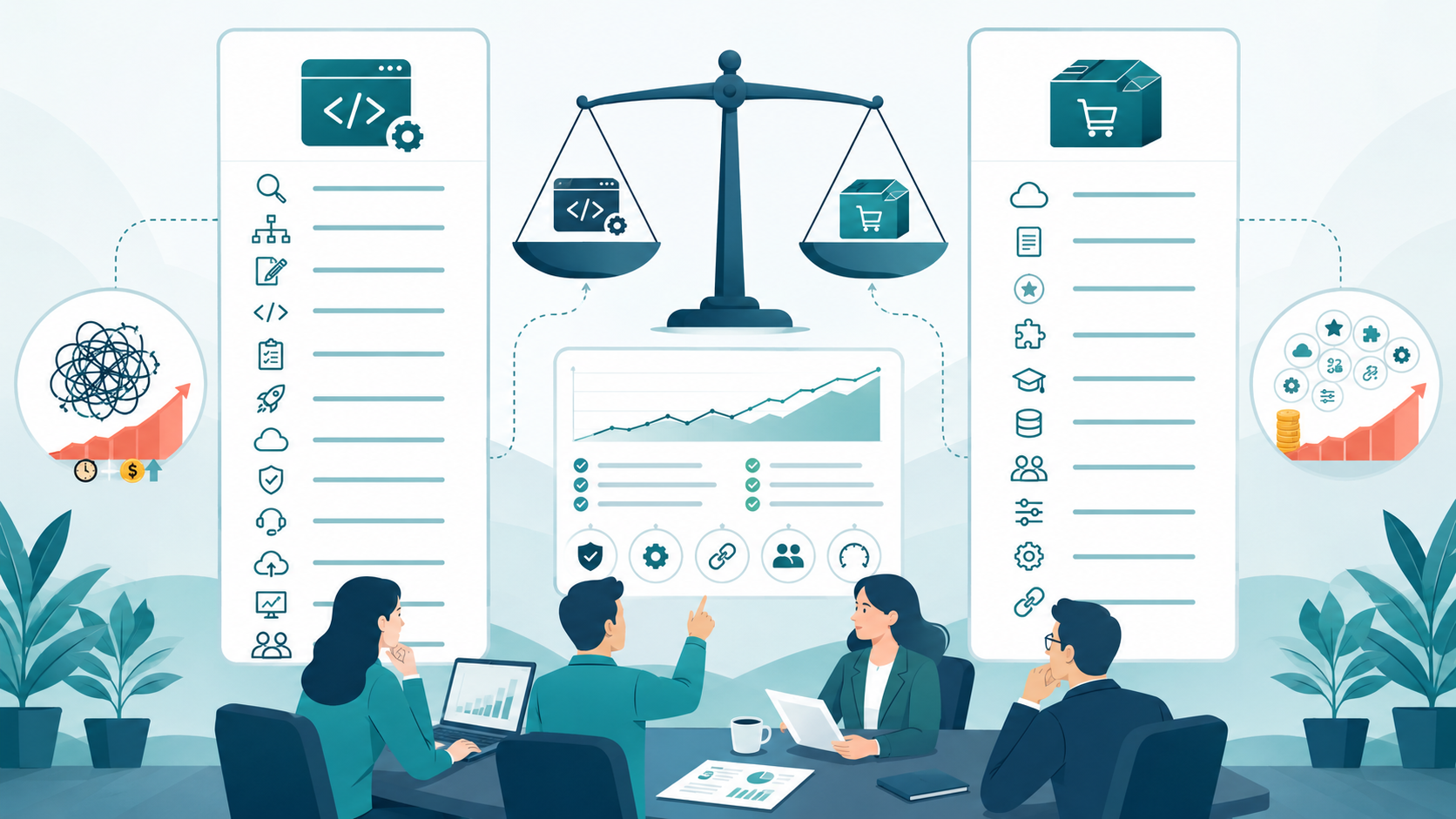
The decision involves several trade-offs. Working with a US custom software partner for build-versus-buy decisions helps businesses compare workflow fit, integrations, scalability, ownership, vendor dependency, maintenance responsibility, user experience, long-term cost, and software control before choosing custom development or an off-the-shelf product.
| Factor | Custom Software | Off-the-Shelf |
|---|---|---|
| Flexibility | High | Limited to available configuration |
| Customization | Extensive | Usually predefined |
| Implementation | Usually longer | Usually faster |
| Initial cost | Higher | Usually lower |
| Ownership | Greater potential control | Vendor controlled |
| Scalability | Designed around requirements | Depends on vendor |
| Integration | Highly customizable | Depends on available integrations |
| Maintenance | Business responsibility | Mostly vendor responsibility |
| Upgrades | Controlled internally | Vendor controlled |
| Workflow fit | Highly specific | General-purpose |
| Vendor dependency | Lower in some areas | Usually higher |
| Control | Higher | Lower |
Neither option wins every category.
The right decision depends on which factors matter most to the business.
How to Evaluate the Cost Properly
The biggest mistake businesses make is comparing:
Custom development cost vs. software subscription price.
That's not a complete comparison.
Instead, consider the total cost over several years.
Custom software costs may include:
- Development
- Infrastructure
- Maintenance
- Security
- Support
- Upgrades
- Monitoring
- Internal management
Off-the-shelf costs may include:
- Subscription fees
- Licensing
- Premium features
- Integration tools
- Implementation
- Training
- Data migration
- Additional users
- Customization
- Multiple connected products
An inexpensive subscription can become expensive when the organization needs multiple add-ons and integrations.
Likewise, custom software can become expensive if requirements are poorly defined or the architecture is unnecessarily complex.
The correct comparison is based on long-term value, not simply initial cost.
A Practical Build-or-Buy Decision Framework
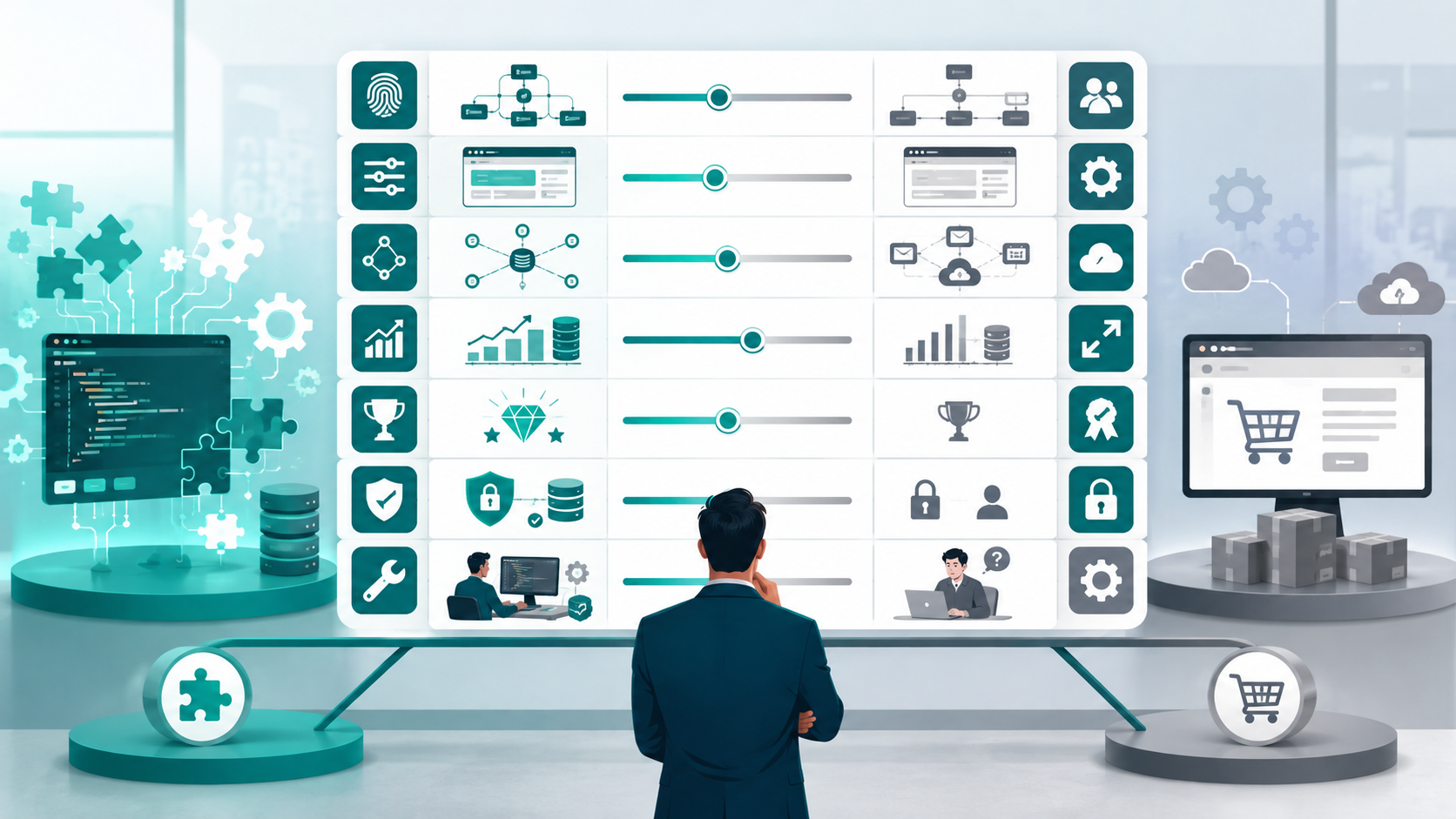
Before choosing custom software, ask these questions.
1. How unique is the workflow?
If your workflow is fundamentally different from the market standard, custom software becomes more attractive.
2. How important is flexibility?
If requirements change frequently, flexibility may be more valuable than immediate implementation speed.
3. How many systems need integration?
The more complex the integration environment, the more important architectural control becomes.
4. How important is scalability?
Consider where the business will be in three to five years, not only where it is today.
5. Does the software create competitive differentiation?
If software directly contributes to your competitive advantage, custom development may have strategic value.
6. How much control does the business require?
If ownership, autonomy, architecture, and product direction matter significantly, custom software deserves serious consideration.
7. Can the organization support maintenance?
Custom software requires ongoing responsibility.
If there is no plan for maintenance, upgrades, security, and support, custom development can create more problems than it solves.

When Custom Software Is Usually Worth It
Custom development becomes particularly compelling when several of these conditions exist simultaneously:
- Your workflow is highly specialized.
- Existing products require extensive workarounds.
- Multiple systems must communicate.
- Automation can eliminate significant manual work.
- The business expects substantial growth.
- Software provides competitive differentiation.
- Security or privacy requirements are unusual.
- Vendor limitations are restricting operations.
- The business needs control over future functionality.
- Long-term value is more important than quick implementation.
The more of these conditions apply, the stronger the case for custom software becomes.
The Biggest Mistake: Building Custom Software Too Early
There is another side to the decision.
Some businesses assume that custom software is automatically more professional, scalable, or powerful.
That can be a costly assumption.
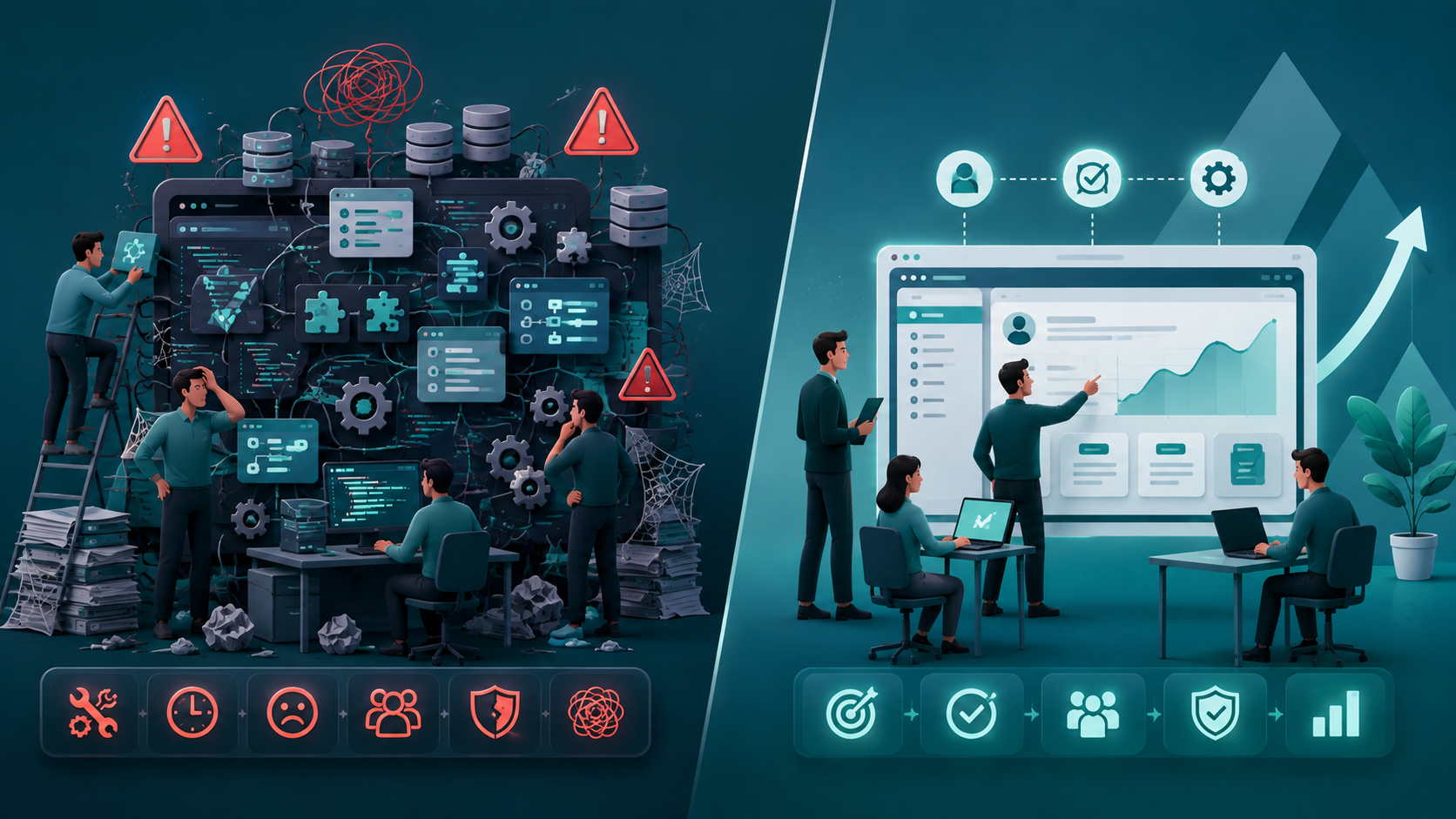
Building software before understanding the actual requirements can lead to:
- Unnecessary functionality
- Increased complexity
- Higher maintenance
- Longer implementation
- Poor usability
- Architecture problems
- Unclear ownership
- Increased operational risk
Custom software should solve a meaningful business problem.
It shouldn't exist simply because the company wants something custom.

A Better Approach: Start With the Problem
The strongest software decisions usually start with the workflow rather than the technology.
Instead of asking:
Should we build custom software?
ask:
Where is our existing software preventing the business from operating effectively?
Then identify:
- The current workflow
- Existing bottlenecks
- Manual processes
- Integration requirements
- Security constraints
- Scalability expectations
- User requirements
- Vendor limitations
- Long-term maintenance needs
- Expected business value
Once these factors are clear, the build-versus-buy decision becomes much easier.
Conclusion
Custom software beats off-the-shelf software when business requirements, workflow, integration, flexibility, control, or long-term value are more important than the speed and simplicity of adopting an existing product.
But custom development isn't automatically the better option.
If an off-the-shelf application solves the problem effectively, provides acceptable scalability and security, and doesn't create significant workflow limitations, buying may be the smarter decision.
The real goal isn't to choose custom software.
It is to choose the solution that provides the best balance of functionality, flexibility, cost, risk, ownership, and long-term value.
In practical terms:
Buy software when your business can comfortably adapt to it. Build software when adapting your business to the software becomes more expensive than building what the business actually needs.
When Does Custom Software Beat Off-the-Shelf Software?: FAQs
Custom software usually beats off-the-shelf software when a business has unique workflows, complex integrations, specialized requirements, or needs greater control and flexibility. It can also make more sense when existing software creates workarounds that reduce efficiency and productivity.
No. Off-the-shelf software is often better when business requirements are standard, implementation needs to be fast, and the available functionality meets most requirements without major compromises.
Custom software generally requires a higher initial investment because it involves planning, architecture, development, testing, and deployment. However, the total cost can be justified when it reduces manual work, licensing costs, integration problems, or long-term vendor dependency.
Businesses should consider off-the-shelf software when they have common requirements, need quick implementation, have limited development resources, or don't require extensive customization.
Custom software can be designed around specific scalability requirements, allowing the architecture to evolve with business growth. However, scalability still depends on proper architecture, infrastructure, performance optimization, and ongoing maintenance.
Reference
Written by

Paras Dabhi
VerifiedFull-Stack Developer (Python/Django, React, Node.js)
I build scalable web apps and SaaS products with Django REST, React/Next.js, and Node.js — clean architecture, performance, and production-ready delivery.
LinkedIn